

CBSE Answer Writing Strategy for the Last Month: Calm, Clear, and Score-Focused
The last month before the CBSE exams is not the time for frantic cramming; it’s the time for smart, deliberate action. With a clear plan and steady practice you can turn remaining days into reliable marks. This guide walks you through a practical, day-by-day approach to sharpen answer-writing skills, manage time, and present answers in a way markers appreciate. Expect concrete checklists, sample formats, and a couple of handy tables you can adapt to your subjects.

Start with a Calm Audit: Know Exactly Where You Stand
Before designing drills or writing another practice answer, take a 48-hour audit. This is a focused snapshot — not a panic session. List out the chapters and question-types you can answer confidently, the ones you can answer with effort, and the ones you cannot answer right now. Use that list to prioritize. The goal of the audit is twofold: identify high-yield topics you must secure, and create a realistic scope for practice so you don’t chase low-return topics in the last month.
- Make three columns: Strong | Needs Fixing | Must Review. Put each chapter and main question-type into a column.
- Mark topics that frequently appear in board-style questions and those that demand writing/diagram practice.
- Decide which topics will be left for very light review only — focus time on improving from mid-level to strong.
Week-by-Week Roadmap: How to Use the Last 28–30 Days
Break the month into weekly sprints. Each week should have a focused theme: consolidation, intensive answer practice, full-length mocks, and final polishing. This keeps energy high and prevents the false comfort of vague revision.
| Week | Primary Focus | Key Activities | Goal |
|---|---|---|---|
| Week 1 | Audit & Prioritize | Audit topics, make condensed notes, practice 3–4 short papers | Clear scope; daily micro-revision lists |
| Week 2 | Targeted Answer Writing | Practice 5–10 long answers per subject; peer/self-evaluate | Structure answers; improve presentation |
| Week 3 | Full-Length Mocks | 2–3 full papers per subject; strict timing; detailed marking | Exam pace, endurance, and error correction |
| Week 4 | Polish & Memory | Quick facts, formula sheet, labelled diagrams, light mocks | Confidence and recall readiness |
Design a Practical Daily Timetable
Structure each day around concentrated answer-writing blocks and quick revision. Keep sessions short and focused — the quality of practice beats long, aimless hours. A useful rule: alternate active writing practice with passive revision (notes, flashcards) and rest.
- Morning: 60–90 minutes — high-concentration writing practice (one long-answer or two medium answers).
- Late morning: 30–45 minutes — revise core formulas, keywords, and definitions.
- Afternoon: 60 minutes — short answer drills or numericals with step-by-step working.
- Evening: 90–150 minutes — full or sectional mock, then mark it immediately.
- Night: 20–30 minutes — light reading of condensed notes before sleep.
Answer Writing Essentials: Read, Plan, Execute
Answer writing is a three-step process: read the question carefully, spend a fixed time planning the structure (even 30–60 seconds helps), then execute clearly. For subjective answers, structure is often the difference between average and excellent marks.
- Read twice: underline action words (define, explain, compare, list, evaluate).
- Time allocation: use the marks as your primary guide — more on this below in the suggested length table.
- Plan briefly: Jot 3–5 bullet points for long answers; these become your paragraph heads.
- Write clearly: short paragraphs, headings for multi-part answers, and boxed final statements where appropriate.
- Leave 2–3 minutes: for quick proofreading and to add a missed keyword or a short clarifying sentence.
Suggested Answer-Length and Time Guide
Use the following as a flexible guideline. Different subjects and markers vary, but these suggestions help you practice consistent pacing.
| Marks | Suggested Time | Suggested Structure | Writing Length |
|---|---|---|---|
| 1–2 marks | 1–3 minutes | Direct answer, one-liner or two points | 1–3 lines |
| 3–4 marks | 4–7 minutes | Short intro, 2–4 points, brief wrap-up | 5–8 lines |
| 5–8 marks | 8–15 minutes | Intro, 3–5 points with explanation/examples, conclusion | 8–14 lines or 2–3 short paragraphs |
| 9–15 marks | 15–30 minutes | Intro, clear subheadings, examples/diagrams, concise conclusion | 2–4 paragraphs + labelled diagram if needed |
Tactics for Different Question Types
CBSE papers include short answers, long answers, case-based and source-based questions, and practical/numerical problems. Here are subject-agnostic tactics that apply broadly.
- One-liners (1–2 marks): Be precise. If a specific term is expected (a name, a year, a concept), give it. Avoid adding unnecessary sentences.
- Short answers (3–4 marks): Structure as bullet points or a compact paragraph. Each point should relate directly to a marking point.
- Long answers (5+ marks): Use an intro, 3–5 developed points, examples and a conclusion. Where diagrams help, draw a neat, labelled figure and refer to it in text.
- Case-based/source-based: Read the source carefully. Link each answer to the evidence in the passage. Write crisp answers and reference the main idea from the source.
- Numericals & derivations: Show steps. Writing the key formula at the top and then step-by-step working earns clarity marks. Box the final numeric result.
Presentation Matters — But So Do Keywords
Markers look for correct content, clarity, and signposts that show you understand the concept. Use headings, underline or circle final answers, and keep your handwriting legible. A few strategic formatting choices save time for the marker and can convert partial knowledge into marks.
- Underlining the question’s keywords and writing a short plan helps keep you focused while writing.
- Use bullets for lists and numbering for steps; it’s easier for a marker to award discrete points.
- Highlight or box the final answer in numericals and the concluding sentence of discursive answers.
- Be economical with words — clarity beats verbosity. A well-placed keyword often corresponds to a marking point.
Self-Marking and Peer Feedback: Use a Rubric
After every practice answer, grade it against a simple rubric: accuracy of content (0–3), clarity of structure (0–2), use of examples/diagrams (0–2), and presentation (0–1). This makes feedback objective and repeatable. When doing full papers, calculate time per question and note the questions where time leaked.
| Rubric Item | Max Points | What to Look For |
|---|---|---|
| Accuracy | 3 | Correct facts, correct steps, no major conceptual errors |
| Structure | 2 | Intro, body, conclusion or clear stepwise working |
| Examples/Diagrams | 2 | Relevant and correctly labelled/useful |
| Presentation | 1 | Legibility, boxed final answer, underlined keywords |
Top Micro-Changes That Add Marks in the Final Week
Small, repeatable habits can move the needle. Here are high-impact micro-actions to practice and make automatic.
- Memorize exact definitions and one concise example for them.
- Create a one-page formula/keyword sheet per subject and review it daily.
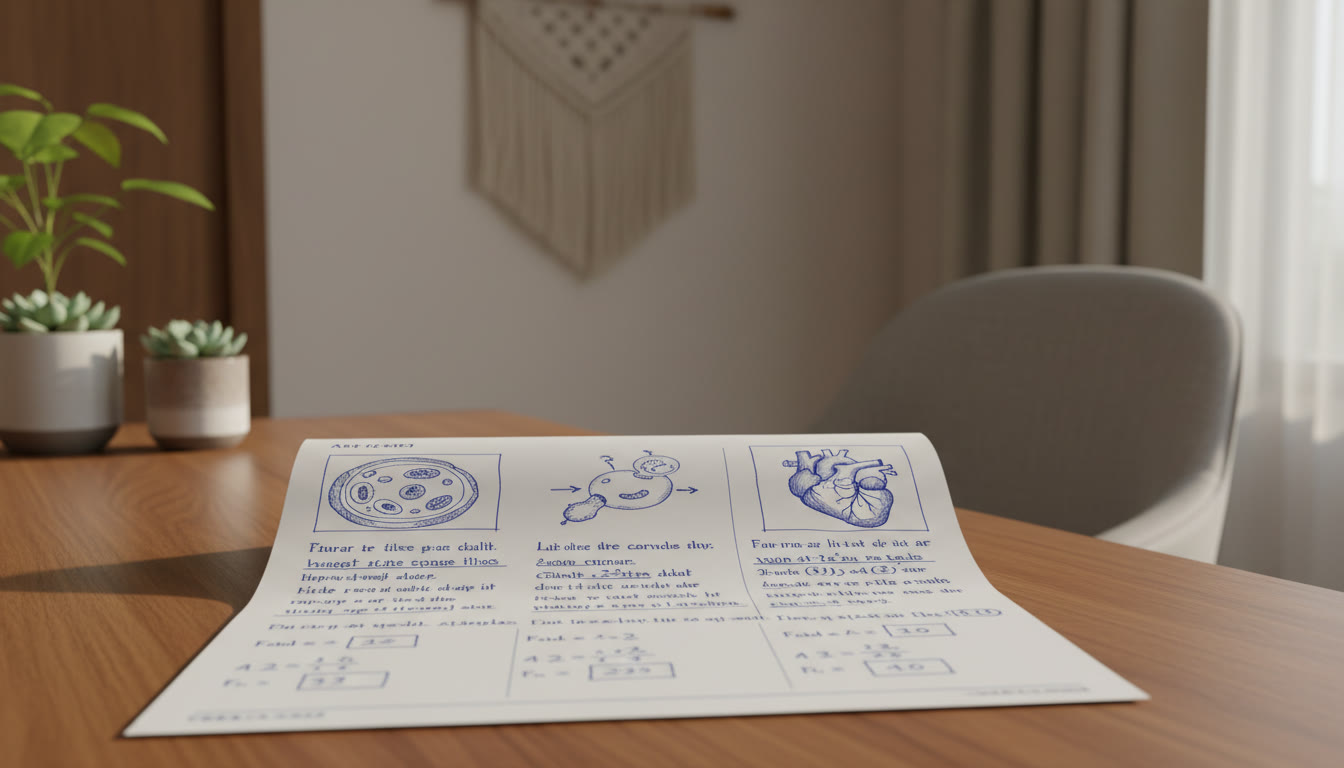
- Practice labelled diagrams until you can draw them in 2–3 minutes.
- For each long-answer topic, memorize two crisp case examples or real-world links you can add as evidence.
- Always leave time to proofread and correct one small mistake.
How to Use Mock Tests Effectively
Mocks are the single most useful tool in the last month — but only if you simulate exam conditions and follow up with disciplined marking and correction.
- Take full-length papers in one sitting, with the same guesswork rules you’ll follow in the exam.
- Time each section and practice switching between subjects if your exam schedule demands it.
- After each mock, categorize mistakes: careless, concept, structure, or time-related. Fix one category at a time in the next mock.
- Keep a dedicated notebook for recurring errors and review it daily.
Practical Tips for Specific Subjects (Brief, Universal Tips)
While each subject has its own specifics, some practices are widely useful:
- Sciences: write steps clearly for experiments and derivations; label diagrams; box final numerical results; include units.
- Maths: show logical step-by-step working; do not skip steps that lead to marks; cancel, simplify and box the final answer.
- Social sciences: use dates and names sparingly and correctly; for long answers, present arguments with supporting facts and a short conclusion.
- Languages: answer with correct grammar, single-word alternatives for short questions, and a clear opening/closing for long composition-type answers.
Use Personalized Support to Target Weak Spots
If you find a pattern of recurring errors — timing leaks, poor structure, or a particular question type — targeted guidance can accelerate improvement. Sparkl’s tailored study plans and 1-on-1 guidance help students identify weak points and convert them into reliable, repeatable exam skills. Personalized feedback, whether from a tutor or a trusted peer, becomes exponentially more useful when combined with timed mock practice.
Last-Week Checklist: What to Lock, What to Let Go
The final week is about polish and consolidation. Let go of any new topics that take long to understand; instead, reinforce the things you can make reliable.
- Lock: key formulas, definitions, and labelled diagrams you will reproduce under time pressure.
- Lock: time management rhythm — know how long you will spend on each question type.
- Let go: complex new topics with low expected yield. Document them for later study after exams.
- Quick revision: daily 20–30 minute rapid-fire rounds of high-yield questions and definitions.
Exam Day: A Simple Answer-Writing Routine
On the day, keep routines simple and consistent. Before you start writing, glance through the entire paper and mark questions you will attempt first (the ones you can answer quickly and securely). Always write the number of the question clearly and start with a short plan on the margin for long answers. Keep presentation clean — avoid heavy crossing out; if you must redo, strike through gently and continue.
- Skim the paper (5–8 minutes).
- Start with comfortable questions to build momentum.
- Stick to planned time per question; use a margin note of remaining time if helpful.
- Proofread quickly at the end of each section.
Physical and Mental Care in the Final Stretch
Your brain performs on the fuel you give it. Prioritize sleep, short exercise, and regular meals. Short naps and 5–10 minute breaks between intense sessions improve focus. Keep social media to a minimum; replace scrolling with a 10-minute review of a key formula sheet or one quick mock question.
Quick Example: How to Structure a 8-Mark Answer
Here’s a compact approach you can rehearse until it becomes automatic:
- Intro (1–2 lines): Define the core term or state the main idea.
- Point 1 (2–3 lines): First argument/step with a supporting example.
- Point 2 (2–3 lines): Second argument/step with a brief explanation.
- Point 3 (2–3 lines): Third argument/step or small diagram if relevant.
- Conclusion (1 line): Summarize the key message and, if possible, state a short implication.
Common Mistakes to Avoid
- Writing too long for low-mark questions — brevity and precision win.
- Missing the directive word (compare/contrast/explain) — always answer the command verb directly.
- Over-reliance on memory without structured practice — rote notes need application through writing.
- Neglecting presentation — an unclear script hides correct thinking from the marker.
Practice Template: One Hour Slot
| Minute | Activity | Purpose |
|---|---|---|
| 0–5 | Read and plan the question | Clarify scope, list headings |
| 5–35 | Write the answer | Implement the plan, include examples/diagram |
| 35–45 | Self-mark using rubric | Identify one major fix |
| 45–60 | Redo the weak point and quick revision | Reinforce correct approach |
Final Note: Practice with Purpose
The last month rewards deliberate practice: focused mocks in exam conditions, structured feedback, and small daily habits that improve clarity and recall. Work on pacing, plan answers before you write, and practise the small presentation moves — neat diagrams, boxed results, and clear paragraphing. If you use targeted help, make sure it focuses on converting weak spots into consistent marks rather than adding more topics to your plate.
End this final stretch by trusting a simple routine: audit, practise, test, correct, and polish. That sequence converts revision time into reliable performance on the answer sheet.

























No Comments
Leave a comment Cancel