
IIT vs NIT vs IIIT: Campus infrastructure that actually matters for your engineering journey
Deciding between an IIT, an NIT or an IIIT can feel like standing at a three-way fork with equally alluring signposts. Beyond brand names and placement statistics, the infrastructure you’ll live with for the next several years has a profound impact on how you will learn, what research you can access, and the quality of day-to-day student life. This blog walks you through the kinds of facilities that matter, how each system typically approaches them, and — most importantly — how to match those realities with your goals.

Why infrastructure should be a top decision factor (and what “infrastructure” really means)
When students talk about infrastructure they often picture campus buildings and hostels. Those matter, but infrastructure is also the invisible scaffolding: lab access hours, computing power, research funding, mentor availability, incubation spaces, high-speed internet, and systems that help convert curiosity into published work or a prototype. Good infrastructure reduces friction — fewer long waits for lab time, more chances to run experiments, better access to industry-grade equipment and smoother academic-administrative support.
For JEE aspirants making a college choice, remember that admissions are a starting point, not an outcome. The campus you choose will shape the problems you can work on, the people you meet, and the habits you build. So let’s break down how IITs, NITs and IIITs generally stack up on the concrete things students use every day.
Quick comparative snapshot (what these acronyms usually imply)
Each category has a historical focus and resource pattern that creates differences in infrastructure priorities:
- IITs: Broad campus ecosystems with strong research funding, diverse departments and often the most advanced specialized labs and interdisciplinary centers.
- NITs: Solid, balanced undergraduate teaching infrastructure with good labs and reasonable research facilities—quality is consistent but can vary across institutes.
- IIITs: Focused investment in computing, networks and software engineering resources; compact campuses that prioritize high-performance computing, labs and industry-aligned facilities.
Side-by-side table: infrastructure features at a glance
| Infrastructure Aspect | IIT (general) | NIT (general) | IIIT (general) |
|---|---|---|---|
| Campus size & funding | Large campuses, stronger research funding and endowments; separate research parks and incubation areas. | Medium to large campuses; funding varies by institute but usually strong for core teaching and labs. | Smaller to medium campuses; concentrated funding in computing and industry collaboration. |
| Laboratories & equipment | Cutting-edge, specialized labs (across disciplines) with advanced equipment and longer access hours for research projects. | Well-equipped core labs for undergraduate courses; advanced equipment may be limited to certain departments. | Extensive computing labs, cloud credits, data centers and networking labs; hardware labs vary by institute. |
| Library & knowledge resources | Large libraries, subscriptions to major journals and databases, inter-library access and digital resources. | Good library collections; increasing digital subscriptions but access levels can vary. | Strong online resource emphasis and subscriptions to computing repositories and technical journals. |
| Hostels & student amenities | Generally superior hostel facilities and student services; more variety in room types and dining options. | Comfortable hostels with standard amenities; quality varies by campus and batch strength. | Functional hostels; attention often on creating collaborative workspaces and group study areas. |
| Industry linkages & incubation | Stronger industry partnerships, more sponsored projects and established incubation centres. | Good industry engagement, regional collaborations and campus recruitment support. | Deep ties with IT industry and startups; incubation and placement pipelines often IT-heavy. |
| Sports, arts & campus life | Broader extracurricular infrastructure and large-scale campus events. | Active student life with sports and cultural facilities; size dependent. | Vibrant student communities, often with hackathons and tech fests at the core. |
Labs and research: where the rubber meets the road
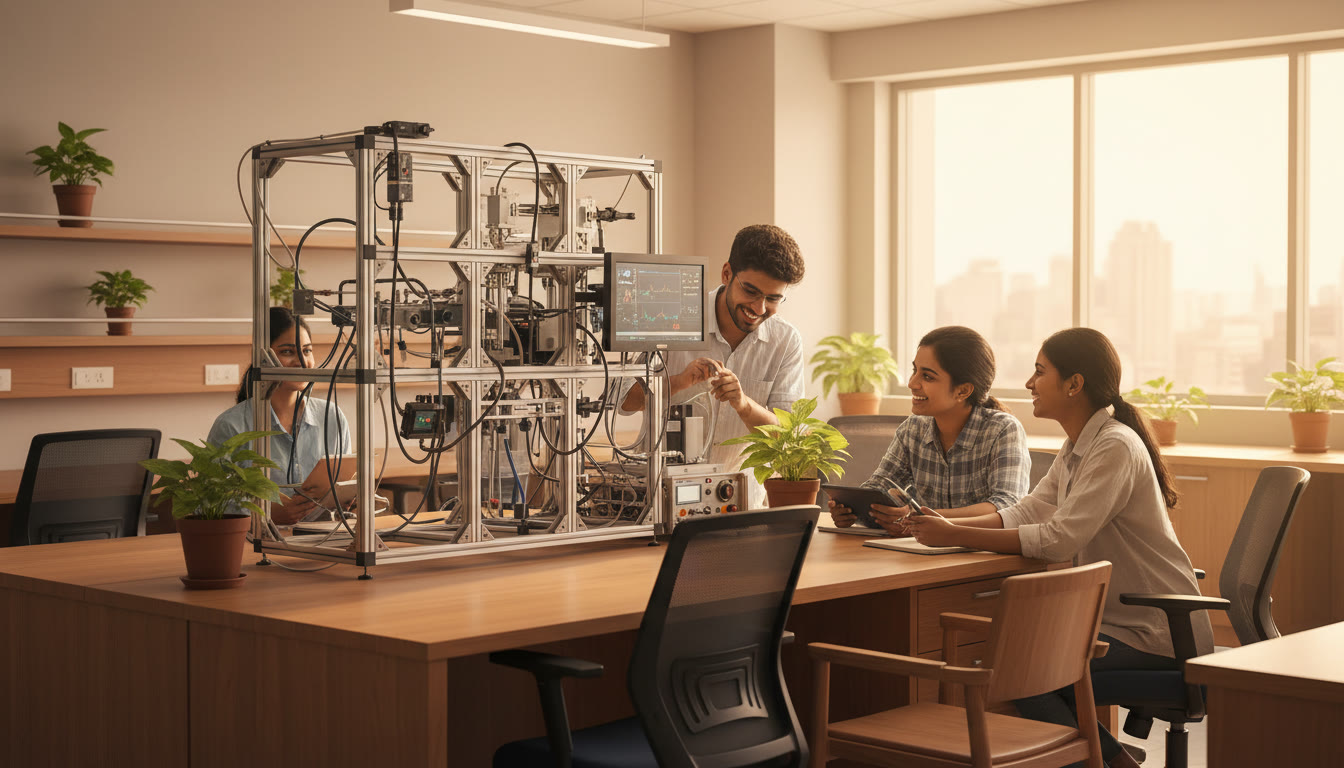
If you want to do hands-on work — build circuits, run fluid dynamics experiments, deploy machine-learning models on dedicated GPU clusters — the availability and accessibility of labs matter more than how shiny the building facade looks. IITs frequently house specialized equipment (nano-fabrication, advanced spectroscopy, large mechanical rigs) and dedicated research groups. That means students who want to pursue deep laboratory research can usually find supervisors and instruments.
NITs offer robust teaching labs and, in many cases, growing research opportunities. They often shine for students who want a strong undergraduate teaching environment and opportunities to collaborate on applied projects. IIITs concentrate resources where they matter most for computing: high-bandwidth networks, clustered GPUs, cloud credits and lab spaces designed for software development, cybersecurity, AI/ML and data science projects.
Practical tip: if you’re interested in experimental research, ask about lab booking systems, instrument maintenance schedules, availability of consumables, and whether undergraduate students can lead small projects or require a supervisor’s permission. These operational details make or break your ability to complete hands-on work.
Libraries, computing resources and connectivity
Access to literature and computing power speeds up research. A library with a good collection and digital access to journals is invaluable for thesis work. Similarly, campus-wide high-speed internet, centralized compute clusters or cloud partnerships let you prototype faster. IIITs will often prioritize compute availability and cloud access; look for GPU quotas, remote-access hooks to campus servers and the presence of continuous integration/continuous deployment (CI/CD) environments for student projects.
On the other hand, if your specialty is experimental (say, optics or materials) the library matters as much as lab instrument uptime. Ask about access to conference proceedings and subscriptions to relevant technical repositories.
Hostels, food and daily life: comfort supports focus
A comfortable, well-managed hostel can be the difference between studying effectively and spending energy on logistics. IITs often have larger, layered hostel systems with options for seniors and better maintenance cycles. NIT hostels are generally functional and community-oriented. IIIT hostels may be compact but built to facilitate collaborative late-night coding sprints. Consider proximity from hostel to labs, library hours, food variety, laundry and ease of resolving maintenance issues.
Checklist items to verify on campus visits: frequency of water/electricity outages (if any), campus medical facilities, local transport and safety at night. These pragmatic factors shape the daily experience more than promotional pictures.
Industry collaboration, incubation and placement infrastructure
Infrastructure for internships and startups is often a combination of good lab ecosystems, a ready talent pool and active liaison cells. IITs frequently have established incubation centers with mentorship networks and seed funding channels. NITs maintain strong campus placement cells and local industry partnerships, and IIITs often have tight pipelines into IT and product roles given their industry focus.
If entrepreneurship is your goal, look beyond a marquee incubator name—check whether students can access seed grants, legal and IP support, prototyping workshops, mentor networks, and co-working space. These are the practical infrastructure pieces that help an idea leave the whiteboard.
Classrooms, pedagogy and faculty mentorship
Infrastructure is not only physical. Teaching style and mentorship systems determine whether facilities are fully used. Large lecture halls are useful for theory, but small group rooms, active-learning classrooms, peer-led workshops and office-hour culture matter if you want personalized faculty time. Across the three institute types, faculty-student ratios and mentorship norms vary — and they can affect how easy it is to find a project guide or a research supervisor.
During visits or virtual interactions, ask about faculty office hours, mentorship programs, and how undergraduates are integrated into research teams. That integration is one of the best returns on infrastructure investment.
Evaluating infrastructure: a practical checklist for visits and virtual tours
- Labs: Can undergraduates book time independently? Are there consumables and support staff for experiments?
- Computing: Is there a centralized compute cluster or cloud credits? What’s the GPU access policy?
- Library: How current are journal subscriptions and digital access? Are study spaces available 24/7?
- Hostel: What are maintenance turnaround times? How close is the hostel to academic buildings?
- Industry links: Are there active projects with companies? How does the placements team assist internships?
- Incubation: Is there an on-campus incubator? What support is available for student startups?
- Student support: Counseling, health care, grievance redressal and academic mentoring availability.
- Campus culture: Clubs, tech fests, hackathons, and opportunities to practice skills publicly.
How to map your priorities to institute strengths
Your “best” campus is the one whose infrastructure aligns with your academic aims and learning style. Here are some typical student profiles and what infrastructure matters most to them:
- Aspiring researcher: Prioritize access to specialized labs, strong faculty mentorship and library/journal access.
- Product-focused software engineer: Look for high-performance computing, collaborative workspaces, industry partnerships and hackathon culture.
- Entrepreneur: Seek incubation facilities, legal/IP assistance, prototyping workshops and seed funding channels.
- Balanced undergraduate: Choose reliable teaching labs, comfortable hostels, and a disciplined academic support system.
Exam-format realities and why they matter for infrastructure choices
While infrastructure is about what happens on campus, remember the testing realities that got you here. The JEE selection process emphasizes accurate, timed problem-solving: MCQ-based tests, full-length mock practices typically matching the three-hour exam duration, negative marking for incorrect answers, and strict answer-entry discipline whether on OMR-like interfaces or computer-based test platforms. There is no partial credit for descriptive steps in standard objective assessments — accuracy matters. Because of this, campus infrastructure that supports timed practice (mock test centers, CBT labs), disciplined study spaces and problem-solving workshops is especially valuable for keeping your skills sharp during college.
Practical implication: a campus that offers regular, proctored full-length mock tests or has dedicated CBT labs helps you transition from exam-preparation habits into intensive, project-driven academic life. If you want to maintain competitive problem-solving speed while engaging in research or projects, choose a college that supports both exam-style practice and long-form project work.
The role of personalized support: filling infra gaps
Not every campus will have perfect labs or endless funding. That’s where tailored academic support can help you bridge the gap. For instance, students who need focused 1-on-1 guidance, personalized study plans, or targeted help applying advanced algorithms to a project can benefit from supplemental tutoring that complements campus resources. Sparkl‘s personalized tutoring services can provide tailored interventions — 1-on-1 guidance, expert tutors and AI-driven insights that help you make the most of whatever facilities your college offers.
Use such services selectively: to build a missing skill, to prepare for specific competitions, or to get mentorship on a research proposal. They are most effective when they augment campus infrastructure rather than replace the hands-on experience you can get from labs and campus collaborations.
Comparing cost, upkeep and long-term sustainability
Infrastructure quality is sustained by maintenance budgets, alumni support, and institutional priorities. A shiny new building without maintenance plans will degrade quickly. When assessing colleges, ask about recurring budgets for equipment calibration, software license renewals, and library subscriptions. Sustainable campus infrastructure also includes energy-efficient buildings, waste management and transport planning—factors that affect daily life and institutional longevity.
Final tips: questions to ask during admission season or on virtual tours
- How are undergraduates integrated into faculty-led research projects?
- What is the average waiting time to book core lab instruments?
- Are there mentorship programs that guarantee faculty contact for first-year students?
- What compute or cloud credits are available for student projects, and what is the allocation policy?
- How does the institute support student startups (seed funding, legal help, office space)?
- Are full-length proctored mock tests and CBT practice sessions available on campus?
Putting it all together: a pragmatic decision flow
1) List the three things you absolutely must have (for example: specialized lab access, strong CS compute environment, or an active incubator). 2) Match each institute’s strengths to those items using the checklist above. 3) Factor in everyday comforts — hostel quality, medical facilities, commute time — because they affect sustained productivity. 4) Remember that learning outcomes depend on what you do in the infrastructure, not only on the infrastructure itself: a smaller lab with open hours and proactive mentors can be more valuable than a massive but inaccessible facility.
If you combine honest self-assessment with careful inspection of facilities, you’ll choose the campus that gives you the best chance to execute your plans — whether that’s publishing research, building a startup, or becoming a high-performing engineer.
Concluding academic note
Infrastructure is a means to an academic end: it should enable experimentations, reduce friction for learning, and scaffold long-term growth. Evaluate labs, libraries, computing resources, mentorship systems and day-to-day campus logistics against your learning priorities. Choose the environment that best supports the kind of work you want to produce and the career trajectory you aim to follow.

















No Comments
Leave a comment Cancel