

Mastering Time: A Practical CBSE Exam Strategy for Students
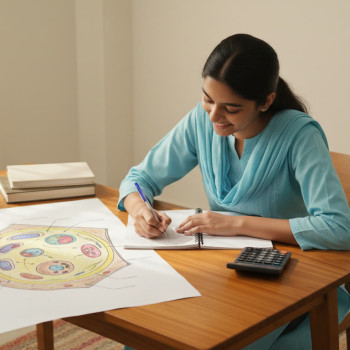
![Photo Idea : [Student at a tidy desk with a planner, alarm clock, and open textbooks]](https://asset.sparkl.me/pb/blogs-image/img/2be85b1952d24bf89f12d9440372b221.jpg)
Every CBSE exam season feels like a race against the clock — but the good news is that time is the one opponent you can train. This guide is written for students who want a calm, efficient, and realistic plan that respects the CBSE exam pattern, aligns with the syllabus, and focuses on full-length mock practice and clear answer-writing. Read it like a toolkit: pick what fits, adapt for your subject load, and practice consistently.
Why time management matters beyond finishing the paper
Finishing an exam on time is important, but that’s only the surface. True time management helps you:
- Allocate effort to high-mark and high-difficulty questions intelligently.
- Preserve mental energy so you can maintain accuracy throughout the paper.
- Plan revision cycles so weak topics become reliable by exam day.
- Use full-length mock tests to reveal textbook knowledge gaps and exam temperament issues.
Start with clarity: understand the CBSE context
Begin by aligning your plan with the CBSE syllabus and the latest updates to paper patterns. CBSE papers typically mix objective and descriptive questions, and they reward clear, stepwise answers and accurate diagrams where relevant. Because marking rules and specific internal choices can change, use the most recent syllabus and specimen papers to know which topics carry more weight and which skills — reasoning, application, calculation — are being tested.
Important principle: do not assume partial marks will be awarded automatically for incomplete answers. Write answers with clear steps, labeled diagrams, units where required, and short concluding lines for reasoning-based questions. Wherever a solution requires derivation or working, show it cleanly — that clarity is often what secures marks.
Build a plan that respects how your brain actually works
Map topics to weightage and difficulty
Spend a study session mapping your syllabus into three buckets: high-weight and high-yield topics, medium-yield topics, and low-yield or optional topics you’ll touch only after securing the essentials. Use recent specimen papers and teacher guidance to estimate weight, but keep language evergreen and say ‘as per the latest updates’ when referring to official priorities.
- High-yield: deepen understanding, practice varied questions, and test under time pressure.
- Medium-yield: keep a steady revision rhythm and solve exemplar questions once a week.
- Low-yield: be familiar, but do not let these topics crowd your high-yield revision.
Daily rhythm: quality blocks, not just hours
Counting hours feels productive, but structure beats raw time. Divide study into focused blocks (60–90 minutes for deep work, 20–30 minutes for active recall), with short breaks. Reserve morning or your personal peak energy time for the toughest subjects. Reserve the evening for consolidation, light revision, and summary notes.
Sample daily framework and weekly rhythm
Below is a sample weekday routine you can adapt to your school hours and personal energy cycle. Use it for several weeks and tweak based on what your mock test scores tell you.
| Time Slot | Duration | Activity | Purpose |
|---|---|---|---|
| Early morning (peak) | 60–90 min | Deep study: a high-yield topic | Build conceptual strength when fresh |
| Mid-morning | 45–60 min | Practice problems / numerical exercises | Apply concepts under moderate load |
| Afternoon (post-school) | 60 min | Short revision or school homework | Consolidation and immediate practice |
| Early evening | 30–45 min | Active recall: flashcards, quick quizzes | Strengthen memory retention |
| Late evening | 30–60 min | Summary writing / note-cleanup | Convert practice into concise reference notes |
This framework is a template. The single most important rule is consistency: small, daily, focused sessions beat occasional marathon cramming.
Design your weekly mock and practice cadence
Mocks are the engine of time management. Start with one full-length mock every two weeks, then increase to one per week as the exam approaches. After each mock, spend time analyzing: which questions consumed time, where careless mistakes happened, and which topics repeat as weaknesses.
- Full-length mock: replicate exam conditions—same start time, no notes, exact question paper length.
- Post-mock review: mark the time spent, annotate each mistake’s cause (concept, calculation, careless error, poor time allocation).
- Targeted practice: follow each mock with a focused revision cycle for the weakest two topics.
Question-level time allocation: a practical method
Rather than an exact formula, adopt a flexible budgeting approach: quickly scan the paper, categorize questions as easy/medium/hard, and write an initial time budget on the question paper. A good routine is:
- First 5–8 minutes: quick scan, mark questions you will attempt first.
- Easy questions: aim to finish these early to bank marks and confidence.
- Medium questions: allocate steady time, show clear steps.
- Hard questions: if stuck for more than the allotted fraction of your budget, move on and return later.
When you return to difficult problems, use rough work to break the solution into smaller steps; each small step is a chance to earn marks. Keep your rough work tidy and label it so if you run out of time the examiner can follow your approach.
Answer-writing tactics that save time
Clarity reduces marking back-and-forth. Practice writing crisp, stepwise answers that follow a predictable pattern: a one-line statement of what you will do, the method or formula, stepwise workings, a boxed/underlined final answer, and a short one-line conclusion for theoretical questions. For diagrams, always label axes, mark units, and keep them proportionate; a neat diagram takes less time in practice than a messy one.
Using mock tests to train speed and accuracy
Make mock tests non-negotiable. They do more than test knowledge; they train pacing, build exam temperament, and reveal strategy errors you can fix before the real paper.
- Before the mock: get a good night’s sleep, prepare exam stationery, and set the room to mimic test conditions.
- During the mock: time each section, and practice the habit of moving on if the clock runs over on a single question.
- After the mock: analyze not only correct answers, but the time cost of each question. Convert that analysis into a targeted weekly plan.
Sample mock-to-revision cycle
One useful cycle that students often find effective is: full-length mock → two focused practice sessions on weak topics → a short cumulative revision of strong topics → next mock. Over successive cycles your time per question should reduce, and your accuracy should improve.
Practical tools and techniques for every subject
Sciences and Mathematics
- Practice numerical problems with timed sets — five questions in 30 minutes, then check speed and error patterns.
- For derivations, practice writing the full derivation once, then create a compressed stepwise checklist for exam speed.
- Use labeled diagrams and flowcharts as revision aids; draw them repeatedly under timed conditions so they become automatic.
Humanities and Languages
- Practice planning answers: spend 2–4 minutes drafting a quick outline for long answers before writing.
- Memorize a few versatile sentences or lines (not whole essays) that help structure answers and save thinking time.
- Use short timed writing drills: 200–250 words in 20–25 minutes to build speed and coherence.
Revision methods that respect time
Spaced repetition and active recall are your best friends. Convert notes into flashcards, quick question banks, and one-page summaries that you can scan in 15–30 minutes. Interleave subjects inside a study session rather than doing long single-subject marathons; alternating subjects reduces mental fatigue and builds retrieval strength.
Example weekly revision split
Rotate subjects so each appears multiple times per week with progressively more difficult practice. For example, treat Monday and Thursday as heavy practice days for Subject A, Wednesday for Subject B, and so on — always keep one lighter day for consolidation and wellbeing.
Health, sleep, and mindset: the hidden time savers
Time management is not only about calendars. Sleep, hydration, movement, and short mental breaks directly impact speed and clarity. A tired brain doubles time on tricky problems and multiplies careless errors. Schedule regular breaks, keep a consistent sleep window, and include short physical activity to reset concentration.
Quick wellbeing checklist
- Sleep rhythm: aim for consistent sleep and wake times during your revision cycle.
- Micro-breaks: 5–10 minutes every 60–90 minutes to stretch and recharge.
- Nutrition: light, steady meals; avoid heavy food right before study blocks.
Personalized help that speeds progress
When you need to turn slow weeks into fast progress, targeted guidance can shorten the learning curve. For students who want structured, one-on-one plans, Sparkl‘s personalized tutoring offers tailored study plans, expert tutors, and AI-driven insights that help convert mock-test learnings into measurable improvements. A few focused sessions can fix time-sink habits — for instance, rewriting long answers inefficiently or getting stuck on a single hard question during a paper.
Exam day blueprint: a calm, timed approach
On exam day your strategy should be simple and mechanical. Begin with a quick mental checklist, scan the paper to mark easy and high-scoring questions, and firm up a time budget. Keep these routines:
- First five minutes: read the entire paper and mark easy wins.
- Establish section-wise time limits and stick to them with a visible watch or clock.
- If you hit a block, write a short note on the page outlining your approach and move on — that often secures approach marks if you don’t complete the full solution.
Dealing with anxiety without losing minutes
If you feel anxious, pause for 30 seconds, take three slow breaths, and begin the question with the smallest doable step. Anxiety eats time; small rituals — a rhythm of breathing before you write — restore control and speed.
Tracking progress: metrics that actually help
Use simple, measurable metrics: percent correct on mocks, average time per question category, and the number of high-yield topics you can solve end-to-end in the allocated time. Update these metrics weekly and use them to shift your focus. For instance, if medium questions take too long, practice timed sets of medium questions rather than more reading.
Quick study review template
- Mock score and time breakdown (section-wise)
- Top 3 mistakes and root causes
- Two action items for the next week
Small habits that compound into huge improvements
Consistency is the driver of speed. Five small habits to adopt: neat rough work, clear final answers with boxed results, timed daily practice of one question type, weekly full-length mocks, and a short nightly summary of what you learned. Each habit saves minutes in the long run and turns time pressure into manageable pacing.
Final exam-week checklist
- Reduce new learning; shift to smart revision and practice.
- Continue full-length mocks but limit them to one every 3–4 days to avoid burnout.
- Prepare stationery and a calm routine: exact arrival time, required papers, and a short warm-up revision sheet.
Time management for CBSE exams is a practical skill: it combines honest mapping of the syllabus, disciplined mock practice, clear answer-writing, and the small health habits that keep your brain fast. Use tests to reveal where you lose minutes and then design short drills to fix those leaks. Where focused guidance is helpful, targeted one-on-one tutoring and AI-driven feedback can accelerate the process by turning mock insights into precise, personalized practice. Keep plans simple, measure progress, and adapt the routine until finishing a mock in the allotted time feels normal rather than exceptional.
In the end, effective time management turns pressure into predictable pacing, and predictable pacing turns preparation into performance.


























No Comments
Leave a comment Cancel