
How to Solve Sample Papers Without Stress: A Calm, Smart Approach for CBSE Students
Sample papers are like dress rehearsals: the lighting won’t be perfect, and you’ll probably find a misplaced prop, but by the final performance you’ll move with confidence. If the words “sample paper” give you a knot in the stomach, this guide is written for you — in plain language, with practical steps you can follow today. The aim is simple: turn practice into progress, not panic. You’ll learn how to set up realistic sessions, time yourself smartly, mark like an examiner, and recover quickly from mistakes so each practice makes you calmer and stronger.
Why sample papers matter — and why they don’t have to be scary
Sample papers mirror the structure and rhythm of the real exam. They help you get comfortable with question types, manage your time, and identify which topics need more polish. But remember: a sample paper is a tool, not a verdict. One low score on a mock doesn’t define your ability; it highlights a place to focus. Treat each paper as feedback — a list of clues about what to improve.
- They build familiarity with layout, sequencing, and question phrasing.
- They show which parts of the syllabus appear together, so you can prioritise study time.
- They turn theory into exam-style practice — practicing under pressure is a skill you can train.
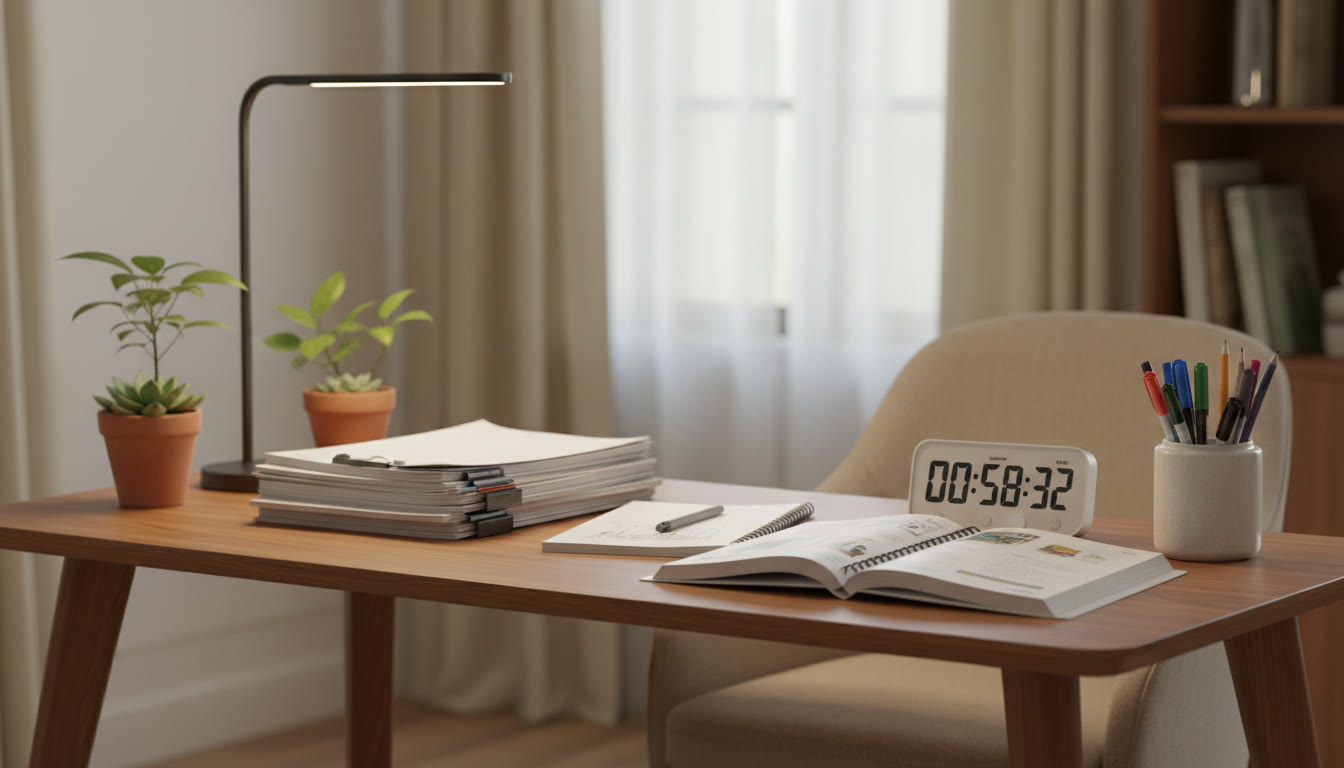
Shift your mindset: from stress to strategy
Stress often comes from feeling unprepared or rushed. The quickest change you can make is to shift from a defeatist thought like “I’ll never finish this paper” to an actionable one: “I will allocate time, skip wisely, and review.” That’s it — a tiny shift, but a powerful one. Treat the paper like a game with rules. The rules are simple: scan, plan, execute, and review. Each step reduces uncertainty.
- Accept imperfection in practice — the goal is progress, not perfection.
- Focus on small, repeatable habits: timed sections, one revision loop, and a clear marking routine.
- Celebrate small wins: finishing within time, improving accuracy on a topic, or clearer answers.
Before you begin: setup, syllabus alignment and realistic timing
Preparation is practical. Before you open a sample paper, make sure your environment, materials and mind are aligned. That looks like a quiet space, a working timer, the official syllabus at hand, and a short checklist. Map the paper to the syllabus: mark which topics appear where, and make a quick note of formats you expect — long answers, short answers, numerical problems, diagrams. Aligning practice to the syllabus keeps your work efficient; it prevents you from spending time on items that won’t help you this cycle.
- Materials: printed sample paper or clear digital copy, answer sheet or ruled notebook, pen, pencil, eraser, ruler, and a timer.
- Distraction-free window: phone on Do Not Disturb, a single glass of water, and a 5-minute warm-up (breathing or gentle stretching).
- Set a realistic timer: if you’re practicing full length, simulate the actual duration; for focused practice, pick 20–60 minute chunks.
Step-by-step method: how to solve a sample paper calmly and efficiently
Here is a reliable sequence you can follow during every sample-paper session. Practising the same sequence trains your exam-day rhythm, which reduces stress because you know what comes next.
- Step 1 — Quick scan (5–10 minutes): Flip through the paper and note high-weight questions, diagrams, and any questions you’re confident with. Identify question types you’ll need time for (long proofs, multi-step problems).
- Step 2 — Plan (3–5 minutes): Decide your order. A good rule is: secure quick marks first, then tackle long or tricky questions with fresh time. If a long question is in your comfort zone, do it earlier.
- Step 3 — Timed attempt: Work in blocks. If the paper is a long exam, break it into 30–45 minute chunks with goals for each block. Keep a small watch or timer visible and glance only at major checkpoints (e.g., 60, 30 minutes left).
- Step 4 — Mark as you go: Put a faint tick for each completely correct answer and a different mark for partial attempts. This visual map helps your review later — but don’t over-mark during the attempt; a quick note will do.
- Step 5 — Review (last 15–20 minutes): Use remaining time to fix simple errors, rework calculations where you lost marks, and write one-line checks for long answers where statements are missing.
To make timing clearer, here’s a suggested allocation for a standard full-length CBSE-style exam (useful as a starting point and adjustable to your speed):
| Stage | What to do | Suggested minutes |
|---|---|---|
| Quick scan & plan | Identify easy wins and big tasks | 8–12 |
| First pass (easy/short questions) | Collect straightforward marks quickly | 45–60 |
| Second pass (long problems) | Tackle multi-step answers and diagrams | 70–80 |
| Final review | Corrections, neatness, and quick verifications | 15–20 |
Marking your paper like an examiner (without getting discouraged)
Post-practice marking is the real learning moment. You must switch roles from test-taker to examiner. Be honest but fair. Use the official marking scheme when it’s available and mark every answer with the same strictness you’d expect from an examiner. If there isn’t a public marking scheme, mark by breaking answers into logical steps and allocate marks consistently across similar questions.
| Metric | How to record it | Why it matters |
|---|---|---|
| Score (%) | Total marks scored ÷ total marks | Overall progress measure |
| Time per question | Average minutes on attempted questions | Shows where you’re slow or rushed |
| Concept errors | List questions with conceptual mistakes | Highlights topics to revise |
| Presentation issues | Note messy steps, missing units, poor diagrams | Helps polish exam answer style |
When you mark, write a short action point next to each mistake: “revise formula”, “practice similar questions 5x”, or “review diagram rules”. These short, specific tasks are much easier to follow than vague notes like “study more”.
Turn errors into a revision plan
After every sample paper, build a targeted plan. Spend more practice time on weak topics, but also do one short review of strong topics so they stay sharp. Use spaced repetition: revisit a weak topic after two days, then after five days, and again after a fortnight. That spaced return builds memory without overwhelming your schedule.
- Create flashcards for formulae you forget.
- Make short “fix” sessions (20–40 minutes) that focus on single error types — for example, gravitational problems or opinion-based answers in social science.
- Keep a single page called “Exam Tricks” where you collect common pitfalls and handy phrasing for long answers.
When and how to use guidance: targeted help that speeds progress
Sometimes a persistent problem needs a tutor’s perspective. Short, focused guidance — a 1-on-1 session to clear a single concept — often beats long, unfocused study. For students who want structured follow-through, Sparkl‘s personalised tutoring can offer 1-on-1 guidance, tailored study plans, expert tutors and AI-driven insights to turn your post-mock action points into a weekly routine. Use personalised guidance sparingly and for the topics that truly block you; the aim is to become independent, not dependent.

Practice types: full paper, timed sections and micro-practice
Not every session should be a full-length marathon. Mix three kinds of practice:
- Full-length mock: Simulate exam conditions to build stamina and timing.
- Timed section: Focus 30–60 minutes on one section or question type to improve speed and accuracy.
- Micro-practice: Short, intensive drills for a single skill — a set of 10 calculus problems or five data-based reasoning questions.
Rotate these modes in your weekly plan. For example, one full mock on a weekend, three timed-section sessions in the week, and daily 20–30 minute micro-practice slots for targeted skills.
Common pitfalls and how to avoid them
- Over-focusing on one paper: Practise different papers and formats to avoid getting too used to a single author’s style.
- Never marking honestly: Inflated self-marks hide real gaps. Mark strictly and use official schemes when possible.
- Guessing without strategy: Educated attempts are useful; random guesswork is not. Markers often reward method even when the final value is off, but don’t assume partial credit — follow the marking rubric.
- Skipping reviews: Practice without review is repetition, not learning. Always spend 20–30% of your practice time analyzing mistakes.
- Ignoring presentation: Clear steps, labeled diagrams and neat numbering save marks and reduce correction errors.
Sample two-week focused practice block (adaptable to your schedule)
This is a suggested rhythm you can adapt. It balances full mocks with focused correction work so you practice under pressure and then repair the exact gaps the mock revealed.
| Day | Activity | Focus |
|---|---|---|
| Day 1 (Weekend) | Full-length mock under exam conditions | Timing, stamina, and paper flow |
| Days 2–3 | Mark paper, list concept errors, do micro-practice | Correction and consolidation |
| Days 4–6 | Timed sections + revision of weak topics | Speed and conceptual clarity |
| Day 7 | Restorative review: light revision, sleep, light reading | Recovery and memory consolidation |
| Repeat for second week with adjusted focus | Alternate full mock with targeted practice days | Progressive improvement |
Small habits that reduce stress and sharpen performance
- Regular sleep patterns: Short-term cramming can help, but consistent sleep improves recall and reaction time.
- Short physical breaks: 5–10 minute movement breaks every hour keep you alert.
- Nutrition and hydration: A steady energy source (light protein, fruit) during long practice helps concentration.
- One-minute rehearsal: Before a timed session, close your eyes and picture yourself finishing calmly; mental rehearsal reduces anxiety.
Final checklist before you start a sample-paper session
- Have you set a realistic timer and a plan for the paper?
- Is your phone silenced and out of reach?
- Do you have the marking scheme or a clear step-based plan for marking?
- Can you commit to reviewing mistakes after the attempt?
- Do you have one small, actionable goal for this practice (e.g., “no careless arithmetic errors”)?
Putting it all together — the calmer, smarter routine
Solving sample papers without stress comes down to a reliable routine: prepare the environment, set a plan, time your work, mark strictly, build a targeted review, and repeat with adjustments. Each step lowers uncertainty and increases confidence. With consistent practice that includes full mocks, timed sections, and micro-drills, you’ll notice two changes: you finish more often within time, and you make clearer, more complete answers. Those two wins cut stress more than anything else.
Use tools and short guidance when you need them, and keep your practice honest and focused. Small, consistent improvements compound quickly: one clearer answer today makes the next practice a little easier, and that ease spreads until the paper feels manageable instead of menacing.
Conclusion
Approach each sample paper as a structured rehearsal: set up, scan, plan, execute, and review. Measure results with simple metrics, convert errors into targeted study tasks, and alternate full-length mocks with focused practice. Over time you’ll replace anxiety with routine, and the test will become a performance you control rather than a test that controls you.

























No Comments
Leave a comment Cancel