

How to Prep for the SAT If You Have Limited Internet Access
Let’s start with a truth: you don’t need nonstop internet to get a great SAT score. I know—most study guides assume you live in a glowing coffee shop with perfect Wi‑Fi. But lots of students study from homes, small towns, or places where data is expensive. The good news is that the SAT rewards consistent, focused practice, and many of the most powerful techniques are delightfully analog: paper, pencil, a stopwatch, and a little strategy. This post will walk you through a realistic, step‑by‑step plan to prepare on low or intermittent internet—complete with examples, a printable weekly schedule you can copy, a sample timed drill, and ideas for making the most of every offline minute.
Understand the SAT (so you study what matters)
Before you start, get the basics straight. The modern SAT tests three core areas: Reading, Writing & Language, and Math. Math comes in two sections—a no‑calculator portion and a calculator portion. The optional essay has been discontinued for most administrations, so your main focus should be the multiple choice and student‑response math work that together score between 400 and 1600. Knowing the format helps you prioritize resources and decide what to print or copy into a notebook.
Why offline prep can actually be great
There are advantages to studying offline that people often miss:
- Fewer distractions. No notifications, no tempting tabs, no autoplay videos.
- Stronger retention. Writing by hand (notes, flashcards, error logs) improves memory.
- Deeper focus. Long, uninterrupted practice mimics actual test conditions better than sporadic online sessions.
- Low cost. Libraries, used books, photocopies, and printed practice tests are inexpensive and durable.

Step 1: Gather the offline essentials
Start with a simple toolkit you can keep with you. Everything here is either physical or easy to download once and save locally for occasional internet access.
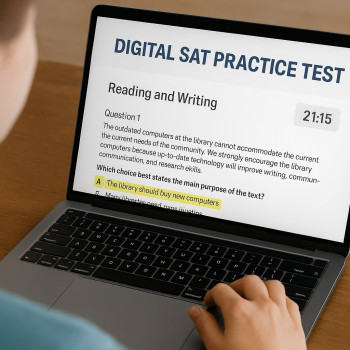
- One or two official practice tests in print: Print full-length SAT practice tests when you have access (library computer, friend’s phone hotspot) or borrow printed versions from a library. Full tests let you practice pacing.
- Quality prep books: A recent College Board practice book or reputable prep books (Barron’s, Princeton Review) cover content, strategies, and practice questions. Used copies are fine.
- Notebook for error logs and notes: A dedicated binder or notebook to track mistakes, rules, and formulas.
- Paper flashcards: For vocabulary, grammar rules, and math formulas. Index cards work perfectly.
- Stopwatch or basic timer: You can use a phone on airplane mode or a simple kitchen timer. Timing drills are crucial.
- Graph paper and a ruler: For math diagrams, coordinate geometry, and neat work.
- Highlighters and pencils: Use pencil for practice tests (so you can erase) and a pencil‑grade you prefer for clarity.
Finding materials without heavy internet
If internet is intermittent, plan a single session at a library or café to download and print. Libraries are gold mines: many carry SAT prep books and printouts of official practice tests. Ask the librarian—often they can photocopy or print for you inexpensively.
Step 2: Build a realistic study plan you can follow offline
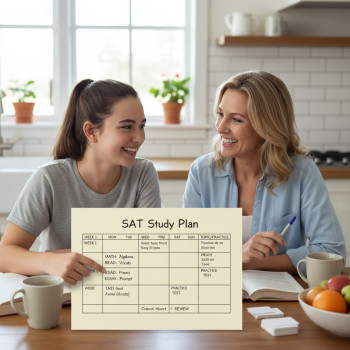
Consistency beats intensity. A reliable offline study plan blends long full tests with short daily practice. Here’s a flexible 10‑week plan you can copy into a notebook or print and pin on your wall.
| Weeks | Focus | Weekly goals |
|---|---|---|
| 1–2 | Baseline & foundations |
|
| 3–4 | Content building |
|
| 5–6 | Pacing & strategy |
|
| 7–8 | Targeted improvement |
|
| 9–10 | Final polishing & confidence |
|
This table is a template—adjust the weeks based on how far you are from test day. If you have only 6 weeks, compress by doing more frequent full tests. If you have months, spread the plan out so you avoid burnout.
Daily routines that actually work without the internet
Short, consistent sessions are more effective than marathon cramming. Try this daily pattern (30–60 minutes) you can do anywhere:
- Warm‑up (5–10 minutes): 5 vocabulary flashcards + one grammar rule review.
- Focused practice (20–35 minutes): A timed mini‑section (10–15 questions) or 20 math problems on a single topic.
- Review (5–10 minutes): Add mistakes to your error log and rewrite the rule or method you missed.
Step 3: Practice tests—how to get the most from paper tests
Full practice tests are the backbone of reliable prep. They’re not just for scoring; they’re for learning your pacing, endurance, and test day emotions.
How to simulate test day offline
- Use a printed test and sit in a quiet room with a kitchen timer or stopwatch.
- Strictly follow section times and breaks. No peeking at answers early.
- Mark answers on a separate answer sheet, then score only after the test is complete.
- Write a short reflection in your notebook—what felt hard, what ate time, and any repeated mistakes.
What to do after scoring a practice test
Scoring tells you numbers, but analysis tells you what to fix:
- Break down missed questions by type: reading inference, grammar usage, quadratic equations, data interpretation.
- Record each missed question in an error log with: question type, what you answered, why you missed it, and the correct method.
- Plan two focused sessions to fix the high‑frequency mistakes.
Step 4: Strategy and techniques you can practice offline
Pacing tricks for each section
Practice pacing with your timer. Here are simple targets (adjust slightly to match your speed):
- Reading: aim to spend ~13 minutes per passage (read passage + answer 10‑11 questions). Skim for structure, annotate key words in the margin.
- Writing & Language: about 35–45 seconds per question. Read the sentence carefully; many questions hinge on concision and verb tense.
- Math no‑calculator: practice mental math and efficient scratch work—aim for about 1.75 minutes per question on average.
- Math calculator: use the calculator smartly; do not rely on it for every calculation—allow ~1.5–2 minutes per question.
Smart guessing and eliminating wrong answers
Since there’s no penalty for wrong answers on the SAT, always answer every question. Use elimination first: cross out clearly wrong choices, then pick the best remaining. If you must guess, keep it quick—mark the problem to revisit if time allows.
Active reading techniques without highlighted PDFs
Annotating a printed passage helps. Mark topic sentences, underline transitions (however, however, yet), and jot one‑line summaries at the top. This physical interaction with the text builds memory and speeds up locating evidence when answering questions.
Step 5: Build a powerful offline toolkit for content mastery
Flashcards—use them like a pro
Flashcards are the most portable study tool. Make them by hand; writing strengthens memory. Use them for:
- Vocabulary (word on front, definition + sentence on back).
- Grammar rules (name of rule on front, three quick examples on back).
- Math formulas and short solution methods (problem on front, stepwise solution on back).
Shuffle daily and use the spaced repetition method: review newly learned cards more frequently, older cards less so.
Error log—your personal cheat sheet
Your error log is a bound list of why you got questions wrong and how to fix them. Each entry should include:
- Question type (Reading: inference; Math: systems of equations).
- Mistake reason (timed pace, misread wording, forgot formula).
- Correct method/shortcut and an example solved by hand.
Review the log weekly. Many students find that the majority of their missed questions fall into a small set of repeatable errors.
Step 6: Low‑internet ways to get help and feedback
You don’t have to go solo. There are ways to get personalized guidance without streaming hours of content.
- Ask a teacher or tutor to review your written work in person. Bring the specific practice test and your error log.
- Join or start a small offline study group. Two heads solve problems differently and help each other stay accountable.
- Use occasional internet access strategically: upload a photo of a tricky problem to a tutor during a scheduled hour and get a focused explanation, rather than random browsing.
- Consider periodic personalized tutoring—Sparkl’s personalized tutoring, for example, offers 1‑on‑1 guidance, tailored study plans, expert tutors, and AI‑driven insights that can be used in short bursts when you have connectivity. Even a couple of focused sessions can reset your studying and give you targeted drills to do offline.

Step 7: Practice examples and mini drills you can do anywhere
Here are two concrete, offline drills to try this week. Do them with a timer and record your errors.
Drill A: 20‑minute Reading sprint
- Take one printed passage and set a 20‑minute timer.
- Spend 8 minutes reading and annotating; 12 minutes answering questions.
- After time, check answers and log each miss—was it evidence, vocabulary-in-context, or inference?
Drill B: 25 math problems in 30 minutes (mixed topics)
- Pull 25 mixed problems from a prep book—algebra, functions, geometry, and data analysis.
- Attempt them in order with a 30‑minute timer.
- Afterward, grade and rewrite solutions for the ones you missed; add to the error log.
Test day and logistics when you have limited internet
Practical tips for the days before and on test day:
- Confirm test location and time well in advance. If you must register or check details online, do it during an internet session and print confirmation.
- Assemble a paper test day kit: printed admission ticket, photo ID (hard copy), pencils, eraser, calculator with fresh batteries, snacks, and a clock‑watch or wristwatch (not a smart device)
- Practice waking up and traveling to the test site at the same time you’ll go on test day so you’re not guessing how long the commute takes.
How to measure progress without constant online diagnostics
Use paper scores, but also track more meaningful progress indicators:
- Percent correct by question type (reading evidence, grammar, algebra). Look for steady decreases in repeat errors.
- Average time per question by section—aim to reduce time without dropping accuracy.
- Confidence ratings—after each practice block, write a quick 1–5 confidence score and see if it rises over time.
Final thoughts: persistence, not perfection
Studying for the SAT with limited internet can feel like a logistical puzzle, but it’s also an opportunity. You’ll cultivate habits—regular note‑taking, careful error analysis, and disciplined timing—that too many online study plans skip. Keep things simple: borrow or print a couple of full practice tests, build a strong error log, use paper flashcards, and practice pacing. If you occasionally can connect, use that time strategically—download another practice test, or book a short tutoring session to refine a stubborn weakness. A few targeted sessions with a coach can pay huge dividends: Sparkl’s personalized tutoring, for example, is designed to complement offline routines with 1‑on‑1 guidance, tailored study plans, expert tutors, and AI‑driven insights that help you know exactly what to practice next on paper.
Most importantly, be kind to yourself. The SAT is a snapshot of test‑taking skills, not your worth. Keep a steady plan, practice with purpose, and celebrate small wins—each corrected mistake is real progress. With paper, pencil, and persistence, you can absolutely achieve the score you want.
Quick checklist to get started this week
- Print or borrow one full practice test and schedule a timed session.
- Make 50 flashcards: 30 vocabulary, 20 math/formula cards.
- Start an error log notebook and add entries after every practice.
- Schedule at least one focused tutoring or review session for feedback—make it count by bringing your test and error log.
Good luck. Treat each practice test as a training run: learn from it, fix what broke, and come back stronger. You’ve got this.


















No Comments
Leave a comment Cancel