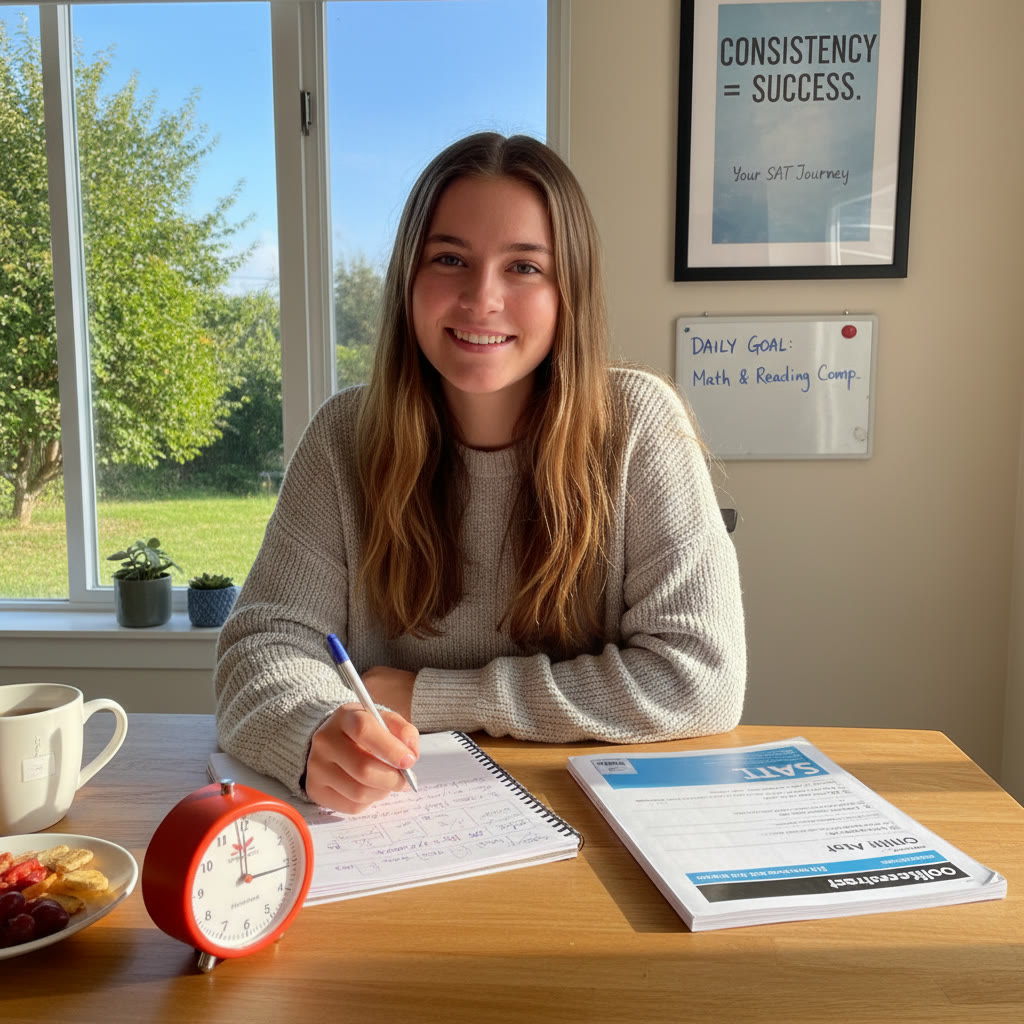

Why Consistency Beats Intensity in SAT Prep
Ask any student who has sat for the SAT and you will hear stories about marathon study sessions, 12-hour weekends, and the last-ditch sprint the week before the test. That intensity feels heroic in the moment, but for most learners it produces short-lived gains, exhaustion, and anxiety. The counterintuitive truth is simple: small, steady investments of time often yield far better results than occasional bursts of maximal effort. This blog explores the science, the strategy, and the practical steps you can take to make consistency your competitive advantage in SAT prep.
Why we love intensity and why it misleads us
There is a natural appeal to intense study. A single long session gives a sense of progress. You can point to a full day of work and say, I did everything. Intensity promises a dramatic transformation and feeds the narrative that willpower is the determining factor. Yet human brains are wired to forget; memory decays quickly if it is not reactivated. That means an intense day of learning can feel deeply productive in the moment but evaporate within days if you do not revisit the material.
Intensity also creates logistical and emotional problems. Long sessions require uninterrupted time, which is rare for busy students balancing school, extracurriculars, and social life. They can cause burnout and reduce motivation for subsequent sessions. When motivation dips, the whole plan collapses. Consistency, on the other hand, is resilient. Ten focused 45-minute sessions spread over weeks tend to produce stronger, longer-lasting mastery than one 10-hour cram day.
The science behind steady progress
Two well-established cognitive principles explain why consistency works: spaced repetition and retrieval practice. Spaced repetition spaces review of information across increasing intervals, which strengthens memory traces. Retrieval practice forces you to recall information rather than passively reread, which builds more durable learning and highlights gaps in understanding.
Consider a concrete example from vocabulary study. If you study 100 new words in one eight-hour marathon, you might recall 70 to 80 percent immediately after. A week later, you may remember 30 to 40 percent. If you learn the same 100 words across twelve short sessions with spaced review and active recall, you might only recall 50 percent immediately after the final session, but six weeks later you may retain 60 to 70 percent. Over time, the spaced approach overtakes the marathon approach in retention and usable knowledge.
Consistency builds fewer fragile wins and more reliable skill
There is a difference between short-term performance and long-term skill. Short-term performance boosts test-day confidence for a few days; long-term skill endures across months and is what actually moves your score. Consistency allows you to practice the strategies that matter on the SAT: pacing, error analysis, and targeted content review. It also creates opportunities for reflection. After a few consistent practice sessions, you can look at patterns in mistakes and design a study plan that targets those weak spots.
How to define consistency for SAT prep
Consistency does not mean boring repetition. It means a reliable, achievable rhythm you can keep for weeks and months. For many students, that means daily or near-daily sessions of manageable length. Here are practical formats students have used successfully:
- Daily 45-minute sessions five to six days per week, mixing content review with practice problems and quick error analysis.
- Four 60-minute focused sessions per week, where each session has a single clear objective, like mastering coordinate geometry or time management strategies for the reading section.
- Alternate heavy and light days: longer practice test Sundays and shorter 30- to 40-minute targeted review days on weekdays to consolidate learning.
Sample weekly schedule that emphasizes consistency
The following sample is designed to balance school obligations and steady progress. Adjust the durations to fit your calendar, but keep the principle of regular, focused practice.
| Day | Focus | Duration | Why it works |
|---|---|---|---|
| Monday | Reading passages and question types | 45 minutes | Build inference skills and passage mapping |
| Tuesday | Math problem sets (algebra focus) | 45 minutes | Strengthen foundational rules and speed |
| Wednesday | Grammar rules and sentence correction | 30-40 minutes | Frequent short review maintains accuracy |
| Thursday | Targeted review of errors from the week | 45 minutes | Focused retrieval reinforces learning |
| Friday | Mixed practice and timing drills | 40 minutes | Practice under pressure in small bites |
| Saturday | Full practice section or diagnostic | 90 minutes | Simulates test conditions and measures progress |
| Sunday | Light review, vocabulary, and mental reset | 30 minutes | Prevents burnout and consolidates gains |
Concrete examples: consistency vs intensity
Imagine two students preparing for the SAT over eight weeks. Student A studies intensively: two 6-hour sessions every weekend and no weekday work. Student B studies consistently: six 45-minute sessions per week plus one 90-minute session on the weekend. Both put in approximately the same total hours over eight weeks. Which student is likely to perform better?
Student B will likely have the edge. Their knowledge will be reinforced repeatedly, they will have more opportunities to simulate test conditions, and they will avoid the cognitive fatigue that blunts learning. They will also be able to fine tune timing strategies and make steady incremental improvements that compound. Student A may show strong short-term improvements after each marathon session, but gaps will persist and confidence will wobble as test day approaches.
How to measure progress without burning out
Progress should be visible but not all-consuming. Use metrics that capture both accuracy and skill development rather than only hours studied. Useful indicators include:
- Section scores on timed practice sections tracked weekly
- Number of repeat errors in a topic area after review
- Time per question on practice sets, improving towards target pacing
- Comfort level on question types that previously caused errors
Keep a simple log. Even five minutes after each session to note one thing you learned and one thing you will change next time creates a feedback loop that makes consistency meaningful.
Common obstacles and how to overcome them
Students often say they are “too busy” to be consistent. The trick is to prioritize and protect short, high-quality study blocks. Here are common obstacles and practical fixes:
- Obstacle: School and activities crowd out study time. Fix: Schedule 30 to 45 minutes directly after school as a routine; anchor it to an existing habit like a snack or shower.
- Obstacle: Motivation fluctuates. Fix: Use variety in sessions to keep things interesting and set tiny goals with short rewards for completion.
- Obstacle: Not sure what to study. Fix: Use diagnostics to identify weak spots so every short session has a clear objective.
Practice tests: frequency and purpose
Full-length practice tests are important but should be used strategically. Their value is not just to simulate the test day but to generate high-quality practice material for subsequent consistent study. Here is a practical rhythm:
- Early prep: Take a diagnostic full test to establish a baseline and identify priorities.
- Mid-prep: Take one full test every 2 to 3 weeks to measure progress and adjust study plans.
- Final month: Take one test per week, but ensure recovery and targeted review days follow each test to work through errors.
Too many full tests too close together can cause fatigue and give diminishing diagnostic returns. After each test, spend more time correcting mistakes than celebrating the score: the correction process is where consistent improvement is forged.
How to use errors productively
Errors are gifts when you treat them as data. Instead of moving on from a wrong answer, slow down, identify the root cause, and design a short plan to fix it. Was the error content-based, a careless mistake, or a timing issue? If it was a content gap, schedule brief review sessions over the next two weeks using spaced intervals. If it was a careless mistake, introduce micro-checks into future sessions to interrupt the pattern.
Tools and techniques for maintaining consistency
Small systems beat big goals. Use simple tools to support steady practice:
- Calendar blocking: Put study blocks in your calendar like appointments you cannot miss.
- Short checklists: Before each session, write 3 clear objectives you will accomplish.
- Study sprints: Use a 25 to 45-minute timer to keep sessions focused and recover easily afterward.
- Reflection notes: Keep a one-page progress sheet to track recurring errors and improvements.
These small scaffolds turn inconsistent intentions into daily behavior.
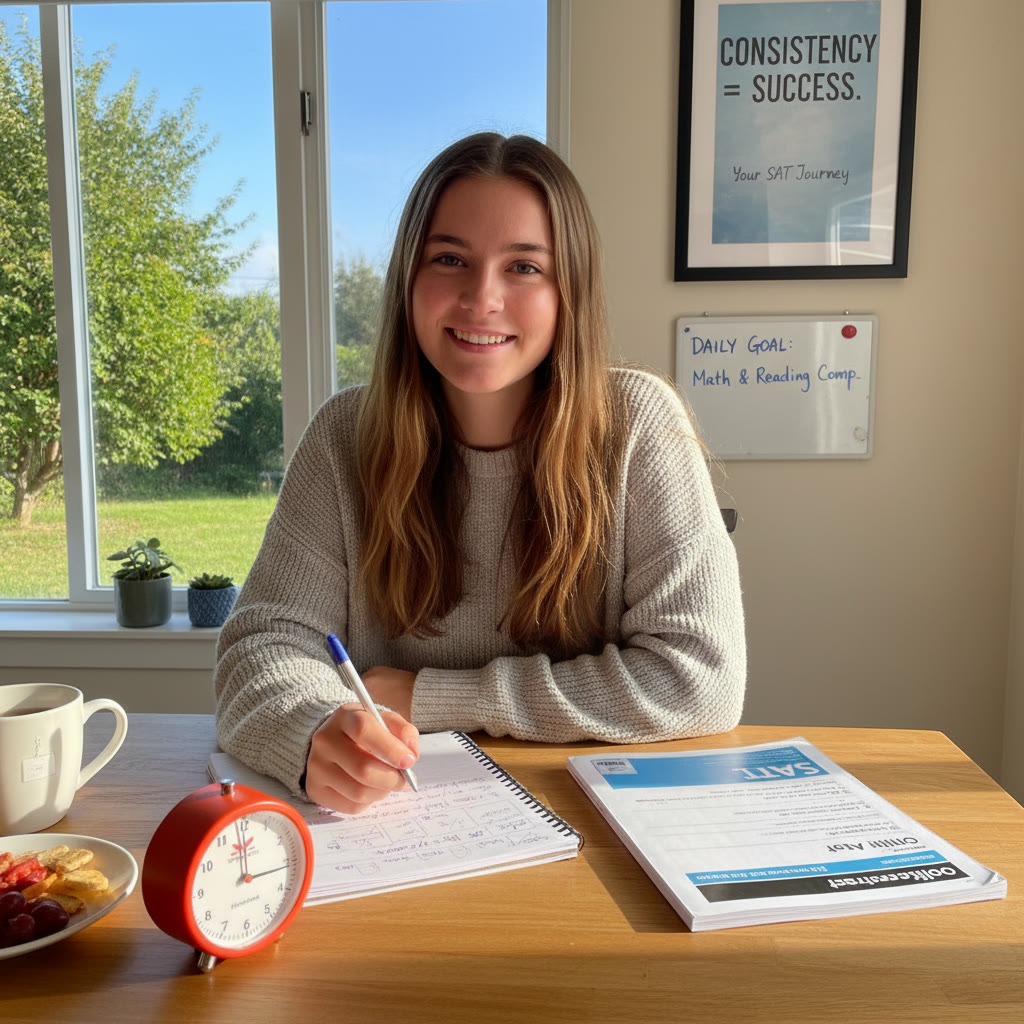
When personalized help matters: how tutoring fits into consistent prep
Even with the best habits, many students benefit from guidance. Personalized tutoring can help by diagnosing weaknesses, setting realistic goals, and designing tailored study plans that make every short session count. For students who juggle busy schedules, 1-on-1 guidance brings accountability and an efficient path to improvement. Expert tutors can suggest the exact practice problems to target recurring gaps and the pacing strategies that fit your speed.
Some modern tutoring services combine human expertise with AI-driven insights to track progress and adapt plans in real time. When used well, that combination accelerates the consistent approach by ensuring your limited study time hits the right topics, with reminders and adjustments that keep you on path. Mentioning Sparkl, many students have found their personalized tutoring helpful for building consistent routines: tailored study plans, expert tutors, and AI-driven insights that identify weak areas and suggest the most efficient practice.
Case study: a student who swapped cramming for consistency
Consider Maya, a high school junior. For months she relied on weekend marathons and felt stuck at a particular math section score. After switching to a consistent plan of 45-minute weekday sessions focused on targeted problem types and weekly error review, her accuracy on those problem types improved steadily. Two months later her section score rose by several points, but the real change was confidence: test-day anxiety dropped because she trusted her preparation process. She also used Sparkl’s personalized tutoring for two months to get tailored feedback and a study plan, which helped her focus each short session effectively.
Balancing consistency and intensity when needed
Intensity still has a role. There will be moments when a longer session is useful — for example, when you are taking a full timed test or doing a deep dive into a stubborn topic. The key is timing those intensive sessions so they support the consistent rhythm rather than replace it. Use intensity as a tool within a consistent framework, not the default mode of operation.
Practical checklist to start a consistent plan today
- Set a realistic daily session length you can maintain for at least six weeks.
- Identify one or two measurable goals for the next month, such as improving timing on algebra questions or reducing careless errors in reading.
- Schedule practice blocks in your calendar and protect them like appointments.
- Take a baseline practice test, but prioritize correction and a focused plan rather than obsessing over the raw score.
- Consider 1-on-1 guidance if you need a tailored plan, accountability, or help translating practice test data into actionable steps; personalized tutoring can accelerate progress by making each short session more effective.
Conclusion: consistency as a long-term skill
Consistency is not a dull obligation; it is a strategic choice that multiplies your effort. In SAT prep, reliability beats heroics. When you study regularly, even for modest amounts of time, you give your brain the repetitions it needs to form durable memories, the practice to turn strategy into habit, and the space to recover and reflect. That steady approach reduces anxiety, supports better performance under pressure, and builds a skill set that matters far beyond one test.
So set a sustainable schedule, honor your short sessions, learn from your mistakes, and use intensity selectively. If you add targeted help like personalized tutoring, you compress the path from inconsistent effort to confident, consistent progress. Over time, those small, steady choices add up into the kind of preparation that not only raises a score but also builds learning habits that last.

Now take a small step: decide on your next three study sessions and write down their objectives. Consistency begins with a single, well-planned block of time. You can do more than you think by doing a little, regularly.
























No Comments
Leave a comment Cancel