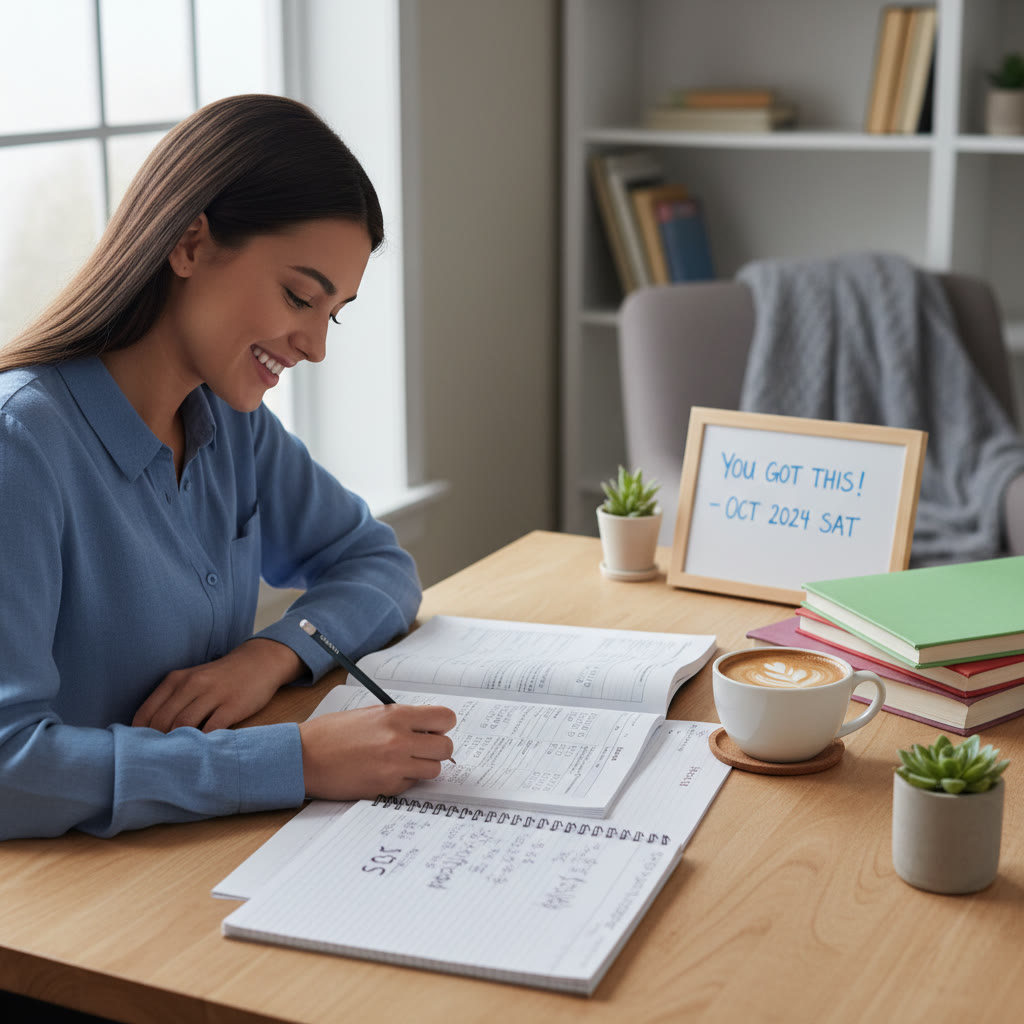

The Student Experience of Managing SAT Stress
Walk into almost any high school hallway in the months leading up to the SAT and you can feel the electricity: study groups huddled under fluorescent lights, flashcards spilling out of backpacks, and conversations switching between math strategies and college lists. For many students, that electricity feels less like excitement and more like pressure. SAT stress is real, and it shows up as tight shoulders, restless nights, and a loop of what-if thoughts that arrive exactly when you want to be calm and clear.
Why SAT stress feels so big
The SAT carries weight not because of any single exam, but because it often sits at the crossroads of expectation, timeline, and identity. It’s not just a test of reading, writing, and math; it’s a test of how you perform under limited time, how well you translate months of study into a few hours, and how you hold yourself up when the stakes feel high.
That combination—perceived importance, time pressure, and a deadline—activates the same stress cascades our bodies evolved for short-term emergencies. Suddenly your heart rate and breathing pick up, your attention narrows, and memory retrieval becomes harder. That biological response is entirely normal, but it can sabotage performance when it takes over.
How stress affects performance
Stress is not all bad. A little bit sharpens attention and primes you for action. But on test day, too much stress becomes a limiter. Here are the main ways stress interferes with SAT performance:
- Working memory shrinkage: Stress reduces the brain’s ability to juggle multiple pieces of information. That makes multi-step algebra problems or passages with dense arguments feel harder.
- Processing speed changes: Time pressure amplifies the perception of limited time, which can cause rushed decisions and careless errors.
- Selective attention: Stress makes it harder to shift focus. You might get stuck on one difficult problem and lose the opportunity to score easier points elsewhere.
- Sleep and consolidation: Anxiety often eats into sleep, and without good sleep your learning and recall decline.
Common triggers students report
Students often share the same triggers that make SAT stress spike. Recognizing these can help you plan around them.
- Time pressure: The clock is visible; every second counts.
- High-stakes thinking: Believing that a single test defines your entire future.
- Uncertain preparation: Feeling like you’ve studied, but not the right things.
- Comparisons: Comparing scores, hours studied, or perceived natural talent with peers.
- Poor test-taking habits: Skipping sleep, cramming, or never doing timed sections before the actual day.
A story you might recognize
Imagine Maya, a rising senior who is good at school but terrible at self-lecturing. A week before the SAT, she alternates between sleeping in fits and marathon reviewing of grammar rules. On test morning she wakes up with a pit in her stomach and a replay of negative thoughts. She stumbles through the reading section, second-guesses obvious answers, and rushes through the math section, leaving a few blanks. Afterward she feels like her score was a measure of her worth rather than a data point she can improve on.
That story is familiar because it captures how the emotional experience around the test can change outcomes. But it also points to the fact that interventions—both practical and psychological—can shift the result. Maya could have benefited from a steadier study plan, timed practice, and quick in-test coping strategies. She might also have used personalized support to identify the right topics to practice and to rehearse calming routines under simulated pressure.
Practical strategies that actually help
Design a manageable study plan
Instead of cramming, adopt a plan that builds competence and confidence. The real aim is twofold: improve mastery of weak areas and build tolerance for timed conditions.
- Start by diagnosing: Take an official practice test under timed conditions. Note the question types and sections that caused the most trouble.
- Set focused goals: Rather than saying I’ll study for three hours every night, say I will do 30 minutes of algebra practice focused on quadratic equations three times a week.
- Use spaced repetition: Return to topics multiple times across weeks rather than a single long session.
- Mix skills: Alternate reading and math to simulate the cognitive switching the test requires.
Practice with purpose
Not all practice is created equal. Deliberate practice targets the gap between what you can do and what you need to do.
- Quality over quantity: Ten high-focus, timed sections with review are better than 20 passive hours of note review.
- Simulate conditions: Do full-length practice tests every 1–2 weeks as the test approaches to build stamina.
- Review mistakes deeply: The moment you get a question wrong, slow down. Ask why you missed it and create a short plan to avoid that mistake.
Time management drills
Time is often the most anxiety-inducing part of the SAT. Treat it like a muscle you can train.
- Chunk practice: Instead of trying to solve the entire section at once, work in focused 20–30 minute sprints with a short break.
- Shadow timing: When you practice, verbally note remaining minutes and how many questions are left to make the clock familiar rather than frightening.
- Strategic skipping: Learn to quickly triage problems. If a question will likely cost you more than the expected points, mark it and move on.
Mental and physical self-care
Preparing your brain is as important as drilling content. Small routine habits stack into big differences on test day.
- Sleep is non-negotiable: Memory consolidation happens during sleep. Aim for 7–9 hours in the weeks before the test, and prioritize the night before.
- Nutrition and hydration: Choose complex carbs, protein, and healthy fats before a practice test to prevent midday energy crashes. Keep hydrated; even mild dehydration reduces cognitive performance.
- Movement: Short aerobic activity helps regulate stress hormones and sharpen attention. A quick run or brisk walk the morning of the test can steady nerves.
- Mindfulness and breathwork: Two minutes of simple box breathing before starting a section can lower heart rate and clear fuzzy thinking.
Test-day tactics that calm your mind and sharpen your focus
The morning routine
The morning of the SAT should feel like a ceremony that signals competence, not panic. Create a consistent routine you rehearse during practice test mornings.
- Wake up at a time that allows a calm breakfast and gentle movement.
- Eat a balanced breakfast you’ve tried before; avoid overly heavy or unfamiliar foods.
- Review a one-page cheat sheet of formulas or test-day reminders—not content to cram, but cues to steady your confidence.
In-the-room strategies
During the test, your job is to pace, pick, and persevere. Use these simple habits.
- Read the question carefully once; underline the target and relevant data.
- If stuck for more than 90 seconds, flag and move on. Return after securing easier points.
- For reading, first read the question stems before the passage when that helps you scan specifically for answers.
- Answer every question; there’s no penalty for guessing. Use process of elimination to increase odds.
Quick calming rituals
Small rituals have an outsized effect on anxiety. Try these micro-practices that take less than a minute.
- Box breathing: inhale for four, hold four, exhale four, hold four. Repeat twice.
- Grounding list: silently name five things you can see, four you can touch, three you can hear, two you can smell, one you can taste—this moves focus out of the worry loop.
- Micro-stretches: roll your shoulders and shake your hands to release tension between sections.
How to measure progress without obsessing over scores
Scores are directional. The most useful metric is not whether you get a purple-streak-perfect practice test, but whether your mistakes are changing in kind and frequency. Track progress in smart ways.
- Error categories: Keep a running list of the types of mistakes you make—careless errors, timing errors, conceptual gaps—and watch how those categories shrink.
- Timed accuracy: Note not just raw score, but accuracy under timed conditions. Your untimed accuracy can be a confidence booster, but timed accuracy predicts test-day performance.
- Stability: If your score jumps up and down dramatically across practice tests, investigate clarity of strategy and stress management rather than raw ability.
Sample 8-week study schedule
Below is a compact example you can adapt to your calendar. It balances content work, strategy, and full-length practice. Adjust intensity depending on your starting point and target score.
| Week | Primary Focus | Weekly Activities |
|---|---|---|
| 1 | Diagnostic and baseline | Take a timed practice test; review errors; set target score |
| 2 | Foundational Math | Daily focused practice on algebra and problem solving; 1 timed math section |
| 3 | Reading strategies | Active reading drills; passage targeting; 1 timed reading section |
| 4 | Writing and grammar | Daily grammar drills; practice passage editing; 1 full practice test |
| 5 | Advanced math and timing | Complex problem types; timed section pacing drills |
| 6 | Mixed practice | Alternating sections under timed conditions; review patterns of error |
| 7 | Stamina building | Two full-length practice tests; simulate test-day routines |
| 8 | Taper and fine-tune | Light practice, review key strategies, sleep and nutrition focus |
When to bring in outside help
Some students navigate SAT prep on their own just fine. Others benefit from structured support. Outside help becomes particularly valuable when:
- You feel stuck and unsure which topics matter most.
- Your practice scores don’t improve despite consistent effort.
- Anxiety consistently undercuts performance during practice tests.
Personalized tutoring can shorten the curve from confusion to confidence. For example, Sparkl’s personalized tutoring offers 1-on-1 guidance, tailored study plans, expert tutors, and AI-driven insights to identify weakness patterns and keep study time efficient. That combination can be effective because it matches the right practice to the right problem and adds accountability, which many students say reduces the mental load of planning and guessing what to study next.
Putting it all together: a weekend routine example
Here is a realistic routine you can use the weekend before a practice test to both train and reduce stress. It balances content work, strategy rehearsal, and recovery.
- Saturday morning: light cardio, healthy breakfast, 90-minute focused content session on your weakest topic.
- Saturday afternoon: one timed practice section of mixed content; detailed error review afterward.
- Saturday evening: relaxation, social time, early bedtime.
- Sunday: full-length timed practice test in the morning with the same wake-up time you plan for test day. After a break, do a 30-minute error pattern review and a short breathing and visualization routine.
A note on visualization
Visualization is underrated. Spend five minutes imagining your test day from waking up to the moment you hand in the booklet. Visualize calm energy, steady breathing, and the process of moving past difficult questions. Many athletes use the same technique to translate practice into performance; you can too.
Common pitfalls and how to avoid them
Students often fall into the same traps when managing SAT stress. Here are quick fixes.
- Pitfall: All-or-nothing thinking. Fix: Break goals into measurable steps and celebrate small wins.
- Pitfall: Overloading with hours, not focus. Fix: Use focused sprints and deliberate practice instead of marathon sessions.
- Pitfall: Ignoring physical health. Fix: Prioritize sleep, hydration, and movement as part of the plan.
- Pitfall: Not practicing under test conditions. Fix: Simulate the test at least a few times so the environment feels familiar.
Final encouragement
Managing SAT stress is not about erasing the feeling of nerves; it’s about arming yourself with habits and tools that reduce the power of those nerves. Think of stress as a signal rather than a verdict. It tells you where your attention should go—sleep more, practice a type of problem, rehearse a coping strategy—if you listen with curiosity rather than fear.
Every student’s path looks different. Some make steady weekly gains, others improve in bursts after a strategic shuffle of their study plan. If you ever feel stuck, remember help exists in many forms: teachers, counselors, peers, and services that provide one-on-one attention. Sparkl’s personalized tutoring is one example of support that combines tailored study plans and expert guidance with AI-driven insights to make preparation less about guessing and more about targeted growth.
Above all, be kind to yourself. The SAT is a test of certain skills, not of your character or potential. With deliberate practice, clear routines, and a toolbox of calm techniques, you can show up to the test with the steadiness and clarity you need to do your best. Take a breath, pick a next step, and start there. You don’t have to conquer everything at once—you only have to practice getting better, one focused session at a time.

























No Comments
Leave a comment Cancel