

Why discipline matters more than cramming (and why you can build it)
Let me start with a truth you’ve probably heard a dozen times but haven’t felt yet: studying for the SAT is more marathon than sprint. The new Digital SAT is shorter than the old paper format, but the skills you’re building—reading critically, solving problems efficiently, and managing stress—take time. Discipline isn’t about robotic repetition or punishing routines. It’s about consistent choices, small wins that compound, and designing a study life that actually fits the person you are.
If you’ve ever felt bright, eager, and then suddenly burned out after a few weeks of intense practice tests, this post is for you. I’ll walk you through practical systems, small experiments you can run on yourself, and simple templates you can start using tonight to keep momentum for months—not just a week.
Start with clarity: define the plan so it feels real
Discipline begins with a clear map. If the destination is fuzzy, any detour looks tempting.
Set a target score and a timeline
Pick a realistic target score based both on your college goals and where you are right now. Decide on a test date and work backward. Break the time between now and test day into weekly blocks. This gives your brain a predictable rhythm and helps you avoid the common “I’ll start Monday” trap.
Use outcome-focused milestones
- Milestone example 1: By week 4, score 50 points higher on timed practice Reading sections.
- Milestone example 2: By week 8, finish Math no-calculator practice problems with 80% accuracy within time limits.
- Milestone example 3: By week 12, complete three full Digital SAT practice tests and review errors thoroughly.
Milestones help you measure progress and keep motivation alive. They’re tiny celebrations that make discipline feel rewarding rather than restrictive.
Create a sustainable routine (not a punishment)
Routines are the scaffolding for discipline. You don’t want a plan so rigid it collapses under life’s small curveballs. Aim for a routine that’s flexible and kind to your real life—classes, family time, sports, sleep.
Design a weekly template
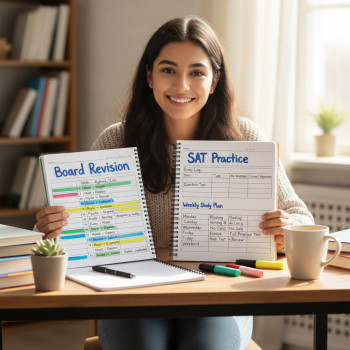
Keep it simple. Your weekly template should include focused practice, review, and rest. Here’s a basic starting template you can tweak:
| Day | Focus | Duration |
|---|---|---|
| Monday | Reading passage practice + error log review | 60–90 minutes |
| Tuesday | Math: targeted skill work (algebra, functions) | 60–90 minutes |
| Wednesday | Writing & Language: grammar drills + timed passages | 45–75 minutes |
| Thursday | Mixed practice + quick review of past mistakes | 60 minutes |
| Friday | Full section practice (Digital practice on test app) | 75–90 minutes |
| Saturday | Full practice test (timed) every other week | 3–4 hours (including review) |
| Sunday | Rest, light review, or strategy review | 30–60 minutes (optional) |
Adapt durations to where you are—if you’re fatigued, do shorter sessions. The key is regularity and intentional review.
Break study sessions into powerful micro-blocks
Long, unfocused hours bleed away productivity. Instead, use focused micro-blocks:
- Pomodoro-style: 25–45 minutes study, 5–10 minute break.
- Single-task focus: work on one skill or passage type per block.
- End each block with a 5-minute reflection: What went well? What needs work?
Micro-blocks make it easier to start, and starting is often the biggest hurdle.
Practice with purpose: quality beats quantity
It’s tempting to chase hours logged. But 30 minutes of deliberate practice beats two hours of random problem-solving.
What deliberate practice looks like
- Set a specific goal for the block (e.g., reduce reading passage re-read rate by 30%).
- Work on weaknesses you’ve identified from recent tests—not whatever feels comfortable.
- Review mistakes immediately and log them. Your error log is gold.
Students often improve faster when they rotate between learning new strategies and applying them immediately in timed settings.
Use real test-like practice and review deeply
The Digital SAT environment is different from the old paper test. Practice in a way that mirrors test conditions: the Bluebook testing app and shorter adaptive sections. Simulate test day as often as you can—device set-up, timing, breaks, and even the small stressors will be familiar on the real day.
But practicing is only half the job. The other half is review. After every practice test or section, spend at least as much time reviewing as you did taking it. Ask: Why did I miss this? Was it knowledge, strategy, timing, or a careless error?
How to structure a review session
- List every question you missed and categorize it (content, strategy, timing, reading comprehension, calculation error).
- Fix the immediate cause (relearn the content or change your approach to that question type).
- Make a micro-action for next week to practice exactly that mistake until it’s no longer a weakness.
Make motivation stick: rituals, rewards, and community
Discipline without joy feels like a chore. Add small rituals and rewards to the process to keep you human and engaged.
Simple rituals that help
- Start each session with a 2-minute breathing or focus ritual to clear your mind.
- Have a physical notebook or digital tracker where you check off daily wins.
- Create a mini-ceremony for every test—you might light a candle, play a 3-minute focus song, or wear a lucky wristband.
Rewards that actually work
- Micro-rewards: a favorite snack after a focused block, 20 minutes of a game after completing a practice test review.
- Macro-rewards: a night out or a new book after hitting a major milestone.
Also: surround yourself with people who understand the grind. Study partners, local groups, or a tutor can introduce accountability and make the journey less lonely.
How to handle setbacks and plateaus
Setbacks are part of learning—lessons packaged as frustration. Expect them and plan how to respond. When your score stalls for a few weeks, try these steps:
- Step back and check the basics: are you sleeping, eating, and moving enough?
- Rotate your study methods: add targeted drills, change timing, or work with a different question bank.
- Bring in an outside perspective. A short session with an expert tutor—someone who can diagnose blind spots quickly—often breaks plateaus faster than more solo hours.
Personalized tutoring, like Sparkl’s 1-on-1 guidance, can be helpful here. A good tutor identifies stubborn patterns, recommends targeted practice, and helps you rebuild momentum without wasting time.
Design your personal accountability system
Accountability doesn’t have to be intimidating. It can be as gentle as a weekly check-in with a friend or as structured as a shared study log.
Accountability ideas
- Find a study buddy and send daily check-ins—one message that says what you did and what’s next.
- Use a shared spreadsheet or habit-tracker app to log practice tests and scores.
- Schedule weekly 20-minute reflection calls with a coach or tutor to review progress and reset goals.
Many students find that a few sessions with a tutor—especially tutors who offer AI-driven insights and tailored study plans—turn accountability into consistent improvement. Sparkl’s personalized tutoring offering, for example, pairs students with expert tutors and AI-driven insights to create study plans that evolve with each score report.
Small, high-impact habits that build long-term discipline
These habits take minimal time but pay huge dividends:
- Sleep like your brain depends on it—because it does. Memory consolidation happens during sleep.
- Do a short review the morning after practice to strengthen retention.
- Keep a one-page error log by topic—check it before every practice session.
- Daily 10-minute reading of diverse, high-quality texts to sharpen comprehension speed and vocabulary.
Consistency in tiny habits is the engine behind long-term discipline.
Sample 12-week progression plan
This shows how effort compounds when you balance practice and review.
| Weeks | Focus | Key Actions |
|---|---|---|
| 1–2 | Diagnostic & fundamentals | Take a diagnostic Digital SAT test. Build error log. Learn core strategies for reading and math. |
| 3–4 | Target weakness work | Daily micro-blocks on weakest areas. One timed section per week. |
| 5–8 | Skill consolidation | Alternate full-section practice with targeted drills. Review every mistake thoroughly. |
| 9–10 | Full-test simulation | Take two full practice tests under test-like conditions each week; detailed review after each. |
| 11–12 | Polish & confidence | Light practice, strategy tuning, rest, and mental prep. Final checklist for test day (device prep, admissions ticket). |
How to keep the Digital SAT specifics working for you
The digital test has differences that should shape your approach. Shorter passages, built-in calculator in some parts, and adaptive sectioning mean you should:
- Practice on digital platforms whenever possible so you’re comfortable with the interface and navigation.
- Train skimming strategies for shorter passages—learn how to extract the main idea fast.
- Practice graph and table reading since the digital format makes data interpretation more visual.
Device comfort and timing feel are small advantages that compound on test day.
Mindset and mental health: the quiet engine of discipline
Your brain is not a machine—it’s a living system that needs recovery. Burnout is the enemy of consistent study. Protect your mental health by:
- Scheduling breaks and days off. Rest is part of the plan, not a betrayal of it.
- Using mindfulness or short breathing exercises before tests or intense sessions.
- Keeping perspective: your worth is not your SAT score. The score is a tool opening doors, not the definition of you.
If anxiety is overwhelming, talk to a counselor, teacher, or tutor. Sometimes a single coaching session can teach you breathing techniques and test-day routines that dramatically reduce stress.
When to bring in professional help—and what to expect
Not everyone needs regular tutoring, but if you find yourself stuck—plateaus, inconsistent practice, or unclear study priorities—professional help can be a force multiplier. Look for tutors who:
- Offer diagnostic-driven plans that adapt to your progress.
- Give concrete, short-term assignments that target your errors.
- Provide one-on-one time for strategy, pacing, and mindset coaching.
Sparkl’s personalized tutoring, for instance, emphasizes tailored study plans, expert tutors, and AI-driven insights to help students sustain discipline without guessing what to practice next. A few targeted sessions can give you a roadmap and accountability that keep discipline humane and productive.
Practical checklist for the week before test day
- Run one light, untimed practice to keep your skills warm—don’t overload with new content.
- Confirm your device readiness and Bluebook app is installed and updated (or your school’s test setup if applicable).
- Prepare your admissions ticket and any school-required materials.
- Sleep early three nights before the test. Eat well and hydrate.
- Prepare a short pep ritual—something that centers you before the test.
Final words: discipline is a skill you can train
Discipline isn’t a personality trait reserved for a few lucky people. It’s a skill you can cultivate by designing systems, celebrating small wins, and giving yourself permission to rest and course-correct. The new Digital SAT rewards steady, intelligent practice—and the strategies above will help you keep going for months without burning out.
If you ever feel stuck, remember that a short, focused conversation with an expert can save weeks of trial and error. Personalized tutoring—like Sparkl’s one-on-one guidance and adaptive study plans—works best when it fills gaps, tunes your practice, and keeps you accountable while respecting your life outside the test.
Pick one habit from this post and start tonight. Maybe it’s a five-minute error log. Maybe it’s scheduling a single 45-minute focused study block for tomorrow morning. Little decisions add up. In a few weeks, you won’t recognize the student who put off studying—because you will be that steady, confident person instead.
Quick starter plan (do this now)
- Take a timed diagnostic to see where you are.
- Create a simple weekly template (use the table above as a starting point).
- Start a one-page error log and review it for 5 minutes after each practice session.
- Schedule one weekly check-in with a friend or tutor for accountability.
Stay patient. Keep the system kind. Celebrate the tiny wins. You’ve got this.





















No Comments
Leave a comment Cancel