
How to Prepare Mentally the Night Before the Digital SAT
Intro: Why the night before matters more than you think
There’s something electric about the evening before a big test. Even if you’ve practiced for months and solved countless practice sections, the last night carries a special charge—equal parts anticipation and anxiety. The digital SAT is not just about what you know; it’s about how well your mind performs under pressure. The choices you make the night before—about sleep, food, routine, and mindset—shape the brain you bring to the exam the next morning.
This article is a friendly, realistic guide to owning that night. You’ll find practical steps you can follow, brief explanations of why each one works, and small rituals to keep you calm, focused, and confident. These aren’t dramatic hacks or one-size-fits-all rules; they’re grounded strategies that students actually use to turn pre-test nerves into steady readiness. And if you want help turning this plan into a tailored bedtime routine, consider how Sparkl’s personalized tutoring—one-on-one guidance, tailored study plans, expert tutors, and AI-driven insights—can fit naturally into your prep so you feel supported right up to lights-out.
Quick checklist: What to do the night before (summary)
- Finish light review (30–60 minutes) — focus on patterns, not new content.
- Set out everything for test day — device, charger, ID, snacks.
- Do a short relaxation routine (10–20 minutes).
- Eat a balanced dinner and hydrate sensibly.
- Switch screens to low-blue or stop heavy scrolling an hour before bed.
- Go to bed early enough to allow 7–9 hours of sleep.
1. Mindset first: what to tell yourself the night before
Your internal monologue matters. The night before is not the time to panic, cram, or convince yourself you’re either doomed or already perfect. Aim for a neutral, steady mindset: “I have prepared, and tonight I’ll rest so I can perform.” That simple shift reduces cortisol and improves sleep quality—two things that actually affect reasoning and memory the next day.
Try a micro-script you can repeat: “I studied what I could. Tonight I recover, tomorrow I perform.” Say it once or twice as you prepare your test materials. It’s a small anchor for your nervous system.
Why this works
Worry activates the body’s stress response, which interferes with the memory consolidation and cognitive flexibility you need for a long, adaptive test. By intentionally choosing a calming mantra and focusing on recovery as preparation, you allow your brain to shift from fight-or-flight into rest-and-repair mode.
2. The final review: what to study (and what not to)
Resist the temptation to marathon through new topics. The night before is for consolidation, not discovery. Your brain benefits from processing, not more input.
Smart final review (30–60 minutes)
- Quickly scan formulas, rules, and high-yield concepts you’ve already practiced (e.g., common grammar rules, algebraic identities, geometry formulas).
- Skim 1–2 practice questions only if they help you recall useful strategies—no digging into whole sections.
- Review a short list of test-taking reminders: time checkpoints, how to handle difficult questions, and the flagging strategy you’ll use.
Example: If your math weakness is manipulating fractions, spend 15 minutes reviewing one clear example and the steps you’ll take under time pressure. Avoid learning a new trick you’ve never practiced.
Why less is more
New learning late at night is fragile—your brain won’t consolidate it effectively in a single sleep period. Consolidating existing knowledge and rehearsing the process you’ll use on test day is far more likely to improve performance than frantic cramming.
3. Build a calming wind-down routine
A predictable, calming routine tells your brain it’s time to sleep. The goal is to lower arousal and prime yourself for deep rest.
30–60 minute wind-down plan
- Turn off study-mode screens: switch to reading physical notes or a familiar, light book.
- Put the test materials in a designated spot for the morning so you’re not thinking about them in bed.
- Do a short relaxation exercise—progressive muscle relaxation or 10 minutes of mindful breathing (box breathing: 4–4–4–4 works well).
- Take a warm shower or wash your face—physical rituals signal routine and comfort.
Simple breathing exercise
Try the 4-4-4-4 box breath: inhale 4 seconds, hold 4, exhale 4, pause 4. Repeat 6–8 times. It lowers heart rate and centers your attention within a few minutes.
4. Food, hydration, and caffeine strategy
What you eat and drink the night before affects sleep quality and next-day focus. Aim to fuel, not overstuff.
Evening nutrition rules
- Eat a balanced dinner: lean protein, complex carbs, and vegetables. Think grilled chicken with brown rice and roasted veggies.
- Avoid heavy, greasy, or very spicy foods that might disrupt sleep.
- Limit caffeine after mid-afternoon—coffee, energy drinks, and some sodas can linger and interfere with falling asleep.
- Hydrate steadily through the day, but reduce liquids an hour before bed to minimize nighttime waking.
Remember, the morning of the test is when you want steady energy: combine protein and a whole-grain carb (e.g., yogurt and oatmeal, or eggs and whole-grain toast) so your blood sugar doesn’t spike and crash.
5. Tech and device checklist for the Digital SAT
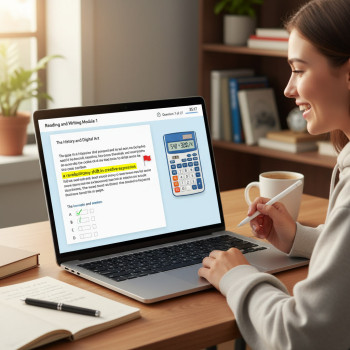
The digital SAT uses the Bluebook app on an approved device. The night before is the final chance to remove tech-related anxiety. Assemble everything, test the chargers, and confirm logistics.
| Item | Why it matters | Action to take tonight |
|---|---|---|
| Testing device with Bluebook | Device runs the test; must be charged and ready | Ensure Bluebook installed and device charged; leave charger in bag |
| Admission ticket / ID | Required for entry | Print or save ticket and ID together in one folder |
| Chargers & power bank | Prevent last-minute power panic | Pack chargers and test the power bank charge level |
| Comfort items | Help with focus and stamina | Pack a light sweater, allowed snacks, and earplugs if you use them |
Lay out your bag now so the next morning is calm. Visualizing the smooth routine helps your nervous system believe the world is safe enough to sleep.
6. Sleep strategy: timing and environment
Sleep is the single most performance-influencing factor you control the night before. Aim for quantity and quality.
How much to sleep
Target 7–9 hours. If your usual habit is shorter, plan for a middle ground—getting at least one extra hour can noticeably improve attention and reaction time.
Optimizing your environment
- Cool, dark, and quiet is best—use blackout curtains or an eye mask if needed.
- If your mind is racing, use a short reflection notebook: write down three things you did well in your prep and three things you’ll do tomorrow morning. Then put the notebook away.
- Avoid screens for at least 45–60 minutes before bed; if needed, use low-blue settings and dim screens.
7. Managing anxiety in the hour before sleep
Even with preparation, anxiety can creep in. Use targeted techniques to lower arousal quickly.
Techniques to try
- Progressive muscle relaxation: tense for 5–7 seconds, release; move from toes to face.
- Guided imagery: picture the morning going smoothly step by step, from waking up to logging into Bluebook calmly.
- Write a ‘worry list’: capture any nagging thoughts and assign them a time slot for tomorrow so they’re parked and not buzzing in bed.
These methods are short and practical—try one and keep it simple. Overcomplicating your pre-sleep ritual increases the chance you’ll stay awake thinking about it.
8. Morning checklist you can set before bed
To reduce morning friction, set these items out tonight and create a short plan for the first hour after waking:
- Alarm (set two if you’re a heavy sleeper) and place it away from your bed.
- Clothes and comfortable layers ready to go.
- Pack your bag: device, charger, admission ticket, ID, snack, water bottle, and acceptable calculator if instructed.
- Plan a simple breakfast: aim for protein + complex carbs and a cup of water.
- Time buffer: plan to leave with at least 30 minutes extra for traffic or parking.
9. Small rituals that build confidence
Rituals turn nerves into ritualized calm. They are less about superstition and more about reliable cues.
Ritual ideas
- Put on a lucky (comfortable) shirt for the morning—comfort equals confidence.
- Say a short affirmation: “I will give my best, breathe, and move forward.”
- Do a one-minute movement routine in the morning to wake your body: light stretching or neck rolls.
Choose one or two rituals and keep them short. The goal is stability, not dramatics.
10. When things go wrong: recovery plans that work
Not everything goes to plan. A late-night worry, a lost charger, or a bad night’s sleep happens—and your reaction matters more than the event.
Quick fixes
- Forgot your charger? Use a power bank or borrow a charger from home the morning of—pack it in your bag and keep calm.
- Woke up groggy? Hydrate immediately, get light movement, and eat something with protein and carbs to stabilize blood sugar.
- On test day anxiety spikes? Use a breathing routine for 60 seconds and refocus on the next step in your plan rather than the outcome.
Planning these small contingencies tonight reduces the cognitive load tomorrow and keeps your brain focused on the test instead of solving avoidable logistics.
11. How tutoring can support your night-before routine (a natural fit)
Targeted tutoring isn’t just for learning content; it’s for shaping habits, rehearsing strategies, and building confidence. If you’ve worked with a tutor—especially one offering personalized plans—you can use the night before as a rehearsal stage: review your tutor’s quick checklist, go over your flagged question types, and practice the breathing routine they recommended.
Sparkl’s personalized tutoring offers one-on-one guidance, tailored study plans, expert tutors, and AI-driven insights that help you identify exactly which concepts are worth a last-minute glance and which are best left alone. When a tutor helps you craft a specific night-before routine, you’re not guessing—you’re following a plan designed for your strengths, which is a powerful confidence-booster.
12. Final thought: permission to rest
Preparing mentally the night before the SAT is less about heroic last-minute study and more about permission: permission to rest, recover, and show up whole. The mind that has space to breathe, a body that had proper fuel and sleep, and a plan for contingencies will outperform a mind running on adrenaline and caffeine.
So tonight, do the sensible things: finalize a short review, pack your bag, power down your screens, and choose rest. Your future self—the version of you taking the test—will thank you.
Closing routine to try right now (10–15 minutes)
- 5 minutes: Lay out your test materials and pack your bag.
- 5 minutes: Write three things you did well in prep + one concrete morning step (e.g., “Eat oatmeal with yogurt”).
- 5 minutes: Do box breathing (4-4-4-4) for 6 rounds and say your micro-script once: “I prepared. I will rest. I will do my best.”
If you’d like a personalized night-before checklist built for your habits and strengths, Sparkl’s tutors can help you create one that fits your schedule, reduces anxiety, and reinforces the exact strategies you’ve been practicing. Small, targeted support—especially the night before—can make a big difference.
Good luck—but not too much luck—you’ve prepared. Rest well.


























No Comments
Leave a comment Cancel