

UBC: AP Credit vs Placement — What Every Student and Parent Should Know
If you’re a student aiming for the University of British Columbia (UBC) and carrying AP exams in your backpack — congratulations. APs can open doors: they might give you course credit, let you skip introductory classes, or simply strengthen your application. But the line between “credit” and “placement” can feel fuzzy, and the stakes are different for Science and Arts streams. This guide breaks it down calmly and clearly, offers realistic examples, and gives practical next steps you can act on today.

Why AP Credit and Placement Matter
At a basic level, AP credit means you’ve earned university-level recognition for a scored AP exam — often translating to university credits that count toward degree requirements. Placement means you may be allowed to enroll in a higher-level course without taking the introductory one, but you might not receive actual credit toward your degree’s credit total. Both can save time, reduce tuition costs, and let you jump into more advanced or specialized courses sooner.
For UBC-bound students, the difference isn’t just academic convenience. In Science, moving past an introductory course can change your lab schedule, allow earlier entry to upper-year electives, and free space to pursue research or a minor. In Arts, placement into upper-level language or social science classes can deepen your major progress sooner and broaden elective choices.
AP Credit vs Placement — Side-by-Side
Here’s a practical table to help you picture the differences — note that the specifics (which AP exams qualify, required scores, and how many credits are granted) vary by institution and can change over time. Use this as a conceptual map, not a definitive policy sheet. Always confirm with UBC’s official admissions pages or academic advising when planning your course of study.
| Feature | AP Credit | AP Placement |
|---|---|---|
| What it gives you | University credits that count toward degree requirements | Permission to enroll in a higher-level course; no credit awarded |
| Typical result of a high AP score | Possible course exemption or transfer credit | Waiver of prerequisite or direct entry into upper course |
| Most useful for | Students wanting to reduce degree time or add minors | Students wanting to start advanced topics earlier |
| Common in Science | AP Calculus, AP Physics, AP Chemistry can sometimes earn credit | May allow skipping intro labs or lecture sequences |
| Common in Arts | Language, History, or Psychology can sometimes translate to credit | Placement often used for language proficiency or advanced seminars |
| Impact on GPA | Some universities do not include transferred AP credit in GPA calculation | Placement leaves GPA unaffected until higher-level course is taken |
Quick note on realism
Policies vary by department. Some faculties award credit only for very high AP scores (usually 4 or 5), while placement may be possible with slightly lower scores. Departments may also require an internal exam, proof of lab experience, or an interview to confirm placement. Because rules change, treat this guide as strategy rather than regulation.
Science Students: Strategies and Scenarios
Science majors often ask: “If I get a 5 in AP Calculus or AP Physics, can I skip first-year?” Realistically, outcomes depend on the program (e.g., majors like Chemistry, Biology, Computer Science, or Engineering-adjacent paths) and specific course equivalencies. Even when credit isn’t granted, placement can matter a lot.
Scenario: AP Calculus BC
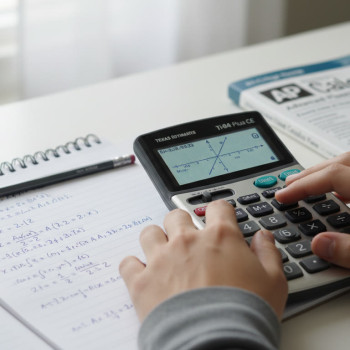
- If you earn a top score, you may receive credit for a UBC calculus course or be placed into Calculus II or III, depending on program rules.
- For majors with heavy math requirements (like Physics or Computer Science), this can let you take advanced electives earlier or pick up a minor without extra semesters.
Scenario: AP Physics C or AP Chemistry
- Physics C (mechanics or E&M) scores can allow placement into higher-level physics streams—valuable for research opportunities and for keeping on track for co-op or honors options.
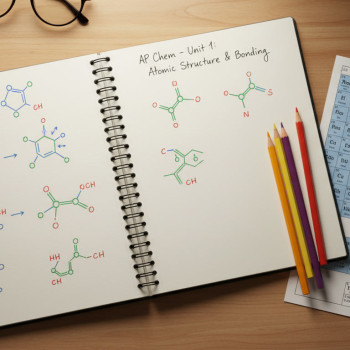
- Chemistry AP may reduce your first-year lab burden, but many programs still recommend taking the university lab to align with department methods and safety standards.
Practical tip: If you’re aiming for placements in science, prioritize AP exams that are calculus-based (for physics) and lab-oriented (for chemistry). If you expect to pursue research or co-op, consult departmental advisors early — placement alone won’t teach you the lab techniques many programs expect.
Arts Students: How AP Helps
In Arts, AP exams can be particularly valuable for language proficiency, history credit, and foundation-level social sciences.
Scenario: AP Language Exams (e.g., AP French, AP Spanish)
- High scores often lead to placement into intermediate or advanced language courses, letting you pursue literature or specialized language electives sooner.
- Some departments award credit for exam-based proficiency, which can count toward degree breadth or elective requirements.
Scenario: AP History or AP Psychology
- These exams may translate into introductory credit or allow you to skip 100-level survey courses, freeing room for higher-level seminars or research projects.
- Placement into advanced seminars boosts your transcript early and gives you a stronger foundation for independent projects.
Practical tip: In Arts, demonstrating depth matters. An AP that gives placement into a 200- or 300-level course can shape your academic narrative—allowing you to show advanced work and engage with faculty sooner.
Common Questions Students Ask
Will AP credit reduce the time to graduation?
Sometimes. If you receive actual credits that count toward degree requirements, that can shorten your path or create room for a minor, exchange, or research. If you only receive placement (no credit), time-to-degree may not change, but your coursework can become more fulfilling and focused earlier.
Does UBC accept AP scores for both domestic and international applicants?
Generally, most universities accept AP scores irrespective of residency; however, how those scores map to credit or placement can depend on faculty rules and the applicant’s overall profile. Always verify with UBC admissions if your specific situation raises questions.
Should I use AP credit or take the university course?
- Consider depth: university courses often include local context, lab styles, and assessment methods that AP exams don’t replicate.
- If you’re aiming for research, co-op, or a program with rigorous sequential requirements, taking the university course may offer stronger preparation than credit alone.
- If you want flexibility—say, to add a minor or fit in an exchange—credit can be strategically valuable.
How to Decide: A Simple Decision Framework
Use this short checklist to decide whether to pursue credit recognition, aim for placement, or retake/attend the university course.
- Academic Goals: Do you need credits for graduation acceleration or to open space for other pursuits?
- Skill Gaps: Does the university course teach lab or practical skills you lack?
- Major Requirements: Does your program require certain sequences that value taking the university course?
- Long-Term Plans: Are you applying for research, co-op, or specialization that benefits from the university-level experience?
Sample Plans: Science and Arts Students
Below are two sample one-year plans showing different uses of AP results. These are illustrative: adapt them to your program and consult an advisor.
| Student Type | AP Outcome | Strategy for Year 1 |
|---|---|---|
| Science Major (e.g., Biology) | AP Biology: 4; AP Calculus BC: 5 | Use calculus placement to take higher-year math; take university Chemistry lab to build lab technique; use possible Biology credit to add an elective or research lab course. |
| Arts Major (e.g., International Relations) | AP History: 5; AP Language: 4 | Place into intermediate language and advanced history seminar; use freed-up credits to pursue a minor or a study abroad application in year 2. |
Study and Exam Strategies for Maximum Benefit
If your aim is credit or placement, your study plan should be targeted — not just “study harder,” but study smarter for the score thresholds that matter.
Tips for Science APs
- Master the fundamentals: Calculus-based reasoning for Physics and strong problem-solving for Chemistry will affect both multiple-choice and free-response sections.
- Lab familiarity: Practice lab questions and procedural thinking even if the AP is exam-based — departments often expect this skill set later.
- Timed practice: Build stamina with full-length practice exams under realistic conditions.
Tips for Arts APs
- Construct strong written arguments: History and English free responses reward clear thesis-driven writing.
- Language practice: For language APs, prioritize active speaking and listening. Placement often reflects communicative competence.
- Context matters: For social sciences, integrate real-world examples and evidence in your practice essays.
How Personalized Tutoring Helps — Naturally
Preparing for APs is about strategy and precision. That’s where targeted support becomes a game-changer. Personalized tutoring — like Sparkl’s 1-on-1 guidance — can help you identify which AP exam scores will matter most for your UBC goals, build tailored study plans, and sharpen weak spots with expert tutors. Smart tutoring adapts: if you’re on the verge of a higher score that would change your placement, focused sessions targeting that gap can turn a 4 into a 5.
What tailored tutoring can do for you
- Create a study plan keyed to UBC’s likely credit and placement thresholds.
- Deliver concept-focused lessons that build transferable skills (e.g., lab methods, academic writing).
- Use data-driven feedback to prioritize the highest-impact improvements before exam day.
Conversations to Have at UBC and with Your School
Before you lock decisions, schedule a few conversations:
- UBC admissions or faculty advisor — ask about specific AP-to-course equivalencies for your intended major and whether placement requires departmental approval.
- High school counselor — coordinate how AP credit will appear on your transcript and how it interacts with any concurrent diploma requirements.
- Academic advisors at UBC once you’re admitted — they often have the most current, faculty-specific rules and can help plot degree plans using awarded credits or placements.
Common Pitfalls and How to Avoid Them
- Assuming placement equals credit: Placement lets you take higher-level courses; it doesn’t always reduce the number of credits needed for graduation.
- Overloading on APs without depth: Quality beats quantity. A focused set of APs aligned to your major often helps more than a long list of unrelated APs.
- Skipping university labs because of credit: If a program values hands-on skills, taking the first-year lab may be the smarter long-term move even if you can skip the lecture.
Next Steps — Action Plan for Students and Parents
Use this compact action plan to move from uncertainty to clarity.
- List the AP exams you plan to take and your target scores.
- Call or email UBC admissions/department advising with your AP list and ask how each maps to credit or placement.
- Create a study schedule focused on the threshold scores that matter (e.g., the difference between 4 and 5).
- Consider targeted 1-on-1 tutoring for the hardest AP or the one that will most affect your placement—personalized support can produce outsized improvements.
- Revisit your plan after receiving AP scores and meet with an academic advisor to finalize first-year registration.
Final Thoughts — Make APs Work for Your Story
AP exams are powerful tools, but their value depends on how you use them. For a Science student, a well-placed calculus or physics score can accelerate research and open doors to upper-level labs. For an Arts student, language and seminar placement can deepen scholarship and free space for study-away programs or double majors. The smartest path is personal: align your AP choices with your long-term goals, talk to UBC advisors, and use targeted support — whether through tailored tutoring or concentrated self-study — to reach the specific score thresholds that matter.
And remember: whether you get credit, placement, or neither, AP study prepares you for university-level thinking. It teaches disciplined study, academic writing, and problem solving — skills that will pay dividends beyond a single course or credit.

Need a hand?
If you’d like help turning your AP strengths into a practical plan for UBC, consider focused coaching. Sparkl’s tutors specialize in AP strategy, tailored study plans, and translating exam performance into real academic advantage — exactly the kind of help that makes the path from AP exam to meaningful university progress clearer and more confident.
Quick Checklist Before You Go
- Confirm current UBC policies with official advisors (policies change; check before you register).
- Target your study to the AP scores that will create the biggest academic leverage.
- Use personalized tutoring to close small but critical gaps in performance.
- Plan course registration with placement and possible credit in mind; revisit after score release.
APs are more than an exam day — they are a strategic investment in how you want your university story to begin. Make choices that fit your curiosity and long-term goals, and use support wisely to turn effort into advantage. Good luck — you’ve got this.























No Comments
Leave a comment Cancel