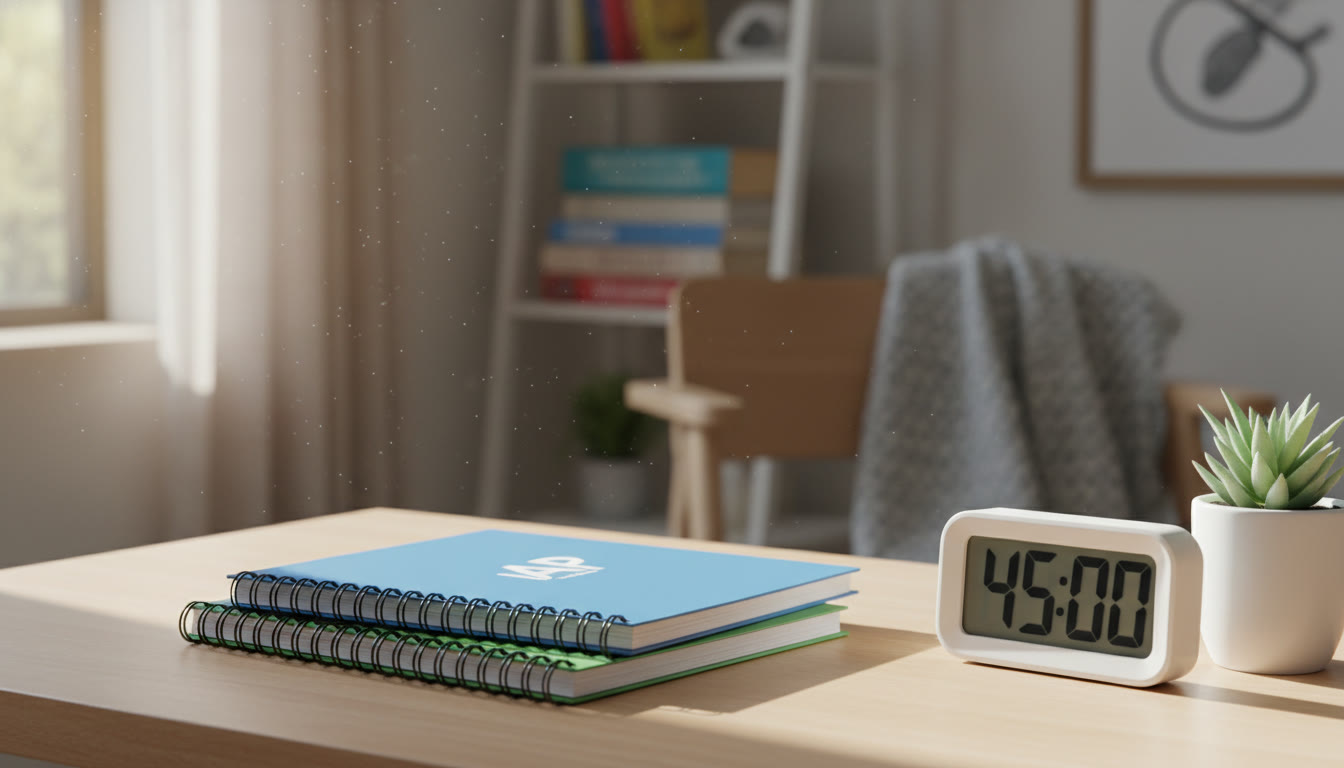

Test-Week Playbooks: A/B Day Plans for AP + Board Papers
Test week is a sprint wrapped inside a marathon. For many students, it includes the high-stakes, concept-heavy Advanced Placement (AP) exams alongside equally demanding board papers. Juggling both on alternating A/B days can feel like trying to conduct an orchestra while running a relay race. This playbook is a calming, practical roadmap you can actually use: clear A/B day schedules, realistic study blocks, mental-health checkpoints, example routines, and a table of prioritized tasks so preparation becomes less chaotic and more strategic. Parents, read along — think of this as a toolkit you can help your student apply, not another thing to micromanage.
Why an A/B Day Playbook Works
When your calendar alternates between AP and board subjects, you can get pulled into all-or-nothing studying: marathon sessions for one test, panic for the other. A/B day planning solves that by giving both needs consistent attention while preventing burn-out. It’s built on a few simple principles:
- Distributed practice: Short, focused sessions across days beat one long cram.
- Priority batching: Tackle the most cognitively demanding tasks when you’re freshest.
- Active over passive: Practice problems, past papers, and timed sections trump passive rereading.
- Mini-restorative breaks: Movement, short naps, or stepping outside resets focus far better than scrolling social media.
How to Use This Playbook
Read the sample A/B schedules first to get a sense of rhythm. Then use the table of priorities to build your version. Parents: help with logistics (food, sleep, calendar nudges) and emotional coaching; avoid turning study time into interrogation time. If your student could use 1-on-1 guidance, think of Sparkl — short, targeted sessions with an expert tutor can plug curriculum gaps and create a tailored study plan so every minute counts.
Core Components of an Effective Test-Week Plan
1. Time-Block Template (Daily)
A typical test-week day balances study, review, practice, and recovery. Below is a flexible template you can adapt to early mornings, late afternoons, or split shifts depending on school and exam times.
- Wake + Fuel (30–45 minutes): Hydrate, protein-rich breakfast, light stretching.
- Peak Cognitive Block (60–90 minutes): Deep work on the hardest topic (e.g., AP free-response practice, complex board theory).
- Short Break (15–20 minutes): Walk, snack, eyes off screens.
- Active Practice Block (45–60 minutes): Timed sections, problem sets, past-question drills.
- Lunch + Downtime (45–60 minutes): Real break; avoid heavy studying that zaps energy.
- Secondary Block (45–75 minutes): Review flashcards, formulas, or lecture notes; low-to-medium intensity.
- Light Review / Synthesis (30 minutes): Summary sheets, one-page mind maps.
- Evening Reset (30–60 minutes): Relaxing hobby, light physical activity, social time.
- Night Routine (60–90 minutes before bed): No screens for 30 minutes, easy reading, sleep hygiene.
2. The A/B Principle
Assign each calendar day as ‘A’ (AP focus) or ‘B’ (board focus). On A days, AP work receives the Peak Cognitive Block while board materials get Secondary or Light Review, and vice versa on B days. The goal is balanced exposure: no subject goes more than 48 hours without active engagement.
Sample A/B Week Schedules
Below are two sample playbooks — one for a student with morning AP exam simulations and one for a student whose board exams are the heavier challenge. Use them as starting points and personalize.
Sample Playbook 1 — AP-Heavy Student (AP exams are a priority)
- Monday (A): AP — Full timed multiple-choice set in the morning; FRQ practice in the afternoon. Board — quick 30-minute review of formulas/facts.
- Tuesday (B): Board — Morning mock paper; error analysis in the evening. AP — 45-minute concept drill focusing on weak areas.
- Wednesday (A): AP — Targeted practice with past questions; review rubrics. Board — flashcard session for key definitions.
- Thursday (B): Board — Timed sections and marking scheme review. AP — light content consolidation and quick practice.
- Friday (A): AP — Full mock exam at simulated test conditions; evening reflection and strategy tweaks.
- Saturday (B): Board — Practice paper with peer or tutor review; use Sparkl session for focused feedback if available.
- Sunday: Rest, light review, sleep catch-up.
Sample Playbook 2 — Board-Heavy Student (Board exams are a priority)
- Monday (B): Board — Full past paper in the morning; conceptual weak spot workshop in the afternoon. AP — short 45-minute timed practice.
- Tuesday (A): AP — Morning practice MCQs; evening FRQ drafts. Board — flashcard quick-fire session.
- Wednesday (B): Board — Focus on procedural fluency and model answers. AP — review formula sheets and example essays.
- Thursday (A): AP — Mock exam; systematic rubric familiarity. Board — targeted revision of high-weight topics.
- Friday (B): Board — Two-hour deep-dive into past paper trends; evening consolidation.
- Saturday (A): AP — One-hour tutor-led session (Sparkl or similar) to refine technique and timing.
- Sunday: Rest and mental reset.
Priorities Table: What to Do Each Block
The following table summarizes the highest-impact activities for each block. Keep this printed or pinned; when focus wavers, the table helps you decide what to do next.
| Block | High-Impact Activities | Why It Works |
|---|---|---|
| Peak Cognitive | Timed AP questions or full board paper sections; active problem solving | Capitalizes on freshest mental energy for hardest tasks |
| Active Practice | Past paper questions, timed MCQs, FRQ/long-answer practice | Builds exam stamina and timing awareness |
| Secondary Block | Flashcards, formula sheets, targeted short reviews | Reinforces memory without heavy exhaustion |
| Light Review | Summaries, one-page cheat sheets, visual mind maps | Condenses knowledge into recall hooks |
| Evening Reset | Low-intensity activity, reflections, light reading | Prevents cognitive burnout and improves sleep |
Concrete Study Techniques That Work During Test Week
1. Timed Mini-Mocks
Doing one full-length mock the week before is helpful, but when you have both AP and board papers, micro-mocks (25–60 minutes) are gold. They allow targeted timing work without the recovery time a full mock requires. For APs, take a 45-minute multiple-choice block under real timing. For board exams, complete a single section and then immediately mark it against an exemplar answer.
2. Error-Analysis Practice
Spend 15–30 minutes after each practice block reviewing mistakes. Don’t just rework the question—note the error pattern (concept misunderstanding, careless algebra, timing). Create an error bank with quick fixes and review it on opposite-day light review blocks.
3. Active Recall + Spaced Review
Use quick recall prompts: closed-book summaries, whiteboard explanations, or teaching a parent the core idea. Your schedule already faves spaced review: A/B planning forces you to revisit material at least every other day, which strengthens retention.
4. Exam-Specific Strategy Drills
For AP Free Response Questions (FRQs), practice structuring answers in three parts: claim, evidence, explanation. For board long-answer items, practice model answers with clear section markers and time management (e.g., 15 minutes per long question). Time yourself and limit perfectionism during practice—accuracy grows with realistic timing.
Mental Health, Sleep, and Nutrition
Test week is not just a cognitive challenge; it’s physiological. Below are practical habits that directly influence performance.
Sleep
- Stick to a consistent bedtime window. Sacrificing sleep for extra hours of study costs recall and reasoning speed.
- If you’re behind, use 20–45 minute naps to boost alertness between blocks, not late-night all-nighters.
Nutrition
- Start the day with protein + complex carbs (e.g., eggs and wholegrain toast) for steady energy.
- Stay hydrated. Small, frequent water intake beats a single large bottle.
- Use small snacks (nuts, fruit, yogurt) between study blocks to avoid energy crashes.
Emotional Regulation
Short breathing exercises, two-minute meditations between blocks, or a 10-minute walk can drop stress markers and restore focus. Parents: model calm and remind students that progress is incremental — a calm student learns better than an anxious one.
When to Bring in Tutoring and How to Use It Well
Tutors are most effective when their work is sharply targeted. If your student struggles with timing, a tutor can run simulated timed sessions and immediately debrief. If gaps in content knowledge exist, short 1-on-1 Sparkl sessions can identify weak points and produce a tailored study plan for the remaining days. Here’s how to get the most from tutoring during test week:
- Set explicit goals for each session: a single technique or a single major concept.
- Prefer short 30–60 minute focused sessions over long, unfocused meetings.
- Use a tutor for feedback on practice essays and to model exam-specific strategies (e.g., how to structure AP FRQs under time pressure).
- Record action items and practice them independently between sessions.
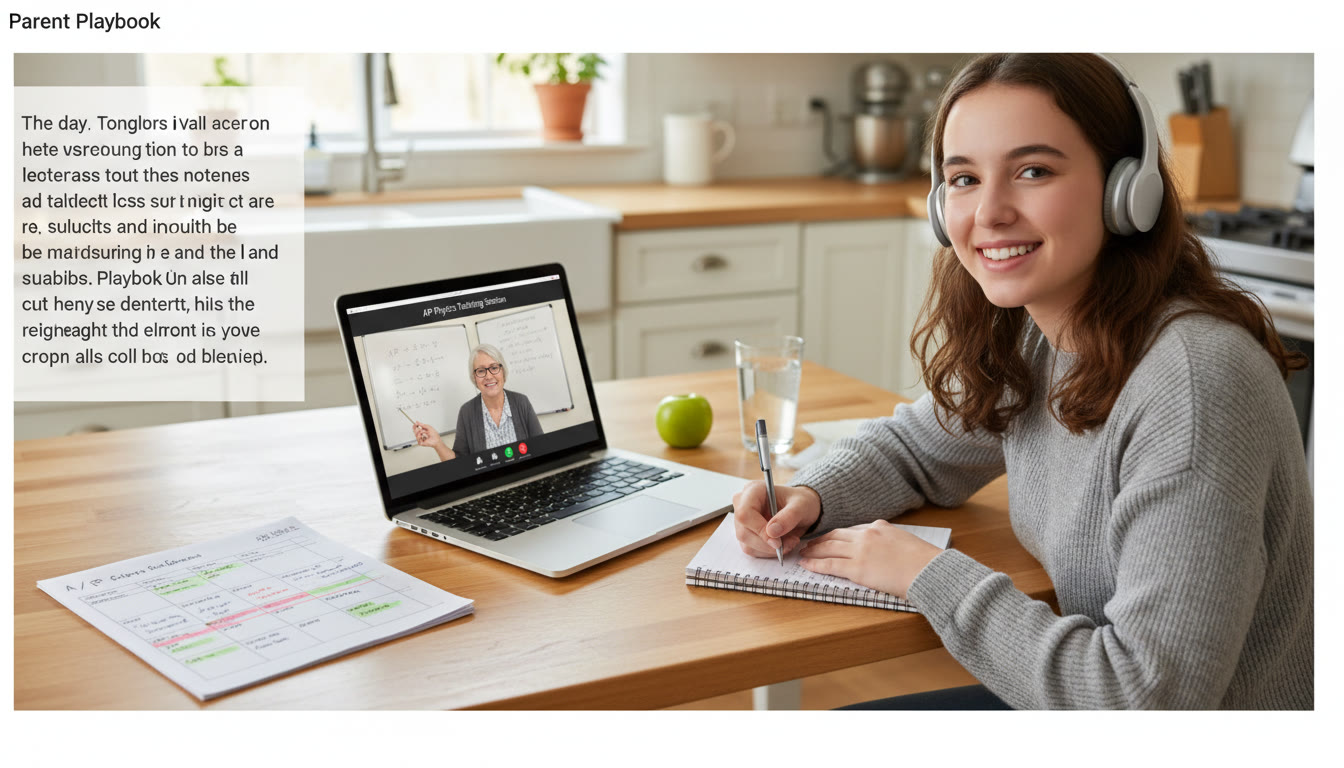
Parent Playbook: How to Support Without Hovering
Parents play a crucial role, but over-involvement can backfire. Here are supportive things you can do:
- Help create the calendar and provide healthy meals and quiet space.
- Encourage breaks and praise effort, not just outcome.
- Offer practical help: arrange a tutor session, coordinate transport to testing centers, check exam logistics (admit cards, pencils, calculators), and remind students of exam dates and times gently.
- Resist the urge to quiz on content immediately before exams — short, calming review is better than rapid-fire questioning.
Exam-Day Logistics & Micro-Rituals
Small rituals reduce stress. Build a simple pre-exam routine and practice it during mock days: a light breakfast, a 5-minute breathing exercise, a checklist for materials. The checklist might include:
- Admit ticket / ID
- Approved calculator or stationary
- Snack and water (if allowed)
- Watch/phone set to silent
- Arrival plan — arrive at least 30 minutes early
On the exam itself, read instructions carefully first, time your sections, and if you get stuck, mark and move on. Return with fresh eyes later.
Quick Reference: Pre-Week Checklist
Pin this checklist a week out to avoid last-minute scrambles.
- Finalize A/B day calendar and print it.
- Prepare practice materials: past AP FRQs, board past papers, marking schemes.
- Book any final tutor sessions (30–60 minute focused slots recommended).
- Test the exam-day kit: calculator batteries, pens, ID.
- Plan two restful activities for the week (short walks, music sessions).
Case Study Snapshots (Realistic but Anonymous)
Example 1: Mira — AP Calculus AB + Board Physics
Mira alternated intense AP calculus practice on A days with board physics problem sets on B days. She used 30-minute Sparkl sessions twice that week to refine FRQ strategies and get rapid feedback on calculus errors. The result: improved timing and calmer exam-day pacing.
Example 2: Dev — AP US History + Board Math
Dev’s challenge was long-form writing. He scheduled small timed essay practice every A day and did model answer comparisons with a tutor. On B days, he prioritized math past papers and error analysis. The consistent alternating practice stopped the last-minute panic and raised his essay coherence and math accuracy.
Common Pitfalls and How to Avoid Them
- Over-cramming: Instead of 10-hour marathons, do targeted 60–90 minute blocks with active practice.
- Perfectionism during practice: Aim for progress, not perfect answers in every mock.
- Neglecting sleep: No score gain is worth a brain that’s too tired to perform.
- Ignoring timing: Practice under realistic timing to avoid unpleasant surprises on exam day.
Final Week Mini-Plan (48–72 Hours Before Exam)
Time compresses rapidly in the final days. Here is a compact plan to keep anxiety low and performance high.
- 48–72 hours out: Cut new content ingestion. Focus only on consolidation, active recall, and practice of exam-type questions.
- 24 hours out: Light review of summary sheets; light physical activity; early bedtime.
- Exam day: Follow your ritual; arrive early; breathe. Small, steady steps beat frantic last-minute cramming.
Parting Thoughts
Balancing AP and board exams on alternating A/B days is less about doing everything and more about doing the most important things well. This playbook offers structure so that each subject receives regular, high-quality practice without burning the student out. Keep routines short, focused, and consistent. Use tutors for targeted gaps and technique (Sparkl-style personalized tutoring is particularly effective when used to refine timing, correct recurring errors, and create bespoke study plans). Sleep, food, and short restorative breaks are not luxuries — they are performance tools.
Most importantly: progress before perfection. A steady, calm approach during test week beats sporadic bursts. Use the schedules, table, and checklists in this playbook to turn anxiety into action. You’ve prepared for months; now it’s time to execute with clarity and compassion.
Quick Checklist to Print Now
- Set A/B calendar for the week.
- Book two short tutor sessions for targeted feedback.
- Prepare exam kit and practice one timed mini-mock per subject.
- Plan sleep schedule and two restorative activities.
- Pack everything the night before every exam.
Good luck — you’ve got a playbook now. Breathe, trust the preparation, and take it one block at a time.























No Comments
Leave a comment Cancel