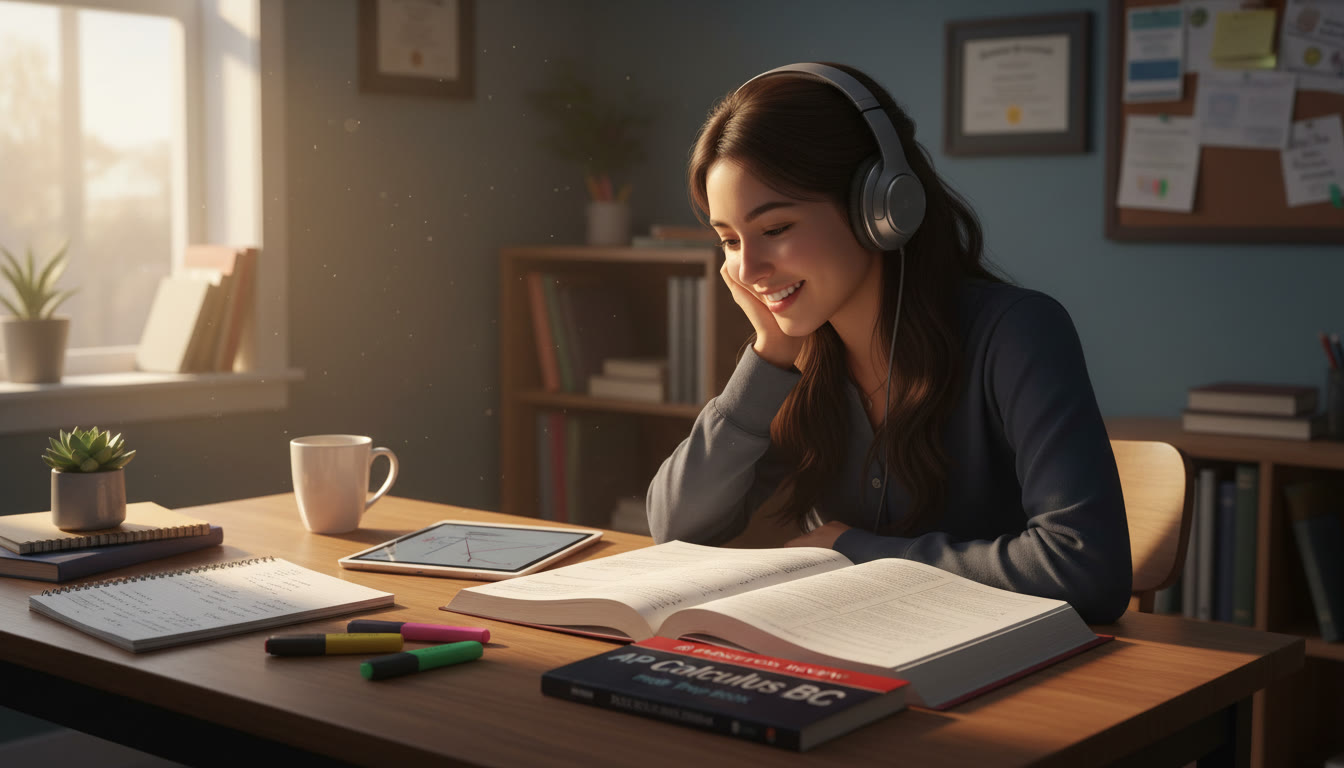

Why sound matters when you’re prepping for AP exams
Picture this: it’s 7 p.m., you’ve got a stack of AP Biology notes and a practice FRQ, and the house is a mix of dishwasher hum, a neighbor’s lawn mower, and the faint buzz of notifications. Sound is doing two things at once — it’s either scaffolding your concentration or quietly sabotaging it. For students aiming for high AP scores, understanding how music and ambient noise interact with attention, memory, and exam stamina can be the difference between productive study sessions and hours lost to distraction.
What the classroom and cognitive science tell us (in practical terms)
There’s no one-size-fits-all “study soundtrack.” Instead, there are patterns: predictable rhythms, low-complexity backgrounds, and familiar routines help concentration; unpredictable, loud, or highly engaging sounds pull attention away. For AP work — where deep comprehension, timed practice, and recall are essential — you want audio that supports sustained focus, not novelty-seeking.
Below you’ll find simple, implementable protocols you can test and adapt: how to choose music, how to set up noise controls when you can’t control the environment, and how to pair sound strategies with study techniques like spaced repetition and active recall. These approaches are designed to make your study time feel calmer, clearer, and more efficient.
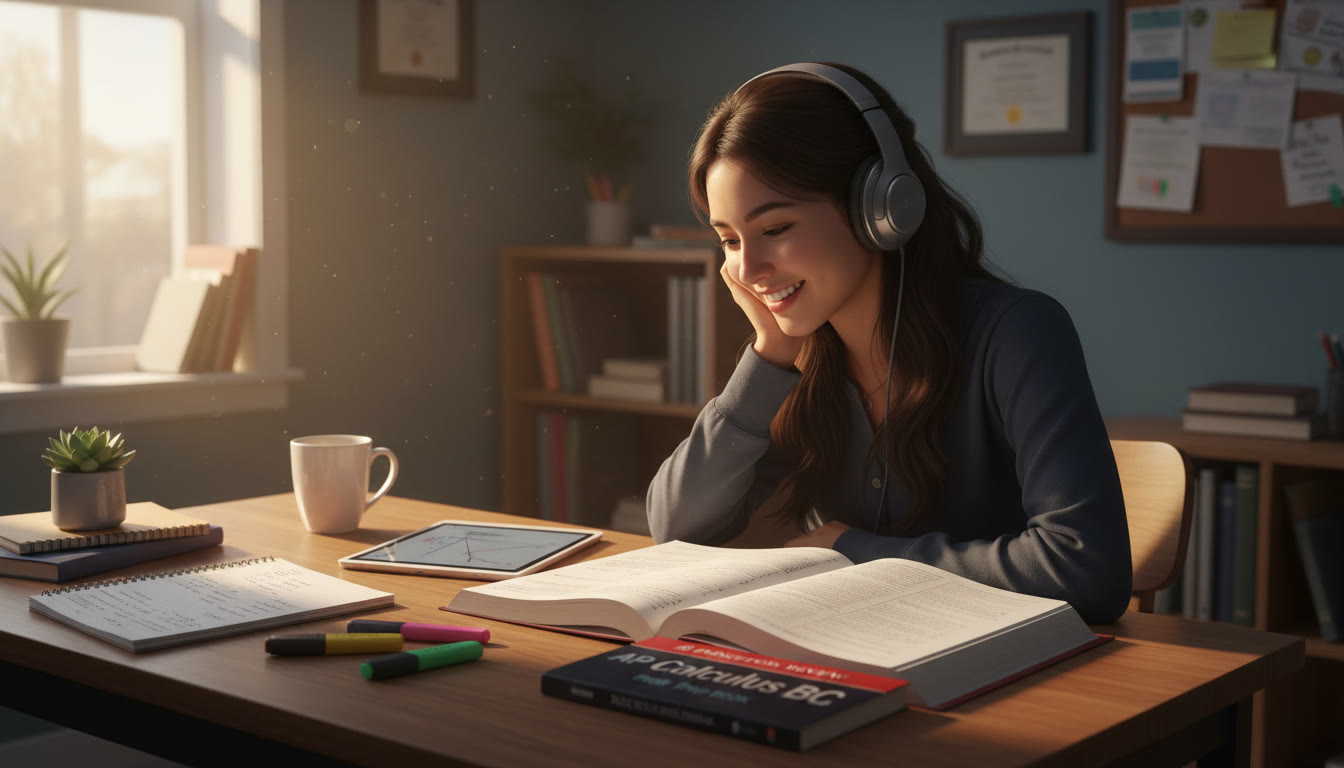
Start with your goal: What kind of study are you doing?
Different study tasks require different sonic environments. Before you pick a playlist, ask yourself which of the following best describes what you’re doing.
- Active learning (solving problems, writing FRQs, working through practice exams)
- Absorptive review (re-reading notes, summarizing concepts, listening to explanations)
- Memorization (flashcards, vocabulary, key dates and formulas)
- Deep synthesis (connecting ideas across topics, building concept maps)
- Restorative breaks (short rests to reset attention and stamina)
Each mode benefits from a slightly different soundscape. Below are tailored recommendations you can adopt the next time you sit down to study.
Audio guidelines by study mode
- Active learning: Silence or very low-volume instrumental music. Your prefrontal cortex is actively manipulating information; words in songs compete with verbal processing.
- Absorptive review: Low-complexity ambient or lo-fi instrumental tracks can be helpful — they provide a gentle background pulse without semantic interference.
- Memorization: Repetition helps. Consider quiet, rhythmically simple music during recall practice, and alternate with complete silence during testing phases.
- Deep synthesis: Minimal music or silence; any audio that introduces new semantic content can disrupt integrative thinking.
- Restorative breaks: Short playlists of your favorite relaxing songs, nature sounds, or even a quick podcast (but keep to 5–15 minutes so breaks don’t balloon).
Build a noise protocol: How to manage environmental sound
Whether you’re in a bustling household, a library, or a busy classroom, you can use a few practical steps to create a reliable noise protocol — a routine that helps you keep sound predictable and therefore less distracting.
Simple, testable noise rules
- Designate a “sonic schedule”: pick blocks of time that are for focused work (e.g., 50 minutes) and announce them to people you live with when possible.
- Use layered defenses: noise-cancelling headphones or earbuds + white-noise app + a brief visual cue (a “do not disturb” sign) for others in your space.
- Match the noise to task intensity: louder ambient noise can be tolerable for passive review but is harmful for timed FRQ practice.
- Pre-empt interruptions: schedule 5–10 minute check-in windows between study blocks to handle messages or household needs so they don’t interrupt high-focus periods.
What to keep in your noise-management kit
- Noise-cancelling headphones (over-ear preferred) or comfortable earbuds
- Portable white noise or ambient noise app with a customizable mix (e.g., rain, coffee shop, fan)
- A timer (use the Pomodoro method or variations tuned to your attention span)
- Optional: a small sign or signal to let others know when you’re in deep focus mode
Music selection cheat-sheet for AP subjects
Different AP subjects place different cognitive demands. Below is a cheat-sheet that matches musical characteristics to each general subject category so you can choose audio that helps rather than hinders.
| AP Subject Type | Cognitive Demand | Recommended Soundscape | When to Use |
|---|---|---|---|
| STEM (Calculus, Physics, Chemistry) | Problem solving, sequential logic | Silence or soft instrumental with steady beat | During problem sets and timed sections |
| Biology / Environmental Science | Conceptual understanding, data interpretation | Ambient instrumental, nature sounds in low volume | When reading and making diagrams |
| English Language & Composition | Close reading, writing, argumentation | Silence or minimal classical pieces without lyrics | Essay writing and annotated reading |
| History / Social Studies | Long-form memory, synthesis of narratives | Low-volume instrumental, repetitive textures | Reviewing timelines and practicing FRQs |
| Music Theory | Listening skills, musical analysis | Course-assigned examples; silence when analyzing | Active listening exercises |
How to construct your personalized study soundtrack
Instead of grabbing a pre-made playlist and hoping for the best, make a small experiment. Building your own “sonic toolkit” takes 30–60 minutes of setup and can save you hours of distracted study time.
Step-by-step: The 30-minute setup
- Pick three tracks for deep focus: instrumental, 2–3 minute loops or tracks with minimal variation.
- Pick two tracks for light review: slightly more melodic but still lyric-free.
- Pick a short “reset” playlist: 10–15 minutes of upbeat but calming songs for breaks.
- Test each option during different tasks for one week. Keep a one-line log: task + soundtrack + focus rating (1–5).
- Refine: drop anything that consistently scores <3 and add new tracks that help you concentrate.
Pro tip: Use the same audio for test simulation
If you plan to take a digital or in-school AP exam with a specific sound environment (quiet room, headphones allowed or not), simulate that environment during at least one full-length practice test. If you use a particular playlist for practice tests — especially for timed sections — your brain builds context-dependent memory cues tied to that audio, which can help exam-day performance.
Noise versus music: when to prefer one over the other
Sometimes noise is better than music. White noise, pink noise, and natural soundscapes (rain, distant thunder, or a fan) provide a nonsemantic background that masks intermittent interruptions and reduces the salience of sudden sounds. Music, even without lyrics, contains patterns and expectations that can either aid or hinder focus depending on complexity and familiarity.
Choosing between noise and music
- Choose noise when you need: consistent masking of unpredictable household sounds, or when your working memory is taxed by linguistic tasks.
- Choose minimal music when you need: mood regulation, pacing during longer study blocks, or when silence feels too isolating.
- Switch strategically: begin a study block with calming music to build momentum, then move to silence or white noise for the most cognitively demanding minutes.
Protocol examples you can adopt right now
Below are three ready-to-use protocols you can adopt immediately. Try one for a week and keep a quick log to measure which helps you retain more and feel less drained.
Protocol A — The Exam Simulation (for timed practice tests)
- Pre-test ritual: 10 minutes of light ambient music while you skim instructions and clear your desk.
- During the test: silence or single static ambient track (no volume changes). Use noise-cancelling headphones if you need to mask external noise.
- Between sections: 5-minute reset playlist (non-verbal or low-lyric) to lower cortisol and maintain focus.
Protocol B — The Deep-Work Block (for difficult problem sets)
- Pomodoro-style 50/10 (50 minutes focused, 10 minutes break).
- Focus audio: low-tempo instrumental or white noise for the first 45 minutes; final 5 minutes silence for reflection and summary notes.
- Break audio: short, favorite tunes or nature sounds for 10 minutes.
Protocol C — The Memory Sprint (for vocabulary and definitions)
- Ten-minute study sprint with instrumental music at low volume.
- Immediately followed by a 5-minute silent self-test (no audio) to recreate test recall conditions.
- Repeat 4–6 times with spaced intervals throughout the day for better consolidation.
When background sound is unavoidable: damage-control tactics
Not everyone can control their environment. If you’re studying in a shared space, a noisy household, or a busy library, these damage-control tactics can help recover usable study time.
- Prioritize tasks: schedule the most demanding work for the quietest part of your day (early morning or late night if possible).
- Create micro-habits: 2-minute breathing before a study block reduces reactivity to interruptions and speeds return to focus.
- Use auditory bookmarks: a short musical cue at the start of a study block primes your brain to enter focus mode; repeat it to create a conditioned response.
- Keep a “distraction notebook”: quickly jot interruptions down so you don’t dwell on them and can return to the task.
How to pair sound strategies with study methods for better retention
Sound is most powerful when it’s paired with evidence-backed study techniques. Here are combinations that work well for AP prep.
- Active recall + silence: Try recall exercises in silence to gauge what you can reproduce without external supports.
- Spaced repetition + low-volume ambient music: Use gentle sound during repeated review sessions to reduce boredom and increase adherence over weeks.
- Practice tests + exam-simulation soundtrack: Practice under the same sound conditions you’ll face on test day to build context-dependent memory.
- Group study + neutral background noise: When studying with peers, neutral white noise can reduce cross-talk distraction while maintaining a collaborative atmosphere.
Measuring what works: a simple tracking table
Simple metrics help you know whether a sound strategy is actually improving results. Track attention, retention, and comfort for two weeks.
| Metric | How to Measure | Target |
|---|---|---|
| Focus Rating | Student self-rating after each block (1–5) | Average ≥4 |
| Retention | Score on quick self-quiz 24 hours later | Improvement over baseline |
| Practice Exam Score | Percent correct on timed sections | Consistent or rising |
| Well-being | Energy and stress check (1–5) | Stable or improving |
Real-world examples: how students use these protocols
Here are a few short snapshots of how AP students have applied sound strategies effectively.
- Jamal, AP Calculus: uses silence for most problem sets, then plays a 10-minute lo-fi mix before each 50-minute study block to lower anxiety and build consistency. His timed-practice accuracy improved after three weeks.
- Sara, APUSH: studies timelines with low-volume orchestral music, tests recall in silence, and schedules her toughest reading for the quieter morning hours.
- Dev, AP Physics: records short, spoken summaries of formulas, listens on repeat while walking, then practices derivations in silence to strengthen recall pathways.
Technology and apps that help — use them smartly
There are apps that generate pink noise, focus music, and timed sessions. The tool matters less than how you use it: set volume consistently, avoid novelty-seeking, and schedule app usage so it supports — not replaces — disciplined study habits.
Smart tips when using apps
- Lock the volume for study blocks so a sudden loud ad or notification doesn’t break concentration.
- Prefer premium or ad-free options during focused work to avoid intrusive interruptions.
- Use a timer integrated with the audio app or a separate timer so your focus periods are predictable.
Sparkl’s personalized tutoring: how targeted support can strengthen your sound strategy
Choosing the right audio environment often requires trial and error — and tailored guidance can speed that process. Sparkl’s personalized tutoring offers 1-on-1 guidance and tailored study plans that help you integrate sound protocols into a larger AP prep strategy. Expert tutors can help simulate exam-day conditions, recommend subject-specific audio approaches, and use AI-driven insights to map when you should be doing intense practice versus restorative review.
For example, a tutor might notice you consistently lose focus during the final 20 minutes of a practice test and suggest an adjusted noise protocol plus a revised pacing plan — a small change that can yield big improvements in practice-test scores and confidence.
Common pitfalls and how to avoid them
- Relying on lyrics: Lyrics compete with verbal working memory. Avoid them for writing and reading tasks.
- Constant novelty: Continuously switching playlists wastes cognitive energy. Keep a stable set of tested tracks for focus sessions.
- Ignoring ergonomics: Overly loud audio or uncomfortable headphones can create fatigue. Prioritize comfort and safe listening levels.
- One-size-fits-all: What works for a friend may not work for you. Use the tracking system above to personalize.
Putting it all together: a two-week experiment you can run
Ready to test what works for you? Here’s a simple two-week plan that combines sound protocols with measurable goals.
- Days 1–3: Build your sonic toolkit (pick tracks and noise mixes) and run baseline practice tests in silence.
- Days 4–10: Run protocol A or B depending on your focus needs; track Focus Rating and one short retention quiz each day.
- Days 11–13: Simulate exam-day conditions for a timed practice exam using your chosen audio regimen.
- Day 14: Compare baseline scores, focus averages, and stress ratings. Adjust protocols going forward.
Final thoughts: sound as a study skill, not a gimmick
Treat your study environment like a lab. Sound is an experimental variable you can control and tune. The right audio doesn’t magically make you smarter; it sets the stage so your attention and memory systems can do their work more reliably. Combine considered sound choices with proven study methods — spaced repetition, active recall, timed practice — and you’ll gain both efficiency and calm during AP prep.
If you’d like help designing a study plan that includes a tested noise protocol and personalized pacing for your AP subjects, consider setting up periodic sessions with a Sparkl tutor. They can help you interpret your tracking data, recommend adjustments, and bring subject-specific strategies that make each study hour count.
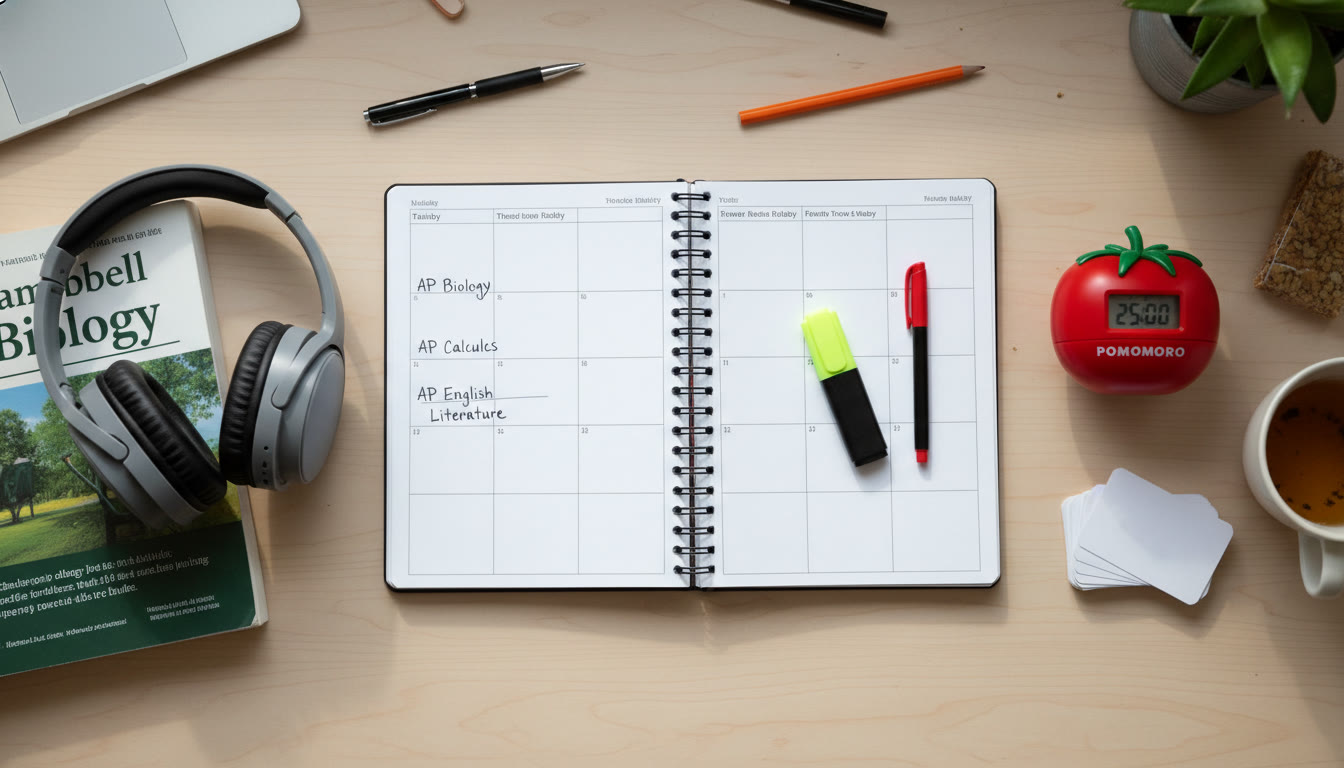
Quick checklist before your next study session
- Choose audio based on your task (silence, noise, or minimal music).
- Set a timer and commit to a defined block (e.g., 50/10).
- Mute notifications and lock volume levels.
- Do a 2-minute breathing or setup ritual to prime focus.
- Log your focus rating and one quick retention check.
Sound is subtle, but when you design it with intention, it becomes one more ally on your AP journey. Study smart, stay curious, and build a routine that helps your best thinking show up. You’ve got this.
Want a starting playlist?
Pick three non-lyrical tracks you like, one ambient noise, and one short reset tune. Test them across different tasks and keep what helps. Over time, you’ll have a personalized sonic signature that signals your brain: it’s study time.
Good luck — and remember: consistency beats intensity
Long-term gains come from repeated, well-structured sessions more than from marathon last-minute crams. Use sound to protect your attention, not to replace disciplined study. When you pair that discipline with smart, personalized help — like targeted tutoring sessions that account for your strengths and noise sensitivity — your AP prep becomes both more effective and less stressful.
























No Comments
Leave a comment Cancel