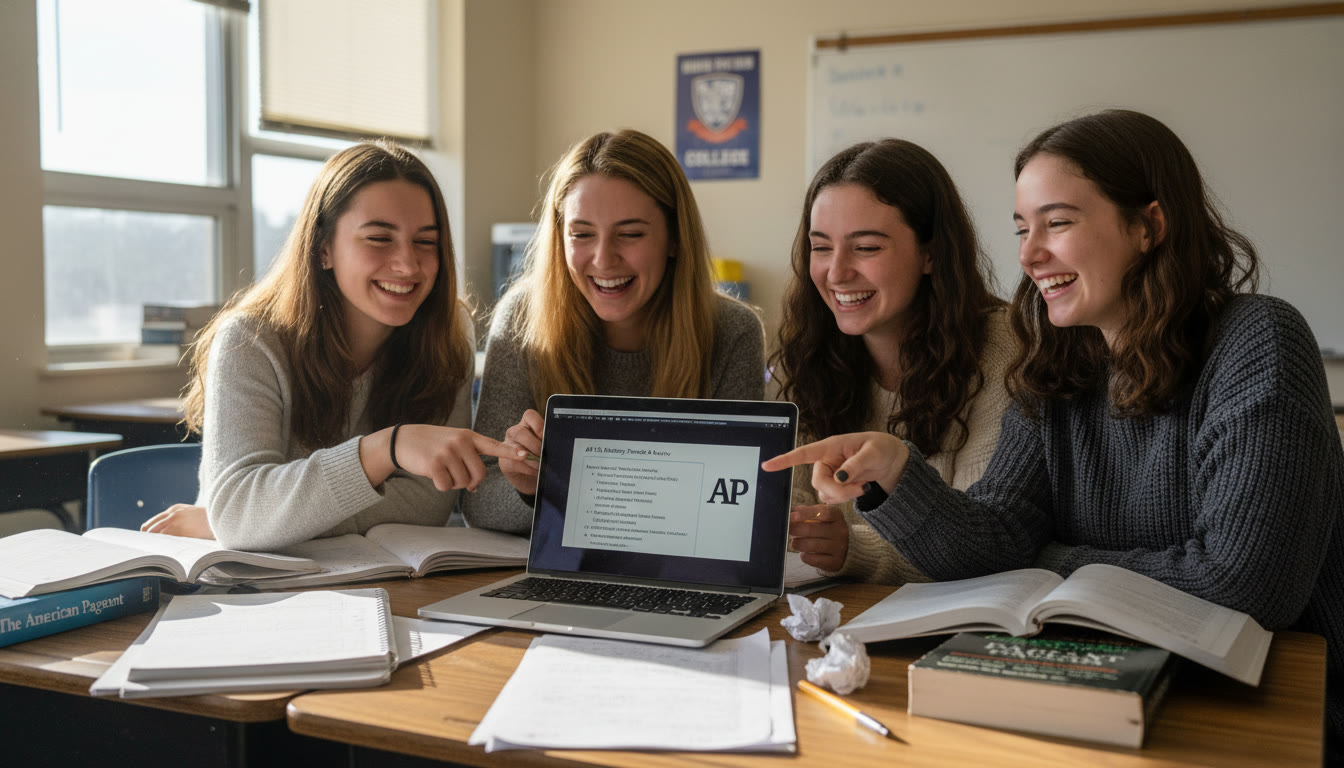

Why Peer Review Matters (And How It Can Save Your Grade)
Peer review is one of those classroom rituals that can feel awkward at first — trading drafts, squinting at handwriting, and muttering polite corrections. But beneath the initial discomfort lies one of the most powerful learning tools you’ll use during your AP courses. When done well, peer review helps you sharpen your argumentation, spot gaps in logic, identify messy data presentation, and practice the very communication skills college professors expect.
Think of peer review as a two-way street: you improve someone else’s work and, by articulating feedback, you deepen your own understanding. For AP students preparing for exams or performance tasks, frequent, focused peer review can transform a draft essay or lab notebook entry into a polished, persuasive piece of academic work.
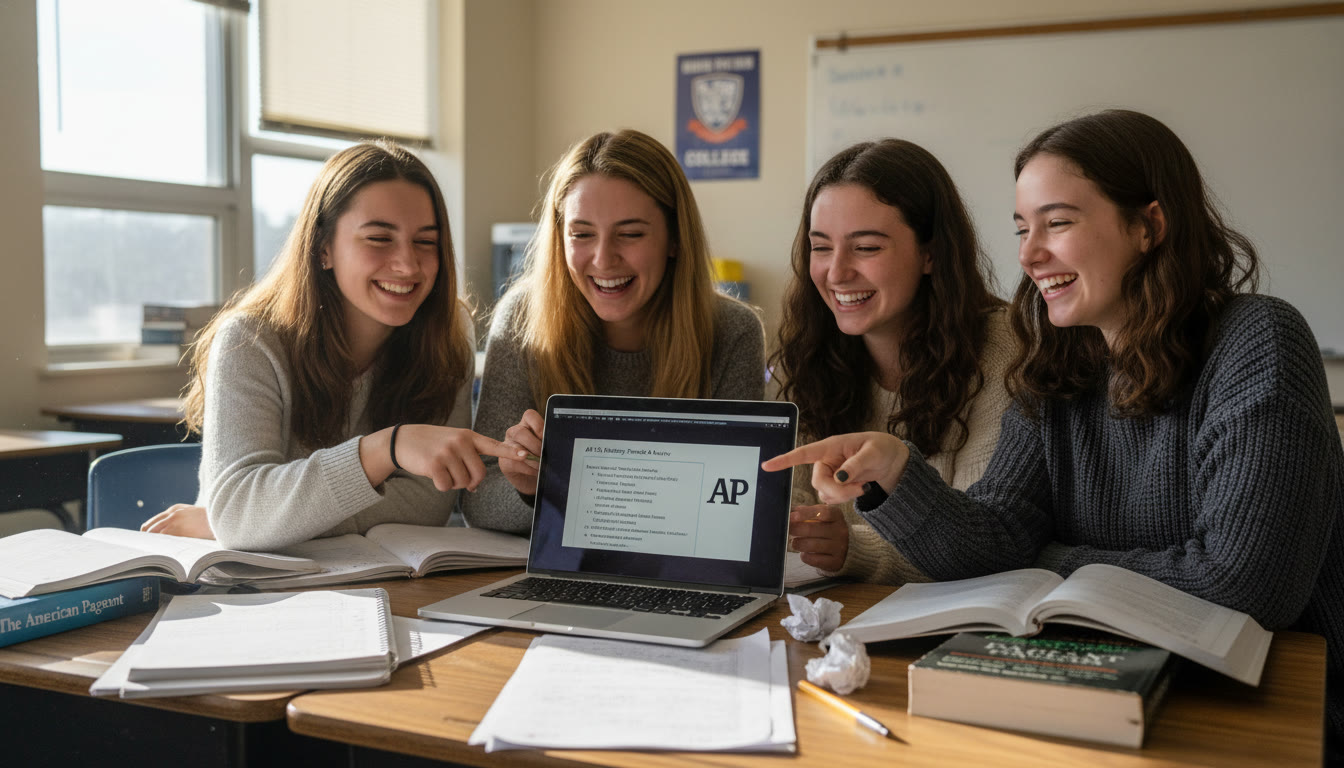
What Makes Peer Review Effective?
- Clear criteria: reviewers need focused checklists rather than vague phrases like “make it better.”
- Constructive tone: praise specifics before suggesting changes; be kind and honest.
- Balanced perspective: combine global (big-picture) feedback with local (sentence-level) edits.
- Actionable suggestions: offer concrete fixes, not just problems.
- Iterative cycles: review, revise, review again — excellence rarely happens in one pass.
Two Checklists — One for Essays, One for Labs
Below are two practical, classroom-ready checklists. Use them as handouts, Google Doc comments, or the backbone of a peer review session. Each checklist is organized into Parts A (Big Picture) and B (Fine-Tuning), so students know where to focus first.
Peer Review Checklist: AP Essay (Argument, Synthesis, or Rhetorical Analysis)
Part A — Big Picture (Structure, Thesis, Argument)
- Thesis clarity: Is the thesis one clear, defensible sentence that answers the prompt directly?
- Argument roadmap: Does the introduction preview the main points and method of development?
- Evidence relevance: Are the claims backed with specific, well-explained evidence (textual details, examples, data)?
- Logical flow: Do paragraphs progress logically? Are transitions smooth and purposeful?
- Counterargument: If applicable, does the essay acknowledge opposing perspectives and rebut them?
- Conclusion strength: Does the conclusion synthesize rather than just repeat? Does it return to the thesis with a fresh insight?
Part B — Fine-Tuning (Clarity, Style, Mechanics)
- Topic sentences: Does each paragraph have a clear topic sentence that links to the thesis?
- Integration of evidence: Are quotes and data introduced, cited, and analyzed rather than dropped in?
- Sentence variety: Are sentences varied in length and structure to keep reader engagement?
- Word choice: Is vocabulary precise without being pretentious? Any confusing or vague phrasing?
- Grammar and punctuation: Note repeated errors (comma splices, subject-verb agreement, misplaced modifiers).
- Formatting and citation: Is the required style (MLA, APA, or teacher-specific) followed consistently?
Peer Review Checklist: AP Lab Report (Hypothesis, Data, and Analysis)
Part A — Big Picture (Design and Scientific Thinking)
- Purpose and hypothesis: Is the purpose stated clearly? Does the hypothesis connect variables and predict direction?
- Experimental design: Are controls and variables clearly identified? Is the procedure replicable?
- Data completeness: Are all raw data, replicates, and observations included and labeled?
- Safety and ethics: Were any safety considerations or ethical constraints addressed?
- Appropriate analysis: Are the statistical or qualitative analyses chosen appropriate for the data?
Part B — Fine-Tuning (Presentation and Interpretation)
- Figures and tables: Are they clearly labeled with captions, units, and readable scales?
- Error analysis: Are sources of error identified and quantified where possible?
- Conclusion vs. claim: Does the conclusion reflect what the data actually support (avoid overclaiming)?
- Terminology and units: Are scientific terms used correctly and units consistent throughout?
- References: Are any sources, protocols, or data sets cited properly?
How to Run a Productive Peer Review Session
Good peer review is more than handing a checklist to a table of students. Here’s a reproducible routine you can use in class or virtually.
- Step 1 — Warm-up (5 minutes): Each student writes one sentence describing the strength and one sentence describing the main concern about their draft.
- Step 2 — Swap and Read (10–15 minutes): Exchange drafts and read silently. Annotate with a focus on Parts A first (big picture).
- Step 3 — Oral Summary (5 minutes per pair): The reviewer summarizes aloud the draft’s thesis and main argument/findings to ensure comprehension.
- Step 4 — Targeted Feedback (10 minutes): Use the checklist to give 3 strengths and 3 specific suggestions. Avoid generalities like “unclear” — point to exact lines.
- Step 5 — Revision Plan (5 minutes): The author writes a short plan: which 3 edits will be made before the next review?
When to Use Peer Review During the Draft Cycle
- Early draft: Focus on thesis, organization, and experimental design — avoid marking every comma.
- Mid draft: Check evidence integration and data presentation; confirm analyses are appropriate.
- Final draft: Polish language, formatting, and citations; perform a proofread sweep for grammar.
Illustrative Examples: Turning Feedback Into Improvement
Real improvement comes from seeing how feedback translates into changes. Below are concise before-and-after examples that show the power of focused peer review.
Essay Example: Weak Thesis vs. Revised Thesis
Before: “This essay will talk about how the author uses detail and tone.”
Peer feedback: “Which details? How do they contribute to the author’s point? Try one precise claim.”
After: “Through stark sensory detail and an ironic tone, the author exposes the gap between public rhetoric and private experience, arguing that social performance masks systemic inequality.”
Lab Example: Vague Conclusion vs. Data-Driven Conclusion
Before: “The reaction seemed faster with higher temperature, so temperature affects rate.”
Peer feedback: “Give numbers: how much faster? Which trials? Could other factors explain it? Include error margins.”
After: “As temperature increased from 20°C to 40°C, the mean reaction time decreased from 120 ± 8 s to 78 ± 5 s, supporting the hypothesis that reaction rate rises with temperature; measurement uncertainty and varying catalyst surface area may also have contributed.”
Using a Table to Track Peer Review Findings
Tables make trends visible. Use this simple review-tracking table to record recurring issues across drafts or between students. It helps teachers prioritize whole-class mini-lessons.
| Draft Round | Common Strengths Noted | Common Weaknesses Noted | Action Items for Class |
|---|---|---|---|
| Draft 1 | Clear hypotheses, strong raw data | Weak thesis statements, missing controls | Mini-lesson on thesis writing; lab design checklist |
| Draft 2 | Improved evidence use, better figures | Overgeneralized conclusions, citation errors | Workshop on limitation language and citation practice |
| Final Draft | Polished prose, accurate error analysis | Minor formatting inconsistencies | Proofreading protocols and a checklist before submission |
Common Peer Review Pitfalls (And How to Avoid Them)
- Too much focus on grammar early on — prioritize structure first.
- Vague feedback — replace “awkward” with “awkward because [specific reason]”.
- Mean comments — pair every critique with a suggestion and a positive.
- Reviewer bias — encourage reviewers to separate style preferences from real errors.
- Over-editing — reviewers should suggest changes, not rewrite the draft for the author.
Checklist for Reviewers to Stay On Track
- Read the draft once without marking to get the big picture.
- On second read, mark one global issue and up to three local edits.
- Write comments that the author can act on in 15–45 minutes.
- End with a summary: “This draft’s main strength is X. My top 3 fixes are A, B, C.”
Peer Review in Online or Hybrid Classes
Digital tools change the shape of peer review but not its purpose. Use Google Docs comments, voice notes, or short video summaries to communicate nuance. When students can’t meet in person, ask them to record a 60–90 second audio summary of the draft’s argument or experimental setup — that oral rehearsal often clarifies what’s vague on the page.
Suggested Workflow for Virtual Peer Review
- Author uploads draft to shared folder and leaves a 3-sentence context note (prompt, intent, and questions).
- Reviewer leaves inline comments and a brief summary comment at the top following the checklist’s Parts A and B.
- Author responds to each major comment with a one-line plan (accept, revise, explain).
- Schedule a 10-minute synchronous check-in if disagreements remain.
How Peer Review Prepares You for AP Exams and College-Level Work
AP exams reward clarity, evidence-based reasoning, and precise lab analysis. Peer review encourages those habits: synthesizing peer comments sharpens thesis statements; explaining why a data interpretation is weak practices scientific reasoning; revising builds the kind of polished prose graders reward. Moreover, peer review mirrors the academic world — scholarship is iterative, collaborative, and evidence-driven.
Real-World Benefits Beyond the Grade
- Improved communication skills: You learn to explain complex ideas simply.
- Stronger critical thinking: Assessing someone else’s method builds skepticism and rigor.
- Better teamwork: Feedback gives practice in respectful, productive collaboration.
- Preparation for college: Professors expect drafts, office hours, and peer critique.
Where Personalized Tutoring Fits In: Sparkl’s Role
Some students thrive with peer feedback, but others need extra structure or expert guidance. Sparkl’s personalized tutoring can plug into the peer review cycle neatly: tutors provide one-on-one guidance to strengthen thesis development, model high-quality feedback, and create tailored study plans that address repeated weaknesses. For AP students tackling complex lab analysis or advanced argumentation, a Sparkl tutor can offer targeted strategies and AI-driven insights to prioritize revisions and track progress across drafts.
How to Use Sparkl Alongside Peer Review
- Bring a reviewer’s checklist and one revised draft to a Sparkl session for focused coaching.
- Ask a tutor to model a live review so your group learns how to give specific, actionable feedback.
- Use Sparkl’s tailored study plans to schedule revision cycles leading up to the AP exam or final submission.
Assessment Rubric: Turning Checklists into Grades
Teachers can convert peer review outcomes into formative scores. This simple rubric aligns with the checklists and rewards thoughtful participation.
| Category | Exemplary (5) | Satisfactory (3) | Needs Improvement (1) |
|---|---|---|---|
| Thesis / Hypothesis | Clear, nuanced, and well-connected to prompt | Clear but simplistic or partially connected | Unclear or missing |
| Evidence / Data Use | Evidence integrated and analyzed precisely | Evidence included but analysis shallow | Little or no evidence; unsupported claims |
| Organization / Design | Logical flow, strong transitions or replicable procedure | Some organizational issues or minor procedure gaps | Confusing structure or missing controls |
| Reviewer Participation | Gave 3 strengths and 3 precise suggestions with constructive tone | Gave 1–2 useful suggestions or mostly surface edits | No meaningful feedback or unconstructive comments |
Final Tips: Habits That Make Peer Review Work
- Keep a revision log: track feedback, your responses, and why you accepted or rejected suggestions.
- Practice summary statements: force yourself to explain a draft in 30 seconds before offering feedback.
- Learn to prioritize: not every comment must be addressed; choose the changes that most improve clarity and evidence.
- Value process over perfection: drafts exist to improve thinking — treat each review as progress, not judgment.
- Use varied reviewers: rotate between peers, teachers, and occasional expert tutors to get multiple perspectives.

Wrap-Up: Make Peer Review a Habit, Not an Afterthought
Peer review is a muscle — the more you use it correctly, the stronger your writing, analysis, and confidence become. By following focused checklists, scheduling iterative reviews, and combining peer insight with occasional expert help like Sparkl’s personalized tutoring, you’ll move drafts from “almost there” to truly compelling. Whether you’re polishing an AP essay or finalizing a lab report, treat peer review as an essential step in producing work you’re proud to submit.
Start small: swap drafts with one classmate this week, use the checklists above, and write a tiny revision plan. You’ll be surprised how much traction a single focused session can give your writing and reasoning. And when you need targeted help — from sharpening a thesis to interpreting complex data — consider bringing your draft to a tutor who can guide you with tailored, one-on-one strategies and AI-informed insights to make every revision count.
Good luck — and remember: feedback is fuel. Use it, refine it, and show up for your next draft with confidence.



























No Comments
Leave a comment Cancel