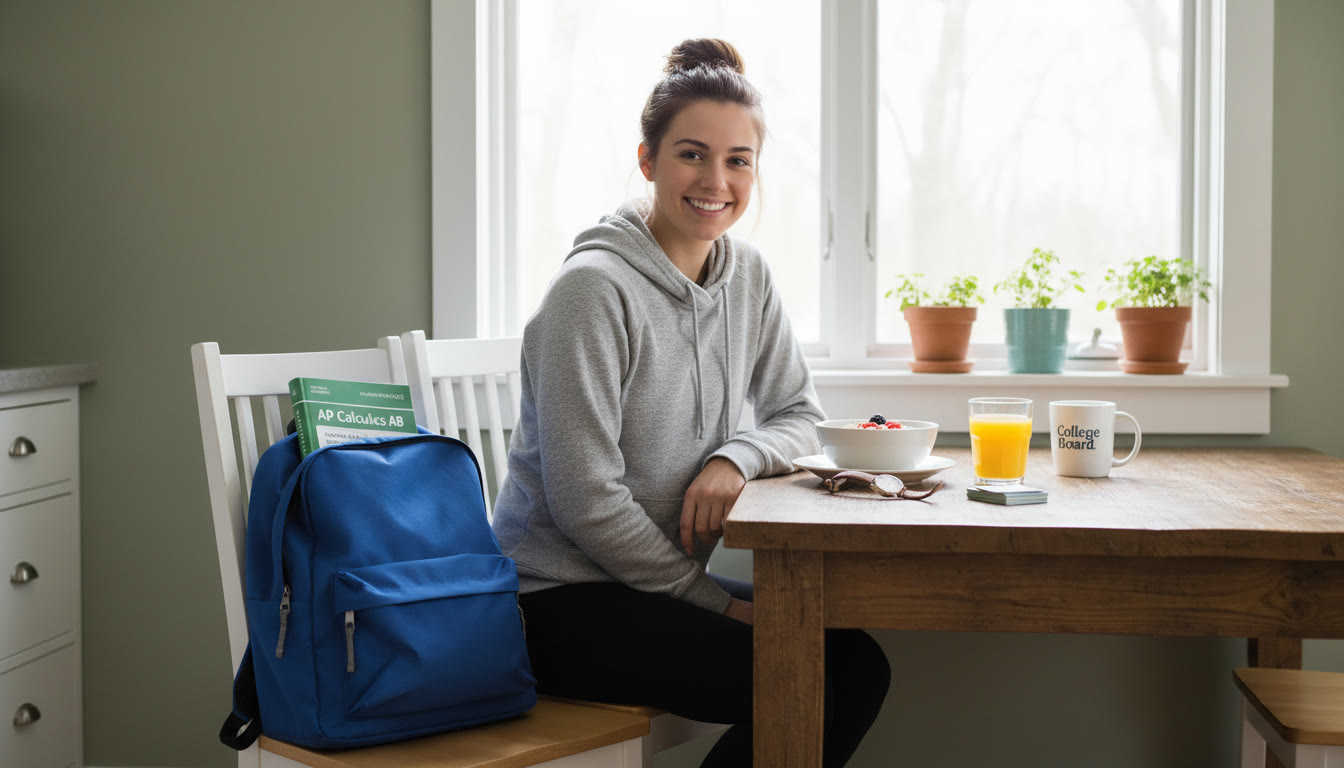

Wake Up Calm: The Tone for Your AP Exam Morning
Breath in. Breath out. You’ve prepared — maybe with months of review, AP Daily videos, classroom practice, and last-minute topic checks. The morning of your AP exam isn’t the place for new study marathons or panic. It’s the moment to gather, to steady, and to do the small, practical things that make everything else run smoothly.
Mindset Matters
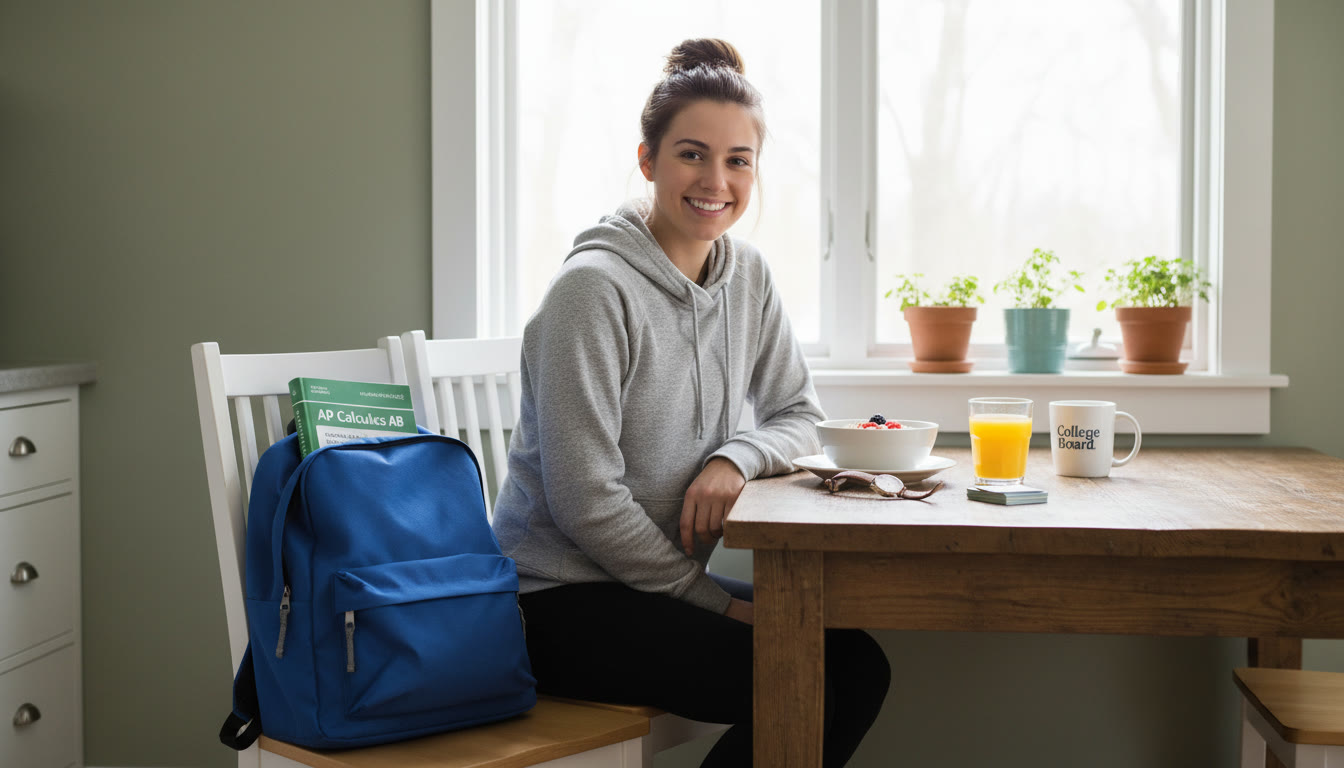
Before you even think about clocks and keys, set your mindset. Remind yourself: you’ve done more than you think. Tell yourself one honest victory — maybe you finally nailed that equation, or you memorized a key literary motif — and tuck that win into your pocket. Confidence doesn’t come from pretending you know everything; it comes from acknowledging progress and trusting your routine.
Timing: When to Wake, Leave, and Arrive
Timing is the backbone of a calm exam morning. It keeps your blood pressure down and your brain free to focus.
Night Before Checklist (Short)
- Verify your exam start time and exam location. (Double-check with your AP coordinator if needed.)
- Charge your device fully and place charger in your bag.
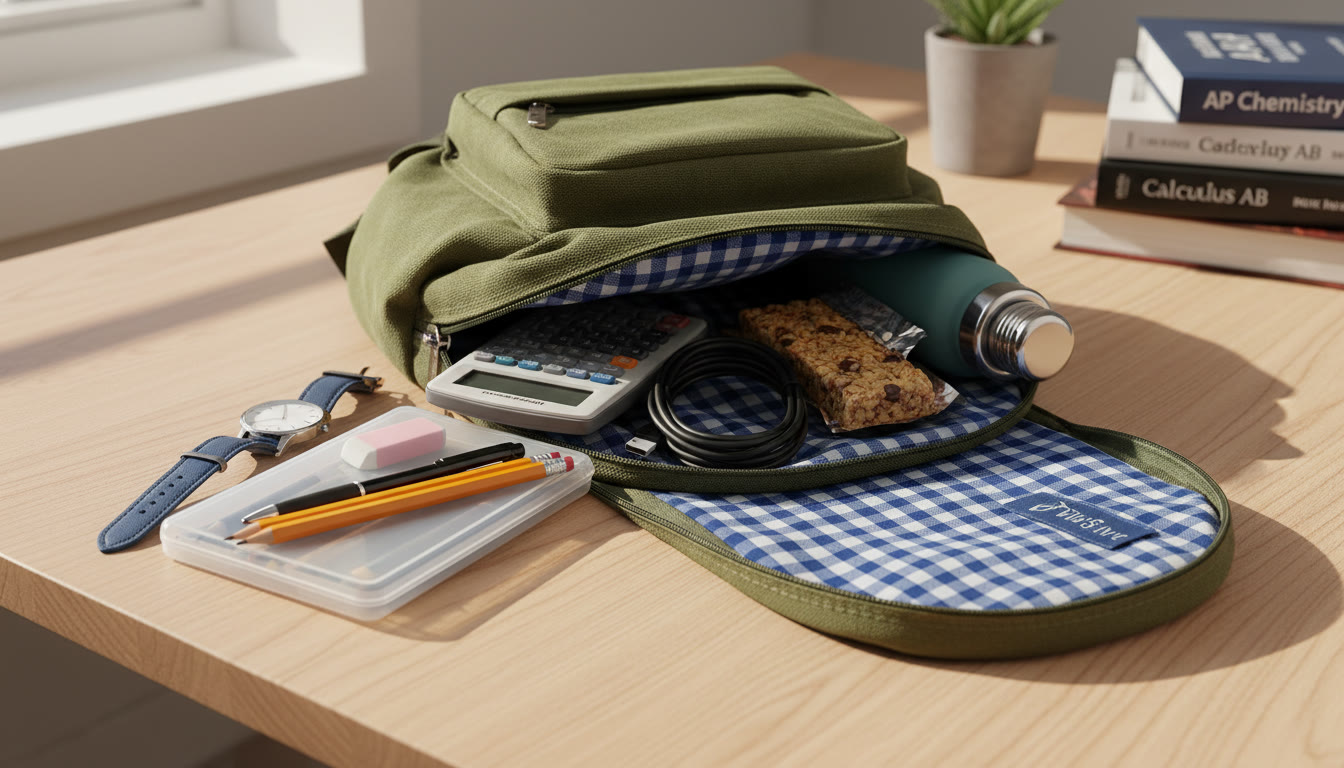
- Lay out your permitted materials: ID, pencils, approved calculator (if applicable), watch, and any pencil case essentials.
- Prepare a simple breakfast you’ll actually eat — nothing new or overly greasy.
- Pack a light jacket — testing rooms can run cool.
Morning Timeline: A Practical Hour-by-Hour
Here’s a flexible timeline you can adapt depending on when your exam starts. The idea is to build in buffer time for delays, breathing, and last-minute checks.
| Exam Start Time | Wake Up | Leave Home | Arrive at School/Test Site | Buffer / What to Do |
|---|---|---|---|---|
| 8:00 AM | 5:45–6:15 AM | 6:30–7:15 AM | 7:15–7:30 AM | Eat, last-minute calm review, restroom, charge check |
| 12:00 PM | 9:00–9:45 AM | 10:00–11:00 AM | 11:00–11:30 AM | Light lunch, device check, stretch |
| 2:00 PM | 11:00–11:45 AM | 12:15–1:00 PM | 1:00–1:30 PM | Prep snack for break if allowed, review permitted items |
Why so early? Give yourself time for unexpected delays: traffic, parking, a delayed bus, or a last-minute ID hunt. Arriving at least 30–45 minutes before your exam helps you settle and removes the rush which often sharpens nerves.
Travel: Getting There Without Stress
Travel day logistics can make or break your calm. Here are practical tips to keep travel smooth and predictable.
Plan Your Route — Twice
- Check your routes the night before and the morning of. If you drive, glance at traffic maps or school parking updates. If you rely on public transit, check schedules and delays.
- Plan alternate routes. A small detour can save you a lot of anxiety if your main path is blocked.
- If your school is hosting, find the testing room and the entrance you’ll use ahead of time so you’re not wandering when time is short.
Car, Bus, or Ride-Share Tips
- If you’re driving: park a little farther away for quicker exit after the break if needed. Keep your parking info in your phone and a printed backup in your bag.
- If you’re on a school bus: confirm pickup times and plan to be at the stop 10 minutes early.
- If using a ride-share: book a slightly earlier pickup and confirm the license/driver info matches what you see.
On Arrival
- Check in with the proctor calmly. Have your ID ready if required.
- Find a quiet corner to stretch or sit and do breathing exercises for five minutes.
- Use restrooms early. Once testing starts, leaving could disrupt others.
Tech: Devices, Power, and Bluebook Essentials
Digital exams introduce new logistics — devices, Bluebook sign-ins, chargers. Treat tech like a permitted test item: pack it, power it, and protect it.
Device Checklist
- Fully charged testing device (laptop, tablet, school-managed Chromebook) with Bluebook installed if required.
- Charging cord/AC adapter compatible with your device — keep it accessible, not buried in the bottom of a pack.
- External keyboard if you’re using a tablet and the exam requires it. Make sure it’s charged.
- Wired headset if your exam includes audio prompts (check your exam’s requirements).
- Power bank (leave it on the desk for inspection before the exam starts).
College Board rules are strict about what technology is allowed during the exam. No phones, smartwatches, or wireless ear devices in the exam room unless they’re approved accommodations. If you bring a personal device, remember: saving your Bluebook password on the device won’t work — you’ll need to know your login details.
Bluebook and Account Prep
If your exam is fully digital or hybrid digital, Bluebook is the gateway. Do a quick login test before you leave home. Practice signing in and note how you recover passwords if needed. If you share devices with family, log out of other accounts and close unnecessary apps that might push notifications or updates.
What to Bring — The Essentials and Why They Matter
Bring the items allowed and useful. Don’t bring anything that might be confiscated and create more stress.
Essential Items
- Photo ID (if you aren’t testing at your regular school).
- Two No. 2 pencils with erasers (for hybrid exams that require paper components) or pens with black/blue ink as required.
- Approved calculator(s) for exams that allow calculators — check the specific calculator policy for your exam.
- Watch that isn’t a smartwatch — analog or basic digital to help you track time if permitted by the proctor.
- Charging cord and fully charged device (if using one for testing).
- Printed copy of your exam notification or a note with your school’s testing room if this helps you find your place faster.
What Not To Bring
- Phones, smartwatches, or any device that can access the internet (unless explicitly allowed for an accommodated test).
- Study books, notebooks, or cheat sheets — these are clearly prohibited.
- Food or drink in the testing room (unless approved accommodation). Use the allowed break to eat if needed.
- Wearable tech that can record or communicate; these are not permitted during testing.
Last-Minute Study: What Helps, What Hurts
The hour before your exam is not the time for heavy content cramming. Instead, focus on fast, confidence-boosting activities.
Do These
- Quickly skim a single cheat sheet of formulas or vocabulary you’ve prepared. One page only.
- Run through a short practice problem for format familiarity — not for learning new content.
- Use breathing exercises or a two-minute mindfulness routine to steady your heart and brain.
Don’t Do These
- Do not attempt to learn a brand-new concept or memorize new terms — this usually increases anxiety and confuses recall.
- Don’t compare notes with friends in a way that turns into a panic spiral. If you notice a friend getting anxious, model calm and suggest a quick walk.
Break Time Strategy: Recharge Smartly
Most AP exams include a break between sections. Use that time strategically.
During the Break
- Step outside for fresh air and a short walk to increase circulation to the brain.
- Eat a light, quick snack if allowed (check policies; often you can step out with proctor permission): a banana, a granola bar, or something with a little protein and carbs.
- Hydrate, but don’t overdo it. Use the restroom if you need to.
- Do a 30-second grounding exercise: name three things you see, two things you hear, and one thing you feel.
Common Exam-Day Problems and How to Solve Them
Even well-planned mornings can hit snags. Here are common issues and how to handle them calmly.
Forgot Your ID
If your testing site requires ID and you forgot it, be honest and speak with the proctor immediately. Some schools will accept a school-issued photo ID or a staff confirmation, but rules vary. Don’t hide it — communicating fast is the best path to resolution.
Device Issues
If your device won’t start, have your charger and power bank accessible. If problems persist, tell the proctor immediately. Schools have contingency plans for device failures; they can often provide a school-managed device if available, but alerting staff early gives them time to help.
Severe Anxiety or a Panic Attack
If you feel overwhelmed, ask the proctor for a moment. They are trained to handle testing situations and can provide time to breathe, step out, or follow the school’s accommodations if necessary. If you have prior accommodations for extended time or breaks, make sure the proctor knows in advance.
After the Exam: Immediate Next Steps
When you leave the room, don’t debrief in a way that ruins your mood. You’ll get your scores later and the immediate analysis is often more emotionally charged than useful.
What to Do Right After
- Take a deep breath and reward yourself with something small and positive — a walk, music, or catching up with a friend (avoid exam-content talk).
- Hydrate and eat something balanced.
- Record your honest impressions in a private note if you want to capture what worked and what didn’t. This can guide future prep if you retake or take another exam.
Real-World Example: A Smooth Morning Plan
Maria has an 8:00 AM AP Biology exam. She sets her alarm for 5:45 AM, sleeps with her device charging on the bedside table. She wakes, drinks a glass of water, eats toast with peanut butter, and double-checks her bag: 2 pencils, ID, approved calculator, charger, watch. She leaves at 6:45 AM to avoid the school drop-off rush and arrives at 7:30 AM. She uses the restroom, does a short breathing exercise, and avoids last-minute cramming. After the first section, she stretches in the hallway and eats half a banana during the break. Simple, calm, effective.
How Personalized Tutoring Can Help on Exam Morning
Personalized tutoring in the weeks leading up to your AP exam can smooth exam mornings in practical ways. A tutor can help you create a personalized morning routine, run through mock exam mornings, and ensure your Bluebook and device setup are second-nature. For students who want 1-on-1 guidance, tailored study plans, and expert tutors who track progress and offer AI-driven insights for weaknesses, Sparkl’s personalized tutoring is designed to fit into this exact kind of real-world preparation. When your testing habits are practiced and predictable, your morning becomes a performance routine, not a panic session.
Packing List You Can Print Tonight
| Item | Why It’s Important | Check |
|---|---|---|
| Photo ID | Required for verification if not testing at your home school | [ ] |
| No. 2 Pencils / Pens | For multiple choice or free response as required | [ ] |
| Approved Calculator | For exams that allow calculators — reduce surprises | [ ] |
| Charged Device + Charger | Needed for digital and hybrid exams | [ ] |
| Watch (Non-Smart) | Helps you keep track of time without needing your phone | [ ] |
| Snack for Break | Quick fuel during the allowed break (if permitted to step out) | [ ] |
Quick Cheat-Sheet for the Morning
- Night before: charge devices, lay out clothes, pack bag.
- Wake up early enough to move slowly — not race.
- Eat a balanced breakfast; avoid heavy or greasy foods.
- Arrive 30–45 minutes early; use the restroom; check-in calmly.
- During the break: move, breathe, hydrate, and refuel sensibly.
Final Notes: The Day Is About Execution, Not Perfection
The morning of your AP exam is a test of logistics as much as knowledge. If you plan, practice, and bring the essentials, you remove noise and give your brain the best possible chance to show what it knows. Small rituals — a rehearsed packing list, a five-minute breathing practice, a mock sign-in to Bluebook — are not superstitions. They are tools that create the conditions for peak performance.
And remember: resources exist to help you refine both content and routines. If you appreciate structured, personalized guidance — from 1-on-1 tutors who craft tailored study plans to AI-driven insights that point to your highest-impact review areas — services like Sparkl can help make your mornings predictable and your confidence real. Use the help that fits into your plan, then use the morning to execute it.
Go In Calm, Come Out Proud
Your exam morning is one day among many in your academic story. When you show up prepared — on time, with the right tech, and with a steady mind — you give yourself the best shot at performing well. Walk in calm, trust your prep, and walk out knowing you did what you could. That’s success.
Good luck — you’ve got this.





















No Comments
Leave a comment Cancel