
AB vs BC: Which AP Calculus Class Is Right for You?
Choosing between AP Calculus AB and BC is one of those hinge moments in a high school career. It’s about more than just a course name—your decision affects your workload, the college credit you might earn, and whether the class aligns with your long-term goals and intended major. Whether you’re leaning toward engineering, economics, or a major that won’t require calculus at all, this guide will walk you through the schedule considerations, academic goals, real-world implications, and practical steps to make a confident choice.

Start With Your Destination: Goals and Major
Before you look at syllabi and test formats, ask the big question: what do you want to study in college? The answer will quickly narrow your options.
If You Plan to Major in STEM
Majors like engineering, physics, computer science, mathematics, and some economics tracks typically expect students to arrive with a strong calculus foundation. AP Calculus BC covers both the AB topics and additional topics (like sequences and series) that more closely match the first-year college calculus sequence. If your goal is a STEM major, BC is often the safer bet because it positions you for more advanced coursework and can sometimes earn you two semesters of credit.
If Your Major Is Social Science, Humanities, or Visual Arts
Many majors in the humanities or arts require less calculus—or none at all. AP Calculus AB still gives you a rigorous mathematics credential that demonstrates quantitative reasoning without the heavier pace of BC. AB is a great option if you want solid math that won’t overwhelm your schedule.
If You’re Undecided
Undecided students should weigh their comfort with math and their willingness to handle a denser syllabus. If you enjoy math, BC provides flexibility; if you’re unsure, AB keeps your options open without steeping you in advanced techniques you might never use.
Understand the Difference: Scope, Pace, and Exam
At a glance: AP Calculus AB covers differential and integral calculus of one variable, focusing on limits, derivatives, integrals, and the Fundamental Theorem of Calculus. AP Calculus BC includes all AB content plus advanced integration techniques, polar coordinates, parametric equations, and infinite sequences and series.
Time and Pace
BC is typically paced faster than AB because it must cover additional topics in the same school year. Some schools offer BC as a two-semester course or split BC across two years; others compress everything into one demanding year. If your school offers an accelerated or block schedule, factor that into how manageable BC will be.
Schedule Considerations: Realistic Workload
Assessing your schedule is practical: look at other honors/AP classes, extracurricular commitments, and how you study best.
Questions to Ask Yourself
- How many AP/honors classes are you taking simultaneously?
- Do you have leadership positions, part-time work, or major extracurricular commitments?
- Can you dedicate regular time each week for problem sets and review?
If your calendar is already crowded, AB may be a better fit. If you can carve out a reliable study routine and enjoy tackling complex problems, BC can be deeply rewarding.
Weekly Time Commitment (Typical)
| Course | In-class Time | Homework & Practice | Exam Prep (average/week) |
|---|---|---|---|
| AP Calculus AB | 4-6 hours | 3-6 hours | 1-2 hours |
| AP Calculus BC | 4-6 hours | 5-9 hours | 2-3 hours |
These numbers are approximations: pace, teacher style, and grading policies will change the reality. Use them as a planning tool, not a strict rule.
Curriculum Snapshot: What You’ll Learn
Here’s a compact comparison to make topic-by-topic choices easier.
| Topic | AP Calculus AB | AP Calculus BC |
|---|---|---|
| Limits and Continuity | Yes | Yes |
| Derivatives | Yes (applications) | Yes (more applications) |
| Integrals | Yes | Yes (including advanced techniques) |
| Parametric/Polar | No | Yes |
| Series | No | Yes (convergence tests, Taylor Series) |
| Approx College Credit | Often 1 semester | Often 2 semesters |
College Credit and Placement: Why It Matters
Colleges treat AP scores differently. Many offer credit for high AP scores, sometimes stacking AB and BC differently—BC is more likely to grant credit equivalent to two semesters of calculus or advanced placement into higher-level math. Remember that credit policies vary widely between institutions and even between departments at a single school. If earning college credit or placing out of introductory courses is a priority for you, BC can be the more rewarding option—if you can achieve the necessary exam score.
Classroom Experience: Teaching Style and Assessment
AP Calculus BC classes can feel like the same ship sailing faster: expect more material per lesson, more frequent quizzes on new techniques, and cumulative exams that require retention across a larger set of topics. AB tends to emphasize depth on core calculus concepts and applications, which can be more forgiving for students who prefer stepwise mastery.
Assessment Differences
- AB assessments focus on core derivative and integral problem-solving and interpretation.
- BC assessments expect facility with sequences, series, parametric equations, and more integration techniques.
- Both emphasize conceptual understanding, but BC adds a heavier computational and theoretical load.
How to Decide: A Practical Checklist
Use this checklist to decide objectively. Score each item on a 1–5 scale (1 = strongly disagree, 5 = strongly agree). Add up your score for AB suitability and BC suitability.
- I regularly enjoy solving challenging math problems.
- I have a reliable weekly study routine I can maintain.
- I plan to major in a field that requires strong calculus (engineering, physics, math, CS, certain economics tracks).
- I already have a solid foundation from Precalculus/Trig and earned high grades.
- I can accept a faster course pace and heavier weekly homework load.
Higher total leaning toward 20–25 suggests BC might be a great fit; lower scores suggest AB. Most students find the checklist helps them look beyond excitement and toward sustainable choices.
Study Strategies: How to Succeed in Either Course
No matter which course you choose, the difference between surviving and thriving is how you approach study and practice.
Daily Habits
- Practice problems daily, even when homework isn’t assigned—consistency beats cramming.
- Write a short summary of core concepts after each class to reinforce understanding.
- Use office hours and study groups; explaining a concept to peers cements your understanding.
Exam Prep Tips
- Work timed practice sections to build speed and stamina.
- Rotate between calculator and non-calculator practice to reflect exam conditions.
- For BC, give extra time to series and multi-step integrals—these often stump students under pressure.
Real-World Examples and Comparisons
Imagine two students: Maya and Jordan. Maya is aiming for biomedical engineering and loves math competitions—she chooses BC, uses office hours weekly, and pairs AP coursework with university-level problem sets. Jordan plans to study English and wants a strong quantitative skillset without being overloaded—she selects AB, focuses on concept mastery, and balances her course load with an independent writing portfolio. Both succeed because their choices align with interests and practical constraints.
When to Switch: Is It Ever Okay to Change Your Mind?
Yes. Some students start AB and switch to BC (or vice versa) after a semester. If you find AB too slow and you’re mastering content quickly, ask your counselor or teacher about transitioning. Conversely, if BC’s pace is unsustainable, moving to AB can protect your grades and mental health. Talk to your teacher soon—most schools allow schedule changes early in the year, and teachers can advise on catch-up strategies.
How Personalized Help Improves Outcomes
Many successful AP students combine classroom learning with targeted support. Personalized tutoring—like Sparkl’s 1-on-1 guidance—can make a tangible difference: tutors tailor study plans to your weaknesses, give immediate feedback on problem-solving methods, and help create an exam strategy that fits your goals. Holistic support that includes practice scheduling, concept review, and exam-style drills often yields better scores and less stress.
What to Expect from Effective Tutoring
- Tailored study plans that align with school pacing and your exam target.
- Focused review sessions on difficult topics, like series or polar coordinates.
- Timed mock exams and strategic feedback to improve speed and accuracy.
- AI-driven insights to highlight recurring mistakes and track progress over time.
Putting It All Together: Decision Flowchart (Quick)
Here’s a simple decision flow to summarize:
| Question | If Yes | If No |
|---|---|---|
| Do you plan to major in a STEM field that needs calculus? | Consider BC | Consider AB |
| Do you have room in your schedule and study routine for a heavier course load? | BC possible | AB safer |
| Do you enjoy fast-paced problem solving and advanced math topics? | BC likely a good fit | AB recommended |
Practical Next Steps: Talk to People and Test the Waters
Before committing, do three practical things:
- Talk to your precalculus teacher and the AP Calculus instructor—ask about pacing, typical homework hours, and past student outcomes.
- Speak with upperclassmen who’ve taken AB or BC and ask what they wish they’d known.
- Try a few weeks of both styles: many curricula allow a short trial or a summer bridge program. Evaluate which pace you prefer.
Final Thoughts: Choose the Path That Fits You
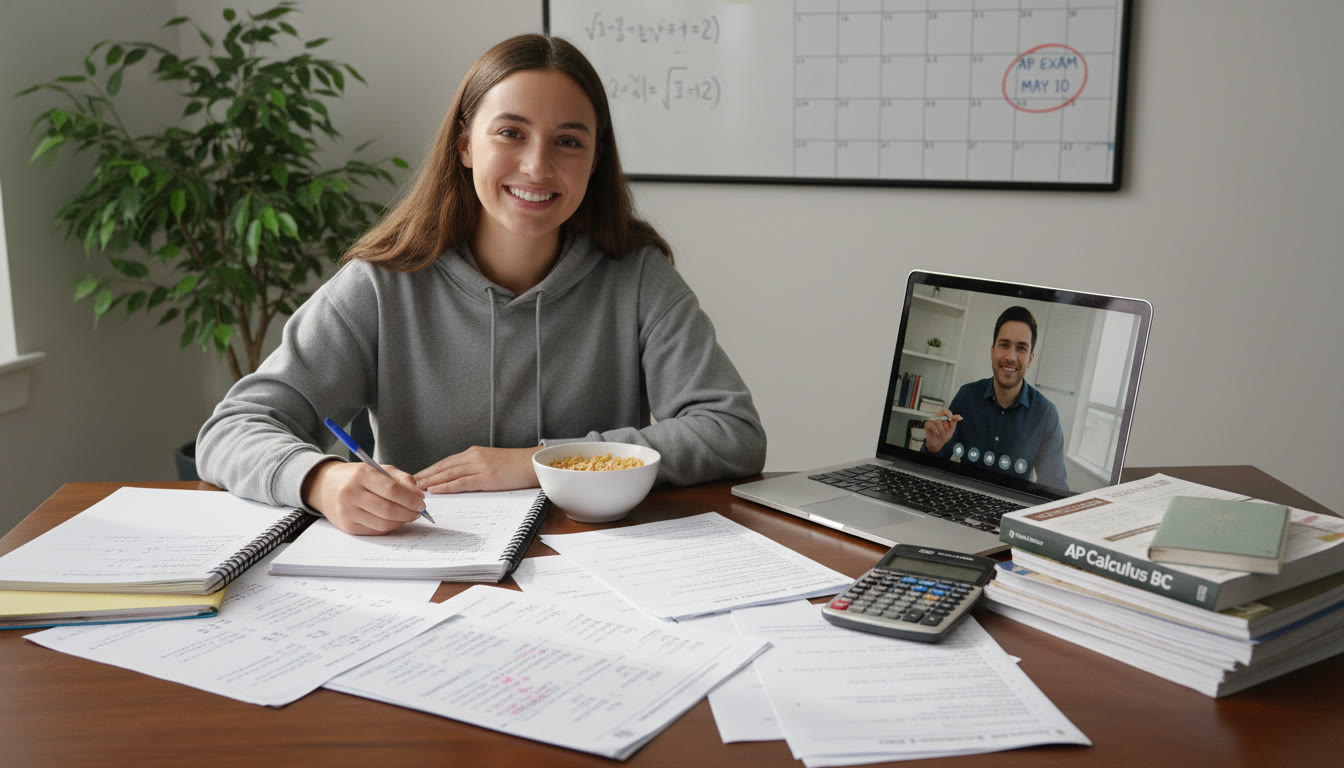
There’s no single “right” answer. AB and BC are tools to help you grow—pick the one that supports your academic goals, preserves balance, and challenges you at the right level. If you want the most flexibility for STEM majors and are excited by deeper topics, BC is powerful. If you want strong quantitative foundations without the densest pace, AB will serve you well.
Remember: the best results come from planning, steady practice, and targeted support. Whether you select AB or BC, combine classroom effort with quality practice, and consider personalized tutoring to bridge gaps quickly. Programs like Sparkl’s offer tailored study plans, expert tutors, and AI-driven insights that can turn weeks of uncertainty into steady progress—especially when tackling tricky BC topics or polishing AB exam strategies.
Quick Checklist Before You Enroll
- Confirm your intended college majors and their calculus expectations.
- Review your school’s AP course pacing and instructor recommendations.
- Assess your weekly time budget and adjust other commitments if needed.
- Consider a tutoring plan or supplemental resources for targeted help.
- Decide early enough to make a smooth transition or to prepare over the summer.
Resources for Continued Success
Keep a study calendar, schedule weekly concept reviews, and practice full-length exams under timed conditions. If you want extra structure, a personalized tutor can build a study plan tuned to your school’s syllabus, measure progress, and keep you accountable—so you can focus on learning, not just logging hours.
Parting Encouragement
Choosing AB or BC is a meaningful decision, but it’s not irreversible. Many students pivot, catch up, and excel. Trust your instincts, gather information, and choose the course that helps you grow academically while keeping your well-being front and center. With steady practice, a smart study plan, and the right support, you’ll be ready for exam day—where your preparation will pay off.
Good luck—and remember: strong decisions come from clarity. Use this guide, talk to mentors, and pick the path that aligns with your goals. You’ve got this.





























No Comments
Leave a comment Cancel