
Why Dimensional Analysis Deserves a Spotlight
Dimensional analysis — sometimes called unit analysis or the factor-label method — is the quiet MVP across AP science courses. Whether you’re solving an AP Physics 1 kinematics problem, converting concentrations in AP Chemistry, or checking the plausibility of an answer in AP Environmental Science, units help you stay honest. Yet many students treat units as an afterthought. This blog turns that tendency on its head: welcome to Cross-Science: Dimensional Analysis Sprint Drills — a practical, high-energy approach you can use to level up your reasoning, speed, and confidence before test day.
What This Guide Will Do for You
By the end of this article you will be able to:
- Use dimensional analysis as a cross-disciplinary problem-solving tool.
- Run focused sprint drills to build speed and accuracy.
- Spot common unit-trap mistakes and dead ends before they cost points.
- Adopt a short, repeatable practice plan that fits an AP study schedule.
- Learn when targeted help — like Sparkl’s personalized tutoring — can turn slow progress into a breakthrough.
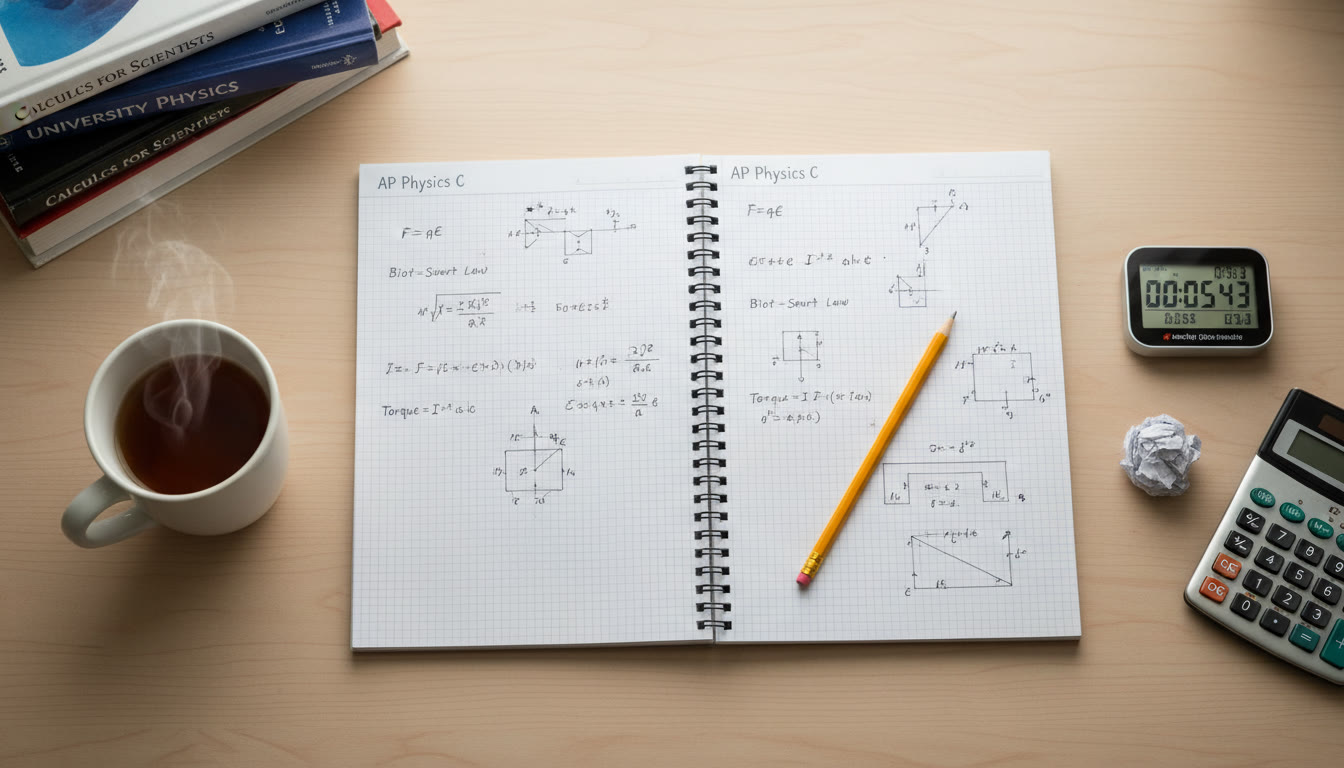
Dimensional Analysis: The Concept in One Breath
At its core, dimensional analysis is simple: treat units like algebraic quantities that must cancel or combine correctly. If the units don’t line up, the answer is almost certainly wrong. But beyond correctness, unit work can reveal hidden relationships between variables, suggest shortcuts, and guide approximation strategies that are invaluable during timed AP sections.
Key Principles (Quick Reference)
- Units multiply and divide like numbers: 3 m × 2 s = 6 m·s (but watch meaning).
- Only like units add or subtract: you cannot add meters to seconds.
- Conversion factors are exact ratios (e.g., 1 km = 1000 m), used as unit-cancelling fractions.
- Dimensional consistency is necessary (but not sufficient) for correctness: a physically plausible expression must have correct units.
Why Sprint Drills Work
Sprints are short, intense practice bursts designed to build automaticity. For dimensional analysis, the goal is to make unit cancellation instinctive so you conserve cognitive energy for conceptual reasoning and tricky steps. Sprints emulate the pressure of exam timing and strengthen pattern recognition — you’ll start spotting unit structures (like rates, densities, or fluxes) in seconds.
Science Crossovers Where Units Save the Day
Dimensional analysis is portable. A few examples:
- Physics: Convert velocity units (m/s to km/h), check formulas (does a term have units of acceleration?).
- Chemistry: Convert moles to grams, mg/L to ppm, or use dimensional checks in equilibrium expressions.
- Environmental Science: Transform flow rates into cumulative volumes or convert concentrations for dose calculations.
- Biology: Convert between units for population density, reaction rates, or concentration gradients.
How to Run a Dimensional Analysis Sprint Drill
Use this reproducible 20-minute sprint format three to five times per week in the month before your AP exam for best results.
20-Minute Sprint Structure
- Warm-up (2 minutes): Quickly review common conversion factors (SI prefixes, time, mass, volume).
- Core sprints (3 × 5 minutes): Each sprint set contains 6–8 problems. Focus on unit-only reasoning first — set up conversions and cancel units before computing numbers.
- Review (5 minutes): Immediately check mistakes and write a 1–2 sentence note explaining why the units failed or succeeded.
Example Sprint Problems (Mixed Difficulty)
- Convert 72 km/h to m/s.
- If a solution has 0.0025 mol/L of NaCl, what mass concentration in g/L does that correspond to? (Molar mass NaCl = 58.44 g/mol.)
- Given a flux of 3.0 × 10^6 photons/cm^2·s, express the rate in photons/m^2·min.
- Check: Does the expression 1/2 mv^2 have units of energy? Show dimensional steps.
- Convert a river discharge of 250 ft^3/s to m^3/s (1 ft = 0.3048 m).
- AP-style challenge: An athlete runs a 400 m lap in 55.2 s; compute power if they burn 840 kJ per lap. Express power in watts and highlight the unit conversions.
Worked Examples: Step-by-Step
Below are two worked examples that show how sprint-style thinking reduces mistakes and speeds up solving.
Example 1 — Physics: Velocity Unit Conversion
Problem: Convert 72 km/h to m/s.
Sprint approach:
- Write units explicitly: 72 km/h = 72 (km) / (h).
- Use conversion factors as fractions to cancel: 1 km = 1000 m and 1 h = 3600 s.
Set up: 72 × (1000 m / 1 km) × (1 h / 3600 s) = 72 × 1000 / 3600 m/s = 20 m/s.
Why it helps: Canceling km and h visually confirms you will end with m/s. No calculator surprises.
Example 2 — Chemistry: Moles to Grams
Problem: Convert 0.0025 mol/L of NaCl to g/L. M(NaCl) = 58.44 g/mol.
Set up: 0.0025 mol/L × (58.44 g / 1 mol) = 0.1461 g/L ≈ 0.146 g/L.
Tip: In sprint drills, write the mol/mol cancellation first, then carry numerical multiplication mentally or with a quick calculator step.
Common Unit Pitfalls and How to Outsmart Them
Even students who know conversion factors can fall into traps. Here are typical mistakes and your sprint-playbook counters.
Pitfall: Treating Units Like Labels Instead of Algebraic Objects
Fix: Always treat conversions as fractions that multiply. For example, to convert minutes to seconds, multiply by (60 s / 1 min), not divide by 60 without units. Write units and cancel them across the entire expression.
Pitfall: Forgetting Square or Cubic Conversions
Fix: Remember that area and volume conversions square or cube length conversions. 1 m^2 = (100 cm)^2 = 10,000 cm^2; 1 m^3 = (100 cm)^3 = 1,000,000 cm^3. Rapidly flag these in sprints by noting exponent position next to the unit.
Pitfall: Rounding Too Early
Fix: Carry full precision until the final step. In sprint practice, write a short note to «hold precision» for multi-step problems. You can round to an appropriate significant figure only after unit integrity is checked.
Data Table: Sprint Drill Templates and Examples
| Sprint Type | Duration | Focus | Example Problems |
|---|---|---|---|
| Quick Conversion | 5–10 min | SI prefixes, time, length | km/h ↔ m/s, mg ↔ g, μL ↔ mL |
| Cross-Discipline Check | 15–20 min | Physics formulas, chemistry concentrations | Check formula units, mol ↔ g/L, energy units |
| Applied Word Problems | 20–30 min | Rates, densities, fluxes | River discharge, power calculations, photon flux |
Integrating Dimensional Analysis into AP Study Plans
Dimensional analysis isn’t a separate skill you should do in isolation — it’s a lens you apply to almost every problem. Here’s how to fold sprint drills into a study plan that fits the AP calendar.
Monthly Build-Up (8 Weeks Out to Test Day)
- 8 Weeks Out: Two 20-minute sprints per week, focused on conversions and common AP formula checks.
- 4–6 Weeks Out: Increase to three sprints per week, mix in applied word problems and discipline crossovers.
- 2 Weeks Out: Daily mini-sprints (10 minutes) to sharpen speed and error-checking habits.
- Final 48 Hours: Light unit-check review and rest; sprint only if it reduces anxiety, otherwise prioritize sleep.
Example Weekly Plan
- Monday: 20-minute conversion sprint + error log.
- Wednesday: 20-minute cross-discipline sprint (physics + chemistry).
- Saturday: 30-minute applied word problem session with one full practice section of AP-style questions.
How to Track Progress: A Simple Error Log
Keep a compact notebook or digital note with three columns: Problem ID, Unit Mistake, Fix. In sprints, review this log each session to prevent repeated errors. Over time you’ll see categories of mistakes — and how quickly they disappear.
Sample Error Log Entry
- Problem ID: Physics kinematics #7
- Unit Mistake: Treated ms^-2 as m/s instead of m/s^2
- Fix: Write exponent position explicitly near variable; run a quick dimensional check before finalizing answer.

When to Ask for Help — And How Tutoring Supercharges Sprints
Sprints build habits quickly, but there are moments when individualized attention accelerates progress: persistent conceptual confusion, plateau in speed despite practice, or anxiety that blocks performance on exam day. Sparkl’s personalized tutoring fits naturally here — short, targeted sessions can debug your misunderstandings, deliver tailored practice problems, and provide 1-on-1 guidance that standard study groups don’t offer.
What Good Tutoring Adds to Sprint Drills
- Diagnosis: An expert tutor spots systematic errors — not just wrong answers — and prescribes precise drills.
- Tailoring: A study plan that respects your strengths, weaknesses, and time constraints.
- Expert Feedback: Immediate correction that shortens the feedback loop and prevents habituation of mistakes.
- AI-Driven Insights: When paired with data-driven tools, tutors can track progress and adapt drills based on your error pattern.
Test-Day Tips: Fast Unit-Checks That Save Points
On exam day, quick heuristics keep you honest and efficient. Use these micro-habits between problems:
- Spot-check units first: Before computing, write the expected final units next to the question number.
- Scan formulas: If a formula mixes units (e.g., mass and volume) ask whether a density or rate is missing.
- Use magnitude sense: If a result is in the wrong order of magnitude (like 10^6 when you expect 10^-3) re-check unit conversions before redoing algebra.
- Unit stub: For multi-step problems, scribble small unit-cancel templates as you move from step to step so you never lose track of exponents or conversions.
Practice Bank: 20 Rapid Problems to Try (Self-Timed)
Set a 20-minute timer and attempt 20 quick unit-focused problems. After the timer, review errors for 10 minutes. These problems should be a mix of conversions, formula checks, and applied units.
- Convert 5.4 × 10^4 cm to meters.
- Express 0.75 g/mL as kg/L.
- Check units: Is Pv = nRT dimensionally consistent? (Identify units that compose R.)
- Convert 50 μg to grams.
- Express 3.2 × 10^-5 s^-1 in per hour.
- Turn 0.012 mol/L into mol/m^3.
- Convert 2500 mL to m^3.
- Check: Does torque (τ = r × F) have units of N·m? Explain.
- Convert 3.6 × 10^6 J to kWh.
- Express 1.5 × 10^8 photons/cm^2·s as photons/m^2·s.
- Convert 20°C temperature change into kelvin change.
- Express 45 miles per hour in m/s (1 mile = 1609.34 m).
- Check units in rate law: rate = k[A]^2 — what are units of k if rate is mol L^-1 s^-1?
- Convert a density of 1.25 g/cm^3 to kg/m^3.
- Express 0.00012 Pa·s in mPa·s.
- Turn 5 L/min into m^3/s.
- Check: Are units balanced in pressure × volume = energy? (PV has units of Joules?)
- Convert 200 ppm (by mass) into g/kg assuming 1 ppm = 1 mg/kg approximation where applicable.
- Express 9.81 m/s^2 as km/h^2 (approximate) and comment on usefulness.
- Given 2.2 lb mass, convert to kg (1 lb = 0.453592 kg).
Final Thoughts: Make Units Your First Line of Defense
Dimensional analysis is not a separate topic you can cram the night before. It’s a habit — a way of thinking — that becomes a reliable ally when practiced with intention. Sprint drills compress habit formation: short, focused, repeated exposures create automaticity. Combine that with a tight error log, weekly mixed practice, and occasional expert tutoring — for example, Sparkl’s personalized tutoring sessions that target your weak points — and you’ll find that units stop being an afterthought and start being a strategic advantage.
Next Steps
- Start with three 20-minute sprints this week.
- Create an error log and add one entry for every incorrect unit step.
- If you’re plateauing, consider a focused tutoring session to break through the snag.
Dimensional analysis rewards the organized mind. Treat units like a map: they show you where you are in the problem, where you need to go, and which roads are blocked. Sprint your way to fluency, and come test day you’ll find that unit checks are no longer a safety net — they’re a shortcut to better answers, faster.























No Comments
Leave a comment Cancel