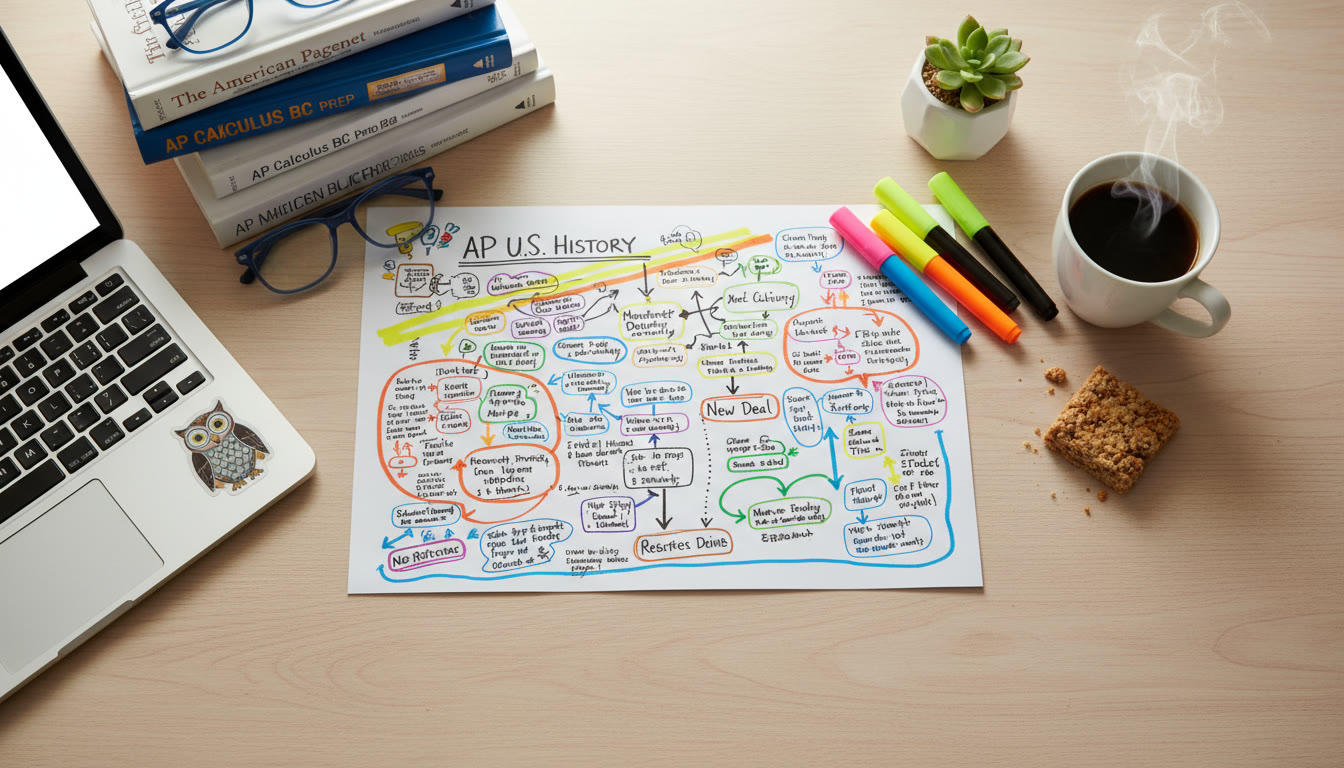

Why One-Pagers Are a Game Changer for AP Language Students
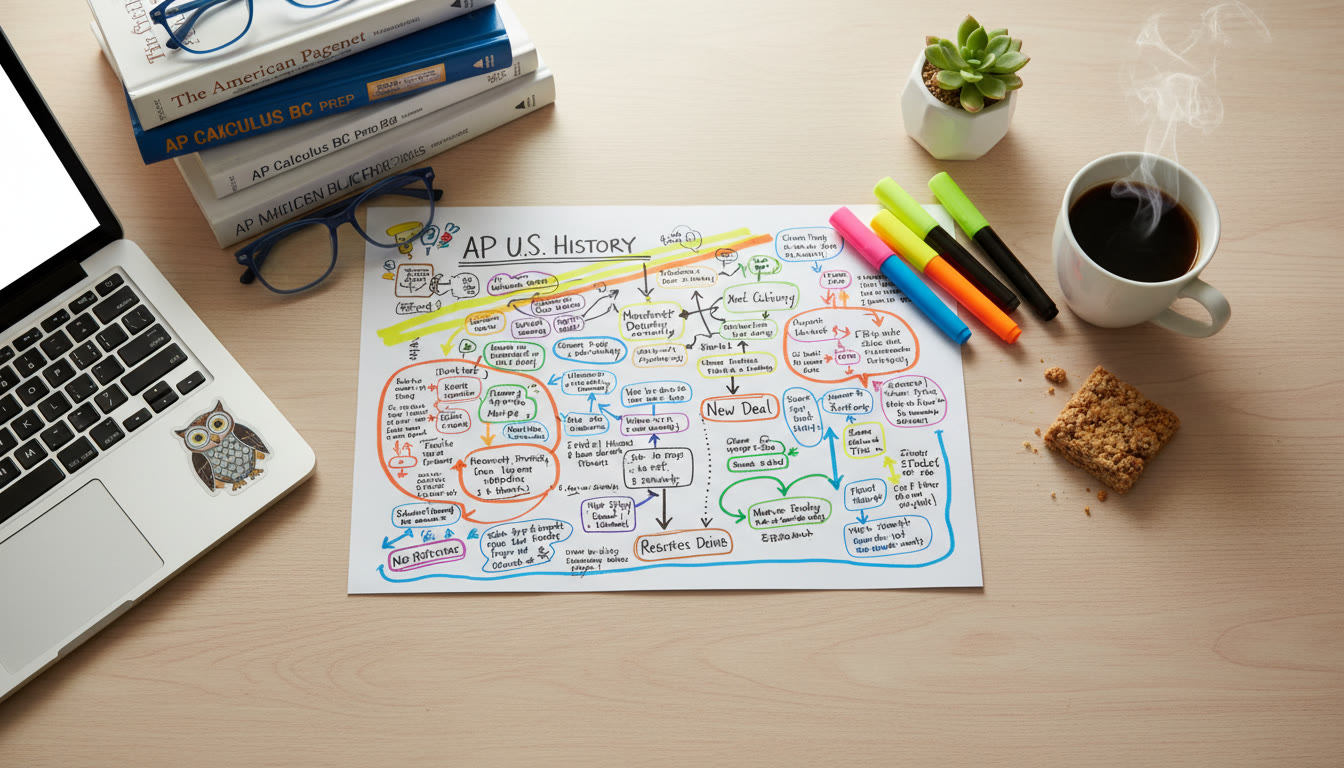
Imagine cramming months of classwork, vocabulary, cultural notes, grammar rules, and exam strategy onto a single, beautifully organized page. That’s the magic of a one-pager: a compact study artifact that turns a sprawling syllabus into something you can quickly scan, internalize, and use on the go. For AP language courses—where speaking, listening, reading, and writing intersect—one-pagers help you connect the dots between grammar structures and real-world usage, all while making revision faster and more meaningful.
In this blog, you’ll find adaptive one-pager templates tailored to each major AP language. These templates are designed to fit different learning styles: visually driven, example-rich, or strategy-focused. You’ll also get practical tips for using them in the weeks before the exam, and examples of how to fold them into daily practice. If you want personalized guidance, Sparkl’s personalized tutoring can help transform these templates into living study plans—1-on-1 guidance, tailored study plans, expert tutors, and AI-driven insights can all make the templates truly yours.
How to Use These Templates
Before we dive into language-specific pages, let’s agree on how to use a one-pager effectively:
- Keep it active: One-pagers are not decorative—they’re functional. Update them after a practice test or a speaking session.
- Prioritize: Place the 20% of content that yields 80% of results (core verbs, essential grammar, transitional phrases) in the top-left quadrant for quick recall.
- Use examples: Short, clear examples beat long explanations—especially in languages. Every rule should pair with a 6–10 word sentence that illustrates it.
- Color code: Use color to separate grammar from vocabulary from exam strategy—your eyes will learn the layout fast.
- Test and iterate: After each practice exam, mark weak spots and revise the one-pager that weekend.
Universal One-Pager Template (Works for Any Language)
Start with this adaptable structure. You can situate these sections in quadrants or columns—whatever fits your aesthetic.
| Section | Contents | Why It Matters |
|---|---|---|
| Core Grammar | Conjugation charts, verb moods, common irregulars | Exam writing and translation tasks hinge on these. |
| Must-Know Vocabulary | Topic-based lists (health, environment, politics) + 10 idioms | Supports speaking prompts, cultural comparisons, and Q&A. |
| High-Yield Phrases | Transitions, opinion markers, hedging language | Boosts coherence and rhetorical sophistication on essays and speaking. |
| Task Strategy | Time splits, scoring rubric keywords, quick checklist for each task | Prevents careless mistakes and optimizes time under pressure. |
| Micro-Examples | One short example per rule/phrase | Memory anchors—real usage beats rules alone. |
Language-Specific One-Pager Templates
Below are tailored templates for several AP languages. Each template highlights the elements that frequently appear on AP exams and in classroom assessments.
AP Spanish One-Pager
AP Spanish tests your ability to interpret and produce Spanish in academic and real-world contexts. Your one-pager should balance grammar precision with cultural content.
- Core Grammar: Present, preterite vs. imperfect contrast table, subjunctive triggers (WEIRDO list), imperative forms, por vs. para with examples.
- Top 30 Vocabulary: Topics: family, environment, technology, politics, immigration—each with 5 high-utility words and 2 idioms.
- High-Yield Phrases: En mi opinión, cabe destacar que, a pesar de, por otro lado, lo que ocurre es que.
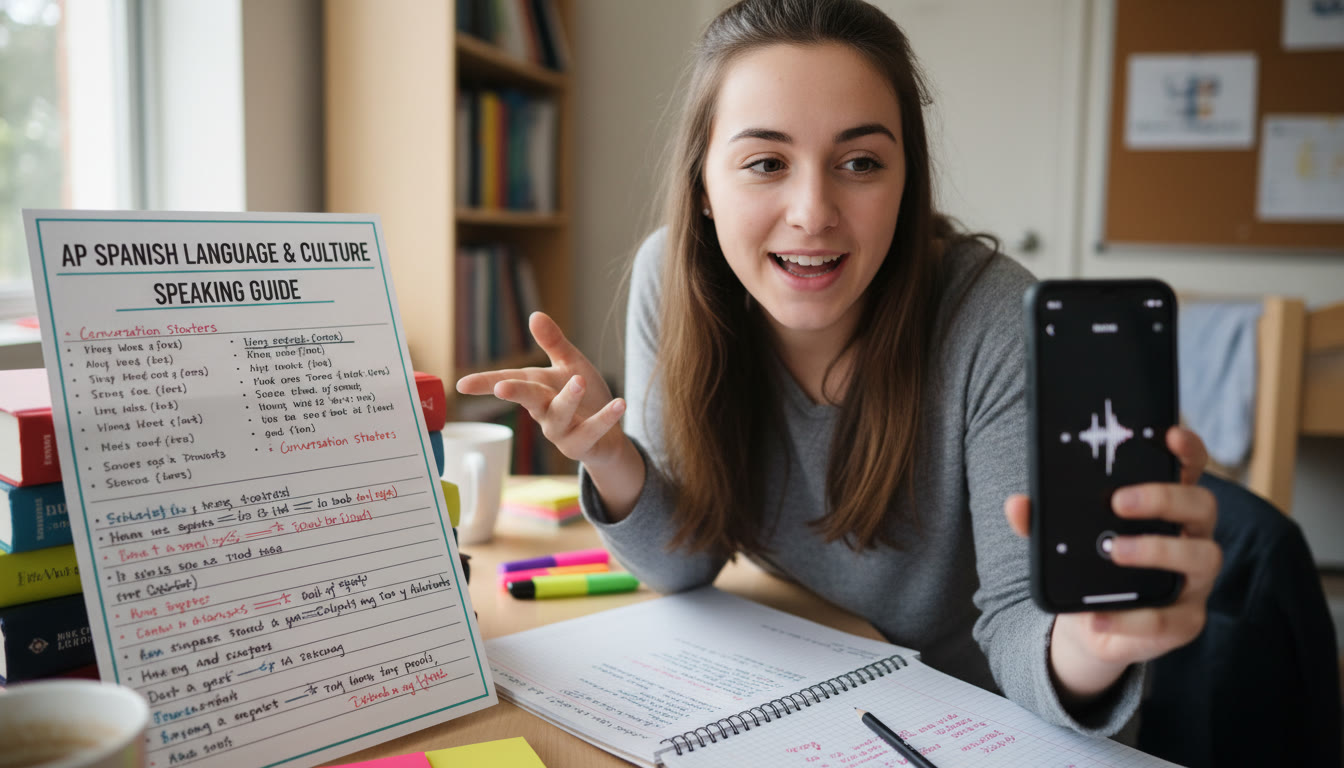
- Speaking Cues: 30-second opener, 45-second expansion, 15-second conclusion templates; linking phrases to shift between ideas.
- Exam Checklist: Include time allotment for each subsection, quick reminders to vary verbs and use one subjunctive sentence in the written task.
AP French One-Pager
AP French emphasizes nuanced expression and cultural awareness. Condense polite formal structures and idiomatic expressions onto one page.
- Core Grammar: Passé composé vs imparfait table, plus-que-parfait, conditional (present & past) with example sentences.
- Key Vocab: Education, environment, francophone world, media, cuisine—phrases that appear in prompts.
- Transitions & Register: Toutefois, en revanche, par ailleurs, il convient de noter que, en fin de compte.
- Pronunciation Tips: Quick reminders: liaison rules, nasal vowel cues, silent h’s that affect liaison.
AP German One-Pager
German requires attention to case, word order, and separable verbs. Your one-pager should make those structural rules immediately visible.
- Core Grammar: Nominative/accusative/dative/pronoun table, modal verbs, separable verbs with examples, subordinate clause word order.
- High-Yield Vocab: Economy, migration, environment, culture—plus fixed collocations (e.g., “Interesse an + D”).
- Writing Strategy: Short patterns for introductions, thesis statements, and balanced arguments (Pro/Contra language).
AP Chinese One-Pager
For AP Chinese, tones, sentence patterns, and character recognition are critical. Build a one-pager that balances characters with usable spoken phrases.
- Core Grammar & Constructions: 把/被 structure, resultative complements, serial verb constructions, comparative structures (比, 没有).
- Essential Characters: 20–30 characters that appear frequently in prompts and authentic materials (culture, environment, technology).
- Speaking Templates: Polite openers, opinion markers (我认为/我觉得), and linking devices for storytelling.
- Listening Strategy: Note-taking symbols for tone, speaker attitude, and factual details—practice shorthand on the one-pager.
AP Japanese One-Pager
Japanese focuses on politeness levels, particles, and reading comprehension. The one-pager should make particle rules and keigo cues instantly accessible.
- Core Grammar: Particles overview (は/が/を/に/で/から/まで), verb forms (te-form, potential, passive, causative), polite vs. plain forms.
- Kanji Bank: 20 kanji with readings and example compounds useful for reading tasks.
- Speech Templates: Phrases for expressing opinion politely and for contrast (しかし, それに比べて).
AP Latin One-Pager
Latin rewards pattern recognition. Your one-pager should spotlight morphology and frequently tested constructions.
- Core Morphology: Declension endings quick chart, principal parts for common verbs, subjunctive uses (purpose, result, indirect command) with short English glosses.
- Translations Tips: Identify point-of-attack verbs, chief participles, and set phrases that indicate subordinate clauses.
- Vocabulary Triage: 50 highest-frequency words grouped by function (nouns of state, verbs of motion, common adjectives).
Sample One-Pager Layouts (Visual Examples)
Here are two layout ideas you can reproduce on a sheet of printer paper or in a digital note app.
| Layout Name | Best For | Structure |
|---|---|---|
| Quadrant Quick-Scan | Students who revise in short bursts | Top-left: Core Grammar; Top-right: Vocabulary; Bottom-left: Phrases/Examples; Bottom-right: Exam Strategy/Checklist |
| Column Flow | Students who like linear review | Left column: Grammar charts; Middle column: Examples and translations; Right column: Speaking/writing templates and checklist |
Practical Examples: Filling the Templates
Let’s fill a few micro-sections with concrete examples so you can see how short, targeted content beats long paragraphs when you’re trying to recall under pressure.
Example: Spanish Subjunctive Mini-Box (Top-Left)
- Trigger words: querer que, esperar que, dudar que, es importante que
- Quick tip: Use present subjunctive after influence or doubt; past subjunctive for hypothetical pasts.
- Micro-example: “Quiero que vengas mañana.” (I want you to come tomorrow.)
Example: French Conditional Quick Pattern (Top-Right)
- Form: infinitive + imparfait endings (or irregular stem + imparfait endings)
- Example: “Si j’avais le temps, je voyagerais plus.”
- Use on essays to present hypothetical consequences when comparing solutions.
Study Routine: How to Build and Maintain One-Pagers
Creating your one-pager is only the start. The real power comes from using it deliberately. Here’s a weekly routine that integrates one-pager maintenance into your study life:
- Monday: Review past mistakes from a practice set and annotate your one-pager with corrections.
- Wednesday: Do a timed speaking drill using only the one-pager for prompts and phrases.
- Friday: Take a mini writing task; mark any missing vocabulary/structures and add them to the page.
- Weekend: Do a full practice section from an AP-style exam and update the one-pager based on weak spots.
If you prefer guided support, Sparkl’s personalized tutoring offers targeted sessions where a tutor can help you turn the one-pager into a tuned study script—tailored study plans, 1-on-1 guidance, and AI-driven insights ensure each revision cycle is efficient.
How to Use a One-Pager During the Exam Prep Window
In the month before the AP exam, transform your one-pager from a learning tool into a performance checklist:
- Use it to design 20-minute micro-sessions focused on a single weakness (e.g., past subjunctive). Repeat daily for a week.
- Practice simulated speaking with a timer; keep your one-pager next to you during prep so you internalize transitions and set phrases.
- Do a last-week memory sweep: rewrite your most vital one-pager elements from memory to reinforce retrieval pathways.
Common Pitfalls and How to Avoid Them
- Overcrowding: If your page is messy, it won’t be useful. Stick to essentials and separate examples from rules visually.
- Theory-only pages: One-pagers must include examples. If you can’t produce a sentence from a rule, you don’t own it yet.
- Neglecting recall practice: Don’t just read the page—use it. Close it and reproduce pieces from memory.
Quick-Fire Checklist: What Every One-Pager Must Contain
- Top 10 grammar facts that cause you errors.
- 20–50 most test-relevant vocabulary words grouped by topic.
- 5–10 transitional and rhetorical phrases for essays and speaking.
- Short example sentences for every rule.
- Micro-plan for timed tasks (how long to brainstorm, write, proofread).
How Tutors and AI Tools Can Improve Your One-Pager
Working with a tutor or AI-driven tool can fast-track your one-pager creation. A skilled tutor helps you select the most exam-relevant material, provides rapid feedback on phrasing and register, and suggests examples that match the style of AP prompts. AI-driven insights can identify patterns in your errors across practice tests and recommend which items deserve a permanent place on your one-pager. If you’re looking for structured, personalized help, Sparkl’s tutoring combines human expertise with data-informed adjustments—helping you keep your one-pager sharp and hyper-relevant.
Final Words: Make It Yours
One-pagers are small, but they’re powerful. They condense hours of study into something that fits in your pocket, on your phone, or taped inside your notebook. The real secret is iteration: build, test, adjust. Start with the universal template, adapt it for your language, and use it actively—speak from it, write from it, and revise it after every practice exam. Over time, the one-pager becomes less a sheet of paper and more your shorthand for thinking in another language.
And if you ever feel stuck or want that extra push, consider scheduling a targeted session with a tutor—Sparkl’s personalized tutoring can help you refine the one-pager, personalize examples, and convert weaknesses into strengths with 1-on-1 guidance, tailored study plans, and expert feedback.
Appendix: Printable One-Pager Checklist (Quick Copy)
Use this checklist to construct your one-pager in 30–60 minutes:
- Choose layout: Quadrant or Column.
- Top-left: Write your 5 most common grammar errors and 1 correction sentence each.
- Top-right: List 30 high-frequency vocabulary words grouped into 5 topics.
- Bottom-left: Write 10 transition/argument phrases with a 3-word translation.
- Bottom-right: Add a 4-step exam-day checklist (Plan, Write, Check, Proofread) and time allocations.
- Decorate minimally—use color for categories only.
Go Build Your One-Pager
Grab a blank sheet, pick a layout, and start with the most unforgiving corners of your knowledge—the rules you forget under pressure. The act of condensing knowledge into one page is itself a learning process: you decide what matters, you rank it, and you anchor it with examples. That focused decision-making is the unseen muscle behind high performance on AP language exams. Good luck—and remember: consistent, targeted practice beats last-minute cramming every time.

























No Comments
Leave a comment Cancel