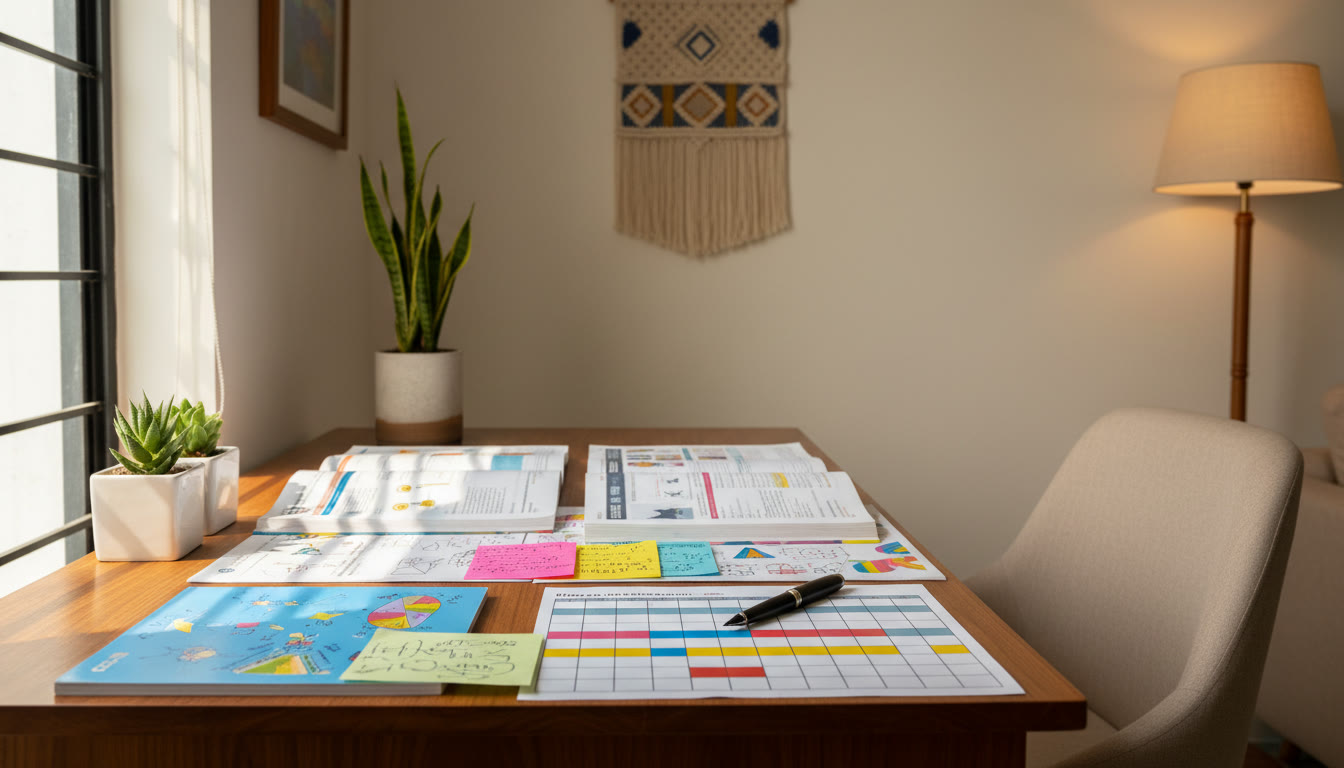

Best Books for CBSE Concept Clarity and Practice
Picking the right books is less about collecting shelves and more about building a toolbox you can trust when exams and deep learning demand it. This guide is written for students who want clear thinking, steady practice, and a practical plan to turn textbooks into understanding. Read on for a subject-wise approach, how to mix and match resource types, study rhythms that actually work, and ways to measure progress with tests that mirror the CBSE style.
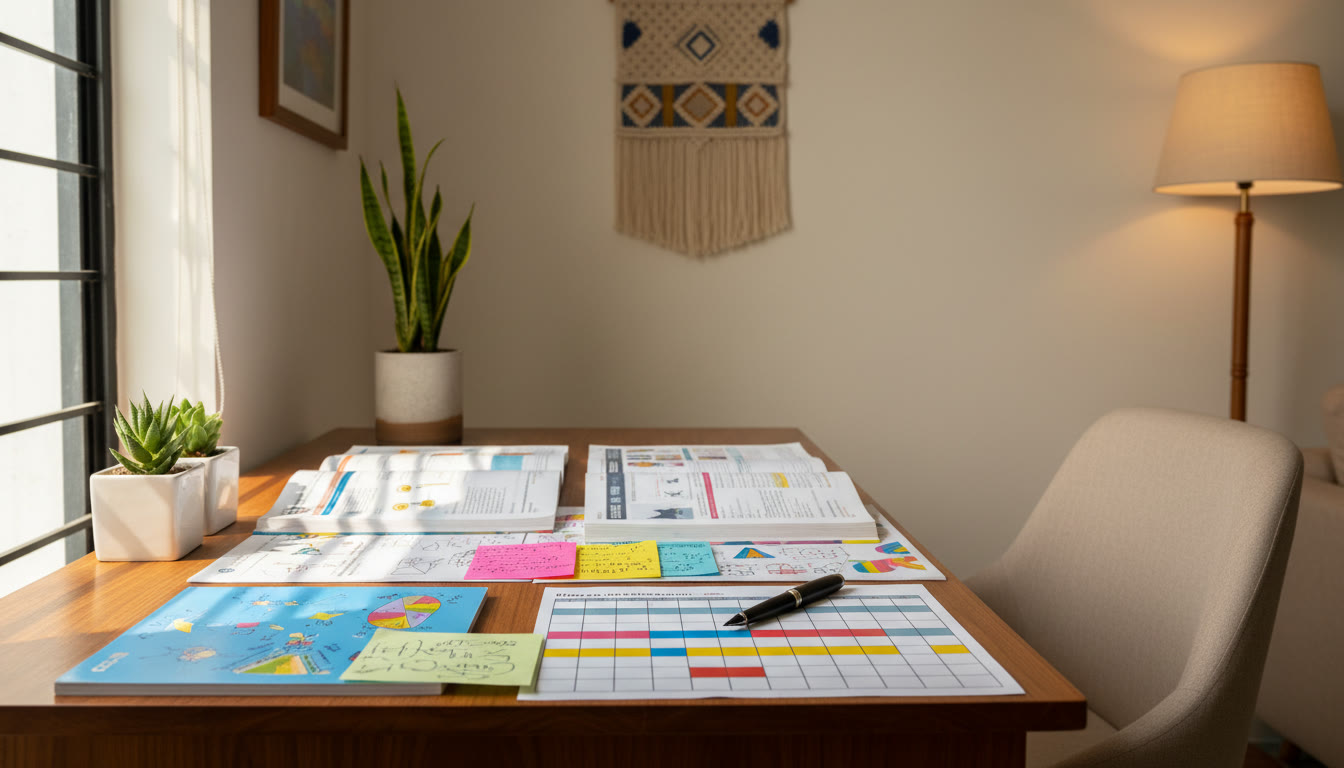
Why the right books matter more than many realize
Books are more than pages. For CBSE-style learning they are the architecture of your preparation. The right set of books helps you map the syllabus, checks your conceptual foundation, provides graded practice, and simulates the exam pattern. Equally important: good resources save time. When you use materials that are aligned to the syllabus and the exam style, you spend less time guessing what to study and more time practising the skills that earn marks: applying concepts, solving problems under time pressure, and presenting neat, logical answers.
What to prioritise when you choose a book
- Alignment with the current syllabus and chapter sequence rather than flashy extras.
- Clarity of explanation: look for stepwise reasoning and worked examples that show why, not just how.
- Variety and grading of practice questions: from basic checks to higher-order application problems.
- Clear marking-style practice: questions that resemble board-style phrasing, including competency-based prompts.
- Good diagrams, lab-focused pages for practical subjects, and space for notes and error logs.
- User-friendly layout: tables, summaries, quick-revision boxes and solved sample papers to streamline revision.
Core categories of books every CBSE student should keep
Rather than dozens of named titles, think in categories. Each type plays a role in your learning cycle.
- Prescribed board textbooks for the official base content and syllabus map.
- Concept-building reference books that expand explanations, provide multiple worked examples, and strengthen intuition.
- Topic-wise practice workbooks with graded questions and short tests for steady skill building.
- Sample papers and previous-year compilations to familiarise yourself with question wording and typical patterns.
- Full-length mock test booklets for timed practice under exam-like conditions.
- Quick revision guides or pocket notes for last-minute formula checks and concept maps.
- Lab manuals and project notebooks for practical assessments, project work and internal evaluation.
Quick reference table: what to use and when
| Book Type | Primary Purpose | When to Use | How to Use Effectively |
|---|---|---|---|
| Prescribed board textbooks | Foundation of syllabus and concepts | From the start of the cycle and for revision | Read chapters thoroughly, underline definitions, attempt in-text exercises first |
| Concept-building references | Deepening understanding with varied examples | After first read of a topic | Study worked examples, try alternate methods, note problem-solving tricks |
| Topic-wise workbooks | Practice and reinforcement | Daily practice and weak-topic focus | Do graded sets, record errors, revisit theory until errors fall |
| Sample papers & previous years | Exam-style familiarity | Mid-season and final revision phases | Time yourself, follow marking style, review model answers |
| Mock test booklets | Time management and full-syllabus testing | Regularly from mid-course to final revision | Simulate exam hall conditions, mark strictly, and analyse errors |
Subject-wise guide: how book choices and use change with subjects
Each subject has its own rhythm. Below are practical notes on the best approach for common subjects and how to pair book types for maximum payoff.
Mathematics
- Start with the prescribed textbook chapter to understand definitions and standard methods.
- Use a concept reference to see multiple worked examples and alternative methods for the same problem.
- Daily problem practice in a graded workbook is key. Focus on building speed and accuracy through repeated application of core techniques.
- Full-length mock tests train time management; keep an error log for recurring slip-ups like sign errors or skipped steps.
Science stream: Physics, Chemistry and Biology
Science combines theory with problem solving and practical work. Treat each component with its own strategy.
- For theory-heavy chapters, read the prescribed textbook, then consolidate with a concept reference that explains underlying principles.
- For numerical problems in physics and chemistry, focus on graded practice and systematic method notes: knowns, equations, substitutions, units, answer check.
- For biology, integrate concept maps and labelled diagrams into daily revision. Practice drawing neat, labelled figures and short descriptive answers that follow a logical order.
- Use lab manuals and project notebooks to keep experiments tidy, reflect on observations, and link practicals to theory.

Social Science and Languages
- Social Science benefits from timeline charts, mind maps and practice answer writing; use topic-wise practice books for source-based and long-answer practice.
- Languages require regular reading, writing and grammar work; pack one workbook for short activities and one for extended composition practice.
- Practice past-style questions for source interpretation, map skills, and structured answers that follow introduction, explanation and conclusion when appropriate.
How to use practice books and mock tests so they really help
Practice without analysis is busywork. Turn every practice session into feedback that improves the next one.
- Time the test to reflect exam duration and avoid distractions so you build stamina.
- Mark strictly using the official-style expectations: check for completeness, clarity, and logical steps.
- Keep a test notebook where you record each mistake, why it happened and the corrective step you will take next time.
- Mix question difficulty: a daily routine that blends easy, medium and hard problems builds confidence and skill.
A practical weekly routine for book-based study
Here is a balanced weekly rhythm you can adapt. The idea is to cycle learning, practice and testing so knowledge moves from short-term to durable memory.
| Day | Morning | Afternoon | Evening |
|---|---|---|---|
| Monday | Read a new chapter from prescribed textbook | Work through concept reference examples | Do graded workbook problems |
| Wednesday | Revise notes and highlight key formulas | Practice problem set on weak topics | Short timed quiz on that chapter |
| Friday | Attempt sample paper questions from same topic | Self-mark and record errors | Revise error-log corrections |
| Sunday | Full-length mock for that subject or combined test | Careful answer review and model answer comparison | Plan next week based on gaps found |
Note making, diagrams and derivations as study weapons
Notes are not just summaries; they are active learning tools. Use a two-column layout with keywords and quick explanations on the left and worked examples on the right. For diagrams, practice drawing them by hand and labelling neatly; that muscle memory helps you reproduce them accurately under pressure. For derivations, write each step with a short rationale: this helps examiners follow your logic and helps you find the gap if you make an error.
Using resources smartly: fewer but deeper
- Quality beats quantity. Instead of ten random books, choose one reliable reference per subject that explains concepts clearly, one practice workbook, and one mock/test booklet.
- Rotate resources according to your phase: concept-builders early, practice mid-cycle, mocks heavily in revision time.
- Keep a revision notebook and a short formula sheet for quick pre-test checks instead of flipping through large books at the last minute.
How personalised tutoring complements your books
If you find persistent gaps or need one-on-one pacing, personalised tutoring can amplify the value of your books. Sparkl‘s tailored study plans and expert tutors can help translate weak areas into targeted practice and turn mock-test insights into concrete next steps. Tutors can design question sets from the right book categories, explain tricky problems, and coach efficient answer presentation aligned with board expectations.
Mistakes students make when picking books and how to avoid them
- Buying many similar books and never finishing any. Solution: select a primary reference and a single practice workbook per subject.
- Relying only on past papers without strengthening weak concepts. Solution: pair sample papers with concept sessions from a trusted reference.
- Skipping lab manuals or practical notebooks until the end. Solution: maintain practical records from day one and integrate them into your weekly routine.
- Ignoring the syllabus map. Solution: match chapters to the official syllabus headings and tick them off as you finish.
Checklist before you start using a new book
- Does it explicitly match the syllabus topics and sequence?
- Are worked examples clear and varied?
- Is practice graded by difficulty and includes board-style questions?
- Is there a set of full-length papers or mock tests that mimic exam conditions?
- Does it include summaries, quick-revision boxes and practice for practicals if applicable?
Measuring progress: beyond marks to skills
Marks matter, but measure the skills behind marks. Track speed, error types, conceptual confidence, and the ability to attempt higher-order questions. Use your mock-test reviews to identify whether errors are careless, due to weak concepts, or time pressure. Convert that insight into a focused book usage plan: more concept work, targeted problem sets, or timed practice as needed.
Bringing it together: a simple roadmap for the resource stack
Start with the prescribed board textbook for foundation reading. Use a concept-building reference to sharpen understanding. Practice in topic-wise workbooks until you can do core exercises without hesitation. Periodically, attempt sample paper questions to see how the board frames the problem. From mid-course, schedule regular full-length mock tests to build stamina and time management. Keep quick-revision notes and a disciplined error log to guide your final months of revision.
Final thought
Choosing books is a strategy, not a shopping list. When your resources are organised around clarity, graded practice, and realistic timed tests, each study session becomes an investment in skill rather than a hunt for answers. Build a small, reliable stack: prescribed textbooks for foundation, a clear concept reference, a graded practice workbook, and mock tests to refine timing and presentation. Pair these with steady note making, diagram practice, and targeted analysis, and your preparation will be both efficient and resilient.





















No Comments
Leave a comment Cancel