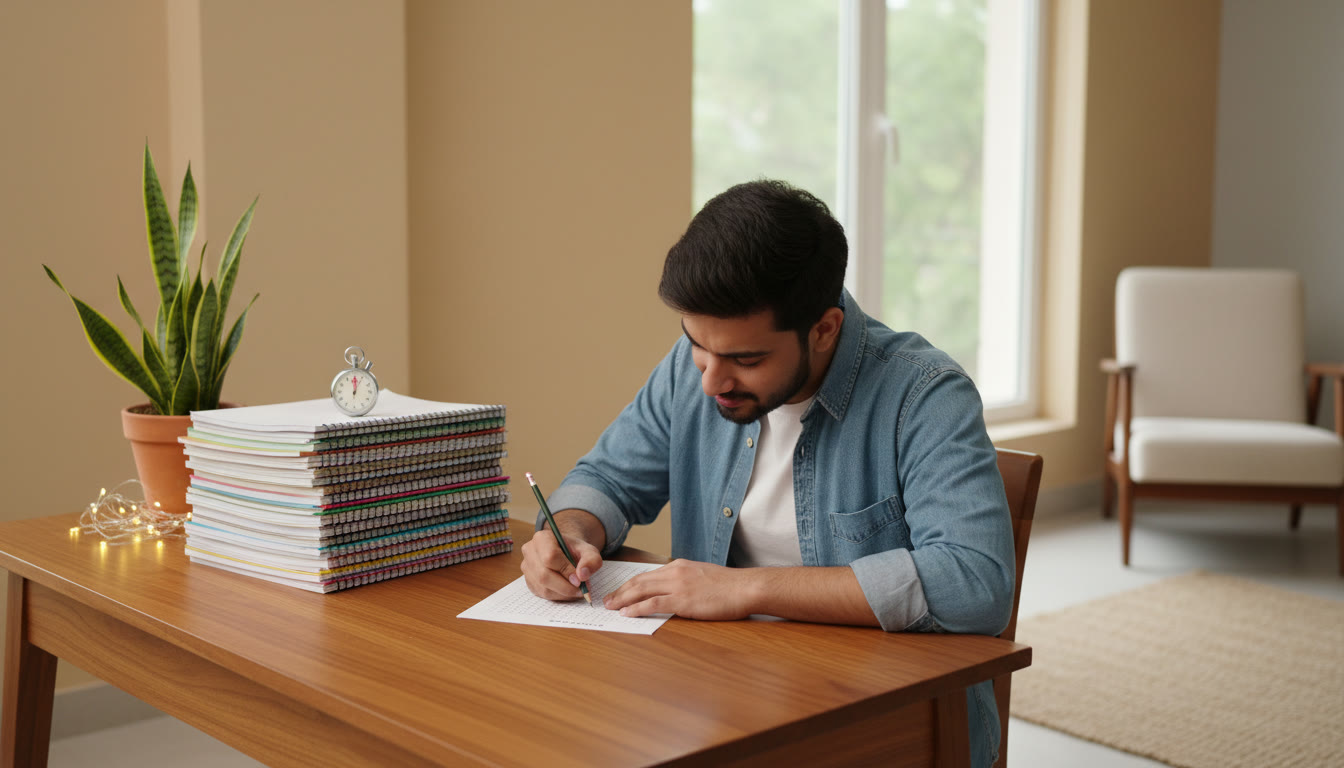

Mistakes Students Make Before Exams — Spot Them, Fix Them, and Go In Confident
Walking into exam season feels different for everyone: some wear excitement like armor, others carry a low hum of panic. Whatever you feel, the things that help most don’t usually involve last-minute miracle strategies — they involve careful mistake analysis, disciplined practice, and next-step habits you can actually stick with. This piece breaks down the common pitfalls students make before big MCQ-based entrance exams (the kind that run on a strict three-hour format, with OMR discipline and negative marking), shows how to analyse what went wrong, and gives practical fixes you can start applying immediately in the current cycle.
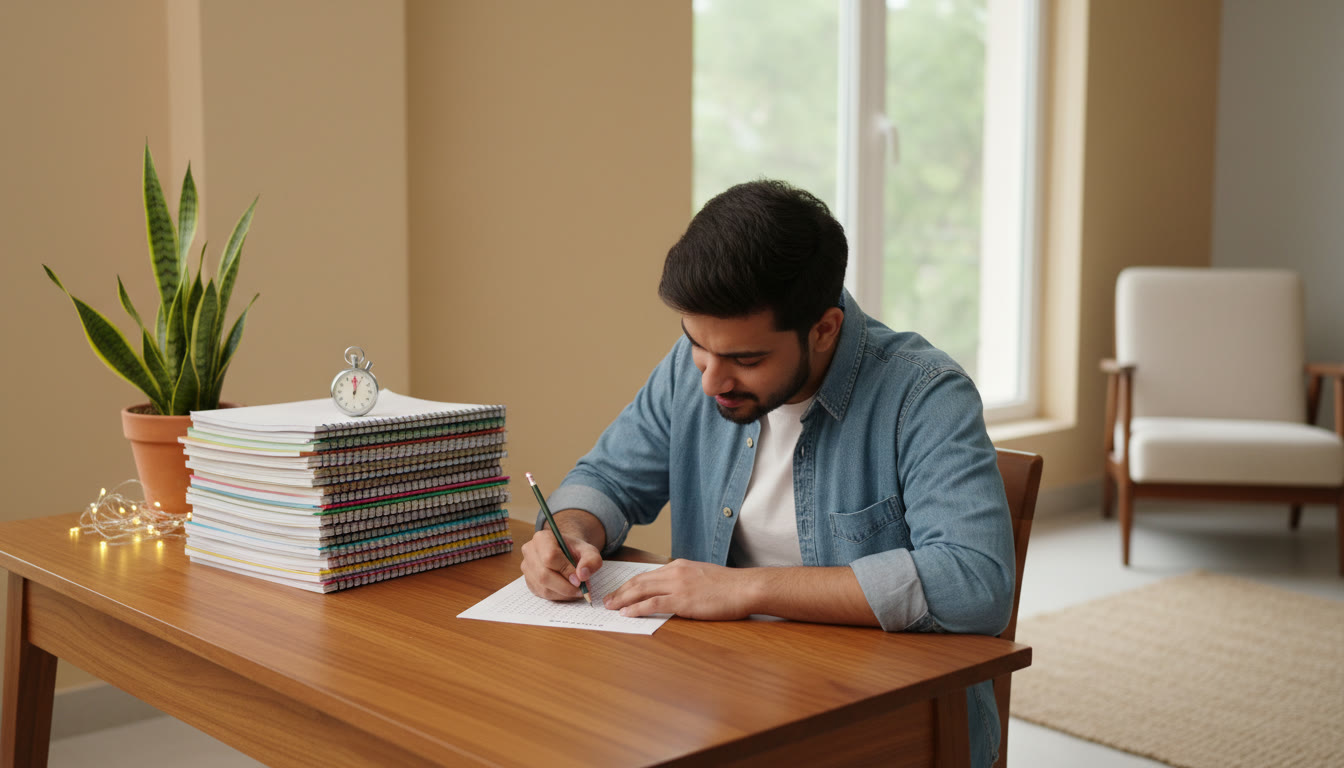
Why analyzing pre-exam mistakes matters more than blaming them
Mistakes are useful — but only if you turn them into data. A single mock test feels like a failure or a win, which tends to trigger emotional reactions. Analysis turns that emotion into information: which topics are bleeding marks, which question-types waste time, whether your OMR-skills are reliable, and whether negative-marking decisions are costing you overall score. The aim isn’t to be perfect; it’s to reduce repeat mistakes and turn weak spots into predictable, fixable items.
Two quick truths to keep in mind as you read: the exam is MCQ-based and scored under negative marking, the typical full-length practice is three hours long and must be treated like the actual hall experience, and answers on the OMR sheet need disciplined, error-free filling. Also remember that diagrams, derivations, and class notes are study tools — they help build concepts, but MCQs reward accuracy and clarity rather than step-by-step descriptive answers.
Common pre-exam mistakes and how to fix them
Below are recurring errors students make in the weeks and days before an exam, with clear actions to stop them from repeating.
Mistake 1 — Panic cramming instead of focused revision
What happens: Hours are poured into unfamiliar topics with the hope that quantity equals readiness. Result: surface familiarity without recall under pressure.
Fix: Switch from broad cramming to targeted short-cycle revision. Pick the 8–12 topics that are high-yield for you (not “high-yield” generically, but high-yield for your recent mock-test errors) and schedule 25–40 minute focused sessions followed by quick recall attempts. End each session by doing 5–10 mixed MCQs in exam-mode for those topics.
Mistake 2 — Ignoring OMR practice and sloppy marking habit
What happens: Students assume knowledge is enough and neglect bubble-filling practice. In the hall, they mis-bubble, double-fill, or smudge answers — small errors that can nullify hours of study.
Fix: Simulate the OMR routine every full-length mock: fill a separate answer sheet (or a practice OMR) strictly, use the exact pen you’ll use on the day, time the marking pauses you’ll allow between sections, and practise crossing out and erasing while keeping the sheet neat. Learn a reliable habit: answer in the question booklet first, then transfer every 10–15 questions in one calm sweep on the OMR. This habit reduces hurried mistakes.
Mistake 3 — Neglecting negative-marking strategy
What happens: Wild guessing on every doubtful question or over-cautious skipping, either of which hurts net score.
Fix: Develop a decision rule. For example, if you can eliminate at least one or two options reliably (and your confidence is moderate), attempt; if less than one option eliminated, skip and come back only if time allows. Practice this threshold during mocks and track the net gain of your guesses. The point is consistent decision-making, not random attempts.
Mistake 4 — Mock tests taken as score-checks, not learning tools
What happens: Students celebrate a high score or wallow in a low one and then move on. They rarely dissect wrong answers properly.
Fix: Treat each mock as a science experiment. After every mock, do a structured post-mortem: identify conceptual errors, silly mistakes, and time-bleeds. Create a short corrective plan for each mistake type and schedule small corrective drills before the next mock.
Mistake 5 — Spending too long on trendy ‘shortcuts’ and not on fundamentals
What happens: You chase last-minute tips, mnemonics, or 30-second tricks that look appealing but don’t help on tougher reasoning questions.
Fix: Anchor your revision in fundamentals. Use shortcuts sparingly and only after the core idea is crystal-clear. If a shortcut saves 10 seconds but you miss the question because the concept was shaky, it’s a false economy.
Mistake 6 — Overloading on one subject and starving others
What happens: Students dig deep into the subject they love or fear, leaving the third subject dangerously underprepared — especially in mixed-selection exams that require steady performance across Physics, Chemistry, and Biology.
Fix: Use a balanced micro-plan. For a three-hour mock-test pace, allocate your weekly practice in a 40:30:30 or 35:35:30 split depending on your baseline — then adjust based on mock-test feedback. The goal is to maintain steady accuracy across all subjects, because a weak subject drags down overall percentile more than a slightly stronger one helps.
Mistake 7 — Misreading questions and rushing past qualifiers
What happens: Missing words like ‘not’, ‘except’, ‘closest to’, or qualifiers in physics options leads to avoidable errors.
Fix: Train a two-step read: first get the gist, then re-read and underline or mentally mark qualifiers. Practice with a timer but force yourself to take an extra 4–6 seconds on questions with multi-part phrasing. That little pause saves incorrect choices later.
Mistake 8 — Treating mock corrections as passive note-taking
What happens: You highlight the wrong option, scribble the correct one, then shelve the sheet without actively drilling the identified weak area.
Fix: Convert correction notes into micro-drills. For each wrong concept, write one sentence that explains the root cause and design one 10-question mini-quiz to be attempted within 48 hours. Repetition with short spacing cements the fix far better than re-reading notes.
Mistake 9 — Poor time allocation inside the three-hour window
What happens: Early sections are rushed or later sections left incomplete because pacing wasn’t rehearsed under real conditions.
Fix: During mock tests practice pacing strategies: time per question ranges should be flexible but predictable. Build a checkpoint rhythm — for example, after every 45–60 minutes note the number of attempted questions and adjust speed. Practice sectional sprints to improve speed on question-types that use up time without proportional marks.
Mistake 10 — Mental and physical maintenance ignored
What happens: Last-minute sleep deprivation, poor meals, and high anxiety hijack cognitive performance on exam day.
Fix: Treat sleep and nutrition as non-negotiable. The week before the exam, normalise your sleep schedule to match exam timing. Eat balanced meals, avoid heavy unfamiliar foods, and practise calming routines: deep breathing, brief walks, and a short pre-exam mental checklist to stabilise focus.
Quick reference: Mistakes, symptoms and fixes
Use this table for fast review before a mock or exam day.
| Mistake | Common Symptom | Quick Fix |
|---|---|---|
| Panic cramming | Shallow recall, confusion under timed questions | Switch to focused 30–40 min slots + 10 MCQs |
| Neglecting OMR practice | Smudges, double bubbles, time-waste | Simulate OMR routine each full mock |
| No negative-mark rule | Random guessing or excessive skipping | Apply elimination threshold before guessing |
| Unstructured mock analysis | Repeating same mistakes | Use post-mock correction drills within 48 hrs |
| Ignoring sleep & food | Brain fog, drops in accuracy | Regular sleep + light familiar meals |
How to do a mock-test post-mortem that actually works
Analysis should be short, sharp and repeatable. Here’s a step-by-step routine to apply right after each full-length practice.
- Step 1 — Immediate capture: Within an hour of finishing, write a one-paragraph emotional and factual note: how did pacing feel, which section felt easiest, where did panic begin.
- Step 2 — Categorise errors: Label each wrong answer as conceptual, calculation, reading error, or OMR/marking slip. Keep a simple tally.
- Step 3 — Root cause for top 5 errors: For each of the five most costly mistakes, write one-sentence root causes and one action item (e.g., “relearn derivation X” or “practice 10 similar MCQs under 5-minute limit”).
- Step 4 — Drill within 48 hours: Convert each action item into a 10–15 minute drill and schedule it within two days.
- Step 5 — Track gains: In the next mock, mark if the same error repeats. If it does, escalate the fix — add concept videos, 1-on-1 coaching, or targeted textbook problems.

Metrics to track after each mock
Keep a tiny table or note with these quick metrics: attempt count, net score (or proxy), time spent per section, number of careless errors, and number of conceptual errors. This data points to whether you need pacing work, conceptual reinforcement, or mental calm strategies.
When to get targeted help — and what that help should look like
Everyone hits plateaus. The important part is choosing help that targets your gap instead of the gap everyone else has. If after two structured mock cycles you still repeat the same conceptual mistakes despite drills, seek personalised attention.
Personalised tutoring should give you three things: 1-on-1 guidance to isolate the exact idea you’re missing, a tailored study plan that slots into your existing schedule, and diagnostic feedback so the same mistake doesn’t reappear. If you explore personalised options, look for a mix of expert tutors and diagnostic tools — for example, tutors who use data from your mock tests to craft focused micro-drills and AI-driven insights to spot patterns you might miss on your own. For many students, Sparkl‘s personalised tutoring model blends one-on-one guidance, tailored study plans, expert tutors and technology-driven insights so the intervention is precise rather than generic.
Pre-exam day checklist — what to do and what to avoid
Use this as a practical go-to list as the exam approaches. Keep it simple, stick to routine, and avoid experimentation.
- Maintain your mock-test sleep schedule the week before — don’t change wake-up times suddenly.
- Do one full three-hour mock under real conditions within a few days of the exam to rehearse pacing and OMR discipline.
- Pack two pens you’ve practised with, ID, admit card copy, and simple, proven snacks. Avoid unfamiliar meals that might upset your stomach.
- Limit screen time the evening before; use light review (key formulas, quick diagrams) rather than learning new content.
- On the sheet: adopt a calm OMR routine, transfer answers regularly but without rushing, and double-check bubbles left intentionally blank if you changed answers.
Simple weekly template to convert mistakes into steady gains
Below is a practical micro-plan you can repeat across the weeks leading into the exam cycle. Adjust time proportions by subject depending on your baseline, but keep the pattern.
| Day | Focus | Time | Activity |
|---|---|---|---|
| Mon | Physics (Core) | 3 hrs | Core concept review + 20 MCQs timed |
| Tue | Chemistry (Problems) | 3 hrs | Practice numeric and reaction-type MCQs + quick revision notes |
| Wed | Biology (High-yield) | 3 hrs | Diagram recall + 25 MCQs focused on weak units |
| Thu | Mixed Practice | 3 hrs | Sectional timed practice and OMR rehearsal |
| Fri | Mock Analysis | 2 hrs | Post-mock drills for top errors |
| Sat | Light Revision + Rest | 2 hrs | Flashcards, short recall, mental cooldown |
| Sun | Full-length Mock | 3 hrs | Simulate exam timing and OMR discipline |
Real-world examples — small changes that make big differences
Example 1: A student was losing marks through careless algebra slips in physics. The fix wasn’t more hours; it was a five-minute checklist: (1) rewrite variables, (2) check units, (3) simplify before substituting. Implementing this routine in mock testing cut careless errors by half within three cycles.
Example 2: Another student kept getting biology MCQs wrong because she skimmed questions and missed modifiers like ‘most likely’ or ‘least’. A two-week habit of underlining qualifiers during practice raised her accuracy dramatically; she deliberately slowed her first read by 4–6 seconds and regained precision without losing overall time.
Mental habits that reduce mistakes
Beyond the mechanics, cultivating a few mental routines reduces repeat errors:
- Micro-pauses: Pause for 4–6 seconds on each question to catch qualifiers and avoid impulsive misreads.
- Confidence calibration: Keep a small confidence mark (H/M/L) beside difficult questions during mocks to track whether you are over- or under-confident.
- One-thing focus: During drills, commit to fixing one mistake type at a time (e.g., only reading errors for a week) rather than chasing multiple broad improvements.
Closing — steady improvement, not perfection
Repeatable improvement comes from disciplined analysis and small, consistent fixes. Focus on converting mistakes into micro-drills, practice OMR discipline as religiously as you practice answers, and treat mock tests as experiments rather than verdicts. When targeted help is needed, personalised tutoring that combines 1-on-1 guidance, tailored plans and diagnostic insights can shorten the feedback loop and help you stop repeating the same errors. Keep your routines simple, track a few reliable metrics, and let steady, data-driven adjustments build confidence rather than hope.
The academic preparation ends when the exam begins; everything up to that point should be designed to reduce repeatable error and strengthen reliable performance under exam conditions.




















No Comments
Leave a comment Cancel