
CBSE Exam Mistakes for Average Students: A Friendly Roadmap
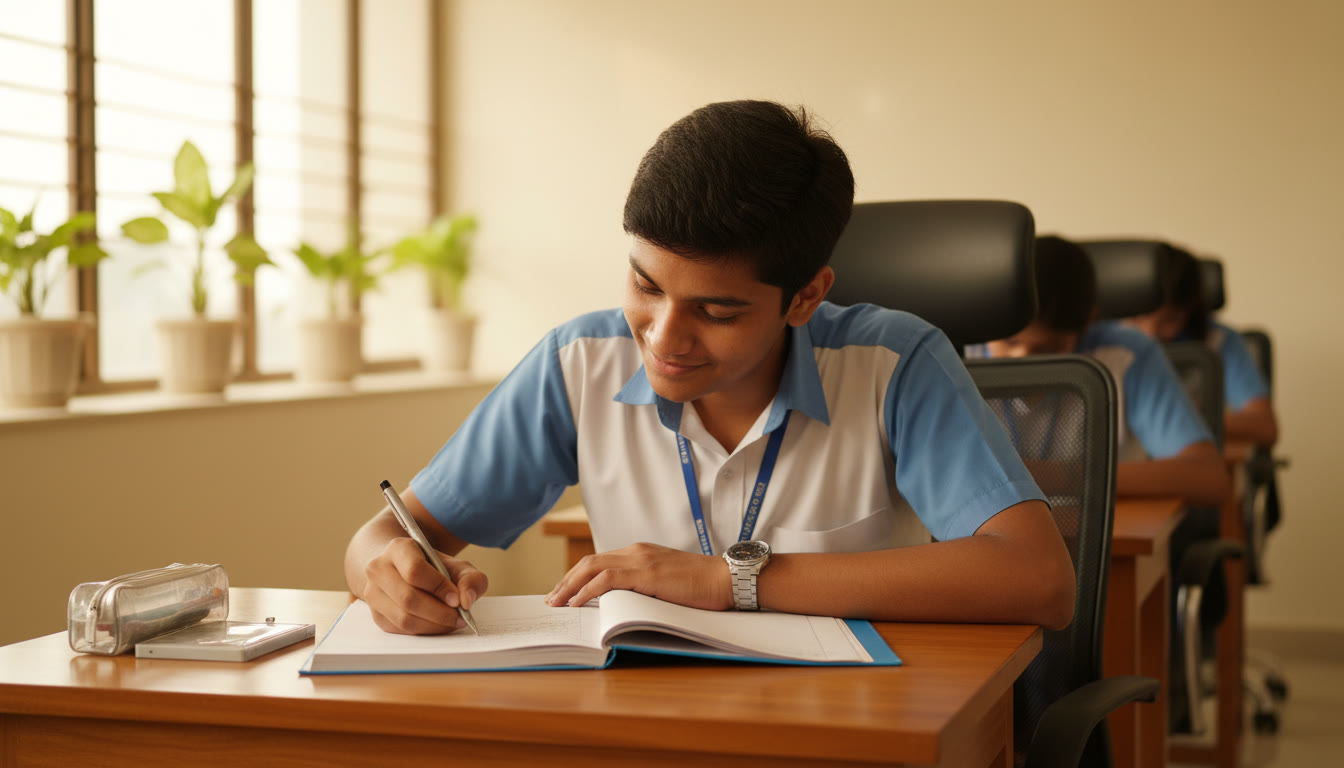
If you consider yourself an average student, that label is far from a final judgment — it’s a starting point. Most students who end up just short of their potential are not lacking in intelligence; they’re tripped up by a handful of repeatable, fixable mistakes. This blog is a warm, practical guide to spotting those traps in the way you study, practice, and write answers for CBSE-style exams, and to turning them into steady, measurable improvement.
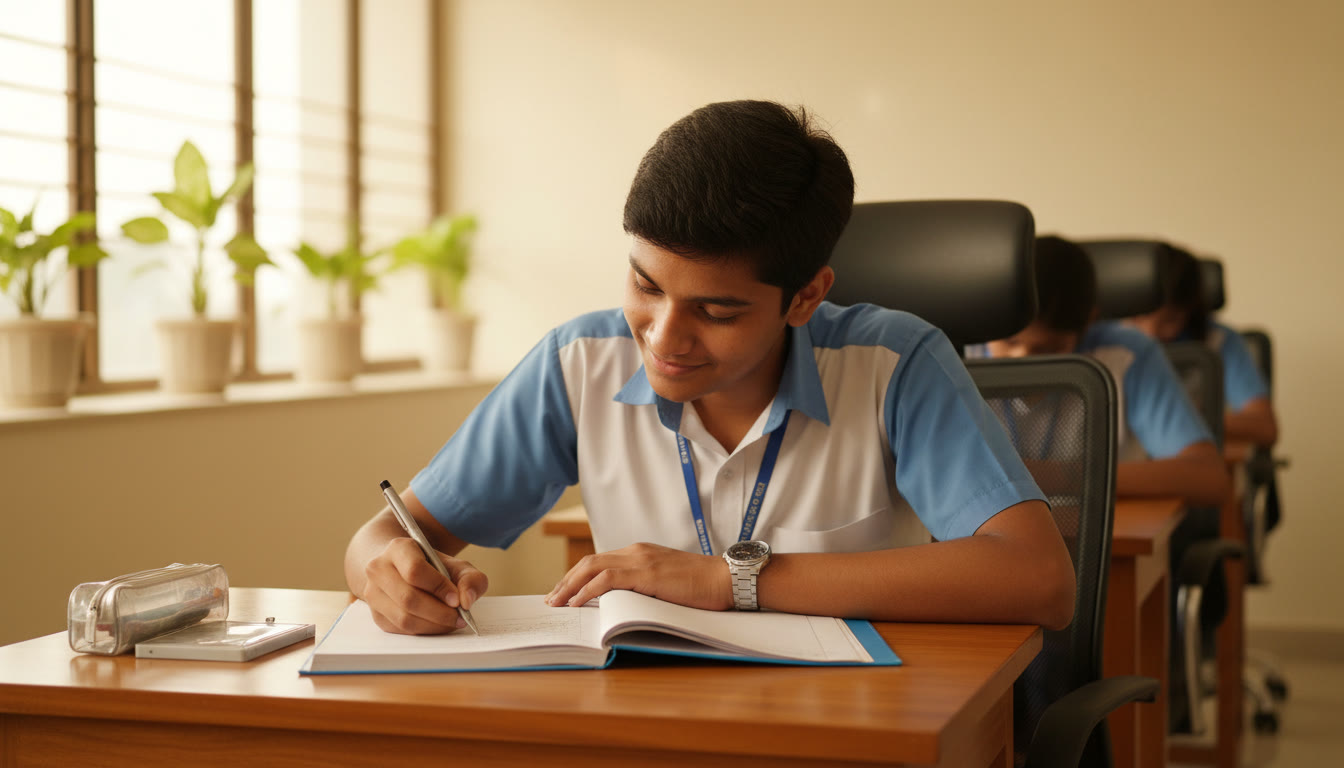
This isn’t about miracles. It’s about structure, small habits, clarity in answers, and the right kind of practice — especially full-length mock practice that mirrors the actual CBSE test environment. I’ll walk you through common errors before, during, and after the paper, concrete fixes you can start using tonight, and simple routines that average students can adopt to become consistently better.
Why Average Students Often Trip Up
Knowing why a mistake happens is half the solution. For average students, a pattern usually emerges: inconsistent study rhythms, partial understanding of concepts, shaky answer presentation, and not practicing time management under real exam pressure. Add exam-day nerves and small but costly habits — skipping reading instructions, misreading a question, or writing irrelevant facts — and the result is predictable.
Three root causes to watch for
- Surface-level learning: Memorising definitions without connecting them to problem-solving or application.
- Poor exam simulation: Doing topic-wise drills but rarely attempting full-length, timed papers that match exam format and marking style.
- Presentation loss: Knowing the content but not organizing answers the way CBSE marking schemes reward (stepwise answers, labelled diagrams, clear headings).
Common Mistakes — Practical Fixes
Below are frequent mistakes that cost marks and momentum, followed by precise, student-friendly fixes. Treat these as a checklist you can audit each week.
1. Studying without a syllabus-first plan
Mistake: Random study sessions and chasing extra resources rather than covering the CBSE syllabus in a structured way. Fix: Build a syllabus-aligned map with topics prioritized by weight and your personal weaknesses. A crisp map helps you plan revision cycles and ensures you cover every required outcome.
2. Ignoring full-length timed practice
Mistake: Practising only questions from individual topics or short tests and avoiding full papers. Fix: Schedule regular full-length mock tests under timed conditions. Treat each mock like a real paper: no phones, strict timing, and full answer booklets. After each mock, analyse mistakes strategically — not emotionally.
3. Poor time management in the paper
Mistake: Spending too long on one question and leaving others rushed. Fix: Use a time plan on the front of the answer booklet (or mentally) based on marks and questions. Do an initial skim to pick low-hanging marks, and allocate a buffer of minutes for review.
4. Answer presentation that confuses examiners
Mistake: Answers that are correct but hard to read — no headings, missing steps, unlabeled diagrams. Fix: Write in clear blocks: show calculations or reasoning step-by-step, underline final answers where appropriate, and label diagrams precisely. For long answers, short numbered points often read better and match marking rubrics.
5. Over-reliance on rote memorisation
Mistake: Recalling facts but failing at application or reasoning when questions are framed differently. Fix: Convert memorised content into active knowledge by practising application problems, case-based questions, and questions that ask “explain,” “analyse,” or “apply.”
6. Skipping marking-scheme awareness
Mistake: Not studying the way marks are awarded. Fix: Review model answers and marking guidelines for sample questions (in the latest cycle), and practise writing answers to meet those expectations — show steps and linkage between points that examiners look for.
7. Weak revision habits
Mistake: One-off reading before exams instead of spaced, active revision. Fix: Use spaced repetition for key formulas, definitions, and maps. Convert class notes into quick-check sheets and use them for active recall rather than passive rereading.
Table: Quick Reference — Mistakes, Causes, and Fixes
| Mistake | Why it happens | Quick fix | When to practice |
|---|---|---|---|
| Not attempting full papers | Comfort with short drills, fear of full-length fatigue | Schedule one full mock every 7–14 days | Weekly during revision cycles |
| Answer presentation issues | Focus on content, not layout | Practice labelled diagrams, stepwise answers, and headings | After each topic test |
| Time mismanagement | Poor planning, no time drills | Use paper-wise minute allocations; practise sectional timing | Before every mock |
| Over-memorisation | Comfort with recall, not application | Convert facts into problem-solving practice | Daily short sessions |
| Not analysing mistakes properly | Emotional avoidance or superficial review | Use a mistake log: error, reason, corrective action | After every test |
How to Structure Study Time — A Practical Weekly Rhythm
The goal is consistency and variety. For an average student juggling board syllabi and school routine, modest, repeatable habits beat intense but short-lived cram. Here’s a sample weekly pattern to keep your work focused and aligned to the CBSE format.
Weekly rhythm (example)
- Daily core session (2–3 focused hours): One major subject + one light subject or revision notes.
- Alternate-day practice (1–1.5 hours): Past questions or application problems from recent topics.
- Weekend mock or full-section timed practice (3 hours): One full paper or two timed sections.
- Weekly review (30–60 minutes): Go through the mistake log and plan the next week’s focus.
Sample daily block
- Warm-up (15 minutes): Quick recall of definitions, formula checks, or flashcards.
- First focused block (60–90 minutes): Deep work on a major topic (concepts +
practice problems). - Short break (15–30 minutes): Move, hydrate, short walk.
- Second focused block (45–60 minutes): Lighter subject or active revision (notes, mind maps).
Exam-Day Strategy: Calm, Clear, and Efficient
Exam day is where preparation shows. Most average students leave marks on the table by making a few avoidable mistakes.
Before you start the paper
- Read the instructions carefully (numbering, internal option, word limits).
- Skim all questions for marks and choose a smart order: answer confident short questions first to secure marks.
- Note the time plan on the first page — allocate minutes per section based on marks and difficulty.
While answering
- Write clearly and structure answers: a short introduction, numbered points or stepwise working, and a concluding line where appropriate.
- When diagrams help, draw them neatly and label every part asked in the question.
- If stuck, leave a marker and move on; return with the buffer time. Tangling on one tough problem is a common time trap.
Answer Writing: What CBSE Examiners Appreciate
CBSE marking schemes reward clarity, method, and relevance. A correct answer expressed poorly can lose the benefit of the doubt; a clear, stepwise answer often wins marks even when reasoning is partial.
Practical presentation checklist
- Start with a one-line definition or framing sentence for descriptive answers.
- Use numbered points for extended answers and underline the key term in each point.
- Where steps lead to a result (math, chemistry, physics), show intermediate steps — examiners award methodical work.
- Label diagrams and include units (where applicable) for numerical answers.
- Keep handwriting legible — if special notation or abbreviations are used, stick to them consistently.
Mock Tests & Feedback Loops — The Engine of Improvement
Mocks are not only for testing knowledge; they’re the primary tool to simulate marking expectations, time pressure, and answer presentation norms. A single mock without rigorous review is a missed opportunity.
How to analyse a mock paper properly
- Make a mistake log: what went wrong, why it happened (knowledge gap, careless error, time rush), and what you will do differently next time.
- Separate conceptual errors from presentation errors. Conceptual gaps need targeted study; presentation faults need formatting practice and timed re-runs.
- Track recurring errors. If a mistake appears in three consecutive mocks, escalate it to a focused mini-module until it’s resolved.
Personalised help that combines 1-on-1 guidance, tailored study plans, and feedback loops can accelerate this process. Sparkl‘s personalised tutoring often frames mock analysis around your individual mistake patterns, helping convert each mock into a targeted action plan without wasting time on irrelevant drills.
Using Notes, Diagrams, and Derivations Effectively
Notes should be tools for recall and application, not verbatim transcriptions of textbooks. For CBSE papers, compact, well-organised notes that highlight the ‘why’ and include quick diagrams are invaluable during revision.
How to make revision notes that work
- Use one page per sub-topic: key definition, formula box, one example, common pitfalls.
- For subjects with derivations (maths, physics, chemistry), keep a two-column note: left for stepwise derivation, right for the ‘intuition’ or common mistakes.
- Transform long answers into 3–5 point summaries that can be practiced as quick recalls.

Mindset, Stress, and the Small Things That Matter
Average students often suffer from avoidable stress habits: late-night cramming, skipping healthy routines, or catastrophising a bad mock. Practical mental habits build resilience and performance.
Simple mindset habits
- Replace “I failed this paper” with “This test showed me what to fix.” Frame each mistake as a diagnosis.
- Keep a short daily routine for sleep, light exercise, and short breaks — mental freshness shows in writing clarity.
- Limit last-minute new material; final days are for consolidation and confidence-building practice, not starting new chapters.
Checklist: What to Audit Weekly
- Have I done at least one full-length timed mock in the last two weeks?
- Is every topic covered at least once with a revision note or flashcard?
- Am I practising answer presentation (headings, labelled diagrams, stepwise working)?
- Is my mistake log updated with corrective actions and evidence of follow-up?
- Am I balancing school, self-study, and rest to avoid burnout?
Practical Examples: Before, During, and After a Mistake
Example 1 — Before the mistake: If you habitually skip drawing diagrams in science answers, set a micro-goal: draw one labelled diagram for every relevant answer in the next week. That builds muscle memory.
Example 2 — During the mistake: If mid-paper you blank on a concept, use a quick five-minute recovery technique: move to the next question, mark a return point, and come back with fresh time. Often a different question unlocks the blocked concept.
Example 3 — After the mistake: When you score lower than expected on a mock, don’t simply re-sit it. Use the mistake log to categorise each error and schedule targeted mini-practices that tackle the underlying cause.
How Tutors and Data-Driven Feedback Help
A good tutor or guided programme helps you prioritise: which mistakes are small and fixable this week, which require more concept work, and which are presentation-related. When combined with AI-driven insights, that guidance becomes more efficient — it points you to the patterns rather than isolated incidents.
For example, personalised support that pairs 1-on-1 guidance with tailored study plans and focused mock analytics can shorten the time between making a mistake and truly fixing it. Sparkl‘s approach to matching study plans with your mistake log and mock performance can make each practice hour more productive.
Putting It All Together: A 30-Day Improvement Sprint
Want a short, disciplined method? Try a focused 30-day sprint: week 1 map the syllabus and baseline with a full mock; week 2 target three recurring mistakes; week 3 intensify full-length timed practice and presentation drills; week 4 consolidate with light revision and confidence-building mocks. Track progress with your mistake log and celebrate small wins.
Final Academic Conclusion
Mistakes in CBSE exams are not a verdict on ability; they are signals about what to change in study technique, practice structure, and answer presentation. Average students who adopt syllabus-aligned planning, regular full-length mock practice, disciplined time management, and methodical analysis of errors reliably convert inconsistent performance into steady improvement. Clear answers, labelled diagrams where needed, stepwise reasoning, and a short, maintained mistake log are practical habits that align directly with CBSE marking approaches and lead to better outcomes.

























No Comments
Leave a comment Cancel