

CBSE Sample Papers Strategy for Class 12: Practice Smart, Score Better
Sample papers are not just extra work on top of your syllabus — when used the right way they become a practice laboratory. Think of them as rehearsal scripts for the exam hall: they show the pacing, the phrasing of questions, the focus areas of the syllabus, and the way marks are really awarded. This guide walks you through a calm, practical plan to convert sample-paper practice into visible improvement: better time management, clearer answers, and the confidence to perform on exam day.
Why sample papers matter more than you think
Working through sample papers does three things that ordinary study alone cannot: it simulates the exam experience, it reveals gaps in timing and presentation, and it sharpens your ability to translate knowledge into exam-style answers. A single read-through of theory becomes useful knowledge only when you can reproduce it under pressure, following the board’s expected format and time limits.

Use sample papers to: (a) test your pacing across sections, (b) train the habit of showing working steps where required, and (c) improve the clarity and structure of answers so markers can award marks efficiently. Above all, treat each paper as practice for writing — not just thinking. Practice writing answers the way the marking scheme rewards them.
Understand the pattern: what sample papers reveal (and what they don’t)
Before you start mass-practicing, take time to decode the pattern embedded in a sample paper. Look at the distribution of question types: objective/very short answer, short answer, long answer, application/skill-based questions, and any internal choice. Pay attention to the instructions, word limits, and whether steps or diagrams are required. The goal here is not to memorise questions; it is to internalise the exam’s language and expectations.
Two practical habits to develop right away:
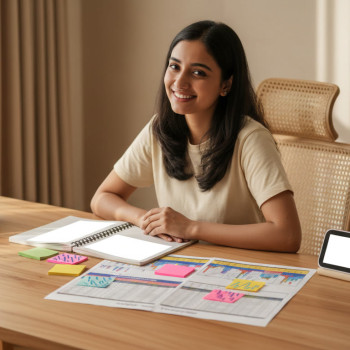
- Track question formats: maintain a simple spreadsheet or notebook page that records how many questions of each type appear in several sample papers — this builds a live blueprint of likely emphasis areas.
- Match questions to syllabus units: when a question appears, mark which chapter or skill it tests; that helps you prioritize revision by weight and recurrence.
Build a sample-paper-focused practice roadmap
A roadmap converts random practice into progress. Structure your plan around three recurring cycles: learn → apply → analyse. First, learn or revise a topic; next, attempt sample questions from that topic; finally, analyse mistakes and update notes. Repeat this cycle for each major chapter or unit.
The calendar you use depends on how many weeks you have. Below is an adaptable plan that you can scale up or down depending on your timeline and exam schedule. The aim is consistent exposure to full-length papers while maintaining targeted practice.
| Phase | Duration (suggested) | Focus | Sample Papers / Week | Outcome |
|---|---|---|---|---|
| Foundation | 2–4 weeks | Topic-wise practice; short answers; concept clarity | 1–2 small sets | Smooth recall, solved examples, corrected notes |
| Consolidation | 4–6 weeks | Full-length timed practice; section pacing | 1 full paper + 1 focused session | Realistic timing and answer structure |
| Refinement | 2–4 weeks | Mistake analysis and error correction; quick revision | 2 full papers | Stable performance under time pressure |
| Final Tune-up | 1–2 weeks | Light mocks, focused revision on weak topics | 1 timed paper + short sets | Confidence and crisp exam-day routine |
Consistency matters more than volume. A single well-analysed paper is worth more than several rushed ones. If you need help personalising such a roadmap, Sparkl‘s tutors can build a plan that fits your current level, pace, and priorities.
Active practice: how to treat each full-length mock
A full-length mock should be a complete simulation: same duration, same breaks, and the same restrictions you’ll have on exam day. Follow these steps for each mock paper you take:
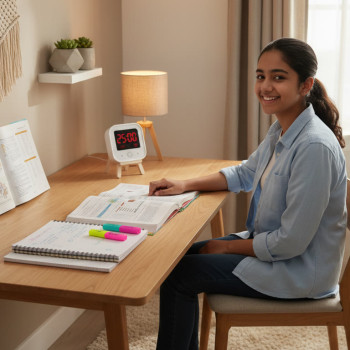
- Set the conditions: quiet room, single attempt, timer visible. Write by hand if your exam is handwritten.
- Segment your time: mark checkpoints on your watch or paper (for example: end of Section A, 30 minutes left, 15 minutes left).
- Answer selection: do a quick scan and solve high-value or high-confidence questions first, then move to longer, heavier-mark questions.
- Presentation matters: start each answer with a clear statement (where relevant), show steps, label diagrams, and write neatly. Markers award marks for clarity and method as much as for the final line.
- Post-mock review: grade strictly with the marking scheme; record time spent per question and note which errors cost you marks—concept error, careless mistake, or time trouble.
Practical timing: a simple method to allocate your minutes
Work from marks to minutes. If a question carries 8 marks, plan to spend proportionally more time than on a 2-mark question, but always leave buffer time for revision. Use the table below as a model for time allocation and adjust it for your paper’s format.
| Question Type | Marks (example) | Planned Time | Goal |
|---|---|---|---|
| Very short answer / objective | 1–2 | 1–2 minutes | Accuracy and speed |
| Short answer | 3–5 | 5–8 minutes | Concise structure, one-coherent point per paragraph |
| Long answer / application | 6–10 | 12–20 minutes | Full method / justified steps with neat final answer |
| Practical/diagram/derivation | Varies | Allow extra buffer | Label clearly; show working steps |
These are templates, not iron rules. The right allocation for you depends on the paper format and how fast you write. Practice will reveal your natural rhythm; tweak the plan based on mock performance data.

Section-wise tactics: turning practice into marks
Sample papers highlight what each section expects. Below are compact tactics for common streams; apply the underlying logic (clarity, method, time) to every subject you study.
Science (Maths / Physics / Chemistry / Biology)
- Write the method: for numerical problems, write concise steps — markers look for approach as well as result. If a calculation is long, box or underline the final answer.
- Practice diagrams: labelling and neatness count. During revision, redraw key diagrams from memory and compare with your notes.
- Balance speed and accuracy: set a target accuracy rate for practice (for example, 85–90% correct under timed conditions) rather than speed alone.
Commerce (Accountancy / Business Studies / Economics)
- Format counts: for Accountancy, layout matters — totals, balances and steps should be obvious. For theory answers, use short paragraphs and bullet points where relevant.
- Use sample papers to memorise question phrasing: practice asking yourself what the marker expects — definition, reason, or application?
- Time proportionally: accounting problems that carry many marks deserve methodical working that’s easy to follow.
Humanities and Languages
- Plan essays and long answers briefly before writing: 2–3 clear points with supporting examples beats long, rambling paragraphs.
- Practice precise introductions and conclusions: even a short, well-phrased opening organizes your answer for the marker.
- Language papers: practise with full-length sample papers under time; work on handwriting, coherence and the appropriate register for the question.
Error analysis: the most valuable part of practice
After each paper, spend at least as long analysing it as you spent taking it. The review phase is where learning compounds. For each wrong or partially-correct answer, record three things: the cause (concept, careless error, time), the fix (relearn, drill, or time drill), and the verification (what you will do next to ensure it doesn’t repeat).
Keep a running error log of recurring mistakes. When the same error appears across two or more papers, treat it as high priority. Correct it with a targeted micro-plan: 10 focused questions, two timed drills, and a final check in a mock within a week.
Using technology and tutoring strategically
Technology can speed up feedback: timers, typed self-testing, and analytics can highlight weak chapters. If personalised feedback helps, consider one-on-one guidance where a tutor pinpoints recurring issues and helps recalibrate your practice. For students who prefer a guided plan and expert review, Sparkl‘s tutors offer tailored study plans, expert-led problem review, and AI-driven insights to track progress.
Revision and the last phase: what matters most
When you move into the final phase, quality of revision beats quantity. Convert your sample-paper work into compact revision material:
- Create a one-page summary for each chapter with formulae, key dates, definitions, and diagram skeletons.
- Maintain a short ‘error cheat-sheet’ containing only your most frequent mistakes and the correct approach.
- Schedule light, timed papers with immediate review rather than long, exhaustive sessions; your brain needs retrieval practice, not exhaustion.
Exam-day simulation: a checklist
- Do a final timed mock under conditions that mimic the exam: same start time, same breaks, no phones.
- Practice handwriting for speed and legibility if your exam is handwritten — clarity often wins marks.
- Develop a two-pass strategy during the exam: first pass for high-confidence questions, second pass for longer answers and tough problems.
- Always reserve at least 10–15 minutes at the end to recheck calculations and read instructions again.
Mindset and confidence: why sample papers reduce anxiety
Confidence is a skill built by repeated exposure. Each mock that you analyse honestly reduces the unknowns about exam format and marking. Over time your tolerance for timed pressure grows, and you learn to convert panic into a procedural routine: read, plan, write, check. Practice builds not just knowledge but a calm workflow.
Common mistakes to avoid when practising sample papers
- Rushing through mocks without analysis. A mock without review is a mirror you didn’t look into.
- Only practising favourite topics. Use papers to force attention to weak units.
- Ignoring presentation: even correct answers can lose marks if the method is unclear or steps are missing.
- Overloading: doing too many tests back-to-back without targeted correction leads to burnout, not improvement.
Putting it all together: a weekly micro-plan example
Here’s a compact weekly structure you can adapt. The idea is to combine focused topic drills with one timed full paper and a thorough review cycle.
| Day | Activity | Duration | Goal |
|---|---|---|---|
| Monday | Targeted chapter practice (weak topic) | 1.5–2 hrs | Concept clarity + 10 practice questions |
| Tuesday | Short-answer drills and quick revisions | 1–1.5 hrs | Speed + recall |
| Wednesday | Full-length timed mock (alternate weeks) | Exam duration | Simulated performance |
| Thursday | Detailed review of mock & error log update | 1.5–2 hrs | Correction & memory |
| Friday | Practical/diagram practice or problem sets | 1–1.5 hrs | Precision & presentation |
| Saturday | Mixed-topic timed mini-test | 1–1.5 hrs | Adaptive timing |
| Sunday | Light revision & rest | Flexible | Consolidation and recovery |
Final thoughts on turning practice into performance
Sample papers are a tool — and like any tool they give best results when used intentionally. Prioritise quality of practice, honest review, and gradual increase in exam-like conditions. Time your answers by marks, present them for clarity, and correct errors with small, measurable drills. If structured guidance helps, personalised tutoring can fit practice into your life without overload; for example, short one-on-one sessions can help you fix recurring gaps quickly.
Done right, sample papers transform vague worry into a clear plan: identify weaknesses, convert them into short drills, take timed tests, analyse errors, and repeat. That steady loop — not last-minute cramming — builds lasting exam readiness, better marks, and a calmer exam day approach.
Use the practice roadmap, the time-allocation templates, and the revision cycles here as a scaffold. With disciplined practice and focused review, sample papers will help you write exam-ready answers with confidence.
This guide outlines strategic ways to engage with sample papers so that study time converts into demonstrable improvement on test day.

























No Comments
Leave a comment Cancel