

Designing a Standout IB DP CAS Profile: How to Build a Profile for Design Using CAS
For many IB Diploma Programme students, CAS can feel like both a playground and a pressure cooker: an open space to explore creativity, service and action, and also a formal requirement that must be documented and reflected on thoughtfully. If your passion leans toward design—product design, UX, architecture, visual communication, or sustainable design—CAS is an ideal structure to turn experiments into evidence and ideas into a portfolio that tells a convincing story about who you are as a maker and thinker.

Why CAS and Design Are a Natural Pair
Design is inherently iterative, collaborative, and reflective—three pillars embedded in strong CAS practice. CAS encourages you to set meaningful goals, take initiative, work with others, and reflect on impact. Those exact behaviors map perfectly to the way designers approach briefs: empathize, ideate, prototype, test, and reflect. Treat CAS not as a checklist, but as the scaffold for your design growth. With intentional planning and rigorous documentation, the activities you undertake for CAS become the raw material of a professional-grade portfolio.
Start with Intention: Align CAS Outcomes to Your Design Goals
Before launching into projects, clarify what you want your design profile to demonstrate. Do you want to show technical prototyping skills, human-centred research, community impact, or multidisciplinary collaboration? Pick 3–5 portfolio goals and use them as a compass. Each CAS activity should map back to at least one goal and produce evidence that supports your narrative.
- Set clear outcomes: skill development (CAD, rapid prototyping), impact (community installations, workshops), mindset (empathy, sustainability).
- Choose a balance of creativity, activity and service elements that together tell a coherent story.
- Plan for reflection at every stage: what you tried, what changed, what you learned, and how it informs your next step.
Map CAS Learning into Design Practice
Use CAS requirements as prompts for design thinking rather than constraints. For example, a service-oriented design project can address a local need while practicing user research; an activity-focused challenge—like building a prototype—can display technical skills and perseverance. Here’s how common CAS emphases translate into design-ready evidence:
- Initiative and planning → project proposals, design briefs, timelines.
- Collaboration and teamwork → role descriptions, meeting notes, stakeholder feedback.
- Skills development → before/after documentation, tutorials you followed, mentor reports.
- Ethical and global engagement → sustainability choices, accessibility considerations, community feedback.
Project Ideas That Translate Well into a Design Portfolio
Below are project ideas that naturally live in CAS while producing strong portfolio artifacts. Each idea notes what kinds of evidence and reflection help it stand out.
- Community Furniture Design: Design and build a park bench or seating for a school courtyard. Evidence: sketches, material sourcing notes, build photos, user-testing feedback, time log.
- Low-Cost Lighting for Local Spaces: Create simple, sustainable lighting solutions for community centers. Evidence: prototype iterations, energy calculations, interviews with users.
- Student-Led Makerspace Workshops: Run design and prototyping workshops for younger students. Evidence: lesson plans, attendance records, participant reflections, photos.
- Inclusive Wayfinding Project: Redesign signage and wayfinding for accessibility at a community center. Evidence: empathy interviews, sketches, A/B test results, accessibility audit.
- Rapid-Prototyping Challenge: 48–72 hour design sprints solving small briefs from local businesses. Evidence: sprint logs, prototype photos, client feedback.
- Upcycled Product Line: Turn waste materials into usable objects to sell or donate. Evidence: cost breakdowns, production photos, sales/donation records, environmental impact notes.
- UX Mini-Study: Redesign a school app or website feature and run usability tests. Evidence: wireframes, task-completion metrics, participant quotes.
- Design for Wellbeing: Create small interventions (seating, quiet nooks, lighting) for wellbeing in the school. Evidence: pre/post surveys, photos, stakeholder reflections.
- Collaborative Public Art + Design Installation: Plan and install a community mural or interactive piece. Evidence: project plan, community permissions, construction photos, impact reflections.
Planning and Scoping: Turning a Spark into a Project
A well-scoped project saves time and produces clearer evidence. Break each CAS design project into stages and think about the deliverable at the end of each. Use a simple timeline and checklist so supervisors and collaborators know what to expect.
| Stage | Duration | Key Deliverables | Evidence to Collect |
|---|---|---|---|
| Inspiration & Research | 1–2 weeks | Problem brief, user interviews | Interview notes, photos, research log |
| Concept & Sketching | 1–3 weeks | Sketches, initial models | Photos of sketches, early prototypes |
| Prototype & Test | 2–4 weeks | Working prototype, test plan | Test videos, user feedback, iteration notes |
| Refine & Implement | 2–6 weeks | Final product/installation | Before/after photos, usage metrics, reflections |
| Reflection & Showcase | 1–2 weeks | Final report, portfolio entry | Reflective entries, mentor comments, evidence folder |
Documenting Your Work: The Secret Weapon
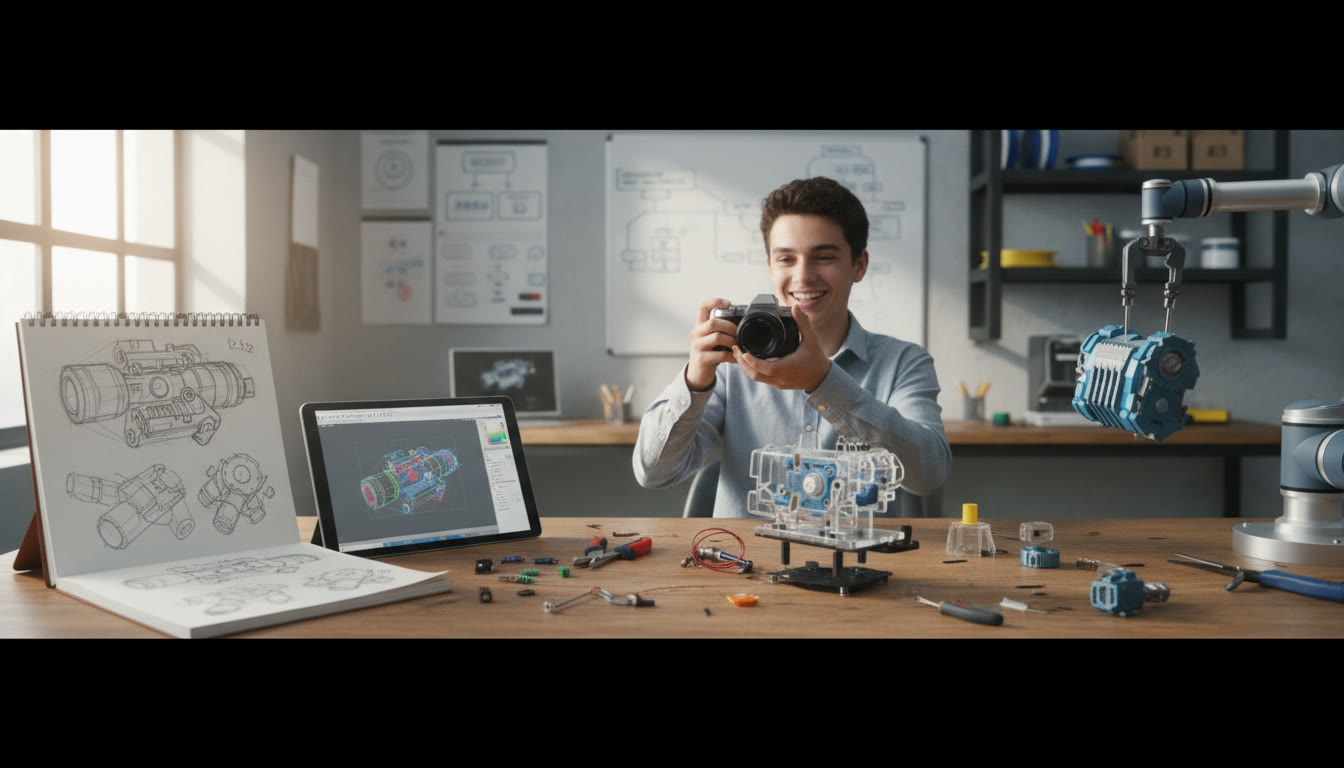
Documentation is how CAS becomes a credible portfolio. A single prototype without process can feel hollow; process without polish can feel amateur. Your job is to capture both: the messy journey and the polished result. Make documenting habitual—capture a photo, write a short reflection, tag key dates, and save drafts of work. Over time those fragments assemble into a convincing narrative.
- Keep a project log: short, dated entries that note decisions, obstacles and next steps.
- Save iterations: label files clearly (v1, v2, test1) and include a short note about what changed.
- Capture user feedback: brief quotes, wish lists, and metrics help show impact.
- Collect mentor feedback: a supervisor’s note or a teacher’s reflection adds credibility.
- Use before/after visuals and short process videos to show iteration.
What Makes Documentation Persuasive?
Think like a future reviewer. They want to see that you identified a problem, moved through thoughtful iterations, learned from tests, and reflected on the outcome. Include the following types of evidence where possible:
- Concise project brief and goals.
- Research artifacts (interviews, surveys, benchmark studies).
- Design iterations with short notes about choices.
- Final media (high-quality photos, short video demo).
- Reflections linking decisions to learning and growth.
Showcasing Your Design Portfolio and CAS Profile
Your portfolio is a narrative: every piece should contribute to the story you want to tell about your design identity. Organize it so reviewers can quickly understand the challenge, your approach, the tangible outcome, and what you learned.
| Portfolio Section | What to Include | Why It Matters |
|---|---|---|
| Project Snapshot | One-line problem statement, key image, outcome | Gives an immediate overview for busy readers |
| Process Highlights | Selected sketches, prototypes, and test results | Shows design thinking and iteration |
| Impact & Evidence | Metrics, testimonials, usage photos | Demonstrates real-world effect |
| Reflection | What you learned, what you’d do differently | Connects activity to personal growth |
Format options include a clean digital PDF, a simple website, or a well-organized portfolio folder. Whatever medium you choose, focus on clarity: use captions for images, keep reflections concise, and highlight the most meaningful evidence up front.
Working with Others: Collaboration and Community
Design rarely happens alone. Collaborations expand your capacity and create richer evidence. When you work with community partners, teachers, or peers, document roles and responsibilities clearly so your contribution is visible. Consider these practices:
- Define roles quickly—who sketches, who prototypes, who sources materials.
- Record meeting summaries and decisions so the process is traceable.
- Collect stakeholder feedback: a short quote from a community partner can be powerful.
- Reflect on teamwork: what did you learn about leadership, communication, or conflict resolution?
Using Support Wisely: Mentors, Teachers, and Tutoring
Mentors and teachers offer perspective that turns effort into evidence. If you want targeted help with documentation, reflective writing, or technical skill-building, pairing your work with Sparkl‘s personalized tutoring can help you refine prototypes, tighten reflections, and craft presentation materials. Look for support that helps you:
- Translate hands-on work into concise reflections and learning statements.
- Develop a realistic timeline and task breakdown.
- Sharpen visual presentation and storytelling.
Assessment, Reflection, and the CAS Narrative
CAS is more than activities and artifacts; it’s a documented learning journey. Your reflections are the connective tissue that turns actions into growth. Frame reflections around what you learned, how you responded to setbacks, and how the experience changed your approach to design problems.
- Be specific: name techniques, tools, or insights you gained.
- Use evidence to back claims: reference dates, photos, or mentor feedback.
- Be honest about challenges and how you overcame them.
- Link each project to broader learning goals: communication, ethics, sustainability, or leadership.
Tips to Make Your CAS Design Profile Stand Out
Small decisions add up. Here’s a practical checklist you can use across projects to ensure your CAS profile is both credible and memorable.
- Write a clear problem statement for every project, limited to one sentence.
- Capture at least three process photos for every prototype stage.
- Collect at least one direct user quote or quantitative metric as impact evidence.
- Keep reflections short and focused: 150–300 words per major milestone is usually enough.
- Tag files consistently so reviewers can find evidence quickly (date_project_stage).
- Mix media: photos, short videos (30–90 seconds), annotated sketches, and PDFs.
- Highlight iterations: show what changed and why—this proves design thinking.
- Balance solo and collaborative work to demonstrate both initiative and teamwork.
- Address ethics and sustainability explicitly where relevant—these are increasingly important to reviewers.
- Prepare a one-page portfolio summary you can submit or present during interviews.
Common Pitfalls and How to Avoid Them
Even with good intentions, students sometimes miss opportunities to make CAS count. Learn from common mistakes so your profile stays tight and persuasive.
- Avoid vague reflections—use concrete examples and tie them to learning.
- Don’t save documentation until the end—capture process in real time.
- Don’t let one big project hide smaller, valuable experiences—diversity of evidence is powerful.
- Be careful with credit—credit collaborators, mentors and community partners where appropriate.
- Avoid over-polishing one artifact at the expense of showing the iterative journey.
Final Thoughts
Design-focused CAS work is most effective when it balances curiosity, structure, and reflection. Plan with intention, document deliberately, collaborate openly, and reflect honestly—these habits turn classroom projects and community efforts into a coherent design profile that demonstrates skill, impact and growth. By viewing CAS as both a learning process and a portfolio engine, you give your design work the clarity and credibility it needs to stand out in academic and creative contexts.




















No Comments
Leave a comment Cancel