
IB DP Career & Counselling: Careers That Fit IB DP Students Who Love Chemistry (Options Map)
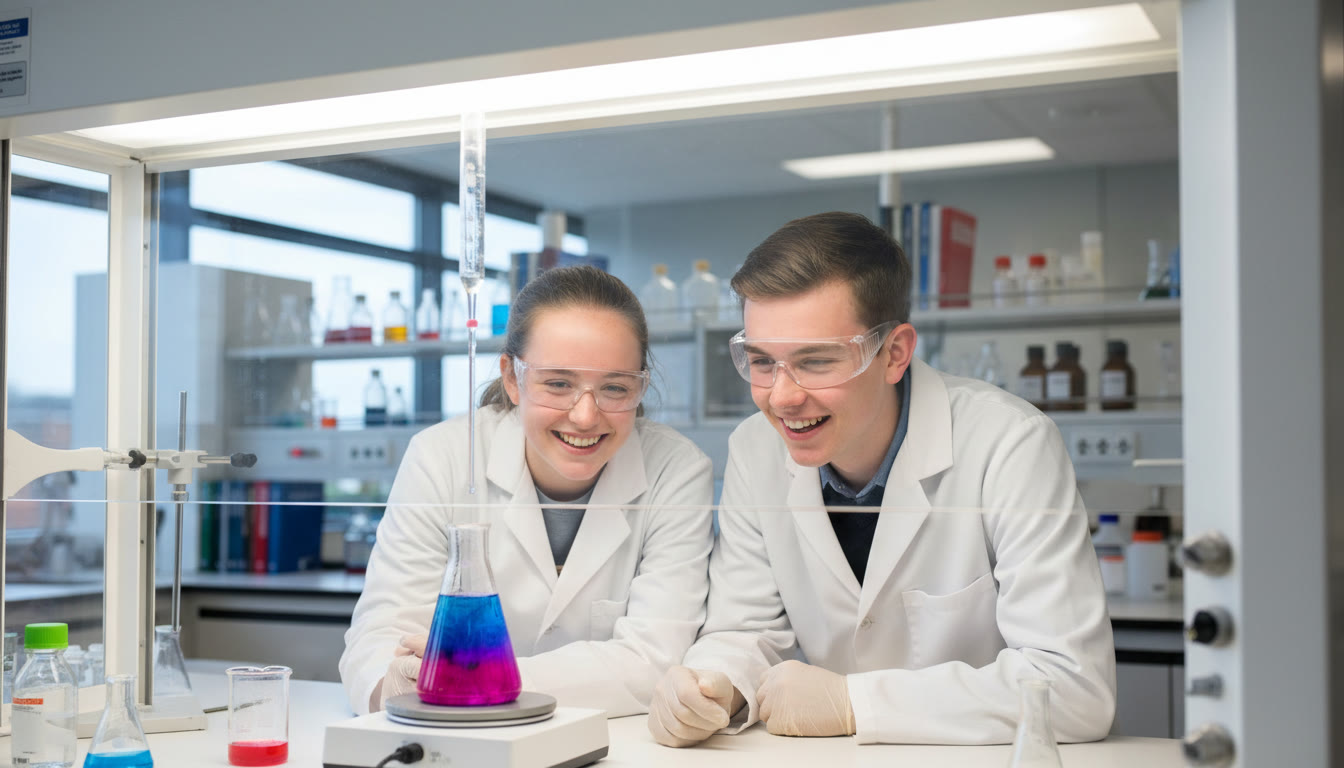
If chemistry is the part of the IB DP that makes your pulse quicken—those careful pipettes, clear results, and the satisfying click when an experiment works—congratulations. You already have a toolkit that universities and employers value: curiosity, methodical thinking, experimental skill, and data literacy. This article is written like a friendly conversation with your school counsellor, but with the practical maps, subject-combination thinking, and on-the-ground steps you need to turn an IB chemistry interest into a major and a meaningful career.
We’ll walk through subject combinations that open doors, explain how to decide HL versus SL, suggest Extended Essay and CAS ideas that actually help your applications, and give realistic career clusters that fit different chemistry-oriented personalities. Sprinkled throughout are examples, comparisons, and practical counselling steps you can use with your advisor, teacher, or college counselor.
Why IB DP Chemistry is a powerful springboard
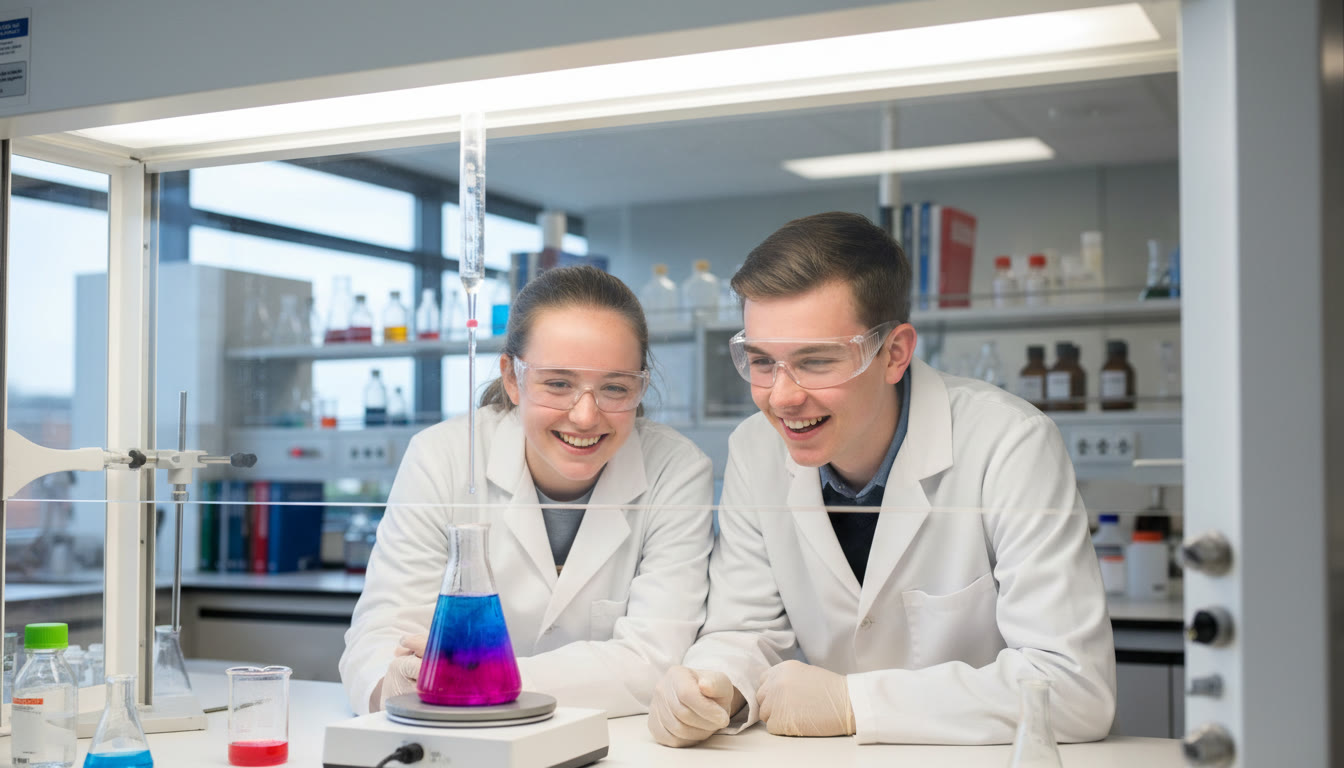
Chemistry in the IB DP isn’t just about learning formulas and balancing equations. It trains you to think like an investigator: form hypotheses, design controlled tests, gather and interpret data, troubleshoot methods, and communicate findings clearly. Those are transferable skills across many fields.
Beyond lab techniques, chemistry teaches quantitative reasoning, error analysis, lab safety and procedure, and—important for admissions—project management through the Internal Assessment (IA) and the Extended Essay if you choose a chemistry topic. If you enjoy problem-solving with a mix of practical work and abstract reasoning, chemistry opens doors in pure science, applied technology, medicine, industry, and even law and policy where scientific literacy matters.
How to read this options map
Think of the map as three layers:
- Core competence: chemistry knowledge and lab experience (often Chemistry HL or a strong SL plus lab-focused IA/EE).
- Complementary skills: math, biology, physics, computer science, or an arts/humanities subject that shapes your career angle.
- Practical signals: Extended Essay topics, CAS projects, internships, and university-relevant prerequisites.
Below you’ll find a compact table that pairs common IB choices with majors and careers, followed by counselling suggestions on HL/SL, EE topics, CAS, and real-world next steps.
Options Map — Subject-to-Career table
| IB DP Focus (Common Choices) | Suggested University Majors | Career Examples | Why it fits / Practical notes |
|---|---|---|---|
| Chemistry HL + Math (HL or SL) | Chemical Engineering, Materials Science | Process engineer, materials developer, battery R&D | Strong math + chemistry is ideal for modelling, thermodynamics, and industrial design. |
| Chemistry HL + Biology HL | Biochemistry, Pharmacology, Molecular Biology | Biochemist, pharmaceutical scientist, clinical research | Bridges molecular chemistry and life sciences; useful for med-related routes. |
| Chemistry HL + Physics HL | Physical Chemistry, Materials, Chemical Physics | Analytical chemist, nanotechnology researcher, lab instrumentation | Supports understanding of instrumentation, spectroscopy, and materials behaviour. |
| Chemistry SL + Biology HL | Biomedical Science, Nursing (varies by country) | Clinical lab technician, healthcare roles | Strong biology compensates where medicine routes emphasize biological knowledge. |
| Chemistry HL + Computer Science / Maths HL | Computational Chemistry, Data Science, Cheminformatics | Computational chemist, data analyst in pharma, modelling scientist | Combines coding, statistics, and chemical modelling—growing field in R&D. |
| Chemistry HL + Environmental Systems (ESS) | Environmental Chemistry, Environmental Science | Environmental consultant, water quality scientist, sustainability analyst | Links chemistry to real-world environmental problems like pollution and remediation. |
| Chemistry HL + Economics / Business | Industrial Chemistry, Chemistry + Business, Regulatory Affairs | Product manager, regulatory affairs specialist, technical sales | Good for students who want to translate chemistry expertise into industry roles. |
| Chemistry HL + Visual Arts / Design | Materials & Design, Cosmetic Science, Conservation Science | Formulation scientist, conservation technician, product developer in cosmetics | Pairs creativity with material knowledge—useful for product formulation and conservation. |
Reading the table in real life
Use the table as a starting point. Counselling is about matching the chemistry you love with the kind of work you see yourself doing. If you like building things that go into products, the engineering/materials path is sensible. If you get excited by molecules interacting in living systems, biochemistry or pharmacology will feel like a better fit.
Choosing HL vs SL in Chemistry (practical counselling tips)
Deciding HL vs SL is often the biggest curricular choice students face. Here are practical questions to guide that conversation with your counsellor and teachers:
- What majors are you considering? Some programs (for example in medicine or chemical engineering) commonly expect or prefer Chemistry HL—check the entry requirements for the programs you’re considering in the upcoming application cycle.
- How much lab time do you want? Chemistry HL tends to have extended practical work and deeper conceptual content; it’s more time-consuming but great preparation for lab-based majors.
- Do you enjoy heavy math? If not, pairing Chemistry HL with Math HL can be an intense workload. Consider whether you want to split strengths (e.g., Chemistry HL + Math SL) or aim for both HLs if you enjoy quantitative reasoning.
- Where will your Extended Essay and IA live? If you plan an EE in chemistry, HL can provide conceptual depth; if your EE will be in a neighboring field (biology, environmental science), consider how that balances your overall profile.
Extended Essay and IA: topics that actually help
Your EE and IA are not just school tasks; they are evidence of sustained inquiry that admissions tutors and employers respect. Choose projects that show experimental independence, clear data, and critical analysis.
- EE idea: Investigate the kinetics of vitamin C degradation in different fruit storage conditions—focus on method calibration, repeated trials, and statistical analysis.
- EE idea: Compare the efficiency of green versus traditional solvents in a simple organic synthesis—document yield, purity, and environmental impact.
- IA tip: Use clear error analysis and multiple trials. A tidy method with honest discussion of limitations often scores better than flashy but poorly controlled procedures.
When appropriate, build the EE so it can produce real, quantifiable data (spectrophotometry, titration curves, chromatography) and discuss broader implications: sustainability, public health, or industrial application.
CAS project and internships that matter
Chemistry students can design CAS projects that simultaneously fulfil learning outcomes and strengthen applications.
- Run community science workshops demonstrating safe, simple chemistry experiments for younger students.
- Volunteer with local environmental groups to monitor water quality—collect samples, run basic assays, and present results.
- Set up a student-led research club to mentor peers in lab techniques and research design.
- Secure short lab internships or job-shadow a university lab technician to show real-world lab exposure.
Skills checklist for chemistry-minded IB students
Tutor or self-audit these skills; they’re the ones universities and employers notice:
- Lab technique and safety awareness
- Quantitative data handling and uncertainty analysis
- Scientific writing and clear lab reporting
- Mathematical modelling and equation manipulation
- Computational basics (Excel, simple scripts, data visualization)
- Communication: explain complex ideas in simple terms
How counselling conversations can be structured
A focused counselling session is more productive than a scattershot list of options. Try this agenda with your counsellor or mentor:
- Confirm interests: Why chemistry? Which part—lab, theory, materials, life sciences?
- List realistic majors and the subject prerequisites for the current cycle.
- Map HL/SL choices against workload and extracurricular plans (EE, CAS, internships).
- Set 3 immediate goals: one academic (grades/skills), one application (shortlist programs), one experiential (internship or project).
If you want tailored, 1-on-1 guidance to run through subject choices or EE planning, Sparkl can offer focused tutor support. For example, Sparkl‘s personalized tutoring can help refine experimental design, build a study plan for Chemistry HL, and translate lab experience into strong application narratives.
Comparing career clusters: which suits your chemistry personality?
Not all chemistry lovers want to wear a white lab coat all day. Below are broad career clusters with examples and what each asks of you.
- Research & Academia: Deep curiosity, patience, and tolerance for iterative work; often requires advanced degrees.
- Industry R&D & Product Development: Practical problem-solving, teamwork, and a focus on making prototypes and scalable processes.
- Healthcare & Clinical Labs: Precise protocols, clinical standards, and a strong understanding of biochemical implications; sometimes combined with further healthcare training.
- Environmental & Regulatory Science: Fieldwork, sampling, policy translation, and public reporting skills.
- Data-driven & Computational Chemistry: Coding, modelling, and handling large datasets to predict molecular behavior or process outcomes.
- Science Communication & Education: Explaining science clearly to different audiences; combines content mastery with storytelling skills.

Practical steps a student can take this term
Turn big ambitions into manageable actions. Here are concrete next steps to discuss with your counselor or teacher:
- Create a shortlist of 6–8 university programs that interest you and note subject prerequisites for the current application cycle.
- Outline an Extended Essay question that aligns with your IA work—this reduces duplication of effort and deepens expertise.
- Book time with your chemistry teacher to review your IA’s methodology and data handling; make revision goals for technique and analysis.
- Find a short lab experience or volunteer opportunity—even a few weeks of shadowing shows initiative.
- Build a simple portfolio describing your EE, IA, CAS, and any independent projects; this is handy for interview or application reference.
For targeted revision or help with research methods and application narratives, many students find that 1-on-1 tutoring strengthens both conceptual understanding and university readiness. Sparkl‘s tutors can provide tailored study plans and expert feedback on lab write-ups and admissions essays.
Example student pathways (mini case studies)
These short, fictionalized profiles show how choices map to outcomes. They’re not prescriptive but illustrate the logic of subject planning.
- Maria — The aspiring pharmaceutical scientist: Chemistry HL + Biology HL + Math SL; EE on reaction yields in drug precursor synthesis; summer lab internship; aims for pharmacology or medicinal chemistry in university.
- Jamal — The environmental problem-solver: Chemistry HL + ESS + Biology SL; CAS project monitoring local river pollution; EE comparing heavy metal removal methods; aims for environmental chemistry or sustainability consulting.
- Priya — The computational thinker: Chemistry HL + Computer Science + Math HL; EE on modelling reaction kinetics; pursues computational chemistry or data science pathways.
Writing your personal statement and interview narratives
Admissions teams look for coherence: your subject choices, EE, CAS, and any work experience should tell the same story about your interests. Structure narratives around three points:
- Trigger: A concise anecdote or moment that explains why you love chemistry.
- Evidence: EE, IA, CAS, internships—what did you do, what did you learn, what skills did you develop?
- Aspire: Connect how the program you’re applying for is the next logical step in that trajectory.
A few specific wording tips for chemistry statements: be precise about skills (e.g., “spectrophotometric calibration” rather than “lab work”), quantify results when possible, and reflect honestly about challenges and how you addressed them.
Common counselling pitfalls and how to avoid them
Here are mistakes students often make and how to sidestep them.
- Choosing HL because it looks impressive rather than because you can commit to the workload. Match ambition with realistic time planning.
- Picking EE topics that are too broad or impossible to measure. Narrow the question and design a method you can complete in the time available.
- Neglecting the complementary subjects. For example, some engineering programs value Math HL strongly; consider that when planning.
- Failing to document your extracurricular science experiences. Keep notes, photos (where allowed), and concise summaries of your role and outcomes.
Tools, practical resources and final checklist
As you work with a counsellor, run through this quick checklist:
- Have you shortlisted programs and checked their current prerequisites for the upcoming cycle?
- Is your EE question focused, feasible, and linked to your IA where possible?
- Do you have at least one documented lab or research experience beyond coursework?
- Have you planned which subjects will be HL and why, balancing interest and admissions guidance?
- Is your CAS plan aligned with your chosen field (outreach, environmental monitoring, science communication)?
Working through these items with a teacher, your school counselor, or a subject tutor will make your options clear and presentable to admissions teams. If you need structured help building a study plan or refining your EE methodology, consider tailored 1-on-1 support; for example, Sparkl‘s tutors can create targeted plans, give lab-method feedback, and provide AI-driven insights into study progress.
Wrapping up your academic plan
Maps are useful because they turn big, fuzzy futures into a set of choices you can test and refine. Decide what you enjoy doing every day, pick subjects that build the skills you’ll actually use, and make short, practical goals—draft your EE question, secure a short lab experience, and choose HL/SL with both admissions logic and your personal bandwidth in mind.
When you put curiosity at the center and back it with clear evidence—good grades in the right subjects, a focused Extended Essay, purposeful CAS projects, and documented lab experience—you create a coherent story that serves you well in both applications and early career steps.
This concludes the academic guidance on mapping careers and counselling decisions for IB DP students who love chemistry.
























No Comments
Leave a comment Cancel