

Why robotics is a CAS superpower for IB DP students
If you love building, coding, soldering and making things move, you already have one of the most fertile passions for CAS. Robotics naturally crosses creativity, technical skill, collaboration and community impact—exactly the ingredients IB assessors look for when they want evidence of sustained engagement, meaningful reflection and real-world learning. This guide is written for students who want their CAS profile to feel like a coherent story rather than a random list of activities: a portfolio that shows growth, leadership and the habits of an engineer-scholar who cares.

What this article gives you
Practical, concrete steps to plan robotics projects that map to CAS learning outcomes, ways to collect evidence without drowning in files, sample project blueprints you can adapt, reflection techniques that actually show learning, and simple portfolio layouts that make your achievements clear to supervisors and selectors. I’ll also point out where targeted tutoring or mentoring can help—especially when you need 1-on-1 advice for a tricky sensor, a project plan, or a polished reflection.
Start by mastering the CAS learning outcomes (so your work actually counts)
Why the learning outcomes should shape your plans
CAS isn’t a checklist of hours; it’s the IB’s way of seeing how you learn outside the classroom. When you design robotics activities with the learning outcomes in mind, every photo, log entry and reflection becomes evidence of growth instead of just a pretty snapshot. The seven outcomes are where your supervisor will look to judge whether you truly benefitted from the experience—so use them as your compass.
Practical mapping of the seven outcomes to robotics
- Identify strengths and develop areas for growth — e.g., improving your PCB soldering while learning project management.
- Undertake new challenges — e.g., designing an autonomous routine you’ve never tried before.
- Plan and initiate — e.g., creating a project timeline, material list and risk assessment for a community robot build.
- Show perseverance and commitment — e.g., debugging across multiple evenings to make a prototype reliable.
- Work collaboratively — e.g., dividing hardware, code, and testing roles among team members.
- Engage with global or local issues — e.g., designing a robot that helps a community garden or a local accessibility need.
- Consider ethical implications — e.g., reflecting on privacy or safety in data-collecting robots.
Blueprint: map robotics activities into Creativity, Activity and Service
Choose projects that naturally blend C, A and S
A robotics activity can tick multiple CAS categories if planned well. For example, a long-term project that designs a sorting robot for a local recycling center is creativity (design & engineering), activity (hands-on building, testing), and service (community benefit). Below is a compact table you can adapt into your own planning document to show supervisors how each activity connects to outcomes and evidence.
| Project / Activity | CAS Category | Key Learning Outcomes | Types of Evidence |
|---|---|---|---|
| Community robotics workshop (teach soldering & microcontrollers) | Service + Creativity | Plan & initiate; work collaboratively; engage with issues | Lesson plans, attendance list, photos, participant feedback, supervisor note |
| Autonomous greenhouse robot (soil sensors + irrigation) | Creativity + Service | Undertake new challenges; perseverance; ethics | Prototype photos, sensor logs, code snapshots, impact report |
| Weekly robotics club (leadership & mentoring) | Activity + Service | Work collaboratively; identify strengths; show commitment | Club minutes, mentorship notes, reflection journal, peer testimonials |
| Interactive art-meets-robotics installation | Creativity | Plan & initiate; undertake new challenges; identify strengths | Design sketches, build log, video demo, visitor feedback |
Project ideas that look great—and actually teach you something
Creativity-focused projects
Choose projects where design thinking is visible. Examples include crafting an assistive device for a fellow student, building an autonomous rover with object recognition, or creating an interactive installation that responds to touch, light or sound. The creative path is where you can show ideation, iteration and documentation of design choices.
Activity-focused projects
Activity is about doing. Long-term, hands-on commitments are golden here: managing regular build nights, leading the physical assembly of a competition robot, or training your team in shop safety and tool skills. Activity evidence is often practical: attendance, safety checks, measurable progress and your personal log of physical troubleshooting.
Service-focused projects
Service is strongest when your robotics skills are used to meet a real community need. Run a repair clinic for donated educational kits, design a robot that helps with repetitive tasks at a local community center, or mentor younger students from under-resourced schools. Show impact with before/after measures, participant feedback and clear statements of benefit.
How to plan a robotics CAS project from idea to proof
Phase 1: Ideation and alignment
Start with a short one-page brief: your objective, intended community impact (if any), technical approach, risks, timeline and which CAS outcomes you expect to meet. This page becomes part of your evidence; supervisors appreciate concise planning documents because they show forethought.
Phase 2: Milestones and documentation
Break the work into weekly or fortnightly milestones. For each milestone record:
- What you did (concrete tasks)
- Who did it (roles/responsibilities)
- Problems encountered and how you approached them
- Time spent (approximate)
- Evidence collected (photos, code commits, test results)
Phase 3: Reflection and verification
After major milestones, write a reflection that links activities to learning outcomes. Ask your supervisor to sign off periodically so your portfolio has authenticated checkpoints.
Building a standout portfolio: structure and evidence that tell a story
What to include for each project
- One-line project summary that an outsider can understand.
- Objectives and intended learning outcomes.
- Timeline and milestone list with dates and hours.
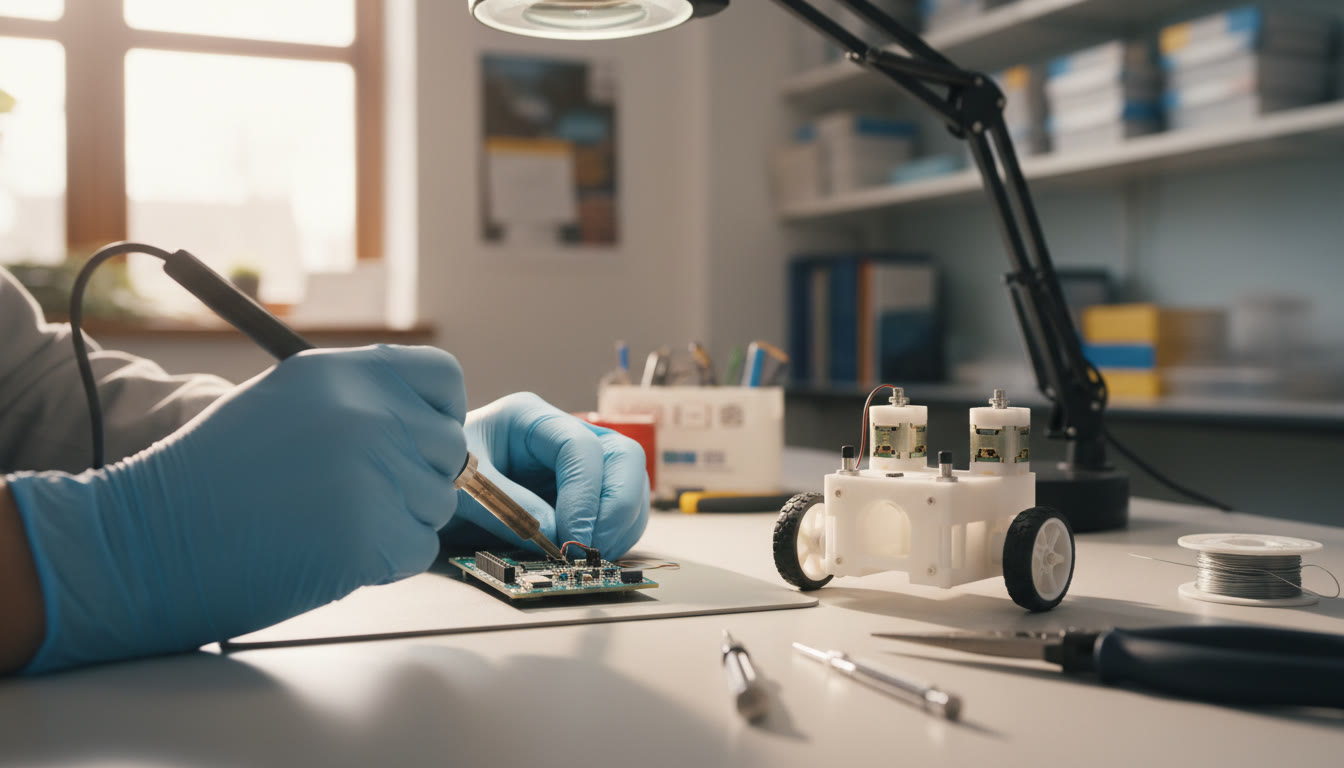
- Photos or short videos (annotated) showing progress.
- Code snippets or schematic images (with notes on what they do).
- Two to three reflective entries—one planning reflection, one mid-project analysis, one summative learning reflection.
- Supervisor and beneficiary statements, where applicable.
Organize your portfolio so a reader can scan it in five minutes
Put a one-page project index at the front: project name, short description, category (C/A/S), top three outcomes demonstrated, and three items of evidence. This index makes it simple for a supervisor or examiner to find the parts of your portfolio that prove your claims.
Writing reflections that show genuine learning (not just a diary)
Reflection is where CAS becomes convincing
A good reflection is analytical and specific. It’s not just “I built a robot,” but “I struggled to integrate the ultrasonic sensor because the servo timings conflicted; I tested three solutions, chose a prioritized scheduling approach, and learned about timing conflicts—this helped our robot reduce collision events by x% in testing.” Numbers, alternatives tried, and a brief note on what you’d do differently next time make reflections feel credible.
Three reflection prompts that always work
- What was the most unexpected challenge I faced, and how did I try to solve it?
- What did I learn about working with others, and how did roles evolve?
- How does this experience influence my future choices (study, career, volunteering)?
Keep each reflection focused, include links or pointers to evidence, and explicitly state which CAS learning outcomes the reflection addresses. Supervisors love when students make this mapping clear.
Demonstrating impact and leadership: make influence visible
Leadership is more than title—show systems you built
If you led a club or project, document the structures you created: onboarding material for new members, a safety checklist, a parts inventory system, or a rotation schedule for responsibilities. These are the visible systems that indicate sustainable leadership rather than short-term command.
Measure impact in small, honest ways
Impact can be measured by attendance figures, participant feedback, time saved, or qualitative testimonials. For a tutoring program, record the number of students helped and the learning milestones they achieved. For a community robot, report the tasks it completed and any feedback from users. Even modest, well-documented impact beats grand but vague claims.
Crafting your digital student profile
Keep it tidy, searchable and cross-referenced
Use a simple folder structure or an online portfolio (school-approved platforms are safest). For each project include a cover page that links to the project’s evidence. Use file names that clearly identify the project and type of evidence (e.g., “GreenhouseBot_testlog_Week6.csv”). If you use video, keep clips short—30–90 seconds—and label what the clip demonstrates.
Permissions and privacy
If your project involves people or spaces outside school, get written consent before publishing photos or testimonials in a portfolio. Keep copies of permission notes in your files—this is part of good professional practice and something a supervisor may ask to see.
Balancing CAS with the rest of IB DP
Time management strategies that actually work
Regular, short sessions beat frantic marathons. Block two or three fixed sessions per week for robotics and protect them as you would a class. Use milestone planning—if you know you need a prototype demo in four weeks, work backward and assign tasks to each session so that testing and debugging time is not left for the last minute.
Sample weekly rhythm
- Monday: Planning & code review (60–90 minutes)
- Wednesday: Build & test (90–120 minutes)
- Saturday: Group integration and documentation (2–3 hours)
- Weekly reflection: 20–30 minutes after Saturday session
Keeping a predictable rhythm helps you maintain academic balance and produces consistent evidence for your portfolio.
Where targeted support can help
When to seek 1-on-1 help
If you’re stuck on a tricky sensor integration, trying to interpret data, or needing help with a compelling reflection, focused tutoring can be time-saving. Personalized tutoring is especially useful when you need tailored feedback on project planning, writing evidence-aligned reflections, or sharpening your presentation for a supervisor meeting. For students looking for structured support, Sparkl‘s personalized tutoring can provide 1-on-1 guidance, tailored study plans, expert tutors and AI-driven insights that help you turn messy drafts into portfolio-ready entries.
Preparing for supervisor meetings and verification
Be prepared, concise and honest
Bring a one-page project summary, a short reflection that maps to learning outcomes, and the most persuasive pieces of evidence (one photo, one log excerpt, one short video or code snippet). Ask for specific feedback and a timeline for signatures—this shows your supervisor you respect their time and makes verification easier.
Supervisor notes and signatures
Request short, task-focused verifier comments at key milestones. A supervisor who writes a few lines about your problem-solving or collaboration will strengthen your portfolio far more than a vague stamp saying “approved.”
Common pitfalls robotics students fall into—and how to avoid them
Pitfall: Too many small projects, no depth
A handful of well-documented, sustained projects is far better than a dozen one-off activities. Depth shows perseverance and learning over time.
Pitfall: Evidence scattered and unlabeled
Organize evidence from the start. Label files, keep an index, and write short captions so a reader instantly understands the significance of each item.
Pitfall: Reflections that summarize rather than analyze
Always link reflections to decisions, alternatives and outcomes. Show what you learned and how that will change future actions.
Final academic takeaway
Turning a love of robotics into a standout CAS profile is about designing projects with intention, documenting progress clearly, reflecting with honesty and linking everything back to the CAS learning outcomes. Prioritize sustained engagement and measurable impact, keep your evidence organized and annotated, and treat reflections as the place where you translate experience into learning. Done thoughtfully, your robotics work will read as a unified narrative of curiosity, skill and responsibility—precisely the qualities the IB seeks to assess.



















No Comments
Leave a comment Cancel