

The Two-Week Cycle: A Practical Rhythm to Move IA, EE, and TOK Forward Together
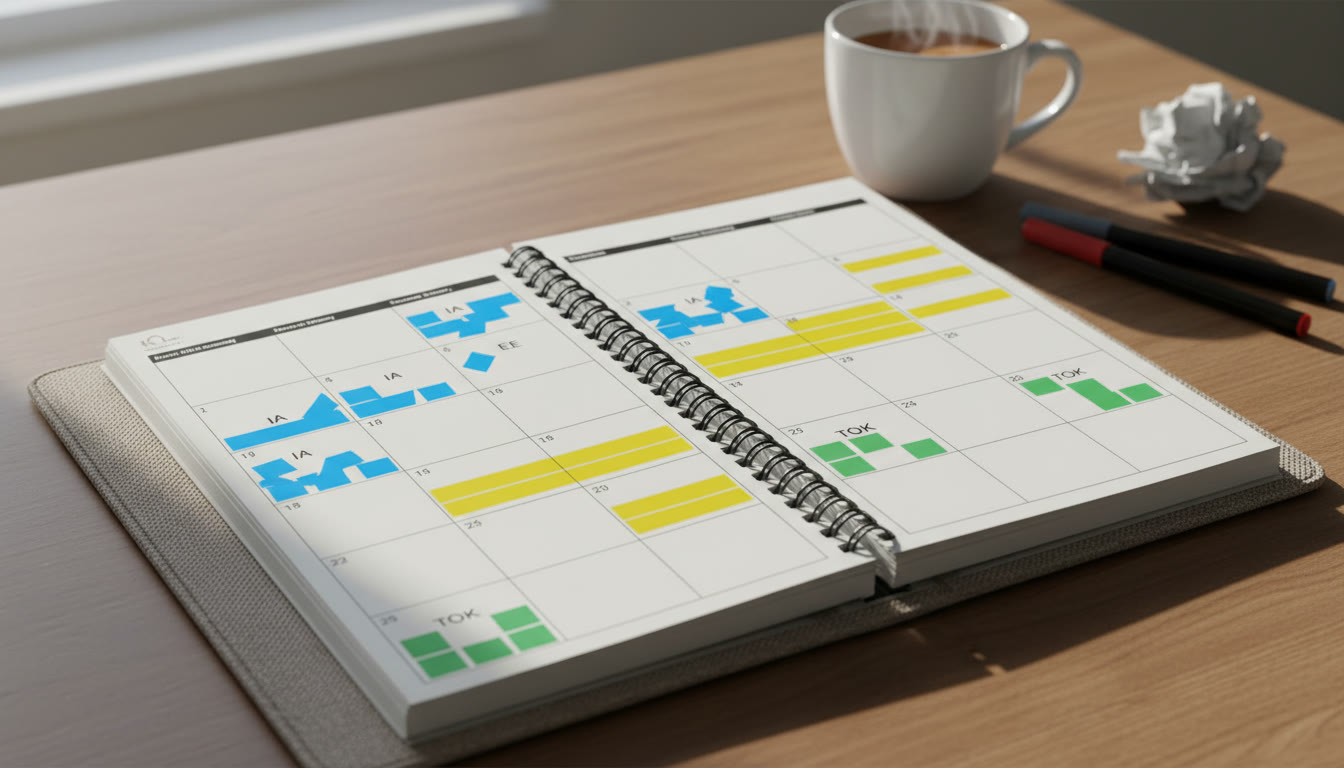
When you’re juggling Internal Assessments (IA), the Extended Essay (EE), and Theory of Knowledge (TOK), it can feel like three separate marathons running on the same track. The idea behind the two-week cycle is simple: break that big, fuzzy workload into a repeating, manageable rhythm that builds momentum, creates space for feedback, and protects your attention. Think of it as a living study scaffold—not a rigid schedule—one that keeps progress visible, feedback frequent, and stress manageable.

Why a Two-Week Rhythm Works
Two weeks is long enough to complete meaningful chunks of work and short enough to get regular feedback. It plays nicely with the supervision timelines that many schools use (fortnightly check-ins are common), and it meshes with cognitive science principles like spaced repetition and interleaving. Instead of sprinting and crashing, you move in consistent, repeatable cycles: plan, do, reflect, and adjust.
Here’s what this rhythm offers in practical terms:
- Frequent checkpoints so problems are discovered early, not the night before a deadline.
- Built-in reflection windows for TOK thinking and for refining EE arguments and IA methods.
- Smaller, psychologically encouraging wins—completing a subsection of the EE or a clean data set for an IA is motivating.
How IB Core Goals Align with the Cycle
IA, EE, and TOK each ask you to do something slightly different: the IA asks for disciplined application and analysis, the EE demands extended, independent research and argument, and TOK asks for meta-level reflection about knowledge. A two-week cycle lets you rotate focus while keeping steady progress across all three. One cycle might emphasize EE research plus a TOK reflection; the next could focus on IA data collection and TOK presentation prep.
Designing Your Own Two-Week Cycle
Customize the cycle to your deadlines, subject demands, and energy rhythms. Below is a step-by-step approach to design a cycle that feels both ambitious and human.
Step 1 — Map the Big Milestones
Write down the main milestones for IA, EE, and TOK within the current cycle: supervisor meetings, drafts, experiments, surveys, and presentation rehearsals. These are your anchors.
Step 2 — Break Milestones into Fortnightly Chunks
For each anchor, list the concrete tasks you can finish within 48–96 hours. Examples: read two core sources and annotate for EE; run one full data collection session for IA; draft a 600-word TOK reflection. These bite-sized tasks are what you slot into each two-week block.
Step 3 — Assign Roles to Days (Flexible)
A cycle should feel predictable but adaptable. You might allocate days to research, writing, feedback, and reflection. Leave buffer days for unexpected complications.
Sample Two-Week Schedule
Below is a practical example you can copy and tweak. Time estimates are suggestions; scale them to your available hours.
| Day | Focus | Concrete Tasks | Time Estimate | Checkpoint |
|---|---|---|---|---|
| Day 1 | Planning & Goals | Set fortnight goals, update research log | 1–1.5 hrs | Clear plan for next 14 days |
| Day 2 | EE Research | Read & annotate 2 sources; add quotes to bibliography | 2–3 hrs | 2 annotated sources |
| Day 3 | IA Data | Collect or clean one data set | 2–3 hrs | Cleaned dataset |
| Day 4 | TOK Reflection | Write a 500–700 word reflection; link to IA/EE | 1.5–2 hrs | Reflection draft |
| Day 5 | Writing | Draft 600–800 words for EE or IA analysis | 2–3 hrs | New draft section |
| Day 6 | Supervisor & Feedback | Send draft to supervisor or meet briefly | 0.5–1 hr + meeting | Actionable feedback |
| Day 7 | Rework | Implement feedback, tidy references | 1–2 hrs | Revision complete |
| Day 8 | Deep Dive Research | Find 1–2 niche sources or run secondary analyses | 2–3 hrs | New citations |
| Day 9 | IA Analysis | Write up results/interpretation | 2–3 hrs | Results section |
| Day 10 | TOK Group Work | Discuss knowledge questions with peers; refine examples | 1–2 hrs | Polished KQ |
| Day 11 | Proof & Style | Language polish, citations, format checks | 1–2 hrs | Formatting pass |
| Day 12 | Extra Buffer | Catch up on incomplete tasks | 1–3 hrs | All tasks up to date |
| Day 13 | Reflection & Annotation | Write reflective log for cycle; plan next cycle | 1 hr | Reflection notes |
| Day 14 | Supervisor Check-in & Reset | Meet, get feedback, set next fortnight goals | 0.5–1 hr + meeting | New cycle plan |
Practical Techniques That Fit the Cycle
Small habits amplify over repeated cycles. Pick three compact techniques and use them consistently:
- Time-blocking: Reserve specific hours for research and different hours for writing. Protect those blocks like appointments.
- Pomodoro bursts: 25/5 or 50/10 for focused drafting, then short reflection to keep TOK thinking fresh.
- Research logs: Keep a one-page running document with date, activity, outcome, and next step.
How to Use Feedback Well
Feedback is gold if you treat it like raw data. After each supervisor meeting or tutor comment, translate feedback into 2–5 precise action items. Rather than “Improve argument,” a useful item would be “Add two contrasting sources to support counter-claim in paragraph three.” This makes progress visible within the next cycle.
If you want structured, regular support between supervision sessions, consider pairing cycles with occasional 1-on-1 guidance. For example, a short targeted session can turn vague feedback into a clear revision plan. Sparkl offers tailored study plans and focused tutoring that many students find helpful for converting feedback into immediate actions while balancing the rest of the DP workload.
Common Pitfalls and How to Avoid Them
- Perfection paralysis: Don’t aim to finish a chapter perfectly in one cycle. Complete a workable draft; polish it in the next pass.
- Scope creep: Especially with the EE, resist expanding the question mid-cycle without re-scoping your plan. Smaller, sharper research questions are easier to manage.
- Feedback overload: If you receive conflicting advice, distill it into themes and test one approach per cycle rather than trying to implement everything at once.
Academic Integrity, AI, and Ethical Use
The DP values authentic student work. If you use AI-driven tools to help with organization, summarizing, or practice questions, do so transparently and as an aid, not as a replacement for original thinking. Keep your research notes and drafts so you can demonstrate the development of your ideas. When AI or other tools inform your work, make sure you understand and can explain the choices and reasoning in person.
Tools that offer AI-driven insights can be powerful time-savers when used responsibly: they can help generate draft structures or suggest literature you might have missed, but the intellectual ownership of arguments and interpretations must remain yours. For students wanting extra structure, Sparkl‘s expert tutors often combine human guidance with intelligent study plans to keep cycles realistic and ethically grounded.
Examples: Micro-Tasks You Can Finish in a Cycle
Concrete examples help translate theory into practice. Here are sample micro-tasks that fit neatly into one two-week block:
- EE: Complete a 1,200-word literature review subsection and compile an annotated bibliography of five sources.
- IA: Run three trials of an experiment or finish coding and cleaning one full data set, then draft results.
- TOK: Draft a 700-word response exploring one knowledge question and link it to an IA or EE example.
Measuring Progress: Simple Metrics to Track Every Cycle
Quantitative metrics are surprisingly motivating when balanced with qualitative reflection. Track a few consistent indicators and look for upward trends across cycles.
| Metric | What to Track | Weekly Target |
|---|---|---|
| Draft Output | Words drafted or revised | 1,200–1,800 words per cycle |
| Sources Added | New, relevant academic sources | 2–4 per cycle |
| Supervisor Touchpoints | Meetings or emailed feedback | 1 per cycle |
| Reflection | Short log entry summarizing wins and problems | 1 per cycle (300–600 words) |
Making the Cycle Fit Your Life
Not every two-week block will look identical—and that’s fine. Some cycles will be research-heavy; others will be editing-heavy. The key is consistency: repeated, deliberate cycles compound into real progress. If you find yourself falling behind, scale tasks down rather than skipping cycles. A 20–30 minute focused session each day within the cycle will still move the needle more than a single frantic weekend.
Tips for Personalization
- Shift the cycle to three-week blocks if your IA experiment requires longer runs—what matters is the rhythm, not the exact length.
- Swap in a peer review day when you need external perspective for TOK examples or EE argument structure.
- Use digital tools or a simple paper planner—what you’ll notice most is rhythm, not the app.
How to Keep Momentum Over Many Cycles
At the start, momentum can be the hardest thing to build. Use the two-week cycle to create a visible trail of progress: keep a list of completed micro-tasks, maintain versioned drafts, and archive supervisor comments alongside your responses. Those small proof-points are invaluable when motivation dips.
If tailored coaching helps you translate feedback into immediate next steps and keeps momentum steady between supervision meetings, short targeted sessions with an experienced tutor can be a smart investment. Sparkl‘s tutors focus on turning feedback into clear action items and on building personalized plans that align with your cycles.
Final Notes and a Clear Closing Thought
Adopting a two-week cycle is about building a sustainable, repeatable pattern: set clear fortnight goals, break them into doable micro-tasks, seek timely feedback, and reflect before you reset. Over time these cycles convert scattered effort into coherent progress across IA, EE, and TOK.
Keep the rhythm patient and flexible; steady, deliberate work beats frantic heroics every time.


























No Comments
Leave a comment Cancel