

Why Tech-for-Good belongs in your IB DP CAS profile
Tech isn’t just coding or gadgets — it’s a toolkit for solving real problems. For IB DP students building a CAS profile and a broader student portfolio, Tech-for-Good projects offer a perfect blend of creativity, activity and service: you design solutions, test ideas, and serve real communities while documenting learning and reflection that maps directly to IB outcomes. These projects let you show initiative, ethical thinking, global-mindedness and practical skills — all qualities teachers and examiners notice.

Think beyond “app launches.” Tech-for-Good can be as simple as teaching a local seniors’ group how to use video calls, as rigorous as designing a sensor network to measure urban air quality, or as empathetic as prototyping accessibility improvements for a community center. What matters is clear intention, evidence, reflection and measurable impact — and that’s exactly what this guide gives you: templates you can adapt, tips for documentation, and ethical guardrails so your work is meaningful and assessable.
How Tech-for-Good aligns with CAS and the IB learner profile
CAS is about real learning through action. Tech-for-Good fits naturally because it:
- Combines design and problem-solving (Creativity).
- Often involves physical fieldwork, prototyping, data collection or outreach (Activity).
- Delivers service that responds to community needs (Service).
At the same time, tech projects highlight IB learner attributes — thinkers, communicators, open-mindedness, principled action — when carried out thoughtfully. Documenting your rationale, safeguards, and community feedback turns a neat idea into a strong CAS experience.
Principles for a high-impact, assessable Tech-for-Good project
- Begin with a clear problem statement: Who is affected, how, and why will your approach help?
- Set measurable outcomes: What will success look like in terms of users helped, skills learned, or behaviors changed?
- Prioritise ethics and consent: Privacy, data minimisation and informed consent are non-negotiable.
- Keep sustainability in view: Plan for maintenance, handover, or local ownership after the project ends.
- Document deliberately: Logs, photos, short video clips, code snapshots, testimonies and reflective entries are your portfolio gold.
- Reflect often: Short, honest reflections after milestones show growth and help map to CAS learning outcomes.
Five ready-to-use Tech-for-Good project templates
Below are adaptable templates you can scale up or down depending on resources, team size and the timeframe of your CAS plan. Each template includes a short description, suggested CAS strands and outcomes, step-by-step milestones, evidence ideas and reflection prompts.
1. Community Digital Literacy Hub
Goal: Build and run a neighborhood digital literacy programme that teaches basic internet safety, video calling, and essential productivity tools for an underserved group (seniors, new immigrants, or local community groups).
- CAS strands: Creativity, Service, Activity.
- Milestones:
- Conduct a needs survey with a partner organization.
- Design 6–8 short workshop modules and simple handouts.
- Run weekly sessions and collect attendance and satisfaction data.
- Train local volunteers to continue the programme.
- Evidence: Lesson plans, attendance sheets, testimonial audio clips, before/after skill checklists, photos (with consent), short reflective journal entries.
- Reflection prompts: What surprised you about learners’ needs? Which teaching strategies worked and why? How did you adapt when things didn’t go as planned?
2. Accessibility Audit and Low-Fidelity Prototype
Goal: Audit a school or community space for accessibility gaps and create a low-cost prototype or awareness campaign to improve access for people with mobility, sensory or cognitive differences.
- CAS strands: Creativity, Service.
- Milestones:
- Perform an accessibility audit using a checklist and interviews with users.
- Prioritise 2–3 improvements you can realistically prototype.
- Create low-fidelity prototypes (signage redesign, wayfinding app mockup, tactile labels) and test with users.
- Deliver recommendations and a handover document for the space managers.
- Evidence: Audit checklist, interview notes, prototype photos, feedback forms, a short guide for caretakers or a presentation deck.
- Reflection prompts: How did user feedback reshape your design? What ethical responsibilities did you discover in representing others’ needs?
3. Data for Good: Community Needs Mapping
Goal: Collect and visualise neighbourhood data (food access points, safe walking routes, green spaces) to inform a local charity or municipal body.
- CAS strands: Creativity, Service, Activity.
- Milestones:
- Define data to collect and draft a simple consent and privacy approach.
- Map data using free tools or handwritten maps if required.
- Analyse patterns and prepare a short report with clear recommendations.
- Share findings with stakeholders and propose next steps.
- Evidence: Raw data logs, anonymised datasets, screenshots or maps, stakeholder emails, summary report, reflection entries about data ethics.
- Reflection prompts: What does the data reveal about local inequities? How will you ensure that the data is used responsibly after the project?
4. Environmental Monitoring using Low-Cost Sensors
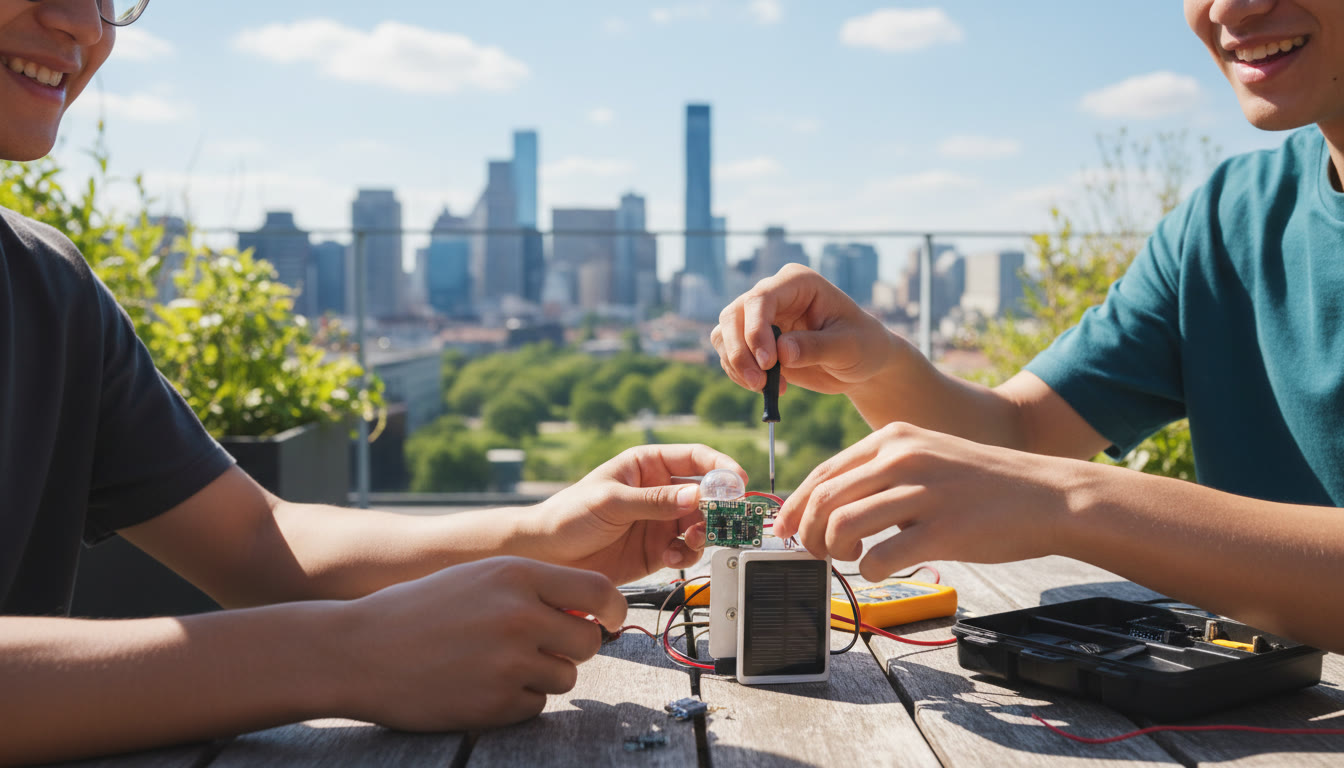
Goal: Build or deploy simple sensors (noise, air quality, weather) to gather environmental data for a local campaign or science club.
- CAS strands: Creativity, Activity, Service.
- Milestones:
- Choose metrics and ensure ethical, permission-based deployment.
- Prototype sensor housings and validate readings.
- Collect and visualise data; present findings to a community audience.
- Discuss mitigation ideas with stakeholders or partner organizations.
- Evidence: Calibration logs, data charts, photos of deployment with permissions, presentation materials, reflections on technical and social lessons.
- Reflection prompts: How reliable was your data and what would you change next time? What responsibilities do you have when sharing environmental information publicly?
5. Mental Health Peer Support Prototype and Awareness Campaign
Goal: Co-design a peer-to-peer support plan and prototype simple digital resources (info sheets, a signposting page, or a moderated chat schedule) to raise awareness and provide safe routes to professional help.
- CAS strands: Creativity, Service.
- Milestones:
- Consult with school counsellors and community leaders to define safe boundaries.
- Create materials and a moderated pilot schedule for peer support sessions.
- Train peers on active listening, boundaries and referral pathways.
- Gather feedback and hand the programme to permanent staff if viable.
- Evidence: Training checklists, attendance sheets, anonymised feedback, resource mockups, reflections on safeguarding decisions.
- Reflection prompts: How did you balance anonymity with safety? What did you learn about supporting others responsibly?
Quick comparison table: Templates at a glance
| Project | CAS Strands | Time Estimate | Skills Developed | Top Evidence Types |
|---|---|---|---|---|
| Digital Literacy Hub | Creativity, Service, Activity | 8–12 weeks | Teaching, communication, project planning | Lesson plans, attendance, testimonials |
| Accessibility Audit + Prototype | Creativity, Service | 6–10 weeks | Design thinking, interviewing, prototyping | Audit reports, prototype photos, user feedback |
| Community Needs Mapping | Creativity, Service, Activity | 6–12 weeks | Data collection, analysis, report writing | Maps, datasets, stakeholder summaries |
| Environmental Monitoring | Creativity, Activity, Service | 8–16 weeks | Electronics, data literacy, fieldwork | Sensor logs, charts, presentations |
| Mental Health Peer Support | Creativity, Service | 6–12 weeks | Training, ethical decision-making, communication | Training records, anonymised feedback, resources |
Planning, documentation and evidence: building a standout portfolio
Good planning makes your CAS profile readable, verifiable and memorable. Treat documentation like a narrative: problem → action → evidence → reflection. Use short, dated entries for each session, save artefacts (slide decks, code snippets, photos with consent) and include direct feedback from people you served. When possible, collect both quantitative indicators (attendance numbers, readings captured, items distributed) and qualitative evidence (interviews, quotes, testimonials).
Tools and formats that work well
- Session logs with date, attendance and a one-line outcome.
- Short reflection entries after milestones (250–400 words) that link action to learning.
- Before/after measurements or simple surveys to show impact.
- Multimedia evidence: short videos, annotated photos, and screenshots (with explicit consent and clear captions).
If you want targeted help shaping your reflections or building a clear portfolio narrative, consider Sparkl‘s personalised tutoring — 1-on-1 guidance, tailored study plans, expert tutors and AI-driven insights can help you refine language, evidence selection and sequencing so your learning is easy to assess and hard to miss.
Reflection that maps to learning outcomes
Examiners and CAS coordinators look for honest reflections that show development. A strong reflection includes a short description, what went well, what didn’t, concrete evidence of learning, and a plan for next steps. Regular reflections — even brief ones — are more powerful than a single long summary at the end.
Ethics, safety and community partnership
Tech projects carry extra responsibilities. Consider these guardrails:
- Privacy first: Always anonymise personal data. Collect only what you need and get clear consent for photos and recordings.
- Work with partners: Local organisations legitimise your project, provide context and help with handover.
- Safeguarding: If you work with minors or vulnerable people, follow school policies and involve adult supervisors.
- Accessibility and inclusion: Test solutions with the people who will use them — assumptions can make good intentions fail.
- Be transparent about limitations: Don’t oversell what your prototype or pilot can achieve; describe next steps honestly.
Assessing impact and linking to CAS outcomes
When you describe impact, connect concrete activities to clear learning: what skill did you learn, what did you do to practise it, and how can you evidence that development? Aligning your narrative to common CAS themes — planning and initiative, perseverance, collaboration, global engagement and ethical reasoning — helps coordinators and assessors see the learning threads through your work.
If you’re unsure how to phrase reflections or want a second pair of expert eyes on your portfolio, a few sessions of targeted tutoring can make a real difference; personalised feedback often turns a good project into a standout, assessable experience.
Scaling, sustainability and future-ready thinking
Design with continuity in mind. Can volunteers take over? Is there a simple maintenance guide? Will your data be archived responsibly? Small decisions — open formats for documents, clear ownership of passwords, and a short handover checklist — make it far more likely that your impact lasts beyond the CAS timeline and that your portfolio shows both initiative and responsibility.
Final academic reflection
Tech-for-Good projects are academic in nature when they frame a problem, apply rigorous methods, reflect on ethical implications and demonstrate clear learning outcomes. By combining careful planning, meaningful community partnership, robust documentation and honest reflection, your IB DP CAS profile will not only show technical ability but also intellectual maturity and principled action. Finish with evidence that ties each activity to learning and to community benefit, and you will have a portfolio that speaks to both your skills and your values.


























No Comments
Leave a comment Cancel