
Why Caltech values research readiness — and why the IB DP is already an advantage
If Caltech is on your radar, you already know the short version: the Institute prizes sustained curiosity, technical depth, and the ability to carry a question from messy beginnings to a clear result. For IB Diploma (IB DP) students, that’s good news — the DP’s structures (Extended Essay, Internal Assessments, HL coursework) map naturally to the kinds of evidence selective STEM programs look for. The trick is packaging that evidence so admissions readers see not just participation, but genuine research readiness.
This guide walks you through practical steps — from shaping your Extended Essay to collecting letters of recommendation, from documenting lab work to preparing interview stories — with concrete examples of what makes an IB profile sing for a place like Caltech. Along the way you’ll also get compact, actionable advice for international logistics and how to use tailored support like Sparkl‘s personalized tutoring when it fits your plan.
What ‘research readiness’ means to selective STEM admissions
Research readiness is not a single credential. Admissions officers evaluate a patchwork of signals that together tell a story: intellectual initiative, technical skill, sustained focus, an ability to grapple with uncertainty, and clear communication of results. For IB students that story is often visible in coursework and projects — but only if you frame it intentionally.
Key attributes admissions are watching for
- Depth over breadth: a few rigorous, well-documented projects beat a long list of shallow experiences.
- Independence with mentorship: you led aspects of the work while learning from experts.
- Method and iteration: you designed or adapted methods, analyzed noisy data, and repeated tests when needed.
- Quantifiable contribution: you can point to a measurable improvement, new dataset, algorithm, or prototype.
- Communication: you can explain your work clearly to specialists and non-specialists, in writing and conversation.
How IB DP elements map to research evidence
Below are the IB components you can leverage and how to make each one do more of the heavy lifting for an application to a research-focused US school.
Extended Essay (EE)
The EE is your most obvious long-form research artifact. To maximize its credibility as research evidence:
- Choose a question with genuine scope and literature to situate it in; avoid questions that only require a cookbook experiment.
- Treat the EE like a lab notebook: document methodology, controls, limitations, and iterations.
- Use appropriate analysis tools — statistics, coding, or modeling — and explain why you chose them.
- If possible, tie the EE to an external mentor or lab: mention the mentor’s role in a short note, and, where appropriate, include a brief research supervisor comment as part of your application materials.
Higher Level (HL) Internal Assessments (IAs)
IAs are smaller than the EE but can collectively show consistent experimental skill. Selecting and presenting your strongest HL IAs — especially those that required original setups, troubleshooting, or data analysis — strengthens the narrative that you can do hands-on STEM work.
Subject choices and HLs
Caltech and similar programs read your subject choices for signal: HL math and at least one HL science (physics, chemistry, or biology) are common among applicants who emphasize research. If your intended major is computational, a strong HL in mathematics (with evidence of programming) matters as much as lab experience.
Theory of Knowledge (TOK) and research mindset
TOK reflections can yield concise, thoughtful language about how you view evidence, uncertainty, and modeling — useful phrasing for application essays and interviews when you explain why particular research questions mattered to you.
Concrete steps to build and present research readiness
Think of your application as a dossier: each component should provide consistent evidence and avoid repetition that doesn’t add value. Below are tactical moves that translate classroom work into compelling research proof.
Build before you apply — and document as you go
- Start your EE early and aim for a question that can evolve into summer work or a longer independent project.
- Keep a research log (date-stamped entries, raw data, brief reflections). Admissions readers respect process artifacts.
- Publish a short write-up or poster if you can: even a clear PDF on a personal site or a GitHub repository helps reviewers verify your claims.
- Seek a research mentor who can objectively describe your contribution; a short mentor letter or email (kept on file) is useful when asking recommenders for help.
Choose recommenders strategically
One of your recommendation slots should ideally be a science or math teacher who knows your academic work. If you have the option, obtain a supplementary letter from a research supervisor (lab PI or mentor). Admissions value context: a teacher can attest to your classroom mastery; a mentor can speak to independence and lab habits.
- Provide recommenders with a one-page summary: your research question, methods you used, obstacles, and measurable outcomes.
- Ask recommenders to describe specific moments (problem-solving, troubleshooting, hypothesis shifts) rather than general praise.
Table: Translating IB activities into application evidence
| IB Activity | How to build it | How to present it on applications |
|---|---|---|
| Extended Essay | Formulate testable question, collect data, use analysis tools, document iterations | Mention as independent research; include methods, results, and your next steps |
| HL Internal Assessment | Design a rigorous experiment, focus on measurement reliability and analysis | Highlight specific technical skills and problem-solving instances |
| Research internship / lab mentor | Contribute measurable tasks, keep records, seek small independent sub-projects | Request mentor comments; summarize your contributions quantitatively |
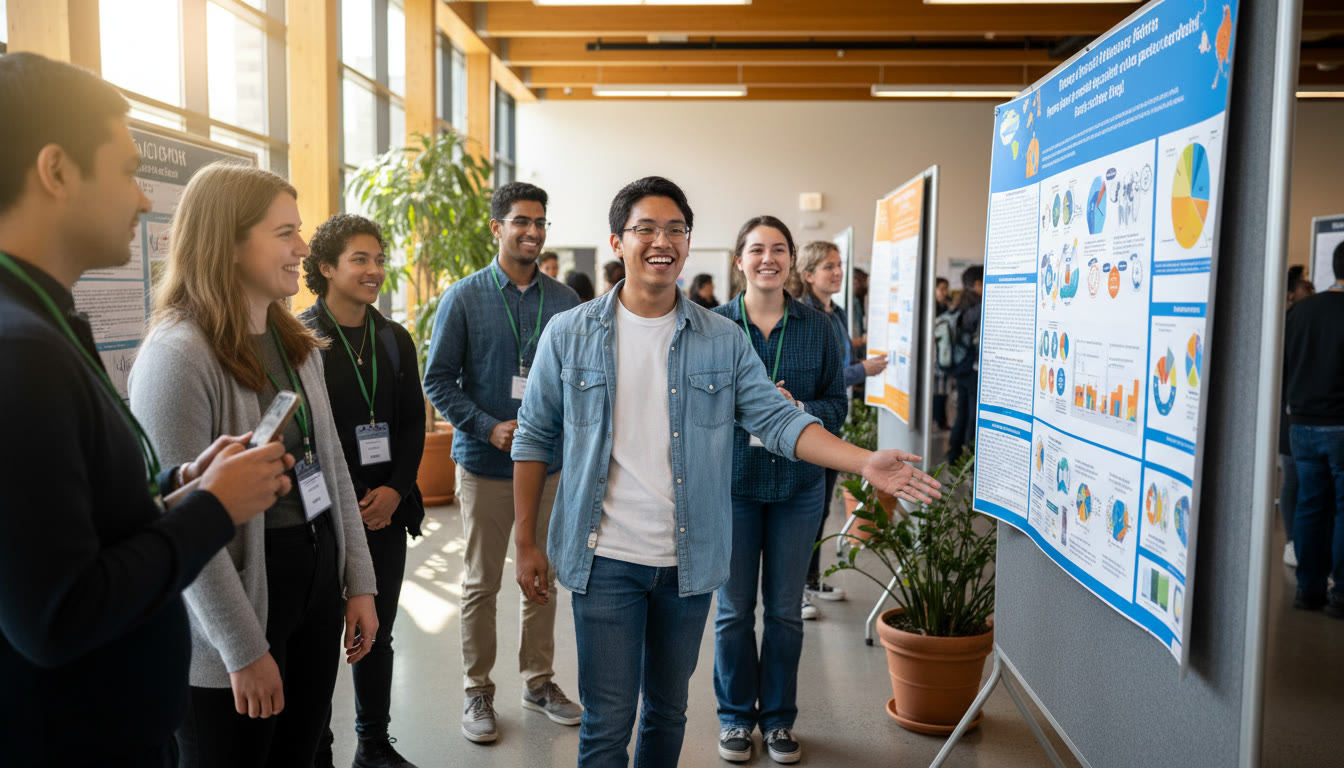
| Competitions / conferences | Develop a clear project and prepare a poster or paper | List outcomes (presented/published/awarded) and what you learned |
| Independent coding / prototypes | Maintain a public repo with README, tests, and documentation | Link to repository; describe your architecture and learning curve |
Writing essays and supplements that prove, not brag, about research
Essays are a space to show thinking in action. Admissions officers want to see the path—how you encountered a problem, the failed attempts, the refinement, and the insight that followed. Keep the language concrete and method-focused.
Structure that works
- Hook: a specific moment in the research process (the failed trial that changed your design).
- Body: methods you used, decisions you made, technical skills you acquired.
- Reflection: what the work taught you about the discipline, and how it shapes your future projects.
Do’s and don’ts
- Do quantify where possible: describe how you improved an experimental protocol or increased accuracy.
- Do name your contribution clearly: what did you originate, and what was collaborative?
- Don’t overclaim: if a mentor supervised a critical step, credit them and explain your role honestly.
- Don’t turn essays into lists of achievements; use a focused narrative to reveal character and method.
Interview preparation: talk like a young researcher
If you get an interview, treat it as a lab meeting with a curious colleague. Prepare to discuss your projects technically but accessibly: explain experimental design, why you chose particular controls, what you would do differently, and what unanswered questions remain.
- Practice explaining your research to a non-specialist in two minutes, and to a specialist in five minutes.
- Bring one or two artifacts to the conversation mentally: a graph, a short result, or a design sketch you can describe out loud.
- Expect follow-up questions about trade-offs, safety, data interpretation, and next steps.
International applicants: timing and system-specific notes
Many IB students apply across systems. Here are targeted notes you should know while juggling timelines and different kinds of evidence.
United Kingdom (UCAS)
If you’re also applying to UK programs through UCAS, be aware that personal statements have evolved into a 3 Structured Questions format focused on Motivation, Preparedness, and Other Experiences for the upcoming entry cycle. Translate your research story into concise answers: use the ‘Motivation’ section to explain why the question mattered, ‘Preparedness’ to list concrete skills and labs, and ‘Other Experiences’ for context — internships, competitions, or mentoring.
Switzerland (EPFL)
For students considering EPFL and other Swiss schools, note the latest updates for international bachelor applicants: there is a recently announced 3,000 Student Cap for international bachelor’s admissions, and admission is competitive and ranked rather than guaranteed by score alone. That means demonstrable research experience and clear projects can be differentiators when selection is by rank.
Canada
When applying to Canadian universities, use the correct terminology: distinguish Automatic Entrance Scholarships (grade-based awards granted when you meet threshold grades) from Major Application Awards (which are leadership- or nomination-based and evaluate your extracurricular impact). For research-focused awards, highlight project leadership, publications, and mentorship roles rather than relying on grades alone.
Netherlands
If you’re targeting Numerus Fixus engineering programs (for example at major technical universities), remember that the application and selection timeline is different: the January 15th deadline for several technical Numerus Fixus programs is much earlier than the general deadline — plan your EE and any external testing or portfolio deliverables well in advance.
Singapore
Many Singaporean universities send offers later in the cycle — often mid-year — which can create a gap risk if you hold earlier offers from the US or UK. If you are applying to both Singapore and Caltech, consider how delayed offers may affect deposits and your decision timeline, and be transparent in your planning with mentors.
Balancing applications: honest narratives across systems
You don’t need different lives for different systems, but you do need slightly different packaging. A research narrative for Caltech should emphasize methods and independence; a UCAS answer might be crisper and motivational. Keep a master file: raw data, project summaries, mentor contacts, and short summaries tailored for each application system.
When external support helps: using targeted tutoring and feedback
At certain stages — polishing an EE methodology section, preparing for technical interview questions, or shaping a recommendation brief for a mentor — targeted, expert feedback can be time-saving. That’s where 1-on-1 guidance and tailored study plans can be useful: they help refine technical explanations, practice interview delivery, and match evidence to an application’s format. Sparkl‘s tutors, for instance, offer subject specialists who can help you tighten an experimental write-up, rehearse verbal explanations, or build a step-by-step plan for a summer research stint; using such support should complement, not replace, the authentic work you produce.
Common pitfalls and how to avoid them
- Overloading your application with many small activities rather than investing in a sustained project — choose depth.
- Describing techniques without results — include what you learned and how it shaped the next step.
- Letting recommender letters stay vague — brief them well so they can describe specifics.
- Failing to align timelines — watch system-specific deadlines and offer timing (see notes above for UCAS, EPFL, Netherlands, Singapore, Canada).
Checklist: a research-ready IB application for a school like Caltech
- Extended Essay with clear methodology, mentor engagement if possible, and a succinct summary prepared for applications.
- At least one HL science or mathematics with IA evidence showing experimental or analytical skills.
- Documented research experience outside the classroom (lab internship, independent project, competition, or repository).
- Recommendation set that includes a classroom teacher and, if available, a research mentor who can attest to independence and technical habits.
- Supplements and essays that explain process, not just results — highlight iterations, failures, and interpretative thinking.
- A plan for interview storytelling: two-minute lay summary and a five-minute technical recounting of your core project.
Final academic conclusion
Research readiness is a composite signal: rigorous IB coursework and assessments provide a strong foundation, but the decisive factor is evidence of independent, methodical thinking and sustained technical work that you can clearly describe and document. Shape your EE and IAs into verifiable projects, secure recommenders who can attest to your role, and present your learning process honestly and concretely — those moves will consistently translate an IB profile into the kind of readiness selective STEM programs seek.





























No Comments
Leave a comment Cancel