

IB DP Subject Mastery: Paper-Wise Strategy—Practice Like It’s the Real Exam
There’s a special kind of calm that comes from doing a practice paper exactly as if it were the real exam: the desk is clear, the clock is steady, the watch is set, and you can feel the small, clean rhythm of reading, planning and answering. That calm isn’t magic—it’s rehearsal. The more you recreate the exam environment and the paper format you’ll face, the fewer surprises will be left for the day that counts.
This guide walks you through a paper-wise plan that treats each assessment on its own terms. Every paper tests different skills—essay fluency, source handling, numeric problem-solving, experimental reasoning, or spoken performance—so each needs a slightly different training regime. Below you’ll find practical steps, timed templates, strategy checklists and realistic ways to measure progress so practice becomes precise, not just busywork.

Why ‘exam-like’ practice beats endless revision
Revision that focuses on background knowledge is essential, but it won’t reliably translate into exam marks unless you practice the skill of answering exam questions. A well-crafted answer is not just knowledge: it is time management, command-term interpretation, structure, evidence selection and presentation. Practicing under realistic constraints builds three things you can’t get from flashcards alone: speed, exam literacy and stress-management.
Speed becomes accurate when it’s trained. Exam literacy—knowing how markers allocate marks and what phrasing wins credit—comes from reading markschemes and exemplar answers. Stress-management comes from repeated exposure: simulated pressure is the single-best, low-cost way to make the real exam feel familiar.
Set up your exam simulation: environment, timing and rules
Environment
- Choose a quiet, uncluttered desk and put away phones and distractions.
- Recreate permitted materials: the calculator you’ll use, formula sheets if allowed, dictionaries for language papers, and any approved attachments.
- Have a visible clock or timer—you want the same cues you’ll see on exam day.
Timing and rules
- Follow the exact time limit you choose for practice. If you’re doing a single-paper simulation, don’t stop early and don’t give yourself extra minutes for drafting unless you plan to train that habit away before the real exam.
- Apply the same source/command restrictions (for example, treat unseen texts as unseen). If you’re practicing a non-calculator paper, put the calculator aside.
- Start and end with the same rituals you plan to use on exam day—5 minutes to set up, a quick mental checklist, a deep breath at the start.
After the simulation
- Take a structured 30–60 minute debrief: mark the paper against the markscheme and write a short reflection (what took too long, where marks were lost, what must be practised next).
- Record three specific targets for the next practice session (for example: ‘Plan essays in 8 minutes’ or ‘Show algebraic working for every numeric answer’).
Paper-wise tactics: matching practice to what’s tested
IB exams are diverse. Rather than one-size-fits-all practice, pick a paper-type approach and train the sub-skills it demands.
Essay papers (argument, evaluation, organization)
Essay papers reward structure, relevance, and evidence. Your practice should focus on tight planning and sustained argumentation.
- Read the question carefully—identify command terms and the specific task. Write a one-sentence thesis before you plan the body.
- Use a simple planning template: thesis, three points (each with evidence and analysis), counter-argument or limitation, and a concluding sentence that answers the question directly.
- Practice the micro-skill of linking evidence to argument: a quotation or data point should be followed immediately by explanation that ties it to your thesis.
- Time-break your essay in practice: allocate time to reading/planning, to writing, and to a short review for clarity and language.
Source-based papers (analysis, provenance, comparison)
Source papers check your ability to interrogate evidence and place it in context. Markers look for accurate reading, awareness of provenance, and effective comparison.
- Annotate sources in the first read-through: mark purpose, audience, tone and any obvious biases.
- Use direct evidence—quotations or precise references—from sources and pair them with explanation: what does the source show, and how reliable is it for the argument you’re making?
- When comparing sources, structure your paragraphs so each one answers the same question about two or more sources (e.g., representation, reliability, perspective).
Problem-solving and data papers (maths, sciences, quantitative reasoning)
These papers reward method and clarity of working. Practise so the examiner can follow your thinking even if the final number is imperfect.
- Always show steps. Partial credit is often awarded for method even when arithmetic slips occur.
- Write units and check them. Use estimation as a quick sanity check at the end of the question.
- Practice standard techniques until they become an automatic first-response: identifying which formula to use, sketching the problem structure, planning before computing.
- Use short, numbered steps where appropriate and circle final answers so markers can quickly find them.
Option papers, internal assessments and coursework
Option questions and IAs are about depth over breadth. They reward clear focus, good evidence and iterative improvement.
- Break IAs into mini-deadlines and keep a clear logbook of changes and feedback.
- For option content, identify the small number of topics that recur in past papers and build a strong evidence bank for each.
- Practice explaining methodology and limitations—this is often where top marks are won.
Orals and practicals (spoken skills, laboratory technique)
Confidence, clarity, and structure are everything in spoken assessments. Prepare short, structured answers and practice responding to unexpected prompts.
- Record rehearsals and listen back—notice filler words and unstructured responses.
- Practice signposting language: ‘First, I will…’, ‘The key result is…’, ‘A limitation is…’.
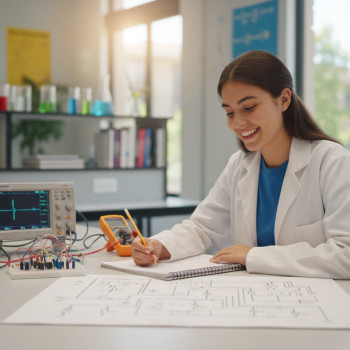
- For lab-based practicals, rehearse the narrative you will present: aim, method, key result, error analysis and conclusion.

How to use markschemes, exemplars and examiner reports
Markschemes are not just answers— they are a map of what examiners reward. When you practise, mark against the scheme and compare to high-scoring exemplars. Look for language, structure and the level of detail that earned marks.
- When you review a practice paper, mark once for content and once for technique (time, clarity, use of evidence). That separates knowledge gaps from exam-skills gaps.
- Turn common errors into a short ‘error bank’ and track them across practice papers. If you see the same mistake three times, that’s the priority for your next focused session.
- Use exemplar answers to learn phrasing and to model paragraph structure—don’t copy, but adapt the structure and phrasing to your own style and knowledge.
Command-term cheat sheet (what examiners expect)
| Command term | What to do | Typical marker focus |
|---|---|---|
| Describe | Give a clear account with factual detail. | Accuracy and relevant examples. |
| Explain | Set out causes, relationships or reasons. | Clarity in linking cause and effect. |
| Analyse | Break material into parts and examine relationships. | Depth of breakdown and insight. |
| Compare | Identify similarities and differences with balance. | Direct comparisons, not separate descriptions. |
| Evaluate | Weigh strengths/weaknesses and reach a supported judgement. | Evidence for judgement and consideration of limitations. |
Timed-practice templates: a simple, repeatable plan
Different papers need different time splits. Here are suggested practice templates you can adapt to fit your subject, level and stage of preparation. Use them as starting points—experiment and refine the proportions until they match your needs.
| Paper type | Practice duration | Reading / Planning | Answering / Solving | Review / Check |
|---|---|---|---|---|
| Essay-focused (e.g., literature, history) | 90–120 minutes | 10–20 minutes | 65–95 minutes | 5–10 minutes |
| Source analysis | 60–90 minutes | 10–15 minutes | 40–65 minutes | 5–10 minutes |
| Problem-solving / Data | 45–90 minutes | 5–10 minutes | 35–70 minutes | 5–10 minutes |
| Oral / Practical rehearsal | 20–40 minutes | 2–5 minutes | 15–30 minutes | 3–5 minutes |
Make practice efficient: quality, variety and tracking
Long study hours are impressive, but measured, varied practice is smarter. Use these techniques to make every session count.
- Spaced repetition: rotate topics so you revisit key ideas at intervals—this beats cramming for long-term retention.
- Interleaving: mix question types within one session to learn to switch thinking modes quickly (essay, short answer, calculation).
- Active recall: close your notes and produce an answer from memory, then check against your materials and the markscheme.
- Peer marking and swaps: trading papers with a classmate helps you see common weaknesses and improves your ability to spot what gains marks.
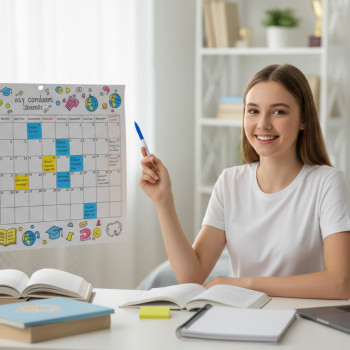
- Progress tracker: keep a short log after each practice (paper, score, time used, 3 targets). Review it weekly to spot trends.
When to bring in personalised help
There are moments in exam preparation when targeted guidance accelerates progress. If you’re consistently losing marks for the same reason—time management, essay structure, or unclear practical reasoning—one-on-one support can fast-track improvement. Personalised tutoring can offer tailored study plans, focused feedback on practice papers, and targeted drills that turn weak points into reliable skills.
For a structured, personalised approach—one-on-one guidance, tailored study plans, expert tutors and AI-driven insights—some students choose to combine regular practice with targeted sessions that address recurring issues. Sparkl‘s tutors, for example, can help you convert practice weaknesses into clear, measurable goals and build a practice schedule that fits the current cycle of assessments.
Common pitfalls and how to avoid them
- Not simulating conditions: practising without time or rules produces false confidence—simulate exam conditions regularly.
- Poor error analysis: marking without reflecting is wasted work. Always write a short note on why marks were lost and the corrective action.
- Over-focus on content lists: knowing facts is necessary but insufficient—train the skill of converting facts into exam answers using past paper formats.
- Neglecting language and presentation: clarity of expression is a mark-winner. Spend part of practice improving concise expression and paragraph transitions.
Putting it together: a sample four-week cycle
Change the length to suit your time, but a focused mini-cycle helps you practice, diagnose and improve rapidly.
- Week 1 — Baseline: do one full-paper simulation under exam conditions for each major paper type. Mark and record errors.
- Week 2 — Targeted practice: take the top three recurring errors and do concentrated drills (timed mini-papers, paragraph rewrites, method-only problem sets).
- Week 3 — Mixed mocks: simulate mixed sessions where you do different paper types back-to-back to build switching resilience.
- Week 4 — Performance check: take a timed full-paper under exam conditions and compare progress against the baseline. Update your targets.
Final pointers for exam-style practice
Keep analysis bite-sized and actionable: each practice should end with three precise targets and one measurable result you want next time. Small, steady improvements in planning, structure and exam technique compound quickly. When you practise intentionally, you turn uncertainty into routine. When you turn routine into habit, the exam becomes another familiar task you know how to manage.
Mastering IB DP papers is less about last-minute memorizing and more about disciplined rehearsal: knowing the task, rehearsing the format, checking against markschemes and fixing the precise weak points that cost marks. That focused loop—practice, mark, reflect, correct—is the engine of progress. Close your practice session by writing the one change you will make in the next simulation and commit to it.
Conclusion
Treat practice as performance prep: simulate the exam, practise paper-specific skills, use markschemes to target errors, and repeat with measurable goals. Over time the unfamiliar becomes routine and exam technique becomes a reliable carrier of the knowledge you already have.

























No Comments
Leave a comment Cancel