

How to Complete the ISC Syllabus on Time: A Practical Student’s Guide
If you’re juggling classes, internal practicals and a mountain of topics, finishing the ISC syllabus on time can feel like a tough puzzle. The good news? With a clear plan, realistic habits and a few smart study techniques, the puzzle becomes solvable — and even satisfying. This guide walks you through planning, efficient practice, making practicals work for you, and how to convert study time into reliable performance in tests and internal assessments.

Start with the map: Understand the syllabus and assessment structure
Before you sprint, take a measured walk through the syllabus. Map every unit, chapter and practical requirement for each subject. Knowing the scope — not guessing it — is the single best time-saver.
Key things to clarify right away:
- Which chapters are large and conceptual versus short and factual.
- Which topics require practical work, diagrams or laboratory records.
- How internal practicals contribute to the final subject score and what the assessment criteria emphasize (procedure clarity, observations, calculations, presentation).
- Examination format for theory papers and time limits so you can practise under real conditions.
Keep a master checklist for each subject with units, practicals and a short note on how the marks are distributed according to the latest updates. This checklist is your north star for all subsequent planning and will prevent wasted effort on topics you don’t need to prioritise.
How to build that checklist quickly
- Write each subject’s unit headings in one column and estimated study time in another.
- Flag units that include practical or project work in a third column so those get scheduled earlier.
- Note any teacher advice or internal deadlines beside related units.
Reverse-plan from exams and internal deadlines
Work backwards from the dates you have — exam days, mock schedules, practical submission windows. Reverse planning gives realistic milestones and prevents last-minute cramming. Pick a target completion date for the full syllabus of each subject, then set monthly, fortnightly and weekly checkpoints.
Sample approach:
- Month 1–2: Core conceptual units and required practical write-ups.
- Month 3: Remaining units and first round of full-length mock practice for each subject.
- Final month: Revision, targeted problem sets, timed practice and polishing practical records.
Example weekly template (adaptable)
| Week | Focus | Daily Hours | Key Tasks |
|---|---|---|---|
| 1 | Core Unit A | 2–3 | Read, summarize, attempt end-of-chapter problems |
| 2 | Core Unit B + Practical A | 2–3 | Practical write-up, diagrams, review theory |
| 3 | Revision + Problem Practice | 2–3 | Timed question sets, note consolidation |
| 4 | Mock Test Week | 3–4 | Full-length mock, mark using scheme, review mistakes |
Adjust the hours according to your school timetable and other responsibilities. The value of this table is in making study blocks concrete so you can measure progress.
Make internal practicals efficient and exam-ready
Practical work is not just a separate task — it feeds into your understanding and often gives easier, reliable marks if presented well. Treat practicals as high-value items in your plan: do them early, document carefully, and revise the write-ups.
Practical checklist for ISC internal assessments:
- Follow the exact procedure the syllabus recommends; deviations should be noted with a reason.
- Record observations clearly and neatly; use tables where appropriate.
- Include labeled diagrams, units and significant figures as required by your subject.
- Write concise, logical conclusions that link results back to theory.
- Keep backups: photograph pages of the lab record and keep a copy with timestamps if your school accepts digital submissions.
Remember: examiners look for clarity and correctness. Presentation counts. If a calculation has steps, write them — partial steps often secure method marks, but don’t rely on unseen assumptions about partial marking; always aim for complete, readable results consistent with the marking scheme.
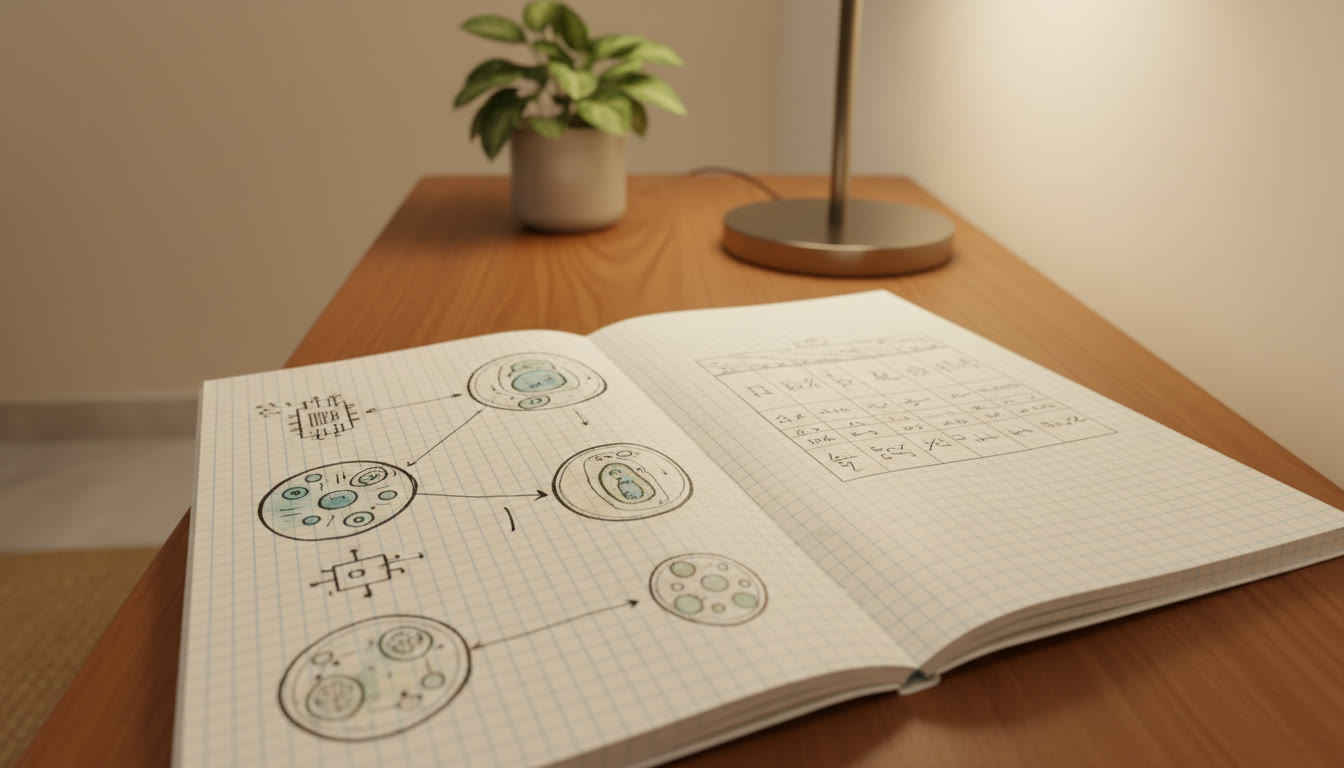
Smart study techniques that actually save time
Smart study is not longer study. Use techniques that increase retention per hour:
- Active recall: After reading a section, close the book and write the key ideas or solve a problem without notes.
- Spaced repetition: Revisit topics at increasing intervals instead of one long revision session the night before.
- Interleaved practice: Mix problem types in a single session so your brain learns to pick appropriate approaches.
- Past-paper alignment: Practice with papers under timed conditions and mark answers using the official scheme to see what examiners reward.
For subjects with derivations or diagrams, learn the structure rather than memorizing verbatim. For example, in a derivation start by memorizing the key assumptions and the final formula; practise the logical steps a few times until you can reproduce them quickly and clearly. Use diagrams as a tool to reduce explanation time during exams — a well-labeled diagram can communicate a lot with minimal words.
Mini-example: Turning a 2-hour study session into a power session
- 0–10 minutes: Skim and set specific goals for the session.
- 10–60 minutes: Focused study on one concept using active recall and worked examples.
- 60–70 minutes: Short break — move, hydrate.
- 70–110 minutes: Attempt timed questions or problems that apply the concept.
- 110–120 minutes: Quick review and note one mistake to revisit later (spaced repetition).
Full-length mock practice and marking-aware revision
Full-length mocks are non-negotiable. They train your timing, stamina and answer organization. But the real value comes from marking those mocks against the official marking scheme and learning to present answers exactly how marks are awarded.
How to get the maximum return from a mock:
- Simulate exam conditions: same time limits, minimal distractions, and the same answer booklet layout if possible.
- Mark strictly using the scheme and annotate where marks were lost: procedure, missing steps, lack of units, or presentation issues.
- Make a short improvement plan based on repeated mistakes and schedule targeted sessions to fix them.
- For practical-based subjects, include at least one mock practical session where you perform an experiment, write observations and complete the report under timed conditions.
Do not assume partial credit will cover unclear or incomplete answers. The safest approach is to present complete, methodical solutions that mirror how marks are distributed.
Daily and weekly routines that keep momentum
Consistency beats intensity most of the time. A habitual routine reduces decision fatigue and keeps progress steady.
- Designate fixed daily study blocks: a morning session for fresh conceptual work, an evening session for problem practice.
- Reserve one weekend block for a longer mock or combined practical session.
- Set a weekly review slot to update the master checklist: move units from “To Do” to “Completed” and adjust the reverse plan.
- Use short, measurable targets (e.g., “Finish Unit 3 theory + 5 problems”), not vague ones (e.g., “Study chemistry”).
Sample progress tracker table
| Unit | Target Completion | Actual Completion | Status | Notes |
|---|---|---|---|---|
| Unit 1 — Foundations | Week 2 | Week 2 | Done | Solid; two mock problems solved |
| Unit 2 — Experiments | Week 4 | Week 3 | Done | Practical write-up completed |
| Unit 3 — Applications | Week 6 | — | Pending | Focus problems scheduled this week |
When to ask for help — and how to ask
Knowing when to reach out saves time. If a concept stays stuck after a focused session, ask for help early. A brief, targeted question is more effective than a vague “I don’t understand.”
- Frame questions: “I understand step A, but I’m unsure how to move to step B in this derivation — here’s what I tried.”
- Bring a specific example or a mock answer to show what you’ve attempted.
- If you need structured support, consider personalised guidance: working with Sparkl‘s personalised tutoring can provide 1-on-1 guidance, tailored study plans, expert tutors and AI-driven insights to pinpoint weak areas quickly.
Time-saving tips for writing and presentation
Small presentation habits save minutes that add up into hours over a syllabus:
- Use clear headings in answers (Procedure, Observations, Calculations, Conclusion) where applicable to make marking easy to follow.
- Practice neat diagrams with labels positioned consistently — a single well-drawn diagram can replace a paragraph of text.
- Learn the common command words used in questions (explain, derive, state, list) and practice the specific response format each expects.
- For calculation-heavy answers, write final answers in a box or highlight them so examiners locate them quickly.
Using technology to multiply effort (without wasting time)
Technology should be a multiplier, not a distraction. Use digital tools for planning, spaced repetition and mock storage, but keep focus time device-free when deep practice is needed.
- Keep a digital master checklist and sync it with a simple calendar for deadlines and mock dates.
- Use flashcard apps for spaced repetition on facts and formulas; schedule short daily review slots.
- Record one timed mock as audio or video only if it helps you review answer delivery in oral practicals — file and timestamp it for quick reference.
- For targeted support, Sparkl‘s tutors and AI-driven feedback can help analyze mock performance to create tailored study plans that focus your remaining time on the highest-impact topics.
Mistakes students make and how to avoid them
Common traps that derail syllabus completion are easy to fix once you spot them:
- Perfection paralysis: spending too long on a single difficult topic. Use a timer and move on, then return later with a fresh perspective.
- Ineffective revision: rereading notes passively. Use active recall and timed practice instead.
- Ignoring practical documentation until the end. Do practicals early and keep records up-to-date.
- Skipping mock marking. Always mark tightly and act on the mistakes you find.
Final checklist before you say the syllabus is complete
- Every unit marked ‘Completed’ on your master checklist and reviewed at least once under timed conditions.
- All required practical write-ups done, neatly presented and stored with backups if applicable.
- At least two full-length mocks for each theory subject with mistakes corrected and tracked.
- Targeted revision plan for weak topics scheduled into the final weeks.
- Clear understanding of marking criteria for each subject so your answers match what examiners award marks for.
Conclusion
Finishing the ISC syllabus on time is a blend of planning, steady execution and smart practice. Map the syllabus, reverse-plan from deadlines, treat internal practicals as priorities, run regular full-length mocks, and use focused study techniques so each hour counts. When preparation is structured this way, confidence and competence grow in parallel, leaving you ready to perform under exam conditions.



























No Comments
Leave a comment Cancel