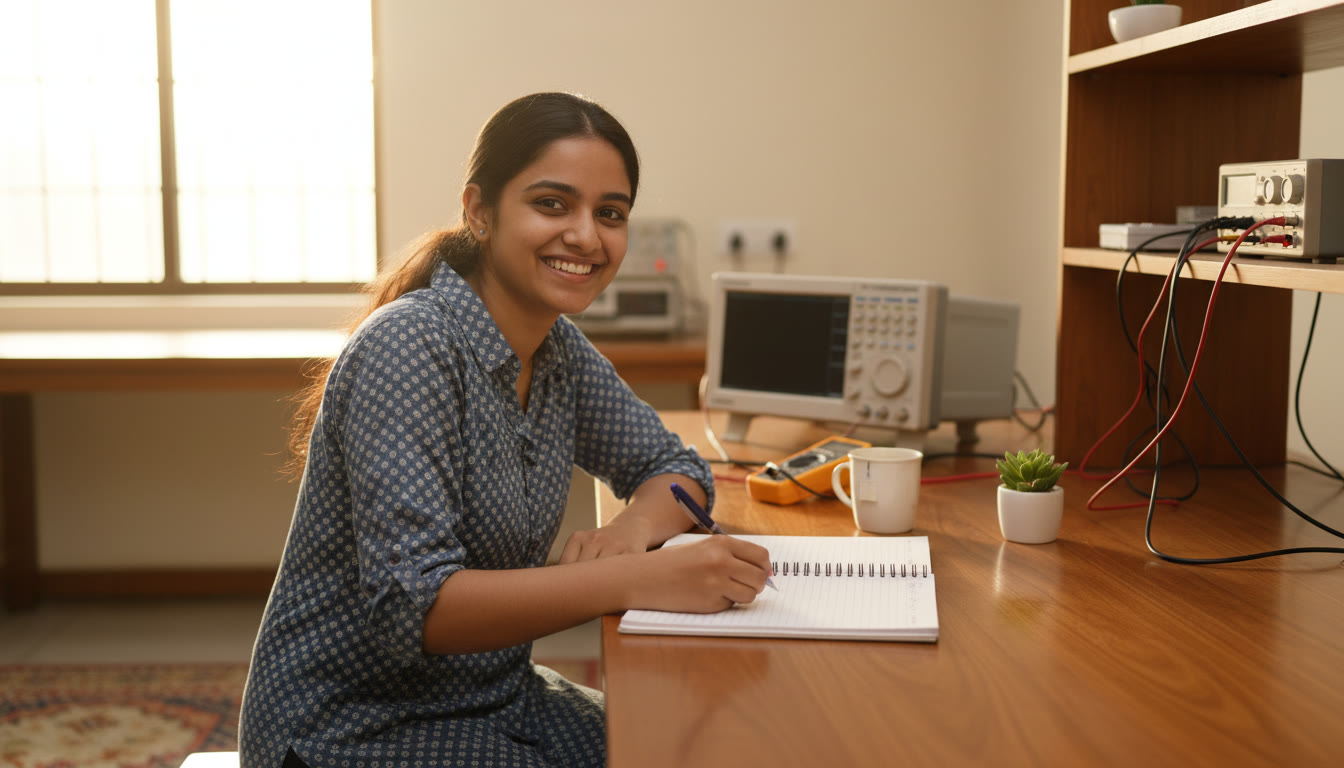

How to Present Your ISC Practical File: a friendly blueprint
Think of your practical file as a conversation between you and the examiner: clear, honest, and well-organized. It’s not only about showing that you performed experiments — it’s about making your thought process visible, documenting reliable observations, and demonstrating that you understand why each step matters. When presented well, a practical file helps your teacher and the external moderator quickly see your competence in the laboratory and your readiness for the viva.
Your practical file supports internal assessment, shows alignment with the syllabus, and often forms the backbone of viva discussions. Keep the tone of the file academic but approachable: neat entries, accurate data, clear diagrams, and a structure that lets someone skim and still understand what you did.
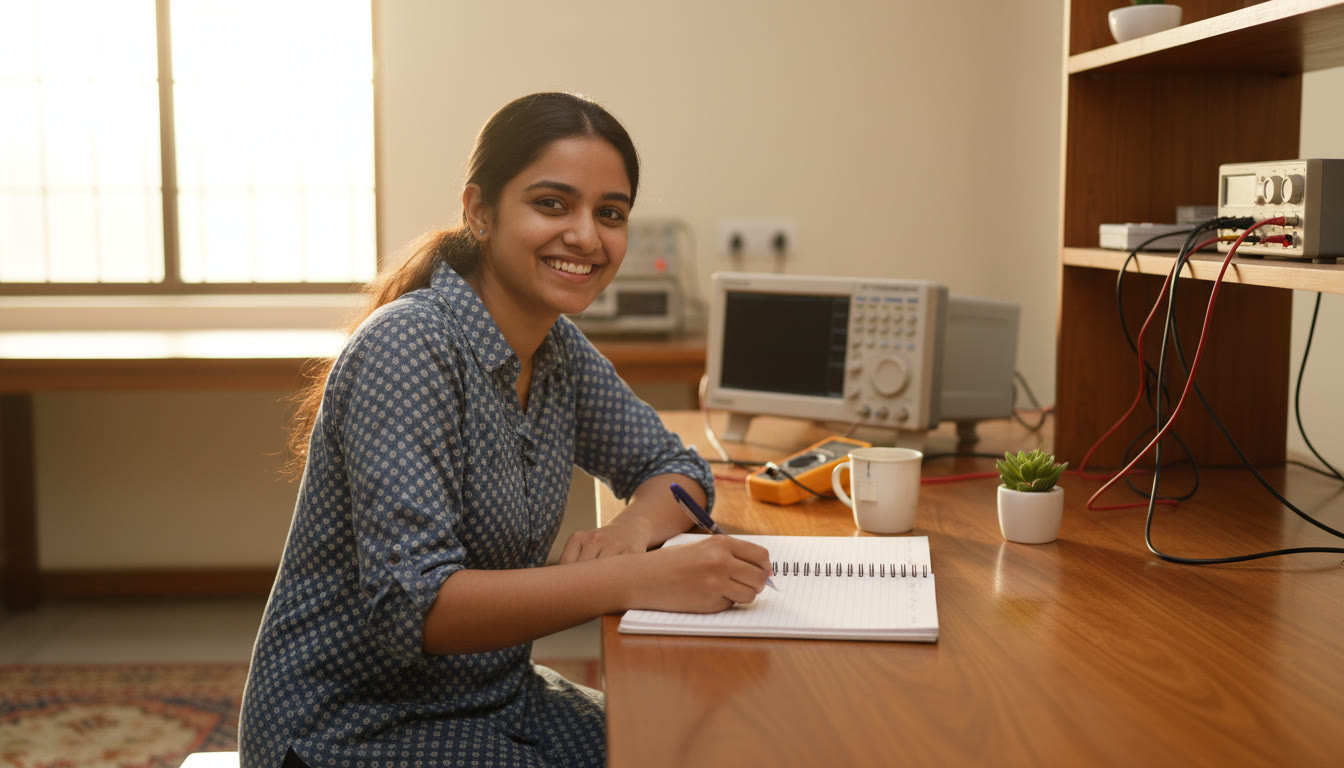
Why presentation matters: beyond neatness
Neat presentation is not just cosmetic. Examiners look for several qualities that are easier to judge when the file is well presented: logical sequence of work, clarity of observations, correct use of units and significant figures, evidence of understanding in calculations and conclusions, and appropriate safety awareness. A tidy file reduces misinterpretation and lets your accuracy and insight stand out.
Essential structure: how to organise your practical file
Consistency is the golden rule. Use the same layout for every experiment so the reader always knows where to look. The following sections are standard and highly recommended for each experiment entry.
- Cover page (student details, subject, class/section, school roll number, teacher name)
- Index or table of contents with experiment numbers and page references
- Experiment entry pages: Date, Experiment number/title, Aim, Theory/Background, Apparatus, Procedure (pointwise), Observations (tables/graphs), Calculations, Result, Conclusion, Precautions
- Record of teacher signatures and dates (where required)
- Appendices: sample calculations, raw data logs, scanned copies of graphs or printouts (if allowed)
Quick checklist table
| Section | What to include | Why it matters |
|---|---|---|
| Cover page | Name, class, subject, practical batch, signature area | Professional first impression; makes identification simple |
| Index | Experiment numbers, short titles, page numbers | Helps examiner locate experiments quickly |
| Experiment entry | Date, aim, apparatus, procedure, observations, calculations, result, conclusion | Complete scientific record: reproducibility and clarity |
| Diagrams & graphs | Clear labels, units, scale, captions | Shows understanding of setup and data presentation |
| Teacher remarks | Signature and short comments where required | Evidence of internal assessment and verification |
How to write each experiment entry (step-by-step)
Date and experiment number/title
Always start with the date and the formal experiment title. Use the experiment numbering or titles exactly as they appear in your syllabus or lab manual so examiners can cross-check easily.
Aim
One or two crisp lines. The aim tells the reader what you set out to demonstrate or measure. Keep it precise: avoid long, rambling sentences — clarity beats length.
Theory / Background
Summarize essential concepts in a concise paragraph. Write only what’s directly relevant to understanding the experiment and the calculations. Include key formulae (with units) and a short explanation of terms that appear in your calculations.
Apparatus and reagents
List equipment and key reagents with approximate specifications where relevant (e.g., 10 mL burette, 1 M HCl). If a particular instrument setting matters (e.g., sensitivity, range), note it.
Procedure (pointwise)
Write the method in numbered steps. Pointwise instructions are easier to follow and are useful during viva when you may be asked why you followed a particular step. Avoid copying entire manual text; instead, note the essential steps you actually followed, including any modifications.
Observations (tables, graphs)
Present raw data in neat tables with clear headings and units. Use a ruler or neat table lines. If the experiment produces multiple readings, show how you processed them (averaging, removing outliers) and present a graph when appropriate. Label axes with variable name and unit (e.g., Time (s), Temperature (°C)).
Calculations
Show at least one full worked example from raw data to final answer — do not simply write the formula and final number. Indicate units at each step and round off sensibly at the end. If you apply a formula, give the substituted values in a readable format so the examiner can follow your reasoning.
Result and conclusion
State the result clearly and write a short conclusion that links the experimental outcome to the aim. Mention if the result is within expected range or if there were deviations; this shows reflective thinking.
Precautions and sources of error
List key precautions and realistic sources of experimental error. A thoughtful note on error analysis (even qualitative) signals maturity: it shows you can critically evaluate the procedure and outcome.
Diagrams, sketches and presentation details
Good diagrams are readable diagrams. Use pencil for base sketching and go over final lines in pen if your school prefers ink. Label parts horizontally to avoid clutter. Provide scale where it matters — use arrows for movement or direction and add short captions below the figure. For biological drawings, use a clean, single-line style and label externally where possible.
Graph tips
- Plot data with equal scaling for axes unless there’s a reason not to.
- Mark points clearly and, if drawing a best-fit line, show how you obtained it (e.g., two-point method or ruler-fit).
- Include equation of line if asked, and show how slope/intercept relate to the calculation.

Subject-specific pointers: make each subject shine
Different subjects have different expectations — tailor your file accordingly while keeping the same clean format.
Physics
- Show instrument readings clearly (e.g., voltmeter, ammeter scales) and explain how you read them.
- When giving calculations, indicate uncertainties qualitatively and show propagation steps for derived quantities.
- Use schematic diagrams with clear arrowed directions for currents or forces.
Chemistry
- Write balanced chemical equations where relevant and include observations (colour change, precipitate, gas evolution) with timings if applicable.
- Present titration tables and calculations step-by-step — a short worked example is very helpful.
- State safety measures and disposal notes to indicate lab awareness.
Biology
- Include labelled diagrams and describe what was observed under the microscope or during dissection in precise scientific language.
- For experiments involving living material, note conditions (e.g., stain used, magnification).
- Keep sketches neat with correct proportion and labels placed outside the drawing using lines.
Computer Science / Informatics
- Include problem statement, algorithm outline, flowchart, program listing (well-commented), sample input/output and screenshots of execution where permitted.
- Explain how you tested the program with different test cases and note edge cases.
Mathematics / Project-based practicals
- Present the problem, method, and clear stepwise solution. For project work, include objective, methodology, data analysis, and conclusions.
- If models or charts are used, ensure axes and units are labelled.
Viva preparation and teacher assessment
The viva usually complements the practical file. Expect questions about the aim, method, and any unusual observations. A few study habits help:
- Rehearse explaining the experiment aloud in 2–3 minutes: aim, method, one key result, and a conclusion.
- Be ready to justify any modification you made and to point at the exact page where an observation or calculation is written.
- Prepare short answers about fundamentals — why a reagent is used, the principle behind an instrument, or the reason for a particular control.
When your file is presented, make sure teacher signatures (if required) and dates are in place. A stamped or initialed page of verification where a teacher confirms that experiments were observed or supervised adds credibility.
Common mistakes and how to avoid them
- Messy or inconsistent formatting: Use ruled lines, fixed margins and a consistent font/handwriting size.
- Missing units or unlabeled graphs: Always include units in the table headings and on graph axes.
- Showing final results without working: Always show at least one complete worked example from raw data to final value.
- Overlong theory sections: Keep theory focused and directly relevant to the experiment.
- Illegible diagrams: Redraw rather than force a cramped sketch on the page.
Practice strategy: mock practical sessions and time management
Full-length mock practice is one of the best ways to convert a neat file into confident performance. Set aside time to simulate the practical examination from start to finish: carry out the experiment, record observations, perform calculations, draw diagrams, and rehearse the viva. Timing each stage helps you allocate minutes during real assessments and reduces last-minute rushes.
Use a few mock sessions to test different parts of your routine: one for accuracy focus (quality of measurements), one for speed (completing steps within allotted time), and one integrating viva practice. After each mock, review your practical file critically and update common error notes so you don’t repeat mistakes.
Presentation day: last-minute checklist
- Ensure all pages are numbered and the index is up to date.
- Check signatures, attendance logs, and any required teacher verification.
- Have two small labels inside the file: one with your name and roll number, another with subject and practical batch.
- Carry a clean copy (or scan) of any computer printouts or graphs if allowed; a photocopy of the cover page can be a safe backup.
- Wear appropriate lab clothing for practical demonstrations and ensure safety items are used where necessary.
How personalised guidance helps (brief note)
Some students benefit from one-on-one attention to sharpen weaker areas: translating raw data into precise calculations, improving diagram skills, or tailoring mock practicals to typical viva questions. For targeted help — like focused practise tests, tailored study plans, and expert feedback — Sparkl‘s personalised tutoring can help you structure practice sessions and pinpoint the skills that matter most to examiners.
Real examples to learn from (mini-case studies)
Example 1 — A titration experiment: A clear tabulation of readings, a short statement of end-point observation, step-by-step calculation with units, and a concluding statement that links the result to the aim demonstrates completeness. Adding a short note on probable error (e.g., parallax or indicator overshoot) shows reflective thinking.
Example 2 — A physics verification: A labelled circuit diagram, raw readings in a neat table, graph of voltage vs current with best-fit line and slope calculation, and a conclusion that ties the slope to the theoretical constant will make your record self-contained and easy to validate.
Files, digital backups and ethical practice
If permitted, keep a scanned backup of your file. This protects against loss and gives you a chance to print a clean final copy. Always ensure that your work is your own. Practical files are assessments of personal skill; avoid copying others’ results or write-ups. If collaborative work was allowed during experimentation, clearly state which parts were performed collaboratively and which parts are your individual records.
Final preparation tips for confidence on the day
- Revisit the index and the three most important experiments you think are likely to be examined — know them inside out.
- Practice explaining any one experiment in one minute; this helps in viva speed answers.
- Keep a short one-page summary of safety precautions and key formulas at the start of your file for quick reference during revision.
- Stay calm: clear handwriting, thoughtful answers, and a steady pace matter more than hurried perfection.
Closing thought
Presenting your ISC practical file well is an exercise in clarity, discipline, and scientific thinking: consistent structure, honest data handling, clear calculations, and reflective conclusions let your practical skills speak for themselves. A carefully prepared file not only supports fair internal assessment but also prepares you for confident viva performance and real laboratory work.




















No Comments
Leave a comment Cancel