

Beat the Clock: JEE Advanced Time Strategy for Top Rank
Think of the JEE Advanced paper as a fast, high-stakes puzzle: not every piece belongs on your first try, but the way you choose, place, and prioritize pieces decides the final picture. Time management is the single practical skill that separates consistent high scorers from hopeful strugglers. This guide walks you through calm first moves, surgical mid-paper choices, and disciplined finishing touches — all tuned to the practical realities of the current JEE-style exam: MCQ-based formats, strict negative marking, three-hour full-length papers, and OMR discipline. No fluff — just strategies you can practice, measure, and improve.

Reality Check: What the Exam Rewards
Before we draw up minute-by-minute plans, let’s be clinical about what the exam actually tests and what it doesn’t. This keeps your time strategy realistic and repeatable.
- Core aim: accurate, fast problem solving that demonstrates conceptual clarity and flexibility.
- Format reality: multiple-choice and objective formats where negative marking penalizes blind guessing; partial credit is generally not available for descriptive derivations — treat derivations as learning tools, not as exam “insurance”.
- OMR discipline matters: filling answers cleanly, avoiding stray marks and last-minute smudges saves time and stress.
- Score-building is cumulative: a clean run of easy-to-medium questions wins more than a heroic attempt at many unsolved hard questions.
First 15–20 Minutes: Calm Scan and Smart Prioritization
The opening minutes are about mapping the battlefield, not sprinting. Use them to create a clear plan for the rest of the paper.
- Quick scan: skim every question (not deeply) to tag them: ‘Quick Win’, ‘Requires Work’, ‘High Effort / High Reward’.
- Mark easy picks on the OMR as you solve them; leave tricky ones marked for a second pass. Avoid changing answers unless you have a clear reason.
- Resist the trap of solving the first attractive question you see if it’s time-consuming — prioritize cumulative points gained per minute.
- Decide the opening tactic: solve your strongest subject first if that clears a chunk of marks quickly, or do a cross-subject sweep to collect guaranteed score.
Phase-Based Time Plan: A Simple Table to Steer Your 180 Minutes
Below is a practical phase plan you can adapt to your strengths. The minutes add up to a three-hour window; use this as a disciplined skeleton and adjust by subject or paper composition during your scan.
| Phase | Minutes | Goal | Action |
|---|---|---|---|
| Scan & Prioritize | 10–15 | Identify easy and high-confidence questions | Tag questions, plan first-pass targets |
| First Pass (Quick Wins) | 60–70 | Secure high-confidence marks | Solve and mark easy/medium questions across subjects |
| Second Pass (Tactical Attempts) | 70–80 | Attempt medium-to-hard questions with reasonable chance | Work on problems you can complete with a concentrated push |
| Review & Clean-up | 20–30 | Double-check OMR, re-evaluate marked questions | Revisit only those with clear upside; avoid introducing new uncertainty |
Three Practical Templates (Choose One and Practice It)
Pick a template that matches your preparation profile and practice it until it becomes a habit.
- Balanced: equal attention across Physics, Chemistry, Mathematics. Good when your strengths are uniform. Rough split: 60 / 60 / 60 minutes.
- Strength-First: attack your strongest subject in the first pass to lock in more marks early, then use later passes on weaker areas. Example: 70 / 55 / 55 minutes.
- Adaptive Sweep: first pass gathers easy wins across all subjects; second pass tackles clustered hard problems. This often reduces time lost switching mental gears.
Question Selection & Risk Management (Negative Marking)
Negative marking changes the calculus of guessing. Instead of an emotional ‘try-it’ or ‘skip-it’ decision, make it a numbers-based move. The core concept is expected value: what’s the expected gain if you attempt a question after eliminating some options?
Basic expected value concept (no complicated math required):
- Estimate how many options you can confidently eliminate. Your probability of success rises with each eliminated option.
- Compare the probability of being correct (based on elimination) with the penalty of being wrong. If your educated guess increases your success odds above the break-even point, attempt; otherwise skip.
- Practical heuristic: if you can eliminate at least one option in a 4-option MCQ, your odds improve enough to consider an informed guess. If you can eliminate two or more, guessing often has clear positive value.
Keep your decision fast: use quick checks (units, dimensional analysis, limiting cases, plug-in simple numbers) to decide whether to invest the precious minutes needed to convert uncertainty into a safe attempt.
Mock Test Routine: Your Laboratory for Time Mastery
Mocks are not just for scoring — they are your time training ground. Treat every mock like a measured experiment: control variables, log outcomes, iterate.
- Frequency: Early on, do full 3-hour mocks weekly. As you progress, increase frequency to several full mocks per week with focused analysis sessions.
- Simulation fidelity: replicate exam hall rules — no digital aids, strict 3-hour timing, physical OMR practice if possible, and minimal breaks.
- Post-mock ritual: spend at least twice the test time analyzing. Break down mistakes, categorize time sinks, and record ‘time per question type’.
Mock Analysis Table — Metrics to Track
| Metric | What to Record | Target |
|---|---|---|
| Attempt Rate | Questions attempted vs total | Consistent with accuracy targets (not just volume) |
| Accuracy | Correct / Attempted | Above your target threshold each subject |
| Time Per Attempt | Average minutes per solved question | Trend downward week-to-week |
| Time Sinks | Questions where time exceeded threshold | Reduce frequency; develop tactical exits |
Minute-by-Minute Tactics During the Paper
Here’s a practical, field-tested rhythm to use on exam day. Make it automatic through repetition.
- 0–15 minutes: Scan and tag; solve 2–3 instant wins to build momentum.
- 15–75 minutes: Execute the first-pass plan — chase questions that you can finish quickly and with high confidence.
- 75–155 minutes: Deep work window — handle the medium-hard problems that require more time. If a problem takes more than your planned threshold, mark and move on.
- 155–180 minutes: Review, check OMR entries, re-check flagged high-upside questions; trust earlier clean work more than new last-minute attempts.
How to Rescue a Bogged-Down Paper
Sometimes the paper resists you: time disappears and confidence drops. Use these concrete rescue moves to re-center.
- Immediate stop rule: if a question costs you more than twice your planned average time for that difficulty tier, stop and mark it for later.
- Hit list: return only to problems with clear breakthrough ideas or those you began confidently and left incomplete.
- Micro-wins: in the final 20 minutes, focus only on questions you can complete in five minutes or less — convert small opportunities into guaranteed points.
Subject-Specific Micro-Strategies
Physics
Physics rewards clean models and disciplined approximations. When stuck, look for a conservation law, a symmetry, or a limiting-case shortcut. If a question has a long derivation, decide whether a clever shortcut (dimensional analysis, limiting cases, or approximating variables to 0/1) yields the answer faster.
Chemistry
Chemistry splits into inorganic, organic, and physical. In inorganic, recall rules and exceptions; in organic, focus on mechanism patterns and quick recognition; in physical chemistry, practice numerical setup to reduce algebraic time. Memorize quick reaction families and keep formulae tabulated for rapid recall.
Mathematics
Mathematics is time-hungry when you overcomplicate. Look for substitutions, symmetry, and bounding arguments. Present rough plan steps quickly and then execute. If algebra becomes messy, consider whether a numerical check or alternate path yields the same result faster.
Daily and Weekly Practice Structure to Build Speed
Speed emerges from a cycle: focused practice, timed application, analysis, correction. Repeat it deliberately.
- Daily: 60–90 minutes of targeted practice on a weak topic, followed by a 30–45 minute timed problem set to apply it under pressure.
- Weekly: 1–2 full 3-hour timed mocks with thorough analysis sessions that log time-per-question and recurring error patterns.
- Fortnightly: simulate exam-like days with two papers or extended sessions, including OMR practice and exam-hall routines.

Tools and Habits That Increase Exam Pace
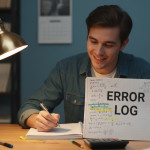
- Time journal: record how long problems actually take; the gap between expectation and reality is where gains hide.
- Formula compact: build a one-page formula sheet (for personal practice) so retrieval becomes instantaneous during problem solving.
- Simulate OMR: practicing without the convenience of digital editing trains you to make fewer careless mistakes in the final minutes.
- Mindfulness breaks: short breathing or focus drills between long study sessions reduce mid-exam panic and maintain steady attention.
When Personalization Accelerates Progress
Most students plateau because practice is generic. Targeted feedback — a tutor or a system that identifies your exact time sinks and conceptual gaps — helps you reallocate study time with surgical precision. For example, many aspirants complement their practice with 1-on-1 guidance that diagnoses recurring mistakes, constructs tailored study plans, and provides event-by-event test feedback. Sparkl’s personalized tutoring often provides such focused inputs: tailored study plans, expert one-to-one coaching, and AI-driven insights that flag time-sink patterns so you can correct them faster.
Examples: Turning a Mistake into a Time-Saving Habit
Example 1 — Repeated long integrals in Physics: you discover that you attempt a long derivation instead of applying a symmetry trick. Fix: create a flashcard with the symmetry trick and practice three quick problems each day until the trick becomes automatic — next mock, you save 8–10 minutes on similar problems.
Example 2 — Chemistry numeric slowness: you find physical chemistry numericals cost extra algebra time. Fix: practice problem sets with a calculator-like speed approach (structured header, knowns/unknowns, quick checks) and log the time saved per practice session.
Common Pitfalls and How to Avoid Them
- Fixating on a single hard question early — set a strict time limit for each difficulty tier.
- Overguessing without elimination — use elimination before guessing; increase odds before risking penalty.
- Poor OMR discipline — practice filling answers calmly; in the final 10 minutes, focus only on matching answers to OMR, not solving new problems.
- Ignoring mock analysis — every mock without analysis is wasted practice time.
Final Checklist for Exam Day Timing
- Arrive early, refreshed, and with an exam-simulated mindset.
- Start with a calm 10–15 minute scan and tag strategy.
- Follow your chosen phase plan strictly; don’t abandon it under pressure.
- Use the last 20 minutes to check OMR and revisit only highest-upside items.
- After the test, log time-use and emotional state while memory is fresh; use it to adjust the next mock.
Closing Thought
Time strategy is a learned reflex: the more deliberately you practice scanning, selective solving, and disciplined review under true test conditions, the more automatic these choices become. Combine measured mock work, targeted correction, and disciplined exam-day habits to convert time into guaranteed marks. The difference between a good attempt and a top-rank performance is rarely a secret trick — it is consistent, measured practice that turns timing into an advantage.





















No Comments
Leave a comment Cancel