

Why PYQs Are the Single Best Shortcut for JEE Main
Think of previous year questions (PYQs) as a conversation the examiners keep repeating in different accents. They show what the test-makers expect, the depth of reasoning they reward, and the recurring ideas that keep showing up across cycles. If you treat PYQs like dusty old papers, you’ll miss the gold — but if you treat them like data, patterns, and practice drills rolled into one, they become your quickest path from ‘I understand the topic’ to ‘I can solve the exam-style problem under pressure.’
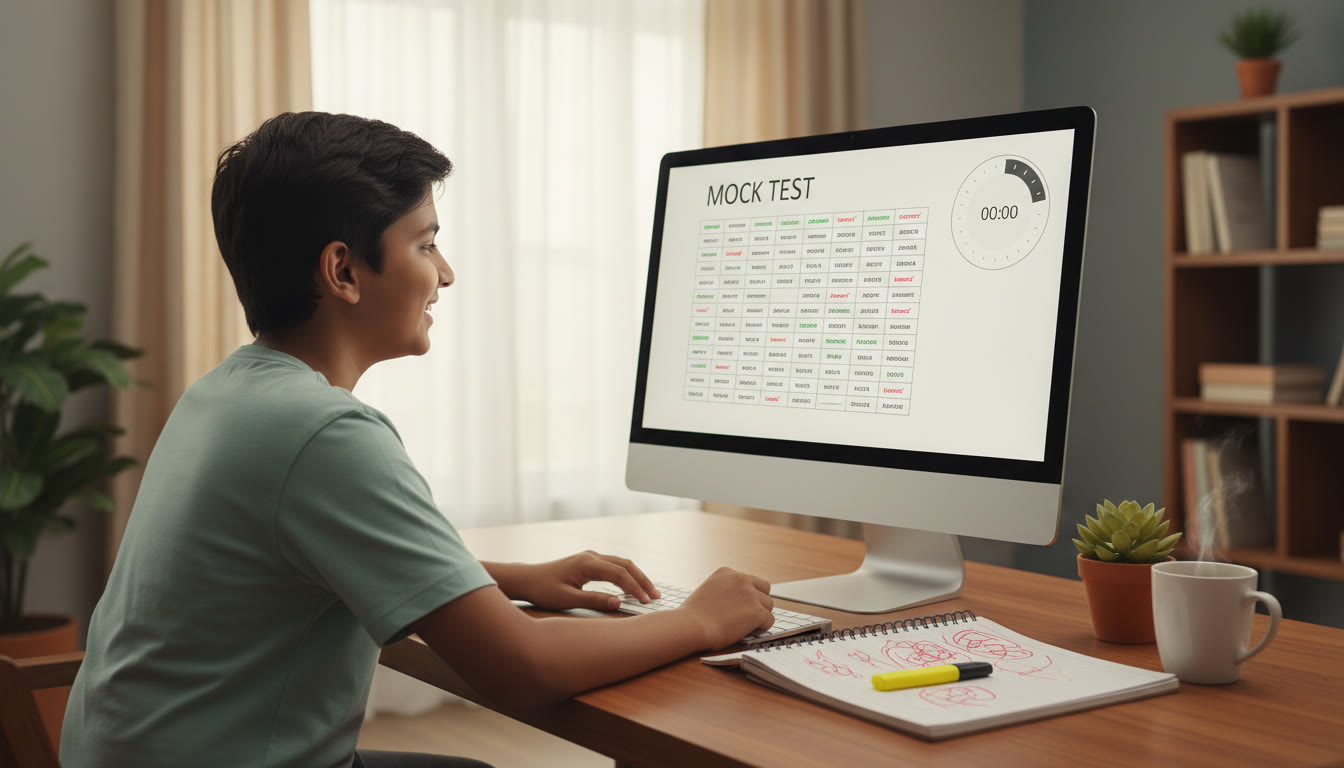
JEE Main is fundamentally an MCQ-based, timed assessment where accuracy, speed and strategy matter. Practicing PYQs teaches you to handle negative-marking pressure, to structure three-hour full-length mock practice sessions, and to build the mental discipline that mirrors real-exam conditions — whether you’re practicing on a computer or simulating answer-marking habits learned from OMR-style drills.

Quick reality check
PYQs are not just practice problems. They are a mirror that reflects the syllabus emphasis across Physics, Chemistry and Mathematics, the question formats (single-correct MCQs, integer-type numerical questions, assertion-reason type formats in some cycles), and the level of multi-concept linkage you’ll often face. The right PYQ resources help you learn how to reduce mistakes, allocate time, and prioritize revision.
What Makes a PYQ Resource Truly ‘Best’ — A Practical Checklist
- Authenticity: papers reproduced exactly as released by the exam authority (problem statements, options, and official answer keys).
- Clear, stepwise solutions that explain the method, not just the final answer.
- Chapter- and topic-wise indexing so you can drill selectively when revising weak areas.
- Difficulty tagging (easy/medium/hard) and a frequency indicator for repeated concepts.
- Exam-simulation versions (timed, full-length, same question mix) to practise pacing.
- Space or format to keep an error log — mistakes are where learning accelerates.
Resource Types and How to Use Them
Different PYQ formats serve different study goals. Below is a compact table that helps you pick the tool you need depending on the immediate objective.
| Resource Type | What it contains | How to use it |
|---|---|---|
| Official past papers | Exact questions and official answers released by the exam authority | Solve under timed conditions to calibrate difficulty and pace; check answer keys and write concise solution steps. |
| Chapter-wise PYQ compilations | Past questions grouped by chapter/topic | Use for targeted revision: identify repeated patterns and weak sub-topics to re-study. |
| Topic frequency lists | Data on which topics appear most often | Prioritise topics for revision; weigh practice time toward high-frequency areas. |
| Timed full-length mocks built from PYQs | 3-hour blended tests mirroring real paper mix and time pressure | Use weekly to train stamina, speed and negative-marking strategy. |
How to Build and Maintain a Personal PYQ Bank
Start small and keep it organised — the goal is to turn scattered past questions into a searchable, actionable database. Here’s a practical way to build one:
- Collect: Gather official past papers and compile them subject-wise into folders (Physics, Chemistry, Mathematics). Keep the question statement, options, and official key together.
- Index: Tag every question by chapter, sub-topic, concept, and difficulty. A simple spreadsheet or a notebook with tabs works great.
- Solve cold: Attempt each question once as if it’s a fresh test item. Time yourself when possible.
- Write a clean solution: Keep concise, logically structured solutions — focus on method and shortcuts, not long derivations that won’t be used in exam settings.
- Track repeats: Mark questions or concepts that reappear across cycles — these are high-yield anchors for revision.
- Maintain an error log: For every wrong or slow solution, record the error type (conceptual gap, silly arithmetic, misreading the option, time loss) and a 2-line fix strategy.
Example: A four-step tagging system
- Subject → Chapter → Concept → Difficulty (e.g., Physics → Electrostatics → Superposition → Medium)
- Use consistent labels so you can filter and pull targeted practice lists quickly before tests.
How to Use PYQs to Shape an 8-Week Revision Plan
PYQs are not a last-minute activity; they should form the backbone of mid-to-late revision. Here’s a compact weekly rhythm you can adapt for the current cycle:
- Weeks 1–2: Create chapter-wise PYQ lists, solve cold, and write short solutions for weaker chapters.
- Weeks 3–4: Focused drilling — pick high-frequency chapters and complete integrated PYQ sets every other day.
- Weeks 5–6: Full-length timed PYQ-based mocks once a week, analysed thoroughly; between mocks do targeted concept fixes.
- Weeks 7–8: Rapid revision using frequency lists and the error log; final two full-length PYQ mocks under strict exam conditions.
Sample weekly micro-plan
| Day | Focus | Goal |
|---|---|---|
| Mon | Chapter PYQs (Physics) | Solve 8–12 past questions; update error log |
| Wed | Topic drill (Chemistry) | Consolidate 10 repeated reactions/concepts |
| Fri | Maths problem set | Speed-focused practice on 6–8 PYQs |
| Sun | Mock or subject review | Timed mock OR deep analysis + concept fixes |
Subject-wise PYQ Strategy: What to Target and Why
Physics: Think concepts, then shortcuts
Physics questions often test layered understanding — a numerical computation that hides a conceptual shortcut, or a fundamental principle applied to an unfamiliar setting. Use PYQs to discover which physical assumptions are frequently used and to practice spotting the shortcut first (dimension checks, symmetry, limiting cases) before diving into algebra. Build a mini-diary of ‘go-to shortcuts’ for topics like mechanics, electricity, optics and thermodynamics, drawn from repeated PYQ patterns.
Chemistry: Balance memory with calculation
Chemistry in PYQs rewards clear reactions, periodic trends, and quick calculation skills. Use PYQs to build three compact toolkits: (1) a reaction-flash bank for frequently tested organic transformations, (2) a periodic table cheat-sheet for inorganic rules and exceptions seen repeatedly, and (3) quick-setup templates for physical chemistry calculations (gas laws, equilibrium set-ups). PYQs will tell you which reactions or calculations examiners expect you to do with textbook speed versus those that demand clever re-framing.
Mathematics: Pattern recognition and answer elimination
Mathematics PYQs are treasure troves for identifying patterns — typical trick approaches in algebra, the most efficient strategies for coordinate geometry, and the types of calculus manipulations that save time. Practice rewriting questions into the standard formats you’ve seen in PYQs: turning raw statements into substitution-friendly forms, spotting possible substitutions, or transforming integrals to quicker equivalents. Over time, this practice trains you to eliminate distractor options fast, a useful skill under negative marking pressure.
Mock Practice, Time Management and Negative Marking
Three-hour full-length practise sessions built from PYQs are non-negotiable. They do three things: train your stamina, reveal pacing problems, and stress-test your negative-marking decisions. While the official test is computer-based, the discipline of careful, deliberate marking that OMR practice instills remains useful — read each option carefully, avoid hurried bubbling or clicking, and practise the habit of marking questions for review rather than frantic immediate guessing.
Smart rules for negative-marking environments
- Never guess randomly. Use elimination to increase expected value before guessing.
- Create a quick weighing rule: if elimination leaves two plausible options and you have time, attempt; if not, mark for review and return if time permits.
- Use PYQs to practise these rules so your instinctive response in a mock matches your carefully chosen strategy.
How to Analyse PYQs — A Simple 6-Step Method
- Solve the question in exam-mode with a strict time limit.
- Grade immediately: correct / nearly correct (timing issues) / wrong.
- For wrong answers, identify the error type — conceptual gap, careless mistake, algebraic slip, misread option.
- Write a 2-line corrective action for each error (e.g., revise concept note X; drill 10 more similar problems).
- Tag the question as ‘repeat’ if the same concept has occurred in other PYQs.
- Revisit tagged mistakes after one week and re-solve under time pressure.
Using PYQs with Personalised Support
At certain points you’ll hit a ceiling: persistent mistakes, a fuzzy concept, or a pattern of high-time consumption in one topic. That’s a good moment to combine PYQs with personalised tutoring. For example, one-on-one help can speed up the leap from ‘I can’t solve this’ to ‘I can solve this consistently’, because a tutor can spot a hidden misconception and reframe it into a tight, test-friendly technique. If you opt for guided support, look for options that explicitly integrate PYQs into the tuition model: 1-on-1 guidance, tailored study plans, expert tutors, and tools that bring AI-driven insights to highlight weak topic clusters and suggest remedial PYQ drills.
Some students find that working through a tricky PYQ with a tutor in real time shortens the loop between error and correction, and helps translate conceptual fixes into reliable exam tactics. That kind of personalised correction — delivered alongside a carefully curated PYQ schedule — often yields faster, more durable improvement than untargeted study.
When Sparkl’s personalised tutoring fits into your plan, it can be used to diagnose recurring PYQ mistakes, create targeted revision sessions, and provide expert-level solution strategies that are aligned with your specific performance patterns. The combination of guided feedback and PYQ-driven practice tightens weak spots and accelerates accuracy under time pressure.
Common PYQ Pitfalls and Simple Fixes
- Pitfall: Solving with too much algebra when a physical shortcut exists. Fix: Before writing, ask “Can I check dimensions / symmetry / limiting case?”
- Pitfall: Memorising solutions rather than methods. Fix: After solving, write a 1-line summary of the core idea that led to the solution.
- Pitfall: Ignoring question pattern frequency. Fix: Keep a short frequency list for quick pre-test revision of the top 10 concepts per subject.
- Pitfall: Not simulating exam conditions. Fix: Do at least one timed full-length PYQ mock every week in the final months.
Short Data Table: Mistake Types and Targeted Fixes
| Mistake Type | Immediate Fix | Follow-up Drill |
|---|---|---|
| Conceptual gap | Re-study core concept; write a 3-line note | Solve 5 PYQs focused only on that concept |
| Careless arithmetic | Slow down on calculation steps; estimate to check | Timed numerical drills with rough-estimate checks |
| Pacing error | Practice sectional timing during mocks | One full-length mock + two short timed sections weekly |
Bringing It All Together — A Short Wrap on Strategy
PYQs are both compass and map. Use them to chart the terrain (what topics come most often), to practise the route (timed, mixed-topic mocks), and to keep a repair kit (error log + targeted drills). Keep solutions concise and method-focused; turn repeated patterns into short techniques you can recall under pressure. If you pair consistent PYQ work with occasional personalised support that targets your specific error clusters — for example, through 1-on-1 guidance, tailored study plans, expert tutor feedback, and AI-driven insights — you shorten the time between mistake and mastery.
Concluding Academic Note
Treat past year questions as structured, evolving evidence about exam expectations: collect them faithfully, tag them carefully, practise them under real-exam timing, and analyse mistakes with a corrective plan. That disciplined loop — attempt, analyse, correct, re-attempt — is the most reliable method for turning syllabus knowledge into exam performance.






















No Comments
Leave a comment Cancel