

How to Improve Thinking Skills for JEE Advanced
Walking into a JEE Advanced-level problem feels different from anything you’ve seen before: the numbers can be tricky, the statement can hide a twist, and the path from question to answer is often less obvious than it looks. For top ranks you don’t just need information — you need a way of thinking that finds the hidden structure in problems, avoids traps created by negative marking, and converts limited exam time into maximum correct output. This article gives a practical, human-friendly blueprint for training the precise thinking that wins high ranks in the latest exam cycle.

Think like a solver, not a memoriser
At its heart, improved thinking is a set of habits: clarifying what’s given, asking what’s being asked, mapping that to fundamental principles, and testing answers quickly for plausibility. In the JEE context — MCQ-style formats, three-hour full-length mock practice sessions, and an environment where negative marking penalizes impulsive guessing — these habits protect your score and raise your ceiling. Build your preparation around cognitive skills (reasoning, pattern recognition, estimation) rather than only accumulating facts.
What specific ‘thinking skills’ should you train?
- Conceptual clarity: Recognise the few principles that control an entire topic, and practice applying them in unfamiliar settings.
- Problem decomposition: Break complex statements into smaller, solvable pieces; tackle sub-problems and stitch results together.
- Pattern recognition: Identify recurring structures — conserved quantities, symmetry, substitutions — that unlock many problems at once.
- Estimation and sanity checks: Always ask whether an answer is reasonable by checking limits, units, or extreme cases.
- Adaptive strategy selection: Choose the right tool quickly: analytic derivation, clever substitution, graphical insight, or approximation.
Daily drills that build exam-grade thinking
Instead of vague “study for 6 hours”, design short, high-quality drills focused on one thinking skill at a time. Example drills you can do every day:
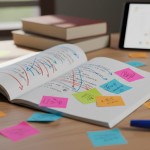
- 15-minute concept maps: Pick one concept and draw an A4 mind-map linking its formulae, assumptions, common pitfalls, and 3 canonical examples.
- 30-minute targeted problems: Choose 3 problems that test the same idea, solve them with time pressure, then redo any you got wrong immediately.
- 10-minute estimation exercises: Make rough numerical guesses for physics or chemistry quantities and check orders of magnitude.
- Flash revision: Create one ‘failure card’ for a mistake you made and review it with spaced repetition.
How to structure practice: micro-practice to full-mock
Thinking ability grows when you cycle between focused practice and full simulated conditions. The micro-practice builds pattern recognition and speed. Full 3-hour mock tests train stamina, time-slicing, and the discipline to manage negative marking and accurate answer entry. Use this rhythm:
- Weekdays: micro-practice, error analysis, and short mixed sets.
- Weekends: one longer practice block, and once a week a full timed mock under exam-like rules.
- Review loop: immediate analysis after any practice (don’t store the review for later), identify root causes, and pick one corrective drill.
Sample weekly allocation
Here is a sample table to visualise how a week can balance concept work, problem solving, mocks, and revision. Adjust quantities to match your available hours and current weaknesses.
| Focus Area | Hours/Week | Typical Tasks | Primary Benefit |
|---|---|---|---|
| Concept building | 8 | Notes, concept maps, short derivations | Clarity and fewer traps |
| Problem solving | 10 | Mixed difficulty sets, topic-wise sets | Pattern recognition and speed |
| Full mocks | 3 | One 3-hour mock + review | Time management and exam discipline |
| Revision | 4 | Anki cards, formula sheets | Retention under stress |
| One-on-one / feedback | 2 | Targeted tutor sessions and doubt clearing | Focused correction of thinking gaps |
Make mock analysis scientific
Treat each mock test as a research experiment about your thinking. Use an error log and categorise mistakes into:
- Conceptual gap
- Application error (you knew the idea but applied it incorrectly)
- Careless mistake (algebra, arithmetic, sign errors)
- Time-pressure/strategy error (ran out of time, picked wrong questions to attempt)
For each mistake, write: the root cause, the corrective drill, and a measurable way to verify improvement (for example: reattempt a similar problem under 20 minutes, or explain the concept to a peer). This turns vague remorse into precise training steps and reduces repeat errors.
Subject-wise thinking heuristics
Physics
Physics rewards pictorial thinking. Habitually draw a clean diagram, mark knowns and unknowns, decide whether energy or force methods are simpler, and immediately test the problem with limiting cases. If an answer grows without bound as a parameter goes to infinity or becomes negative where it must be positive, stop and re-check assumptions.
Chemistry
Chemistry is often a pattern game. For physical chemistry, build intuition for orders of magnitude and how variables influence each other; for organic, practise mechanism maps and electron flow; for inorganic, create compact mental tables of common trends. Train recognition so that when a molecule or reaction appears you instantly recall the category and likely tools.
Mathematics
Maths rewards structural thinking: look for symmetries, substitutions that reduce degrees, monotonicity arguments, and invariants. When faced with a combinatorics or algebra question, try small values or special cases first: those experiments suggest patterns and often reveal the exact approach.

A sample problem-thinking walkthrough
Consider a conceptual approach to a two-part physics-style question rather than calculation details. Step 1: Read the full text and underline what changes between parts. Step 2: Draw the figure and write down conservation laws that might apply. Step 3: Think of two limiting cases — extreme smallness and largeness of a parameter — and see what the expected physical behaviour is. Step 4: Choose a variable substitution or simplification suggested by those cases. Step 5: Execute minimal algebra, then sanity-check units and limiting behaviour. This five-step habit is faster and more robust than plunging into algebra from the start.
The art of selective guessing under negative marking
Negative marking rewards disciplined attempts. A useful heuristic: attempt only when your confidence crosses a threshold. Define that threshold numerically for yourself — for example, only attempt if you estimate a 60% probability of being right. Over time you can refine this cutoff by tracking expected value versus actual outcomes from your mocks. Also train the mechanical discipline of answer entry: a calm, accurate entry process avoids unnecessary penalties from mis-clicks or swapped answers. Simulate the exam platform and practise the exact clicking or typing routine during your mocks.
How to practise thinking under time pressure
- Time-boxed problem sets: Give yourself 30–40 minutes to solve a mixed set of questions and force yourself to pick problems that yield the most points first.
- Section strategy rehearsal: On mocks, practise a consistent policy for which problem types you attempt early and which you leave for the second pass.
- Interrupt-and-resume training: Practice pausing a problem after 10 minutes and returning later; this builds flexibility when the exam forces you to skip and return.
Use peers, explainers and targeted coaching wisely
Explaining a solution aloud or teaching a concept to a peer reveals hidden gaps in your reasoning. A short, focused one-on-one session can be more efficient than 10 hours of solo practice when the session pinpoints a thinking pattern you routinely misuse. If you engage a tutor, look for someone who diagnoses thinking-style errors (for example, over-reliance on memorised steps) and prescribes precise drills. For students who want tailored practice patterns and AI-driven insight into recurring mistakes, guided 1-on-1 support can speed up this feedback loop.
For instance, Sparkl‘s tailored feedback model pairs targeted problem sets with one-on-one guidance and AI summaries of persistent error patterns, helping convert a mock-test failure into a structured week of corrective drills.
Mental models and heuristics to internalise
- Conservation and symmetry: Always ask if a quantity is conserved or if a transformation simplifies the problem.
- Dimensional analysis: Units will catch algebraic mistakes and suggest correct forms.
- Extreme cases: If behaviour at extremes is wrong, the algebra or assumption is wrong.
- Substitution and invariants: Replace complicated expressions with simpler symbols to reveal structure.
- Graphical insight: Sketch functions or fields to see intersections and monotonicity.
Common traps and how to avoid them
- Memorised-solution trap: If you recognise a ‘type’ and apply a memorised sequence without re-checking assumptions, you’re vulnerable to slightly tweaked statements.
- Algebra-first trap: Don’t dive straight into long algebra; first ask what the simplest physical or structural route would be.
- Careless arithmetic: Simple mistakes compound; always estimate the expected magnitude of your result before finalising.
- Over-practising the same problem: Solve a variant instead — that’s where thinking is tested.
Measuring growth in thinking ability
Thinking is measurable. Track metrics such as the average time to reach the key insight for a question, the frequency of concept-category errors, and the percentage of attempted questions you confidently mark. Use your mock history to compute trends rather than single scores. A single higher mock score without improved error patterns is fragile; change that shows up as fewer repeat mistakes in the same category is durable.
Sample month-long corrective cycle
If a mock reveals a recurring weakness — say, difficulty with rotational dynamics — follow a focused 4-week cycle:
- Week 1: Concept rebuilding — spend focused sessions mapping every sub-concept and deriving one or two key relations from first principles.
- Week 2: Guided problems — 12 carefully chosen problems increasing in twistiness, completing in timed blocks.
- Week 3: Mixed practice — integrate rotational dynamics problems into mixed sets to practise spotting the context quickly.
- Week 4: Validation — two full mocks with at least one targeted reattempt and a final review of remaining errors.
Last-mile habits before a test day
- Keep a short playbook: a one-page sheet of go-to problem-identification questions (Is energy conserved? Is symmetry present? What’s the easiest limit?).
- Practice the mechanical routine you’ll use in the exam interface so answer entry feels automatic.
- Sleep and recovery matter for thinking — short-term memorisation is easy to build; deep reasoning needs a rested brain.
Final checklist: daily and weekly
- Daily: one 15-minute concept map, one 30-minute problem set, one quick review of failure cards.
- Weekly: one full mock, two longer mixed sessions, one one-on-one feedback slot or peer explanation.
- Monthly: review error log trends, reset drills for repeated categories, and revise the weekly allocation table above.
Improving thinking skills is less about a single technique and more about creating a feedback loop: practice under test-like conditions, analyse errors to find thinking patterns, apply focused drills to close gaps, and then repeat. Over time your default move when you read a hard question should shift from “which formula?” to “what is the structural insight?” — and that shift is the real driver of higher ranks.
This educational guide is intended to help you build that shift in a systematic, measurable way and to make your preparation more reliable under the constraints of the exam format.




















No Comments
Leave a comment Cancel