

JEE Main Score Booster Strategy for 99 Percentile
Targeting the 99 percentile in JEE Main is not about dramatic overnight hacks — it’s about surgical clarity, consistent habits, and exam-smart execution. If you’ve already built a solid base, this guide is your focused playbook to convert practice into precision: sharper mock-test performance, cleaner accuracy under negative marking, disciplined OMR behavior, and a revision plan that makes every hour count.

Why the last mile is different
At the top end, percentile gains shrink down to tiny margins. In the 90s percentile range, a few correct answers without mistakes — or a single careless error avoided — can swing your percentile noticeably. That means your preparation must shift from broad coverage to error-free, time-optimized performance. The exam’s MCQ nature, enforced negative marking on wrong attempts, and strict OMR/CBT discipline reward smart selection and controlled speed as much as raw knowledge.
Core pillars of a 99-percentile strategy
- Conceptual clarity, not noisy breadth: Solidify the fundamentals until you can quickly recognize which concept a problem tests at a glance.
- Precision under pressure: Train for OMR/CBT discipline and timed accuracy; practice avoiding guesswork that can trigger negative marking.
- Smart mock practice: Full 3-hour mocks must be frequent and analyzed methodically — they’re the laboratory where you tune pacing and question selection.
- High-yield prioritization: Identify topics that return the most marks and make them mistake-proof.
- Active error analysis: Convert every wrong attempt into a durable corrective step.
- Mental & physical stamina: Train under realistic conditions so exam fatigue doesn’t cost accuracy.
Designing your study architecture: fundamentals to finish-line
Think in three layers: Build, Polish, Execute. Build is conceptual learning; Polish is targeted practice and error-removal; Execute is mock-driven simulation. Time allocation between these phases changes as you near the exam — early on, prioritize building; later, dedicate most hours to polishing and executing under timed conditions.
Weekly rhythm that scales
Adopt a weekly cycle with focused micro-goals: concept days, problem-sprints, a full-length mock, and a review day. Keep one clear objective each week (e.g., “master electrostatics problem types” or “zero silly arithmetic mistakes in integration”).
| Day | Focus | Duration | Goal |
|---|---|---|---|
| Monday | Concept consolidation (Physics) | 3–4 hours | Clear 2–3 core topics and solve concept-check problems |
| Tuesday | Problem-sprint (Math) | 3–4 hours | Timed sets on a single chapter; accuracy focus |
| Wednesday | Mixed practice (Chemistry + weak topics) | 3 hours | Reduce error categories and write short notes |
| Thursday | Past-paper pattern practice | 3 hours | Recognize recurring patterns and speed up recognition |
| Friday | Full-length 3-hour mock | 3 hours | Simulate exam conditions precisely |
| Saturday | Mock analysis & targeted fixing | 2–3 hours | Deep error mapping and corrective drills |
| Sunday | Revision & light practice | 2 hours | Consolidate quick notes; rest for stamina |
What to simulate in full 3-hour mocks
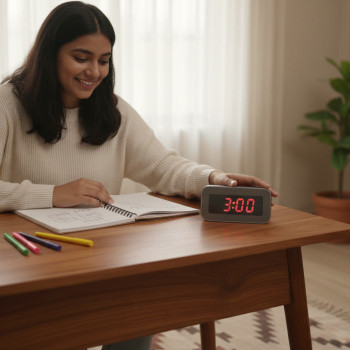
Every full mock should mirror exam conditions: no interruptions, the same time window, and the same question-count pressure. Practice the entire three-hour block to train attention and mental pacing. Treat each full mock as both assessment and training — score is feedback; the real gain is in the corrective cycle that follows.
Practical time allocation inside the 3-hour window
Time management isn’t one-size-fits-all, but the following framework helps convert the clock into answers without inviting negative marking.
| Phase | Minutes | Purpose | Practical tip |
|---|---|---|---|
| First pass (scanning & easy picks) | 60–70 | Secure high-confidence questions across sections | Answer all straightforward MCQs quickly; mark doubtful ones for review |
| Second pass (medium difficulty) | 60–70 | Tackle standard problems that require a bit of working | Work on paper, but keep an eye on time; avoid getting stuck |
| Final pass (hard/long problems & review) | 40–50 | Attempt select hard problems and revisit marked questions | Prioritize solvable ones; leave truly intractable problems alone |
| Buffer & OMR checks | 10–15 | Final answer verification and OMR discipline | Fill OMR carefully; cross-check entries and avoid stray marks |
How to choose what to attempt
- Start with high-confidence questions to build a safe score before attempting riskier ones.
- Avoid blind guessing — negative marking makes random attempts costly.
- Use the marked-for-review list pragmatically: revisit only if there’s time and you have a plan to solve it.
Active error analysis — the multiplier on learning
Mocks matter, but only when you extract and fix root causes. Maintain an error log with categories such as: concept gap, careless arithmetic, formula recall, misreading, and time-pressure error. For every error record the exact reason and one corrective drill. Over weeks, you’ll convert patterns of error into predictable, solvable drills.
A three-step review template
- Detect: What exactly went wrong? (not just “I got it wrong”)
- Diagnose: Was it knowledge, technique, or execution (calculation/reading) failure?
- Drill: Assign 5–10 targeted problems to erase this exact mistake.
Sample error-log fields
- Question ID / Topic
- Type of error (conceptual / silly / time / misread)
- Immediate fix (notes, derivation, formula sheet)
- Follow-up drills & review date

Section-wise tactics (concise, exam-relevant)
Physics
Physics rewards conceptual maps. Translate a problem into known laws quickly, sketch a small diagram if it helps, and check units early. During practice, favor numerical facility and order-of-magnitude checks — these will save you from silly sign or unit errors in the exam.
Chemistry
Chemistry splits into physical, inorganic and organic. Make inorganic factual lists bullet-ready; practice reaction mechanisms in organic as quick pattern-recognition; and treat physical chemistry as applied maths — speed in calculations and approximations will earn reliable marks.
Mathematics
Maths is time-hungry but high-reward. Improve question selection: identify which problems are solvable in 3–6 minutes, which take 10–12, and which are long. Keep formula sheets trimmed to essentials and practice quick algebraic manipulations and numeric approximations to avoid time drains.
Across sections: treat diagrams, derivations and notes as learning tools — sketch and derive during study to internalize techniques, but remember that the exam awards the correct option, not partial descriptive steps. Do practice under exam-format conditions where only the final option matters.
High-yield topic prioritization
Not all topics are equal for return-on-effort. Build a ranked list of topics where you can reliably convert study hours into marks. Keep this list dynamic: after each mock, reprioritize based on the types of mistakes you see.
- Strengthen classic scoring topics first (foundation chapters that appear frequently).
- Convert weak high-weight topics into competence through mini-sprints (3-day focus blocks).
- Always schedule short daily reviews of core formulas or mechanisms to prevent decay.
Practical drills and micro-exercises
Micro-exercises are 15–30 minute sessions focused on removing one friction point: algebra manipulations, quick unit conversions, standard mechanics problems, or 10 organic reaction patterns. These build fluency and reduce exam-time cognitive load.
Examples of effective micro-drills
- 10 rapid integration problems with a 20-minute timer — accuracy first, then speed.
- 5 mixed-concept physics questions that require a quick free-body diagram.
- Flash rounds: 20 inorganic reactions or 20 functional-group identification problems.
Sample focused sprint: 8-week booster outline
This compact plan assumes you already know the syllabus and want to convert competence to near-perfect performance. Each week has a clear theme: consolidate, attack weaknesses, increase mock frequency, and polish exam habits.
| Week | Main focus | Key actions |
|---|---|---|
| 1–2 | Concept polish | Close core gaps; write single-page summaries for each topic |
| 3–4 | Targeted drills | Daily micro-exercises on weak spots, weekly topic tests |
| 5–6 | Mock ramp-up | 2 full mocks a week + intensive review cycles |
| 7 | Polish & stamina | Simulate consecutive mock days to build endurance |
| 8 | Final consolidation | Light revision, error log checks, sleep & nutrition routine |
Exam hall discipline: OMR/CBT and mindset
Exam discipline is the difference between potential and performance. Whether your interface uses an OMR sheet or a computer portal, adhere to the protocol: fill identifiers cleanly, avoid stray marks on sheets, and respect answer-entry rules. On the CBT interface, double-check that the answer registered matches your intention — mismatches can cost you dearly.
Before you submit
- Spend the last 10–15 minutes verifying marked answers rather than hunting for extra questions.
- Use the buffer time to ensure that the OMR entries or computer selections reflect your final choices.
- Stay calm: frantic changes late in the exam are a common source of avoidable mistakes.
Common mistakes top scorers avoid
- Over-attempting: Random guessing under negative marking is a score killer.
- Poor review habits: Not fixing the same mistakes repeatedly wastes time.
- Ignoring simulation: Skipping full 3-hour mocks leaves you unprepared for stamina and pacing.
- Sloppy OMR behavior: Stray marks or mismatched roll numbers are preventable errors.
- Over-reliance on partial work: In MCQ exams, partial derivations don’t earn credit — practice producing quick final answers.
Tools that amplify focused practice
Use a combination of timed problem sets, an error-log workbook, and periodic topic tests. If personalized coaching fits your learning style, a guided setup with one-on-one attention speeds up the error-correction loop — for example, Sparkl‘s tailored study plans and one-on-one guidance can provide focused drills and AI-driven insights that sharpen weak-topic practice. When you pair structured mocks with targeted tutor feedback, the feedback-to-correction cycle shortens dramatically.
How to measure progress without panic
Percentile is noisy over a few tests; focus instead on process metrics: reduction in careless mistakes, increased accuracy in timed sets, and faster recognition of question types. Track weekly trends rather than single test scores — steady improvement in process metrics predicts percentile gains.
Key performance indicators
- Accuracy on first-pass easy questions (aim for 95%+).
- Reduction in time per moderate problem (track minutes per question).
- Error-type frequency (should decline each week).
Final practical checklist before a mock or exam
- Simulate exact test timing and environment for each full mock.
- Complete a quick 15-minute warm-up (formula review, a small calculation set).
- Have an error-log summary and a one-page formula sheet handy for last-minute calm review (not as a cheat, but as memory reinforcement).
- Ensure physical readiness: sleep, hydration, and a light meal.
Closing perspective
Moving into the 99 percentile is achievable when you turn practice into predictable performance: prioritize error-free answering, master full 3-hour mock conditions, maintain OMR/CBT discipline, and apply tight error-analysis cycles. Keep the focus on precision, not on frantic coverage, and let each mock and each correction bring you closer to a repeatable exam performance.
End of article.



















No Comments
Leave a comment Cancel