

Last 6 Months: Turn ‘Stuck’ into Strategy
Feeling stuck when there are six months left for the JEE feels huge — and that’s okay. This period is a golden window: not too close to panic, but close enough to make smart, high-impact choices. The trick is not to work harder in a random way, but to adopt a disciplined, evidence-driven plan that converts small daily wins into lasting momentum. Read this as a friendly, practical roadmap — not a miracle cure. It’s a plan you can pick up today and adapt week by week.

Quick pep note before we start
If you’ve been cramming or revising without visible improvement, the problem is rarely intelligence — it’s strategy, feedback, and focus. The next six months should be about diagnosing precisely where you lose marks, rehearsing the exam environment, and building a simple loop: practice → analyze → fix → repeat.
Step 1 — Honest Diagnosis: Where are the leaks?
Before you redesign your days, take a clear snapshot of your current performance. This isn’t about blame; it’s about data. Spend two to five days collecting the following baseline information.
- Coverage: Which chapters are fully done, partly done, or untouched in Physics, Chemistry, and Mathematics?
- Mock-test performance: Take two full-length, 3-hour mock tests under strict exam conditions to capture real scores, attempts, accuracy, and time per question.
- Error types: Are your errors conceptual, careless, calculation, time-management, or interpretation mistakes?
- Mental & physical state: Sleep, breaks, panic triggers — what makes you lose focus during practice?
What to capture from each mock
Record these metrics after each 3-hour test: raw score, attempts, accuracy rate, time taken per section, number of silly mistakes, and questions you left on doubt. These numbers will guide priorities — not feelings.
Step 2 — The Six-Month Roadmap (snapshots that scale)
Six months is enough to rebuild strength if you use a layered approach: Concept consolidation → Practice volume → Competition-level rehearsal → Calibration & polishing. Below is a concise snapshot you can follow and adapt to your weekly hours.
| Timeline (months before exam) | Primary Focus | Weekly Mock Frequency | Suggested Weekly Hours | Target Outcome |
|---|---|---|---|---|
| Six months out | Solidify fundamentals; finish remaining syllabus; fill concept gaps | 1 (diagnostic + practice) | 35–45 hrs | Complete syllabus coverage with notes and formulas |
| Five months out | Increase problem practice; start timed sections; build error log | 1–2 | 40–50 hrs | Consistent weekly improvements and fewer conceptual mistakes |
| Four months out | Volume practice with mixed sets; deeper mock-analysis | 2 | 45–55 hrs | Cut down silly mistakes; steady accuracy rise |
| Three months out | Competition rehearsal; time management drills; OMR discipline | 2–3 | 50–60+ hrs | High attempts with smart accuracy and speed |
| Two months out | Focused revision cycles; mock-to-mistake repair loop | 3 | 45–55 hrs | Strong section-wise consistency |
| One month out | Polish, scheduled light practice, maintain stamina | 2–3 (full-length) | 35–45 hrs | Reliable test-taking rhythm and calmness |
Step 3 — Build a Weekly Cycle That Actually Works
Simple cycles beat complex plans. A weekly routine that alternates focused study, mixed practice, and full test rehearsal will sharpen speed and accuracy. Here’s a practical weekly template you can scale depending on how many hours you have.
- Monday–Friday: Two focused study blocks per day (2–3 hours each) on priority topics + one short practice set (45–90 minutes).
- Saturday: Long problem session (3–5 hours) — mixed problems from the week.
- Sunday: Full-length timed mock or 3-hour simulated section practice, followed by detailed analysis.
- Daily habit: 20–30 minutes of revision of formula sheets and error-log items.
Sample daily split
| Time | Activity |
|---|---|
| Morning | Concept work and problem-solving (fresh brain) |
| Afternoon | Targeted practice and short revision |
| Evening | Mixed problems or mock-section; error log update |
| Night (30–45 min) | Formula review, quick flashcards |
Step 4 — Mock Tests: The Engine of Improvement
Mocks are non-negotiable. Treat each 3-hour mock as both an exam and a diagnostic lab: answer like the exam matters and analyze like a scientist matters more. Simulate MCQ format with negative marking and follow OMR-like discipline — bubble answers in one go if you’re simulating the sheet, keep rough work organized, and avoid random guessing unless it’s an educated elimination.
How to analyze a mock (60–90 minutes)
- List out every incorrect question and categorize the mistake (conceptual / silly / calculation / time error / misread).
- For conceptual mistakes, re-solve similar problems until you can reproduce the correct reasoning twice in a row.
- For silly mistakes, identify trigger (rushing, not reading options, sign errors) and add a short ritual to check for it during future tests.
- Track the top 10 repeat mistakes — these deserve targeted drills.
Step 5 — Error Log: Your Growth Journal
An error log is the single most reliable tool for steady progress. Treat it like a lab notebook; no shortcuts. Every wrong answer needs: question ID, topic tag, mistake type, corrective action, and a date when you re-tested it successfully.
| Question | Topic | Mistake Type | Fix | Re-test Date |
|---|---|---|---|---|
| Ex: Projectile motion Q-12 | Physics – Mechanics | Misread/assumption | Underline givens; write vector signs; do 2 similar problems | Re-solved: 10 days later |
Subject-wise Tactics (short, sharp, and actionable)
Physics
- Focus on core principles: momentum, energy, fields, circuits, and optics. If a derivation is central, derive it once and keep a 3-line summary to revise quickly.
- Practice different problem approaches: sometimes an energy method is faster than algebra; recognize the pattern.
- Sketch diagrams for every problem; many mistakes vanish with a clear picture.
Chemistry
- Physical Chemistry: practice numericals until speed and accuracy improve. Keep formula cards for thermodynamics, chemical kinetics, and equilibrium.
- Organic Chemistry: map reaction flows and common transformations; for MCQs, elimination of improbable products often wins.
- Inorganic Chemistry: build quick recall sheets for groups, periodic trends, and common exceptions. Regular, short revision beats last-minute memorization.
Mathematics
- Prioritize pattern recognition: sequences, inequalities, calculus tricks, coordinate geometry strategies. Solve variants of a problem to internalize method flexibility.
- Train to recognize when a long path can be shortened by substitution or symmetry — this saves precious time in a 3-hour MCQ-based test.
- Keep a short list of go-to strategies for each major topic and practice timed problem sets.
Time Management During the Exam
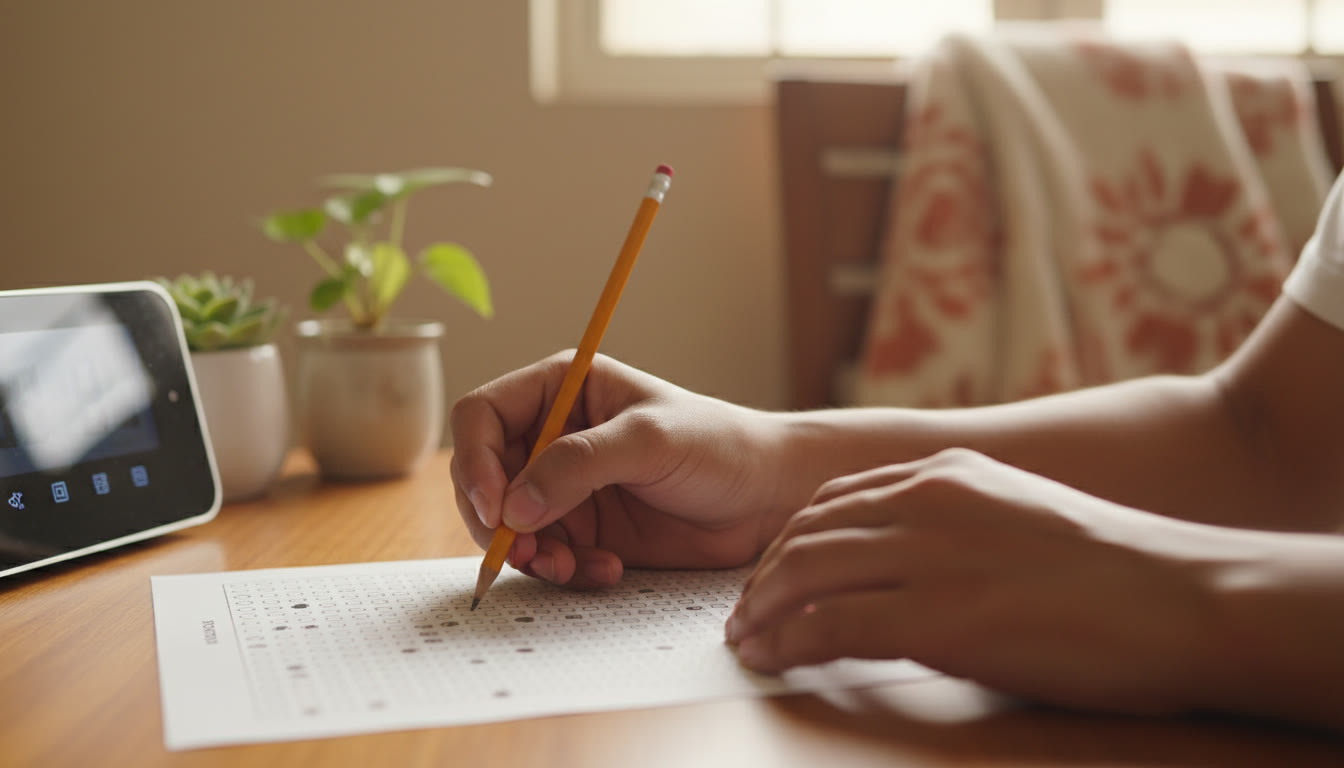
A 3-hour test rewards calm speed. Skipping a question after 2–3 minutes and returning later is a smart choice. Remember negative marking: a blind guess is rarely worth it. Use the first 10–12 minutes to scan the paper, mark low-hanging easy questions, and build confidence. OMR discipline is critical — practice bubbling and time your OMR routines in mocks so the act itself becomes second nature.
Micro-rules for exam time
- Do a quick surface scan (10–12 minutes) and mark obvious solves, medium-difficulty, and potential time-sink problems.
- Allocate a running time plan: aim to finish section-wise easy+medium questions in first 2 hours and use the last hour for leftovers and careful rechecks.
- Perform one rapid OMR check mid-test if you’ve answered 30–40 questions to avoid bubbling errors under time stress.
When a Plateau Persists: Targeted Help
If you’ve followed cycles for 4–6 weeks and your scores aren’t improving, it’s time for targeted interventions. One-to-one guidance can speed the diagnosis and provide personalized drills that fit your exact weak spots. For many students, a tailored study plan, focused doubt-clearing, and regular accountability transform slow progress into clear upward movement.
One natural option for this is Sparkl‘s personalized tutoring — 1-on-1 guidance, tailored study plans, expert tutors who map micro-actions to errors, and AI-driven insights that help prioritize the topics that will move your rank the most. Treated as a supplement to disciplined practice, personalized help accelerates the feedback loop so you spend less time repeating the same mistakes.
Practical Habits That Matter More Than Motivation
- Small checklists: Every evening, write three specific goals for the next day; at night tick them off — small wins build momentum.
- Energy-first scheduling: Do the hardest thinking tasks when you’re freshest.
- Sleep & micro-breaks: A short walk or 20 minutes of light exercise improves cognitive stamina; don’t sacrifice sleep for last-minute cramming.
The Final Month: Polish Without Panic
In the closing month, stop learning entirely new major topics. Convert your time to mixed practice, targeted error eradication, and stamina building. This is the time to tighten the exam routine: full-length mocks under strict rules, perfect your OMR flow, and rehearse the mental steps you’ll take when you open the paper.
48-hour checklist before the exam
- Organize stationery, admit card, and ID; check the route and timing to your center to avoid surprises.
- Limit new inputs — revise formula sheet, error-log top items, and a short cheat-sheet of quick tricks.
- Prioritize sleep and a calm, familiar routine rather than last-minute study spikes.
Common Pitfalls and How to Avoid Them
- Pitfall: Randomly increasing hours without analysis. Fix: Increase practice only with focused error-tracking.
- Pitfall: Ignoring OMR practice. Fix: Simulate bubbling under time pressure weekly.
- Pitfall: Overvaluing speed without accuracy. Fix: Push for smart attempts — higher accuracy with controlled speed beats reckless speed.
Simple Weekly Metrics to Track
Set three core metrics and watch them weekly: accuracy percentage (correct answers / attempted), average time per question, and the number of repeat errors from your log. If accuracy improves and repeat errors fall, you’re on the right path — even if total hours fluctuate.
Closing Thought
Six months is enough to shift your ranking trajectory when every action is purposeful: diagnose honestly, prioritize weak spots, rehearse the 3-hour exam environment, and close errors with targeted practice. Use mocks not as a performance vanity metric but as feedback loops. Keep your error log clean, your daily cycles simple, and your energy managed — consistency compounds. Follow these steps with patience and rigor, and the feeling of being stuck will steadily give way to steady progress and reliable exam execution.




















No Comments
Leave a comment Cancel