

Turning Mistakes into Marks: A Practical Roadmap for Students Struggling with Low Accuracy
Low accuracy in mocks feels like a stubborn leak: you do lots of work, but points seep away in tiny, irritating ways. If your mock scores show inconsistent attempts, frequent careless mistakes, or conceptual slips, this article is for you. We’ll walk through a clear, test‑focused approach that treats accuracy as a trainable skill, not an unlucky trait.

What follows is a step‑by‑step plan you can apply to your 3‑hour full‑length mock practice and daily study, with concrete routines, checklists, and a pacing blueprint. Wherever it helps, you’ll find ways to fold personalized coaching—like targeted 1‑on‑1 guidance and AI‑driven insights—into your routine so you improve faster without confusing noise.
Start with a precise diagnosis: what kind of low‑accuracy student are you?
Not all low accuracy problems are the same. Before you change everything, find which of these patterns fits you most closely and quantify it with data from the last 6–8 mocks:
- Careless error dominant: calculations right at first, but small slips (signs, algebraic mistakes, copying errors) lose you marks.
- Conceptual gaps: you frequently fail questions that rely on a particular concept or visualisation.
- Timing panic: you rush and pick wrong options because you run out of calm thinking time.
- Guessing roulette: many attempts, low correctness because of blind guessing under negative marking.
Record these concrete metrics after each mock: attempted vs. unattempted, correct attempts, wrong attempts, average time on correct vs wrong, and a short error note for each wrong attempt. That record becomes your surgical tool for improvement.
Quick metrics table: where to begin
| Metric | Typical before | Realistic target | Primary action |
|---|---|---|---|
| Accuracy (correct/attempted) | 40%–55% | 70%+ | Error analysis + focused concept practice |
| Attempt rate (out of paper) | 50%–70% | 60%–75% (quality over quantity) | Strategic triage + disciplined skipping |
| Careless error share | 25%–40% of wrongs | <15% | Write mini‑checklists; slow down at key steps |
| Average time per correct Q | 8–15 min (varies by subject) | 5–10 min | Speed through familiar templates; practise timed sets |
Design your mock workflow: accuracy before flair
A mock test is not a sprint of frantic attempts — treat it like a laboratory experiment where you control variables. Here’s a reproducible, accuracy‑first mock workflow that you can adapt:
- Warm‑up (10–15 minutes): light revision of formula sheets, one quick conceptual flashcard set to prime retrieval. Keep it ritualised so nerves settle.
- First pass (70–80 minutes): attempt only questions you read and can see the method for within 2–4 minutes. These should be high‑confidence picks — your aim is clean marks.
- Second pass (70–80 minutes): tackle mid‑difficulty problems where a short derivation or careful algebra is needed. Work steadily; mark unsolved ones clearly to revisit.
- Final pass & review (15–25 minutes): try a few high‑reward problems if time permits, then do a calm review of every attempted answer — recheck arithmetic and answer transcriptions.
Mock pacing plan: a sample split for a 3‑hour mock
| Phase | Duration (minutes) | Focus | Goal |
|---|---|---|---|
| Warm‑up | 10–15 | Formula recall, breathing, pen/paper ready | Calm and focused start |
| First pass (high confidence) | 70–80 | MCQs you can solve fast | Secure ~60% of target answer bank |
| Second pass (workmanlike) | 70–80 | Mid/high difficulty problems | Maximise earned marks without wild guessing |
| Review & buffer | 15–25 | Recheck calculations and entries | Catch careless slips and confirm entries |
Question triage: read, rate, react
Train a fast three‑step triage:
- Read: scan the question for known trigger words (e.g., “steady state,” “conservation,” “common factor,” etc.) and identify the target variable immediately.
- Rate: mentally score the problem 1–3: (1) immediate method, (2) short plan, (3) time‑heavy. If a question is a 3, skip on first pass; mark for return.
- React: pick the simplest valid approach. If algebra looks messy, look for clever approximations, dimensional checks, or elimination on MCQ options.
Accuracy‑first techniques: practical habits that save marks
The following techniques are small investments that repeatedly save you marks in mocks.
- Unit and sign anchors: always check units after you reach a numerical result; if units don’t match expectations, something is off. Habitually mark signs (positive/negative) in physics problems before simplifying.
- One‑line sanity checks: for every final answer, write a one‑line check — plug in an extreme value, check limiting cases, or evaluate dimensions.
- Minimal bookkeeping: keep a running tally on your scratch of which option you selected and why (one short note). This prevents transcription errors when filling answer sheets or entering options on a screen.
- Plug‑and‑play verification: when time allows, insert your final answer into the original equation or a simple test case to confirm plausibility.
- Answer elimination first: on MCQs, eliminate impossible/distractor options before pursuing long calculations. If two options vanish at once, the expected value of an informed guess improves substantially.
- Write the key diagram or variable list: in 20–30 seconds, sketching a diagram or listing knowns often exposes a missing term or an easier route to the solution.
Short illustrative example: eliminating to improve accuracy
Imagine a multi‑option physics MCQ where the options are grouped by sign and magnitude. Rather than compute fully, quickly estimate direction and scale. If two options have the wrong sign, eliminate them. If remaining choices differ by orders of magnitude, a rough order‑of‑magnitude check can pick the right one. This approach transforms long algebra into a short, reliable filter.
MCQ and negative marking: intelligent guessing
Negative marking is not a fear — it’s an invitation to be selective. Build a personal guessing rule and practise it: for example, only guess when you can eliminate at least one or two options, and adjust based on how many options the paper uses per question. In practice sessions, track the success rate of your guesses so you know whether guessing yields net positive marks for you; adjust the threshold accordingly.
Error analysis that actually works: a repeatable template
Do not skip this: post‑mock reflection is the most powerful time multiplier. Use a concise template for every wrong or partially correct item:
| Question | Error type | Root cause | Fix | Practice drill |
|---|---|---|---|---|
| Q23 – Mechanics | Careless algebra | Skipped sign change in expansion | Write intermediate terms; underline signs | 10 algebraic simplifications under time |
| Q41 – Organic Ch. | Conceptual gap | Forgot reaction condition | Revisit chapter and map reagents to outcomes | 5 focused MCQs on the mechanism |
Be mercilessly specific: replace “I made a mistake” with “I forgot to check sign when converting frames of reference,” and then prescribe a single practice drill that addresses that root cause.
Daily micro‑practices: turn accuracy into a habit
When time is limited, do micro‑sessions that target accuracy directly:
- Daily 20‑minute focused set: 8 MCQs where the sole goal is 100% correct on all attempted questions — treat each one like a mini mock and log why any is wrong.
- Two‑question deep dives: pick two problems you got wrong recently and rework them until you can explain the exact error in plain words.
- Weekly mixed timed set: 1.5‑hour mixed paper replicating question mix; practise the triage + review flow.
How to use full‑length mocks as workshops, not verdicts
Instead of letting a mock score dictate mood, treat each mock as a controlled experiment. Vary one variable at a time: this week focus on transcription discipline; next week focus on elimination skills. Keep a ‘mock lab log’ where you record what you changed and whether accuracy improved. Small, consistent wins beat sudden overhauls.
Exam discipline: CBT vs pen‑paper answer recording
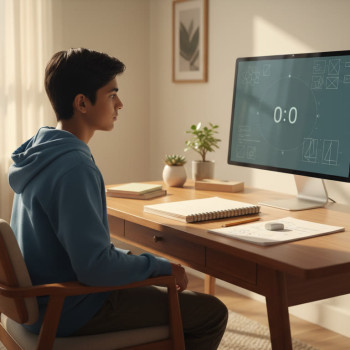
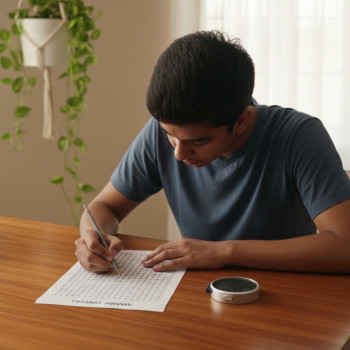
Whether you practise on screen or on paper, strive for the same discipline: clearly mark answers, double‑check transcriptions during buffer time, and be methodical about submissions. If you practise on a tablet or computer platform, simulate answer-entry quirks so that you don’t lose marks due to input error. For pen‑paper practice, replicate the precise answer recording rules so your hand and eyes learn the patterns.
The role of guided, personalised coaching
Sometimes the fastest wins come from targeted outside perspective: a coach can spot a blind spot in your approach that you’ve missed for months. If you use personalised tutoring, prioritise coaches who do short diagnostic sessions, prescribe specific drills, and give you guided walkthroughs of your mistake log. For example, Sparkl‘s approach focuses on 1‑on‑1 guidance, tailored study plans, and AI‑driven insights to highlight recurring error patterns quickly; that kind of focused support is what accelerates accuracy gains when you’re stuck.
How to integrate one‑on‑one help without losing independence
Use personalised sessions strategically: discuss 2–3 recent mistakes, agree on a 7–14 day drill plan, then execute and report results. The coach’s job is to improve the signal in your practice — not to replace your practice. If you opt for guided help, keep your mock‑lab log transparent so each session becomes sharply productive rather than generic.
Practical checklist for the week before a mock cycle
- Prepare a short formula sheet and practise under 10 minutes speed recall.
- Update your error log: pick the top five recurring errors to fix this cycle.
- Schedule two mini‑sessions: one focused on algebra/calculation speed, one on conceptual MCQs.
- Simulate one full timed mock and one relaxed review session in the same week.
- Sleep, nutrition, and light exercise: small routines that stabilise decision‑making under pressure.

Final practical notes: mentality, momentum, and measurement
Accuracy improves when you combine scientific measurement with patient habit formation. Measure the right things (accuracy per attempted question, error taxonomy, time per correct question), make one small practice change each week, and keep a calm, observational mindset when you review results. Rapid fixes are tempting — but lasting accuracy gains come from repeated, focused practice and honest error diagnosis.
Improving accuracy is less about becoming instantly brilliant and more about building reliable processes: a steady triage under time, a short verification habit for every answer, disciplined answer recording, and a focused drill program that closes the specific gaps your mocks reveal.
This concludes a practical, test‑focused guide to raising accuracy in JEE Advanced problem solving for students currently scoring low in mocks.


















No Comments
Leave a comment Cancel