

Understanding Your Paid NEET Mock Score: Calm, Context, and Course Correction
Opening a paid mock score can feel like stepping onto a scale after a long holiday: relief, shock, a little denial and—if you let it—useful data. Whether you scored above your expectation or below it, the score itself is only the starting point. What matters much more is the story the numbers tell and the plan you build from them.
This post walks you through a practical, human approach to paid mock tests: how to react in the first 24 hours, how to decode raw scores and percentiles, which post-mock routines actually change outcomes, and how to fold paid mocks into a long-term revision rhythm. Throughout, I’ll keep the advice exam-focused and actionable—MCQ context, three-hour full-length practice, negative marking, and OMR discipline included—so you can move from emotion to strategy quickly and confidently.

Why paid mocks matter (and why they feel different)
Paid mock tests often feel more intense than free tests—and for good reasons. They usually simulate the real exam environment more closely: same full-length time, strict OMR-like answering, advanced analytics, and questions designed to mirror the difficulty and style you’ll face on the big day. Here’s what paid mocks typically add to your preparation toolkit:
- Realistic timing and stamina training for a full three-hour session.
- OMR-style discipline: bubble-filling practice, enforced single-answer choices and simulated scanning behavior.
- Advanced analytics: topic-wise accuracy, time-per-question, and error-type breakdowns that let you target weak points.
- Quality-controlled question sets that reflect current patterns in Physics, Chemistry and Biology.
- Structured solutions and explanations that help you rebuild concepts rather than just memorize answers.
First 24 hours after a mock: the emotional and factual triage
Rule 1: breathe. Rule 2: don’t make major study-plan changes based on a single score. Your immediate checklist should be short and kind to your concentration:
- Note your raw score and any immediate anomalies (e.g., OMR mis-bubbling, technical interruption).
- Record your emotional reaction—this is useful later when you compare mood to performance trends.
- Save your answer sheet and the test report; take a screenshot of the summary so you can look back without re-opening the platform in an emotional headspace.
- Plan a focused review session within the next 48 hours; don’t try to re-sit the entire test immediately.
Decoding the numbers: raw score, negative marking, and percentiles
Paid mocks usually provide several figures: raw score (your calculated marks), topic-wise scores, and sometimes an estimated percentile or rank versus other test-takers. A steady way to interpret them:
- Raw score = (marks for correct answers) − (penalty for incorrect answers). Understand how your provider counts these. In the general NEET-style MCQ format, correct answers are rewarded and incorrect answers attract negative marks, so accuracy and elimination skills matter.
- Percentile is relative. It tells you how you performed versus that mock’s takers, which is helpful for competition sense but varies by cohort and test difficulty.
- Don’t build your plan on a single percentile—use trends across multiple paid mocks to find where you truly stand.
Sample mock-score interpretation (illustrative)
The table below is an illustrative guide—use it as a mental model, not a ruler. Percent ranges are easier to translate across different mock platforms and difficulty levels.
| Score (percent) | Likely Readiness | Primary Focus | Suggested Next Steps |
|---|---|---|---|
| <40% | Foundational gaps | Core concepts, basic problem practice | Zone in on high-yield topics; daily concept revision + short sectional mocks |
| 40%–60% | Patchwork knowledge | Application and mixed-problem solving | Identify repeat mistakes; 2 paid mocks/week + focused weak-topic sessions |
| 60%–75% | Competitive, inconsistent | Speed, accuracy, and exam temperament | Full-length weekly mocks; simulate exam conditions; target error types |
| >75% | Strong contender | Fine-tuning, time management, maximizing attempted correct | High-quality paid mocks + strategic revision; maintain and polish |
A simple error-classification table to guide your review
When you open the solutions, categorize each mistake. This small taxonomy helps convert a score into a remediation plan.
| Error Type | How It Shows Up | Immediate Fix | Practice Drill |
|---|---|---|---|
| Conceptual | Wrong answers despite careful reading | Revisit textbook + worked examples | 10 targeted concept questions, then 2 mixed problems |
| Careless / OMR | Simple arithmetic mistakes, bubbling errors | Slow down at checkpoints; train OMR procedure | Timed mini-tests with deliberate OMR practice |
| Time-pressure | Unfinished section, rushed last 20 minutes | Work on pacing and selective attempt strategy | Sectional time drills; 3:1 easy-to-hard pass timing |
| Misreading | Answers wrong because the stem was misinterpreted | Underline key data; paraphrase the question before solving | Practice reading-comprehension on MCQs |
Practical post-mock analysis: a step-by-step checklist
Turn the numbers into chores you can execute. Here’s a compact routine that students find repeatable and effective:
- Step 1: Mark the cause for every incorrect answer with a single-word tag (conceptual, careless, time, misread, lucky-guess).
- Step 2: For conceptual errors, write a one-paragraph note explaining the concept in your own words. Teach it to an imaginary peer or to your notebook.
- Step 3: For careless / OMR errors, practice a short timed drill focused only on bubbling and answer transfer for the next two days.
- Step 4: Redo every incorrect question after 48 hours without looking at the solution; if you still miss it, escalate the fix (read the theory, then practice 3 variations).
- Step 5: Track time-per-question patterns. If you spend too long on certain question types, make micro-drills specifically for that type.
How to schedule paid mocks so they accelerate learning
Paid mocks are most effective when they are part of a rhythm, not panic. Here are three stages and how to use mocks in each:
- Early phase (building concepts): 1 mock every 10–14 days + frequent short sectionals to test new topics.
- Consolidation phase (application & speed): 1–2 full paid mocks per week; analyze errors deeply and revisit weak topics immediately.
- Final polishing (stamina & temperament): weekly full mocks under strict exam conditions; use analytics to limit surprise topics and focus on accuracy.
How analytics in paid mocks change the game
Good paid mocks give more than a score—they give patterns. Here are the analytics to pay attention to and what each one tells you:
- Topic accuracy: pinpoints the chapters that are draining marks.
- Time spent per question: reveals whether you’re fast but error-prone or slow and cautious.
- Question-level history: shows whether a question type is repeatedly tripping you up (e.g., kinematics numericals or isomerism in chemistry).
- Attempt vs accuracy graph: helps you decide if increasing attempts is worth the risk of more negative marks.
Should you guess? A short math-backed note (keeps it practical)
In a four-option MCQ system with a negative penalty for incorrect answers, the decision to guess depends on how many options you can eliminate. If you can eliminate at least one option, the expected value of an educated guess improves. In practice, that means:
- If you can eliminate one or more options, guessing is often worth it. Keep track of these educated attempts and review them later.
- If you are truly clueless and the test’s penalty structure and your platform’s reporting encourage caution, you can still use time and attempt budgets to decide. Many students find selective guessing (where you eliminate at least one option) to be the best balance between risk and reward.
When personalized help speeds up progress
If your paid mock analytics show recurring conceptual blind spots or an inability to convert corrections into better subsequent scores, targeted mentoring can be the multiplier you need. For example, Sparkl‘s personalized tutoring offers 1-on-1 guidance, tailored study plans, expert tutors, and AI-driven insights that help translate mock feedback into focused learning routines. Use such support to cut the trial-and-error loop and get structured remediation.
Common interpretation mistakes—and how to avoid them
- Overreacting to one test: build trends from multiple paid mocks before changing core strategies.
- Ignoring the difficulty curve: a higher score on an easier mock doesn’t always mean you’ve advanced—look at percentiles and question-level difficulty.
- Focusing only on score, not on the type of errors: two students with the same score can be at very different points depending on whether errors are careless or conceptual.
- Neglecting OMR training: a technically perfect mock can be ruined by poor bubbling under pressure; practice OMR transfer regularly.
Turning analysis into a weekly plan: an example
Here’s a simple weekly cycle you can adapt after each paid mock:
- Day 1 (Mock Day): Full test under realistic conditions; brief notes after finishing (emotions, time issues, feel of the paper).
- Day 2: Quick factual check—confirm raw score and major anomalies; tag every incorrect question.
- Day 3–4: Deep remediation—rewrite the small set of core concepts that caused mistakes; do 15–20 targeted questions on those topics.
- Day 5: Practice a short sectional test focused on the weakest subject of the week.
- Day 6: Mixed problems + timed mini-test to test transfer of knowledge into speed and accuracy.
- Day 7: Rest lightly or revise high-yield facts; plan for the next mock.
Stamina, mindset, and exam-simulation details
Paid mocks do more than test knowledge—they train exam temperament. The three-hour window demands physical and mental stamina. Practice small rituals that support focus during long tests:
- Simulate breakless sessions. Train your brain to stay focused for the full span.
- Practice OMR at least once every two weeks—bubbling calmly under time pressure reduces careless drops.
- Work on checkpoints: for instance, first read-through in 45–60 minutes to secure easy marks, then progressively tackle harder questions.
How to use multiple paid mocks to find a reliable signal
One mock is noise; many mocks form a signal. Track the trend over 4–8 paid mocks and focus on metrics that consistently show up as issues—these are the changes that actually move your score. Use moving averages for score and topic accuracy, not outliers.
Final checklist before the next mock
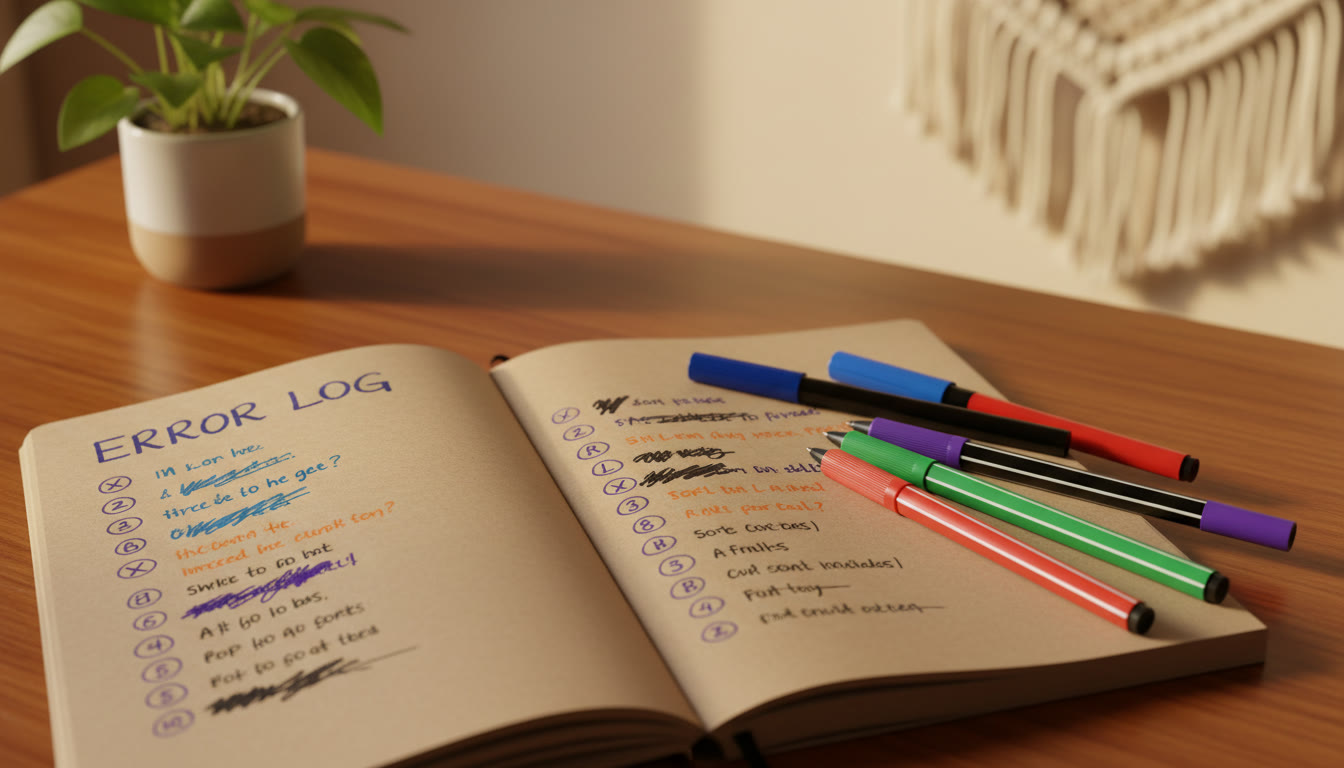
- Clear error log updated and categorized.
- At least one 30–60 minute focused session on the weakest topic.
- One timed sectional drill that targets your time-per-question deficit.
- OMR practice and a calm, consistent pre-mock routine (sleep, food, no last-minute cramming).
Conclusion
Paid mock tests are more than a score sheet—they are a mirror. Walk up to that mirror calmly: note what you see, label the reflection with precise causes, and design short, repeatable steps that move the mirror. Use analytics to pinpoint patterns, treat OMR discipline as part of your practice, and convert recurring mistakes into short drills. When needed, consider targeted 1-on-1 guidance such as the personalized tutoring offered by Sparkl‘s programs to accelerate corrections. Above all, let paid mocks be the structured feedback loop that informs steady improvement rather than the emotional verdict on your worth as a student.























No Comments
Leave a comment Cancel