
Why this matters: caffeine, SAT prep, and your long game
You’re juggling practice tests, schoolwork, extracurriculars, and maybe a part‑time job. Coffee, energy drinks, and tea feel like tiny rocket fuel canisters that get you through late-night review sessions. But when it comes to the SAT, short bursts of alertness can backfire if they erode sleep, increase anxiety, or create unpredictable energy crashes.
This post is for students who want to use caffeine intelligently — not ban it or rely on it — so the work you put into studying actually counts on test day. We’ll cover safe limits, timing, practical swaps, a taper plan if you’re trying to cut back, and test‑day strategies. You’ll also find examples, a comparison table of common beverages, and sample daily schedules so you can pick what fits your life. Along the way I’ll mention how Sparkl’s personalized tutoring can help you build study plans that include healthy energy strategies — because tutoring isn’t just about content, it’s about sustainable routines.
The science in plain English: what caffeine does and why timing matters
How caffeine affects your brain and body
Caffeine blocks adenosine, a chemical that builds up in your brain the longer you’re awake. Adenosine makes you feel sleepy; when it’s blocked, you feel more alert. Caffeine also nudges up dopamine and norepinephrine, which can improve mood and concentration in the short term.
That sounds great — until you realize caffeine is not a perfect switch. It increases heart rate, can make you jittery or anxious, and interferes with sleep if it’s in your system too late. For teenagers especially, small amounts can have outsized effects. That’s why timing and dose are everything.
Half-life and how long it hangs around
Most people have a caffeine half-life of roughly 3–5 hours. Half-life means if you drink 100 mg now, about 50 mg remains in your body 3–5 hours later. That doesn’t mean it’s gone after 5 hours — the tail lingers. For someone with a 5‑hour half‑life who drinks 200 mg at 4 p.m., there could still be ~25 mg in their system at midnight. For sensitive folks, that’s enough to affect sleep.
What’s a safe amount? Clear, practical guidelines
Different people respond to caffeine differently, but a few practical reference points help make wise choices:
- For healthy adults, regulatory bodies often place an upper threshold of about 400 mg per day — roughly the caffeine in four 8‑ounce cups of brewed coffee.
- Teenagers are more sensitive. A good general guideline is to aim for under 100 mg per day, and certainly avoid frequent high doses. The American Academy of Pediatrics discourages routine caffeine use for adolescents, so moderation is key.
- Pregnant or medically sensitive students should consult a doctor — this blog focuses on typical high schoolers preparing for the SAT.
Keep in mind energy drinks and specialty coffees can hide a lot of caffeine behind tempting flavors. Read labels (or ask the barista) and count carefully.
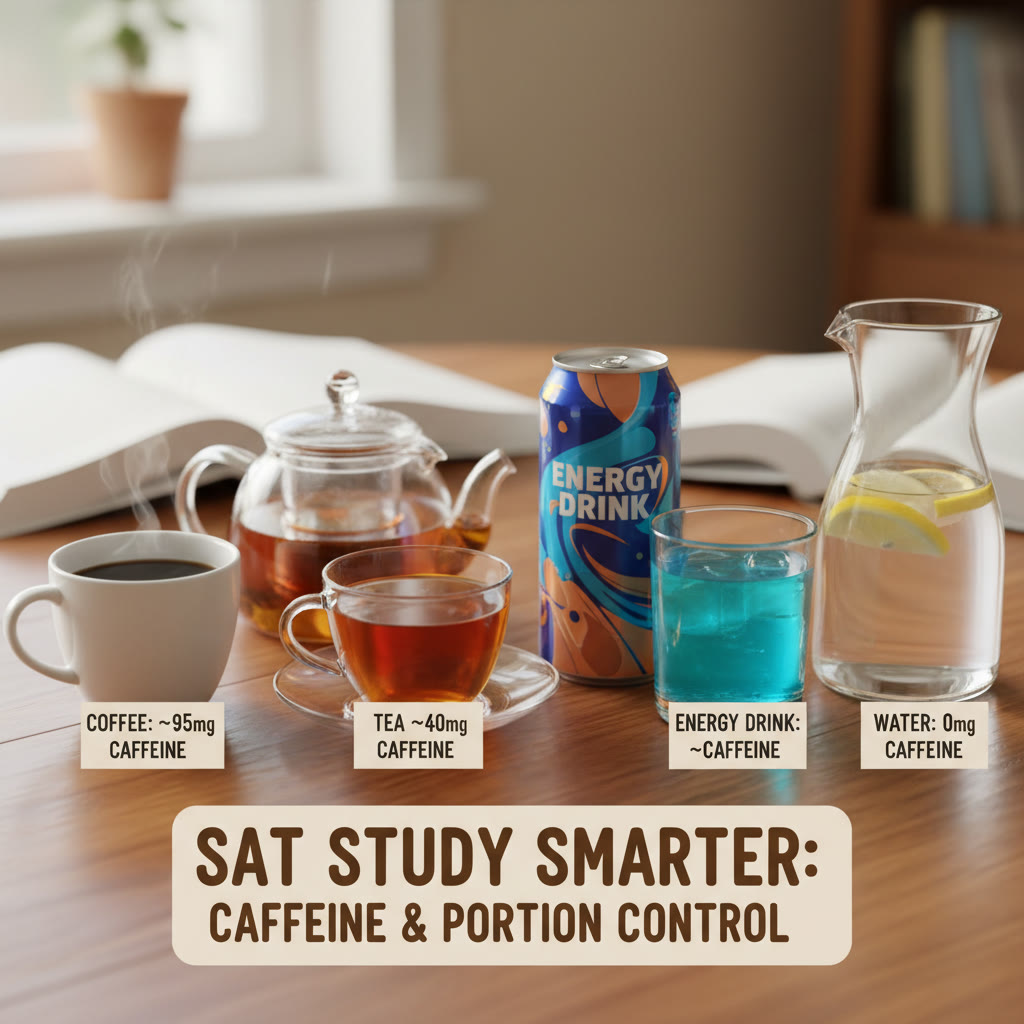
Quick reference table: common drinks and their caffeine
| Beverage | Typical Serving | Approx. Caffeine |
|---|---|---|
| Brewed coffee | 8 fl oz (cup) | ~95 mg |
| Espresso | 1 shot (1 oz) | ~60–75 mg |
| Black tea | 8 fl oz | ~40–70 mg (varies by steeping) |
| Green tea | 8 fl oz | ~25–45 mg |
| Soda (cola) | 12 fl oz | ~30–40 mg |
| Energy drink | 8 fl oz | ~80 mg (varies widely) |
| Decaf coffee | 8 fl oz | ~2–5 mg |
Note: these are averages. Actual caffeine content varies by brand, brew strength, and serving size. Espresso-based drinks (lattes, cappuccinos) add milk without changing caffeine per shot, but larger sizes can stack multiple shots.
How caffeine interacts with SAT prep specifically
Short-term perks
- Improved alertness during long reading sections or practice tests.
- Faster reaction times and reduced feelings of fatigue for a few hours.
- Potentially better mood and motivation for focused study sessions.
Downsides you’ll feel the week before the test
- Sleep disruption: poor sleep ruins consolidation of what you’ve learned.
- Anxiety and jitteriness: when you’re already nervous about a test, caffeine can amplify it.
- Energy crashes: sugary caffeinated drinks can leave you worse after the sugar slump.
For high-stakes tests like the SAT, consistency matters. Your brain remembers patterns: the way you study, the sleep you get, and yes, the coffee habit you maintain right before the test. Test-day performance is more likely to follow reliable routines than one-off caffeine binges.
Practical strategies: daily plans, timing, and sensible swaps
Top rules of thumb
- Prioritize sleep: caffeine can’t replace deep REM and slow-wave sleep that help memory consolidation.
- Limit late caffeine: avoid caffeinated beverages within 6–8 hours of your bedtime.
- Keep your dose predictable: small regular amounts are usually better than occasional large spikes.
When to drink for studying
If you need a focused push for a practice session or a morning of full-length tests, use these timing pointers:
- Have your caffeine 30–60 minutes before a study sprint or practice test for peak alertness.
- Follow caffeine with a full glass of water — caffeine is a mild diuretic and hydration helps concentration.
- If you plan a nap, try the “caffeine nap”: drink a small coffee (about 80–100 mg), then nap for 20 minutes. The nap clears some adenosine while the caffeine kicks in as you wake.
Sensible swaps and combos
If you’re aiming to cut back without losing focus, try these mixes:
- Half‑caff coffee (mix equal amounts of regular and decaf) so you get ritual and a gentler dose.
- Green tea for a milder lift and added L‑theanine, which can smooth out caffeine’s edges.
- Hydration + quick body movement: 2 minutes of jumping jacks or a brisk walk often does more for attention than another cup.
How to taper off: a gentle 7‑day plan if you want fewer jitters
If you rely on multiple large drinks per day and want to cut back before the SAT month, sudden elimination can bring headaches and sleepiness. Here’s a mild plan that maintains functionality while reducing dependence.
- Day 1–2: Record current intake. Don’t change anything yet — awareness is powerful.
- Day 3–4: Reduce total caffeine by about 25%. If you drink two coffees, switch one to half‑caff.
- Day 5: Move to a single small caffeinated drink in the morning (e.g., 8 oz black tea or half cup coffee), and switch afternoon drinks to decaf or herbal tea.
- Day 6–7: Keep a morning boost only. Introduce short daytime naps or brisk exercise for energy support.
Expect mild withdrawal like headaches or low energy for a couple days; hydration and consistent light meals help. If a headache hits, an over‑the‑counter pain reliever (used responsibly) can ease the transition — check with a guardian if you’re unsure.
Test‑day playbook: what to do (and what not to do)
Morning of the SAT
- Stick with your usual breakfast and caffeine routine — test day is not the time to experiment.
- If you normally have one small coffee, have it. If you don’t normally have caffeine, don’t start now.
- Avoid sugary energy drinks right before the test; the sugar spike and crash are risky during a multi‑hour exam.
- Bring water and a small, familiar snack for breaks (if testing rules allow) to keep steady blood sugar.
Dosing and timing on test morning
For most students who normally consume caffeine, a small dose 30–60 minutes before the test gives a gentle lift without overstimulation. If you need to wake up earlier, have a cup earlier but limit additional caffeine later. Keep the morning ritual small and predictable.
Tracking and micro‑habits that help you stay honest
Small tracking habits help you see patterns and avoid late-day overindulgence:
- Keep a one-week log of what you drink and when. Note sleep quality and mood.
- Set a caffeine curfew in your phone (reminders that say “no more caffeine after 3 PM”).
- Replace the midafternoon caffeinated beverage with a short walk or green tea.
When caffeine becomes a problem: signs to watch for
- Difficulty falling asleep or staying asleep on a regular basis.
- Frequent heart palpitations, heightened anxiety, or panic attacks.
- Headaches that improve when you skip caffeine, indicating withdrawal/dependence.
- Reliance on multiple large doses to stay functional.
If you notice these, scale back and consider talking with a healthcare professional. Your health and long-term cognitive performance matter far more than a short-lived energy boost.
Alternatives to boost focus without caffeine
Sometimes the best strategy is supplementing or replacing caffeine with healthier focus tools:
- Hydration: Dehydration quickly reduces attention and working memory.
- Protein-rich breakfasts: eggs, yogurt, or nut butter keep blood sugar steady.
- Movement breaks: a 5‑10 minute walk or dynamic stretching resets attention.
- Breathing techniques: box breathing (4-4-4-4) calms nerves before high-stakes sections.
- Short naps: a 20‑30 minute nap restores alertness for afternoon study blocks.
Sample daily routines you can adapt (pick one that fits your life)
Conservative routine (low caffeine, steady energy)
- 7:00 AM – Wake, 16 oz water, light breakfast with protein.
- 8:00 AM – Green tea (one cup, ~30 mg). Morning study session.
- 11:00 AM – Walk, snack (fruit + nuts).
- 1:00 PM – Lunch with protein and veggies.
- 3:00 PM – Decaf or herbal tea, quick practice set.
- 6:00 PM – Dinner, low-sugar.
- 9:30 PM – Start winding down; no caffeine after 3 PM.
Moderate routine (regular user, prepping for full-length tests)
- 6:30 AM – Wake, water, small breakfast.
- 7:00 AM – 8 oz brewed coffee (~95 mg) before the test simulation or practice.
- 10:30 AM – Short movement break and water.
- 2:00 PM – Small green tea if energy lags; avoid caffeine after 3 PM.
- Night – Light study, early sleep to consolidate material.
How tutoring fits into this rhythm — and how Sparkl helps
Study strategy isn’t only content; it’s habit design. That’s where tutoring and coaching make a difference. Sparkl’s personalized tutoring pairs 1-on-1 guidance and tailored study plans with realistic lifestyle advice. If you struggle to maintain consistent practice blocks because of energy crashes, a tutor can help you:
- Create a study schedule that fits your natural energy peaks.
- Recommend practice timings that avoid bedtime caffeine disruption.
- Use AI-driven insights to detect when mental fatigue undermines learning and adjust session intensity accordingly.
That human layer — a tutor noticing you’re frequently distracted after 3 PM and helping you switch to lighter blocks — can be surprisingly effective. Sparkl’s approach connects knowledge, timing, and wellbeing so the habits you build hold up on test day.
Real-life example: Ella’s three-week taper and test improvements
Ella, a junior, had been living on two large coffees and energy drinks. She reported jittery mornings and poor sleep. With a simple plan — one week tracking, then a seven-day taper to one small morning coffee and green tea — she saw immediate gains: fewer mid-afternoon crashes, improved sleep, and better focus on timed reading sections. After prioritizing sleep and switching an evening energy drink for decaf tea, Ella’s practice-test scores stabilized. Her tutor at Sparkl helped time her practice tests for her best energy windows and adjusted sessions during the taper so she could maintain momentum.
Final checklist before your next practice test or the SAT
- Have a predictable morning routine you’ve tested before.
- Limit caffeine to a small dose 30–60 minutes before test time, if you normally use caffeine.
- Avoid sugars that spike and crash energy.
- Hydrate and eat a balanced breakfast with protein and complex carbs.
- Get 7–9 hours of sleep the night before — no late-night cram sessions fueled by caffeine.
Closing thoughts: caffeine is a tool, not a shortcut
Caffeine can sharpen focus when used thoughtfully, but it won’t replace the fundamentals: consistent practice, good sleep, and steady habits. Treat caffeine like a precision instrument — use small, predictable doses, avoid late-day use, and pair it with hydration and movement. If you need help building a sustainable plan that includes healthy energy management, a personalized tutor can tailor study blocks around your circadian rhythm and test schedule. Sparkl’s personalized tutoring offers that tailored guidance — expert tutors, one‑on‑one attention, and AI-informed insights — so you build a routine you can rely on on test day.
Remember: the SAT rewards consistent preparation more than last-minute boosts. A calm, well-rested mind beats a jittery one every time. Find what works for you, test it before the big day, and stick with the routine that gives your best, most composed performance.



















No Comments
Leave a comment Cancel