

Why test fatigue matters — and why the Digital SAT makes it personal
If you’ve ever felt your eyes glaze over halfway through a long practice test, you’re not alone. Test fatigue is real: it’s a combo of mental tiredness, slipping concentration, and a shrinking ability to think clearly under pressure. With the Digital SAT’s new format — shorter sections but adaptive delivery and on-device testing — the way fatigue shows up has shifted. That makes understanding tiredness not a distraction, but a competitive advantage.
What we mean by “test fatigue”
Test fatigue isn’t just being sleepy. It’s a progressive decline in cognitive performance caused by sustained mental effort. Symptoms include slower reading, more careless errors, trouble holding multiple ideas in mind, and anxiety spikes. On a high-stakes exam like the Digital SAT, those little declines can cost several points — sometimes exactly when it matters most: on the last questions of a section or during an adaptive second module where each question’s weight grows.
How the Digital SAT changes the fatigue equation
The Digital SAT brings advantages — more time per question, built-in tools like a digital calculator in math when allowed, and modern testing workflows. But two changes affect fatigue:
- Session structure: shorter overall test blocks can encourage a faster pace, which is mentally demanding in bursts.
- Device-based testing: staring at a screen and managing digital navigation are new cognitive loads for many students.
That doesn’t mean the test is harder. It means the types of stamina you need are slightly different: sustained attention in bursts, efficient screen-reading habits, and strong mental reset strategies between sections.
Where fatigue hits hardest on test day
Fatigue doesn’t hit uniformly. It sneaks in at predictable moments. Identifying them helps you build defenses.
1. Start-of-test jitters and wasted energy
Many students expend cognitive resources on anxiety in the first 10–20 minutes, which reduces the reserve available for later. Simple breathing and a quick warm-up question set can conserve that energy.
2. Mid-test slump
After sustained focus, attention wanes. The Digital SAT’s structure means you may face this slump earlier or later depending on your personal rhythm. Mistakes during the mid-section often look like misread questions or skipping steps in math work.
3. Final sprint burnout
When students press for a push at the end — trying to “catch up” or guessing through hard questions — decision-making quality drops. That’s when you see lower accuracy on questions that would otherwise be manageable.
Concrete, science-backed ways to fight fatigue (that actually work)
There’s no magic pill, but there are practical, evidence-aligned habits that help your brain stay sharp across a full Digital SAT experience. These techniques focus on three targets: preparation, on-test behavior, and recovery.
Preparation: build a brain that holds up
- Practice under conditions that mimic test day. Use full-length Bluebook-style practice tests on-device so your eyes and hands get used to navigation, timing, and the feel of digital reading. Practice pacing for the adaptive nature of the test so you’re not surprised by shifts in difficulty.
- Train in chunks with breaks. Study in blocks (e.g., 50–90 minutes) followed by short rests. This mirrors ultradian rhythms — natural cycles in attention — and boosts long-term retention.
- Prioritize sleep and nutrition. The night before a full practice or test, aim for 7–9 hours. Eat a balanced meal with protein and complex carbs before the test to provide steady energy.
- Work on active reading and mental math stamina. Short drills that require focused reading under time constraints help your working memory adapt to the test’s demands.
On-test behaviors that conserve cognitive energy
- Warm up quickly. Start with a short, calming ritual — three slow breaths, a glance at your test plan, the first easy question — to avoid burning energy on anxiety.
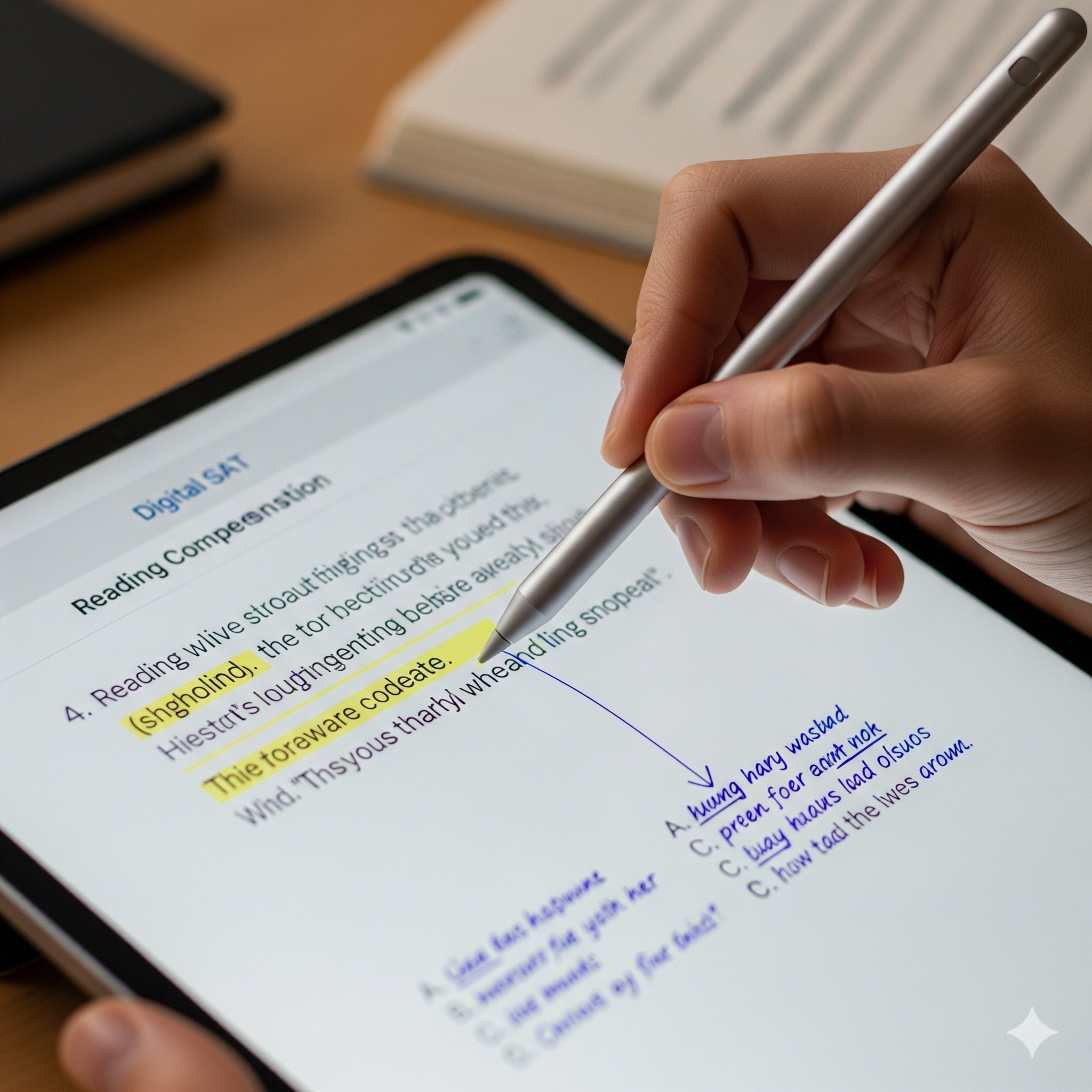
- Use the test tools wisely. Digital annotation, highlighting, and cross-out tools can reduce cognitive load by externalizing information. Train to use them during practice so they become automatic on test day.
- Set micro-goals. Break each section into manageable chunks (e.g., aim for certain question groups) so attention refreshes with each milestone.
- Pause, then return. If you hit a tough question, give yourself permission to mark it and return later. Battling through a sticky problem drains attention for successive questions.
Recovery strategies between sections
The short breaks between Digital SAT sections are a chance to reset mentally. Use them deliberately:
- Look away from the screen for at least 20–30 seconds to reduce visual fatigue.
- Do a quick physical reset: stand, stretch shoulders, roll your neck, and shake out your hands.
- Practice a breathing technique — inhale for 4, hold 2, exhale 6 — to lower heart rate and re-center attention.
Practice plan example: structure your prep to minimize fatigue on test day
Below is a realistic six-week plan that balances content review, full-length device practice, and recovery work. It’s flexible; adjust intensity depending on how many weeks you have left.
| Week | Focus | Key Activities (Sample) |
|---|---|---|
| 1 | Baseline & Scheduling | Take one full untimed practice on-device to identify weak areas; create study schedule; set sleep goals. |
| 2 | Skill Building | Daily 50–90 min study blocks targeting weak question types; light full-section timed practice twice. |
| 3 | Timed Stamina | Two full-length timed on-device practice tests with simulated breaks; review mistakes thoroughly. |
| 4 | Adaptive Strategy | Practice module switching and question triage strategies; emphasize digital annotation methods. |
| 5 | Polish & Recovery | Light content review, focus on sleep, nutrition, and stress-reduction routines; one final timed test. |
| 6 | Final Prep Week | Two short, sharp practices; visual and breathing reset drills; early nights, confident routine before test day. |
How to read your practice test data like a coach
A practice score alone doesn’t show fatigue. Look for patterns:
- Are errors clustered in the second half of sections? That signals endurance issues.
- Do you steadily slow down on reading passages? That points to attention lapses, not content gaps.
- Are careless mistakes multiplying after long problem sets? That’s cognitive depletion — time to build recovery tactics.
Turning these insights into practice adjustments is where targeted improvement happens. If you find the data overwhelming, personalized tutoring — for example, Sparkl’s 1-on-1 guidance with tailored study plans and AI-driven insights — can help translate patterns into a focused plan that reduces fatigue and builds efficiency.
Small changes with big returns: micro-habits to protect your score
When you’re prepping, adopt a few micro-habits that preserve cognitive energy on test day:
- Night-before checklist: Device charged, Bluebook installed, permitted ID packed, sleep routine set.
- Morning-of routine: Light protein breakfast, brief physical movement, avoid heavy social media scrolling that elevates anxiety.
- Section-by-section rituals: A quick gaze sweep of a passage before reading in-depth, or rewriting a math prompt to ensure you understood what’s asked.
- Nutrition during long rests: Light, steady-energy snacks (banana, small handful of nuts) that won’t spike blood sugar and crash focus.
Real-world examples: how small shifts saved students points
Case reports are instructive. Consider two hypothetical, but realistic, students:
Student A: The high-energy starter who burns out
Alex begins practice tests sprinting through the first passages, trying to bank easy points. By the third passage, accuracy drops and anxiety rises. His score pattern shows strong opening quarters but a steady decline. After adopting paced starts and marking harder questions for later, Alex recovered 30–40 seconds per question on average and gained back several accuracy points where he used to guess impulsively.
Student B: The steady worker missing the final sprint
Jasmine maintains steady accuracy early but becomes exhausted in the final module and rushes. She practiced simulated full-length digital tests with forced breaks and used specific breathing techniques between sections. The result: improved last-quarter accuracy and a more consistent score across modules.
Both students benefited from focused practice and small rituals — exactly the kind of targeted plan that personalized tutoring programs, like Sparkl, can tailor to your individual rhythms and weak points.
When to get outside help (and what to look for)
Many students can reduce fatigue with disciplined practice, but some benefit from targeted coaching. Consider getting help if:
- Your practice test scores show a repeatable pattern of decline tied to section position.
- You’ve tried pacing and recovery strategies for several weeks with limited improvement.
- You want an individualized plan that integrates content review with stamina training and test-day routines.
What to look for in a tutor or program:
- Experience with the Digital SAT specifically — not just older paper formats.
- Ability to analyze practice data and build a tailored plan that includes stamina work and digital-device practice.
- Practical coaching on test-day routines and stress-management techniques.
Personalized tutoring — for example, Sparkl’s model of 1-on-1 guidance, tailored study plans, expert tutors, and AI-driven insights — is a good fit for students who need a plan that fits their life, builds resilience, and explicitly trains around fatigue patterns.
Test-day checklist: tactical moves for keeping fatigue at bay
On the morning and during the test, small practical choices matter. Here’s a concise checklist you can memorize and use on the day:
- Sleep: 7–9 hours the night before.
- Morning meal: protein + complex carbs, avoid heavy sugar.
- Arrive early to settle in and run through Bluebook readiness if needed.
- Before each section: look away from the screen for 20–30 seconds; take three deep breaths.
- Don’t fight every hard question — mark and return when possible.
- Use short stretch breaks between sections to keep blood flowing.
- End strong: prioritize accuracy on questions you can answer reliably; aggressive guessing late in a section usually undercuts points.

Putting it all together: a simple pre-test ritual you can try tonight
Here’s a 10-step ritual you can adopt the night before a big practice or the real test. It’s short, repeatable, and designed to maximize cognitive reserve.
- Check your device battery and Bluebook installation (or school-provided device info).
- Lay out your ID and any permitted items so there’s no morning scramble.
- Do 20 minutes of light review — focus on strategy, not new content.
- Spend 10 minutes on a breathing or meditation exercise to lower stress.
- Pack a simple snack (banana, nuts) and a water bottle; avoid heavy meals late.
- Set an alarm that gives you plenty of morning time to move slowly.
- Go to bed at a reasonable hour and avoid screens 30–60 minutes before sleep.
- Morning: brief movement (walk, stretching) and a balanced breakfast.
- Arrive early and do a micro-warmup — 5–10 practice questions to get into rhythm.
- During the test, use the breathing reset and visual breaks between sections.
Final thoughts: fatigue is manageable — and beatable
Test fatigue is not a mysterious fate. It’s a set of predictable, manageable reactions to sustained cognitive demand. By training under realistic conditions, using device-specific strategies, and practicing recovery habits between sections, you can preserve mental energy and protect your score.
If you want faster progress and a plan tailored to your personal patterns — including precise pacing strategies, digital-tool technique, and stress-management routines — consider targeted 1-on-1 tutoring. Sparkl’s personalized approach combines expert tutors with data-driven plans and AI-guided insights to help you build stamina and sharpen accuracy so fatigue doesn’t steal points on test day.
One last encouragement
The SAT isn’t just a measure of what you know — it’s also a test of how well you manage attention, stress, and decision-making under pressure. The good news: those are skills you can train. Small, consistent changes in how you prepare and how you test will compound into calmer, clearer performance. You don’t have to be perfect; you just need to be prepared.
Take the next practice test with a plan in mind: treat fatigue like an opponent you can out-train, out-think, and out-strategize. Your future self — the one opening college acceptance letters — will thank you.





















No Comments
Leave a comment Cancel