
Introduction: A headphone-clad study revolution
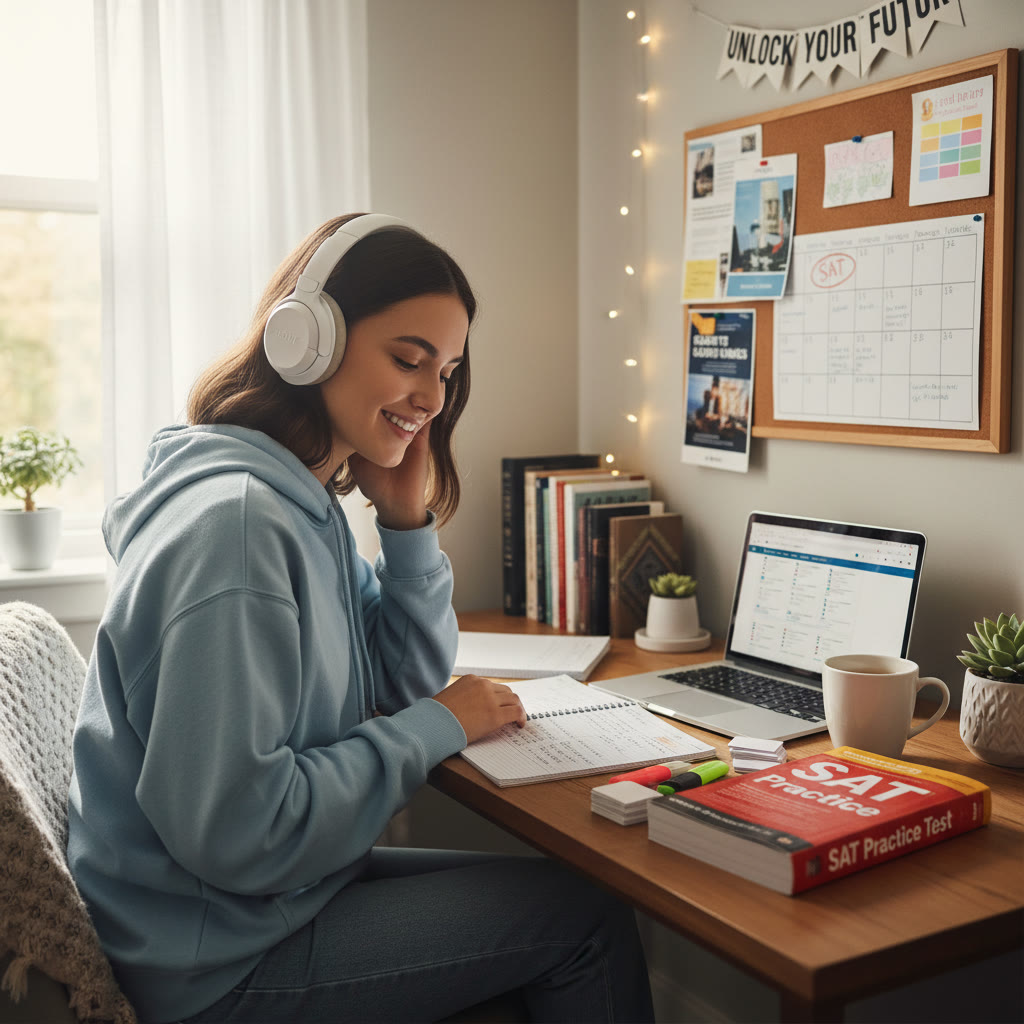
Walk into a library, a coffee shop, or a quiet bedroom and you’ll notice a new kind of study ritual: students with headphones on, heads bent over SAT practice sections, sometimes bobbing slightly to a beat. It looks almost instinctive—put on music, dive into a practice test, and hours later wonder where the time went. But is it the playlist that’s helping, or something else? And more importantly, how can you use music intentionally to get better results on the SAT?
A quick note before we begin
The SAT itself is silent: no music allowed in test centers. That means music is a tool for prep, not for the exam room. Used wisely, though, it can shape your focus, manage anxiety, and make your study hours more productive. We’ll explore what works, why it works, and practical ways to fold music into your SAT routine. You’ll also see how Sparkl’s personalized tutoring and benefits—like 1-on-1 guidance, tailored study plans, expert tutors, and AI-driven insights—can help you design a music-friendly prep strategy that fits your brain.
The science in plain language: how music changes your brain for studying
You don’t need a neuroscience degree to benefit from the effects of music on focus, but a few clear ideas will make your experiments smarter. Three mechanisms matter most:
Arousal and mood
Music changes your emotional state. A calm track can lower anxiety and steady your breathing; an upbeat rhythm can give you energy when motivation flags. For the SAT, where mental clarity and steady pacing matter, matching your mood to the task is powerful: use calm, predictable music for heavy reading and reasoning; use more energetic tracks for repetitive practice like vocabulary drills or timed math sets.
Attention and auditory gating
Background music can act like a filter. For some students, a steady, low-level soundtrack drowns out unpredictable distractions (like a noisy roommate or a barking dog), enabling a more consistent train of thought. That process—auditory gating—helps the brain ignore interruptions. But if the music itself is engaging (think lyrics you sing along to), it becomes the distraction instead of the blocker.
Working memory and cognitive load
The SAT asks you to hold information briefly in working memory while manipulating it—solving math steps, parsing long reading passages, or synthesizing evidence for an argumentative writing prompt. Music that demands little of your attention (instrumental, low variation) is less likely to compete with working memory. When music is too complex or lyrical, it uses the same verbal processing resources you need for reading comprehension and grammar.
When music helps—and when it doesn’t
Not every study session benefits from music. Understanding the right conditions separates helpful soundtracks from harmful distraction.
Helpful situations
- Repetitive practice. Doing multiple practice math problems or flashcard drills? Rhythmic, upbeat music can keep energy up without stealing focus.
- Review and rote memorization. Background ambient or classical tracks often aid concentration while you memorize vocabulary lists or formulae.
- Blocking external noise. If your environment is unpredictable, a steady low-volume soundtrack can provide consistency.
- Motivation and endurance. Long study sessions benefit from playlists that alternate between concentration-friendly tracks and motivating songs during breaks.
Unhelpful situations
- Complex reading and reasoning tasks. Lyrical or highly dynamic music can interfere with comprehension and logical sequencing.
- Initial learning of challenging concepts. When you’re learning a new math technique, total quiet or minimal nonverbal sound often helps you process steps more cleanly.
- Practice tests. Full, realistic practice tests are best taken in silence to mimic test-day conditions and build endurance for sustained focus without music.
What kinds of music work best for SAT study?
There’s no one-size-fits-all playlist, but patterns emerge when we pair tasks with music types. The table below breaks this down so you can match music to study goals.
| Task | Recommended Music | Why it helps | Volume & Tip |
|---|---|---|---|
| Timed math sets | Instrumental electronic, lo-fi beats | Steady rhythm promotes pacing and energy without verbal distraction | Moderate volume; choose tracks with consistent tempo |
| Reading comprehension practice | Soft classical (Baroque), ambient pads | Low variability helps maintain focus and reduces emotional swings | Low volume; avoid prominent melodies |
| Memorizing vocab/formulas | Minimal instrumental, nature sounds | Supports repetition without engaging language centers | Quiet background; use for spaced-repetition sessions |
| Practice essays and creative writing | Soft jazz, ambient, or silence | Lightly textured sound can stimulate ideas without overwhelming analysis | Low volume; experiment whether silence helps more |
| Long study sessions | Instrumental playlists with scheduled upbeat songs for breaks | Balances concentration with periodic lifts to avoid burnout | Use Pomodoro-style timing to switch tracks |
Practical recipes: playlists, pacing, and routines
Having a plan is half the battle. Here are actionable routines that many students find effective. The key is small experiments: try one playlist for a week and track what changed.
Recipe 1 — The 25/5 focus loop
- Set a 25-minute timer (Pomodoro) with instrumental or lo-fi music.
- Work through a focused task (e.g., one reading passage or a set of 10 math problems).
- Take a 5-minute break with an upbeat favorite song—stand, stretch, and breathe.
- Repeat 3–4 cycles, then take a longer 30–40 minute break with silence or ambient sounds.
Recipe 2 — The deep reading block
- Goal: build comprehension stamina. Choose 50–60 minute blocks.
- Play soft classical at a low volume for the first 40 minutes while you read and annotate.
- Turn music off for the final 10–20 minutes and summarize passages in writing to cement recall without auditory support.
Recipe 3 — The drill-and-review mix
- Use upbeat, rhythmic instrumental tracks for warm-up drills (math speed sets).
- Switch to calm ambient music for review and explanation of missed problems.
- End with a short playlist of your most motivating songs to reinforce positive emotions around studying.
Building playlists that actually work
Most students don’t need a musicologist; they need practical rules. Use these as guardrails when you build or choose playlists.
Rules of thumb
- Avoid lyrics during tasks that require heavy reading or verbal reasoning.
- Keep tempo consistent. Sudden changes in rhythm can break concentration.
- Use familiar tracks. Novel music is more distracting because your brain processes novelty.
- Volume should never fight with your thoughts—if you need to raise your voice to speak aloud, the music’s too loud.
Tools and tweaks
- Use crossfade or gapless playback so the end of one track doesn’t snap you out of focus.
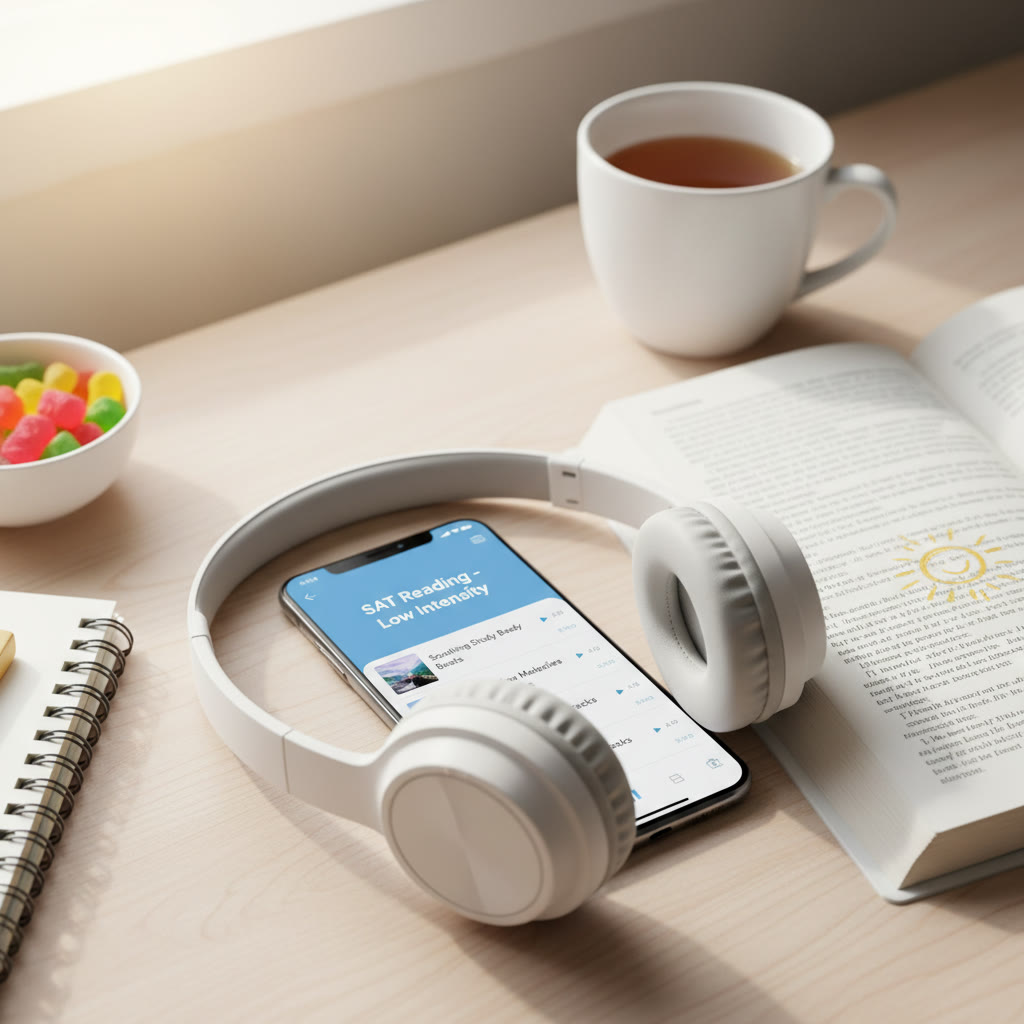
- Label playlists by task: “Reading—Low Intensity,” “Math—Paced,” “Memorize—Ambient.”
- Change playlists as you change tasks instead of relying on a single mixed list.
Personal differences: why music helps some students more than others
Not everyone benefits equally, and that’s okay. Personality, attention profile, and even your current mood shape how effectively music helps you study.
Introverts vs. extroverts
Some studies suggest extroverts may benefit more from background stimulation because they naturally seek higher arousal levels. Introverts might prefer quieter environments. The takeaway is simple: tune the intensity to match your baseline energy.
Students with ADHD or high distractibility
Many students with ADHD find predictable background music helpful because it reduces distracting environmental noise and provides structure. But it doesn’t always work; try low-lyric, steady-tempo music and measure whether you complete more focused work than in silence.
Practice and habit formation
Music can become a cue for focus. If every time you study you put on the same playlist, your brain will eventually associate that playlist with productive studying. That Pavlovian-style cueing can speed up transitions into deep work—but it requires consistency.
Practical pitfalls and how to avoid them
Music is a tool, not a magic switch. Here are common mistakes students make and how to sidestep them.
Common mistakes
- Using music during practice tests: you’ll build a reliance that won’t exist on test day.
- Listening to novelty playlists that pull attention away from the task.
- Making playlists too long and varied, causing mood swings between tracks.
- Overusing stimulating music right before sleep, which hurts recovery and next-day focus.
How to fix them
- Reserve silence for full-length practice tests to build test-day stamina.
- Create short, purpose-driven playlists and update them only after testing changes in your focus.
- Use music as a part of your study architecture—like warm-ups and breaks—not as the entire strategy.
Real-world sample week: integrating music into SAT prep
Here’s a sample weekly plan for a student balancing school, practice tests, and targeted review. This plan uses music purposefully rather than habitually.
| Day | Session | Music | Goal |
|---|---|---|---|
| Monday | 60 min math drills | Instrumental lo-fi | Build speed and pacing |
| Tuesday | 50 min reading passages | Soft classical (low volume) | Improve stamina for long passages |
| Wednesday | Full practice test | Silence (test conditions) | Simulate test day |
| Thursday | Review missed problems | Ambient instrumental | Deeper conceptual understanding |
| Friday | Vocabulary and flashcards | Nature sounds or minimal instrumental | Memory consolidation |
How tutors and tailored plans amplify the benefits
When music is part of a thoughtful study system, results improve faster. That’s where personalized tutoring shines. Sparkl’s personalized tutoring pairs students with expert tutors who can observe how you respond to different study environments, then create tailored study plans that incorporate music when it helps. Tutors can:
- Recommend specific music types for each task based on your attention profile.
- Integrate music into Pomodoro cycles and targeted practice sessions.
- Use AI-driven insights to track whether music increases accuracy or speed over time.
Those small adjustments—matching tempo to task, choosing instrumental over lyrical tracks, and scheduling silent practice tests—can make your study hours more efficient and less emotionally draining. Think of music as one of many levers your tutor can use to personalize your plan.
Checklist: Try this today
Before you start your next SAT study session, run through this quick checklist.
- Decide the task: Is it heavy reading, math practice, or memorization?
- Choose a playlist labeled specifically for that task.
- Set a volume low enough that you could speak without raising your voice.
- Use a timer (25–50 minute blocks depending on the task).
- End the session with 5–10 minutes of reflection: what helped, what distracted?
Final thoughts: personalization beats prescriptions
Music can be a quiet miracle for some SAT students and a needless distraction for others. The single most important idea is this: experiment with purpose. Try specific playlists for specific tasks, measure how your speed and accuracy change, and iterate. Over days and weeks you’ll build a study soundtrack that cues focus, reduces stress, and makes long hours more sustainable.
If you want help designing that plan, consider adding personalized tutoring to your toolkit. Sparkl’s 1-on-1 guidance, tailored study plans, expert tutors, and AI-driven insights can help you discover whether music is an asset for your unique brain and how to use it without creating dependence. With a thoughtful strategy, you’ll walk into the SAT room calm, practiced, and ready—music-free, but sharpened by thousands of intentional, music-accompanied study minutes.
Parting tip
Think of music as part of your study architecture: a mood-setter, a blocker of distractions, and an endurance tool. Use silence when you need precise, test-like practice. Use sound when you need rhythm, repetition, and emotional uplift. Most importantly, listen to your results. Your playlist should help you learn better, not just make studying feel nicer.
Good luck—put on the right track, and let your preparation sing.















No Comments
Leave a comment Cancel