
IB DP Recommendation Strategy: When to Ask for Letters So Teachers Say Yes Happily
As an IB Diploma student juggling internal assessments, mock exams, CAS commitments and the Extended Essay, the thought of asking teachers for recommendation letters can feel like another looming deadline. But it doesn’t have to be awkward—or last-minute. The secret is simple: timing, preparation, and courtesy. This guide walks you through when to ask, who to ask, what to give them, sample wording that sounds natural, a practical timeline table, and how to follow up in a way that makes teachers comfortable saying “yes.”
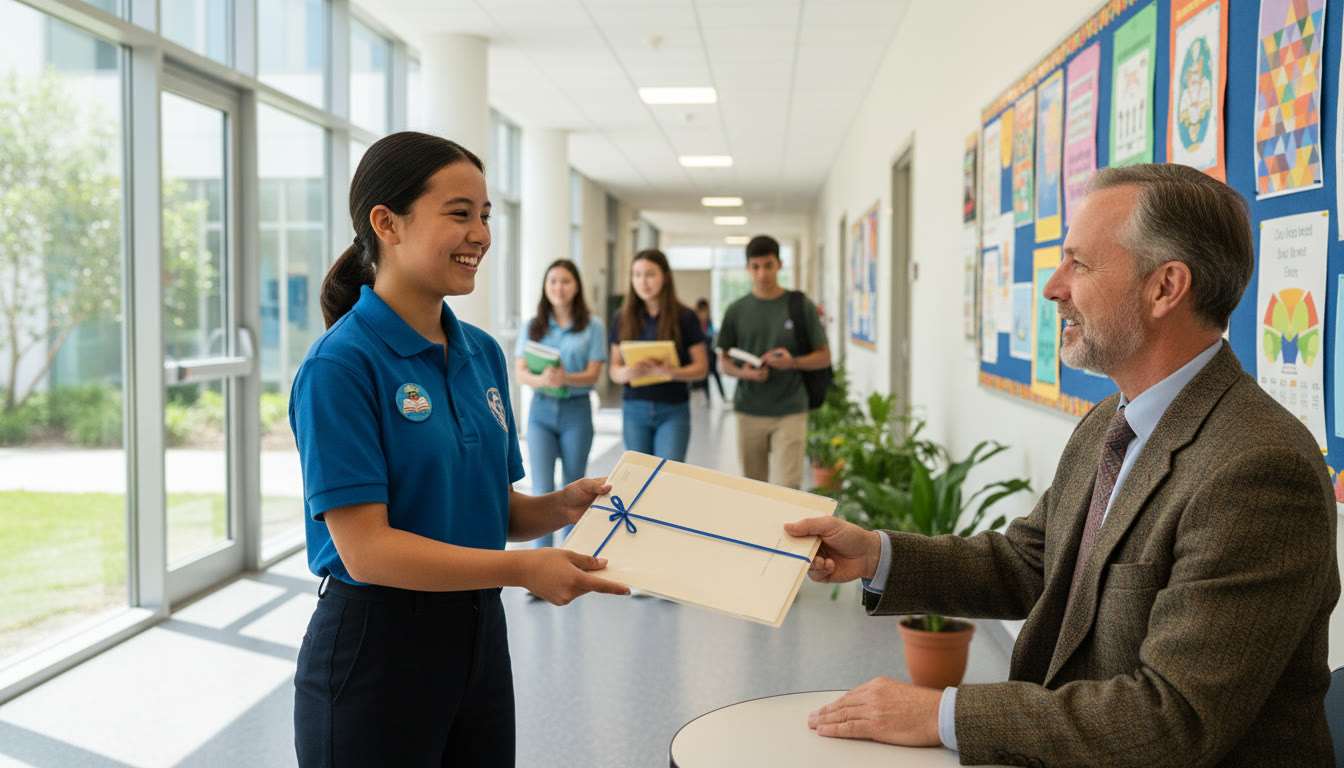
Why timing matters more than you think
Timing matters because teachers are people with full schedules: marking, lesson planning, parent meetings, and their own professional deadlines. In the IB cycle those busy periods align with assessments, moderation, and exam season. If you approach a teacher in the middle of a major marking period and give them only a week, you’re asking them to drop everything. Give them time and they’ll give you thoughtfulness—specific anecdotes and examples that turn a generic letter into a compelling endorsement.
Beyond courtesy, good timing also gives you a chance to prepare the strongest possible supporting materials. A rushed request often produces a generic letter. A well-timed request lets your teacher recall concrete moments—your Extended Essay supervision, a standout lab report, or a CAS project you led—and write about them with detail. Those details are what admissions officers notice.
How far ahead should you ask? A practical rule-of-thumb
There’s no absolute deadline that fits every school or student, but these practical windows are widely effective. Aim for the longer side if you can; shorter notice is possible in a pinch but should be used only when absolutely necessary.
- Early-decision / early-action deadlines: Aim to ask 10–12 weeks before the application deadline. Early cycles compress everything, so give your teacher maximum lead time.
- Regular decision: Ask 8–10 weeks before the deadline. That leaves time for follow-up and any required form submissions through online portals.
- Rolling admissions or departmental scholarships: Ask 6–8 weeks ahead. Rolling schools process applications quickly, so your teacher’s timely submission matters.
- Minimum acceptable notice: 3–4 weeks. This can work, but expect a less-detailed letter unless the teacher already knows you well and has examples ready to use.
- Emergency asks: Less than 2 weeks. Only use this if unavoidable—be clear, apologetic, and supply ready-to-use materials (see the packet checklist below).
Quick timeline table — plan your ask
| Application Type | Ideal Lead Time | Minimum Lead Time | What to Provide Immediately |
|---|---|---|---|
| Early decision / early action | 10–12 weeks | 6 weeks | Resume, draft personal statement, key examples |
| Regular decision | 8–10 weeks | 3–4 weeks | Transcript snapshot, activity list, deadlines |
| Rolling admissions / scholarships | 6–8 weeks | 3 weeks | Clear deadline, submission link, supporting materials |
| Supplemental/program-specific recs | 8–12 weeks | 4–6 weeks | Program brief, desired focus (e.g., research, leadership) |
Who should write your recommendation?
Choosing the right teacher is as important as timing. Quality beats prestige—pick teachers who know you well and can speak to your academic habits or intellectual curiosity, not just those with famous names. Tips for selecting recommenders:
- Subject relevance: If you’re applying for a science program, a higher-level science teacher who supervised your internal assessment or gave feedback on investigative work is ideal.
- Depth of interaction: A teacher who has seen you improve, who supervised your Extended Essay, or who observed leadership in CAS will write more specific anecdotes.
- Balance: If applications ask for two teacher recs, choose instructors from different disciplines to present a fuller academic picture.
- Extended Essay supervisor: If your EE is central to your application, your supervisor can sometimes write an especially powerful letter about research skills and persistence.
What teachers appreciate receiving from you
Make their job easy. A compact, organized packet helps teachers write richer, faster, and more detailed letters. Here’s what to include and why each piece matters.
- Clear deadline and submission instructions: A date, time, and the exact portal or email to submit to. If the school uses a portal, paste the link and login notes into your packet.
- One-page resume or activity list: Bullet points that highlight leadership, research, awards, and CAS highlights—things a teacher might not know in detail.
- Short personal statement draft or paragraph about academic goals: Sharing your narrative helps the teacher align their letter with what you emphasize in applications.
- Two or three concrete examples: Brief reminders of moments the teacher can cite: a standout lab, a revision you made after feedback, a project you led, or a discussion you initiated.
- Transcript snapshot and relevant grades: Context helps teachers place achievement alongside effort.
- Preferred highlights: If you want the teacher to focus on research, leadership, resilience, or curiosity, say so politely. Don’t script their letter—just suggest emphasis.
Many students also pair teacher outreach with Sparkl‘s tutoring when they need focused help on personal statements, interview prep, or structuring that materials packet; one-on-one guidance can make your packet and your framing clearer for recommenders.
How to ask—in person and in writing (human, not robotic)
Face-to-face is usually best—catch your teacher after class, during office hours, or by appointment. Keep it short, polite, and specific. If in-person isn’t possible, a carefully worded email does the job.
In-person script (natural tone)
“Hi Ms. García — I really enjoyed your HL Biology class, and I’m applying to study biological sciences. Would you be willing to write a recommendation for me? I can give you a one-page packet with my resume, a draft personal statement, and the deadline. I wanted to ask now so you have plenty of time.”
Email template (concise and organized)
Subject: Request for Recommendation — [Your Name]
Dear [Teacher’s Name],
I hope you are well. I am applying to university programs that require teacher recommendations and I would be honored if you could write one for me. I greatly appreciated your [class/supervision of my EE/feedback on my IA], and I feel you could speak to my [research skills/critical thinking/work ethic].
I can provide a one-page resume, a short personal statement draft, relevant graded work, and the submission details. The earliest deadline is [relative deadline phrase — e.g., “in about eight weeks”]. If you’re able to help, please let me know and I will send everything immediately. If you’re unable to, I completely understand—thank you for considering it.
Warm regards,
[Your Name]
What to avoid saying
- “I need it urgently—can you do it in three days?” (Unless it truly is an emergency; even then, acknowledge inconvenience.)
- “Please say I’m the best in class”—don’t script their voice; ask for honesty and specifics instead.
- Mass emailing multiple teachers with identical generic notes—personalize each request.

Preparing a recommendation packet — the student’s one-stop kit
Think of your packet as a short, curated memory jog for the teacher. Keep it one to two pages (plus any relevant graded work or the EE abstract). Teachers don’t want to sort through long files—make key items obvious.
| Item | Why it helps |
|---|---|
| One-page resume / activity list | Shows involvement and leadership beyond grades |
| Personal statement draft or goals paragraph | Aligns the letter with your academic narrative |
| Two short reminders of specific examples | Helps the teacher write vivid, memorable anecdotes |
| Submission instructions & deadline | Removes friction—teachers can submit confidently |
Follow-up and polite reminders
Teachers are busy. A kind cadence of reminders keeps things on track without pressure:
- After they agree: send the packet immediately, thank them, and confirm receipt.
- Two to three weeks after the initial ask: if you haven’t seen confirmation, send a gentle check-in (short and appreciative).
- Two weeks before the deadline: a friendly reminder that includes the submission details again.
- After submission: send a sincere thank-you note—handwritten notes land well—or a thank-you email outlining how much you appreciated their support.
What to do if a teacher says no
It happens, and it’s okay. Maybe they feel they don’t know you well enough or are too swamped. Take it calmly:
- Thank them for their honesty—don’t pressure them to change their mind.
- Ask if they can suggest another teacher who knows your work better.
- Provide an alternate plan quickly: identify another recommender and prepare that packet so you can ask promptly.
How teachers structure effective letters (so you know what to provide)
A thoughtful recommendation typically includes an introduction to the teacher-student relationship, specific examples of intellectual curiosity or resilience, and a closing that positions the student for the intended program. Admissions officers look for concrete moments—an argument you defended well in class, the way you revised an IA after feedback, or a CAS project you led through setbacks. When you supply those memories in your packet, you help the teacher create a textured, persuasive letter.
Sample points teachers might include (so you can supply evidence)
- A clear description of how you handled feedback and improved work.
- An anecdote that showcases initiative—setting up extra experiments, organizing peer study, or presenting original analysis in class.
- A note on collaboration and leadership during group work or CAS activities.
- Evidence of intellectual curiosity outside the syllabus—self-driven projects, reading, or research steps in your EE.
Coaching and polishing: where focused support helps
Some students find it helpful to get outside help refining their personal statement, polishing the packet, or practising interview answers before asking for recommendations. Working one-on-one with a tutor can clarify the story you want teachers to highlight. For students who choose this route, Sparkl‘s tutors offer tailored coaching, structured timelines, and focused essay feedback that make the teacher’s job of writing examples and aligning narratives easier. Used thoughtfully, such coaching lowers the friction for recommenders and helps you present a coherent application profile.
Dos and don’ts checklist
- Do ask in person when possible and follow up with a packet.
- Do be explicit about what you hope the letter will emphasize (research, creativity, leadership).
- Do give realistic deadlines and submission details.
- Don’t assume a generic compliment is enough—give examples.
- Don’t mass-bcc the same message to multiple teachers without personalization.
- Don’t micromanage the teacher’s voice; suggest emphasis, do not script their language.
Final checklist before you ask
Before you walk into class or click send on that email, run through this short checklist:
- Have you identified the teacher(s) who can best speak to your strengths?
- Do you have your one-page packet ready to hand over immediately?
- Have you confirmed all deadlines and submission methods?
- Are you prepared to accept a polite refusal and an alternate plan?
Why thoughtful requests matter to admissions
Admissions officers read hundreds or thousands of applications. A letter that gives concrete evidence—an anecdote, an assessment of your intellectual curiosity, or a description of how you handled a setback—helps your file stand out. Thoughtful timing and a polished packet result in letters that feel alive and specific, which in turn gives reviewers a clear sense of who you are beyond test scores and grades.
Parting academic note
Asking for recommendations is a moment to be deliberate: choose teachers who know you, give them clear materials and plenty of lead time, and frame your request with respect and gratitude. When timing, preparation, and communication come together, teachers can write letters that genuinely support your application and reflect your growth as an IB Diploma student.
























No Comments
Leave a comment Cancel