

IB DP Parent Zone: The Healthy Way to Discuss Plagiarism and Integrity at Home
Stepping into the world of IB DP assessments—Internal Assessments (IA), the Extended Essay (EE), and Theory of Knowledge (TOK)—can feel both exciting and a little terrifying for parents. You want to help, but you don’t want to overstep. You want to protect your child’s future, but you also want to respect their independence. One of the trickiest topics in that mix is academic integrity: how to discuss plagiarism, how to spot risky habits, and how to build routines that make honest work the natural choice.
This article is written for parents who want practical, humane ways to keep integrity conversations calm and constructive. You’ll find language to try at the kitchen table, clear signs that something needs fixing (and how to fix it), and age-appropriate support ideas for IA, EE, and TOK. The advice is intentionally evergreen—framed for the current cycle and adaptable as guidelines evolve.

Why academic integrity matters (and how to explain it without moralizing)
At its heart, academic integrity is about learning. For IB students, the outcome isn’t just a grade—it’s the development of critical thinking, clear communication, and a trustworthy record of work. When a student copies or shortcuts, they miss practice at skills they will need later: researching responsibly, arguing clearly, and admitting uncertainty where it exists.
When you talk about integrity with your child, aim for curiosity over accusation. Say something like: “I’m interested in how you found this idea—can you walk me through your process?” That invites explanation and shows that the goal is understanding, not punishment.
How schools and students usually frame plagiarism
Different schools have different policies, but most IB schools emphasize that academic honesty supports fairness, reliability, and the learning process. For parents, that means two things: know that schools take integrity seriously, and remember that mistakes often come from stress, confusion about citation, or lack of time rather than malice.
Common forms of academic misconduct and friendly fixes
Below is a compact guide to common problems parents may encounter, short signs to watch for, and quick responses you can try at home.
| Issue | What it looks like | What a parent can do |
|---|---|---|
| Direct copying | Large sentences or paragraphs that read oddly different from the student’s voice | Ask the student to explain a paragraph in their own words; encourage draft work and source-tracking |
| Patchwriting / poor paraphrase | Several reworded phrases from a source without proper citation | Teach paraphrasing: read, close the source, write from memory, then compare and cite |
| Self-plagiarism | Reusing past work without disclosure | Explain the ethics of submitting the same work twice and encourage supervisor discussions |
| Collusion | Two students with strikingly similar structure or identical wording | Discuss boundary-setting for group projects; encourage independent drafts before peer review |
| Contract cheating | Work that seems beyond the student’s usual level or style | Encourage transparent timelines, drafts, and short recorded reflections on the work process |
Keep the conversation steady: scripts that actually work
Short, calm scripts can be surprisingly powerful because they reduce the chance of a defensive reaction. Here are a few you can adapt.
- Opening the topic: “I know the DP is a lot. I’m curious about how you plan big pieces like your IA or EE—tell me what your next step is.”
- If you spot a worrying paragraph: “I read this part and I’m a little confused about where the idea came from—did you take notes or use a source?”
- When time pressure is obvious: “It looks like this is building up—let’s make a simple schedule so you can hand something in that’s genuinely yours.”
- Discussing use of online help or AI: “If you use a tool, can you also write one paragraph explaining how you used it and why? That keeps things clear for your teacher and you.”
When you suspect a serious breach: a calm step-by-step approach
- Pause. Avoid immediate accusation.
- Collect facts calmly. Compare a draft to the final version and ask for an explanation.
- Encourage the student to speak with their supervisor or teacher—offer to sit with them while they draft a message.
- If the school is involved, be honest and cooperative. Schools usually prefer a learning-focused resolution when possible.
Practical routines that build integrity at home
Small, regular habits are more powerful than a single lecture. Here are routines that reinforce honest practice without nagging.
- Designate weekly ‘work reviews’ where the student reads a short section aloud and explains reasoning.
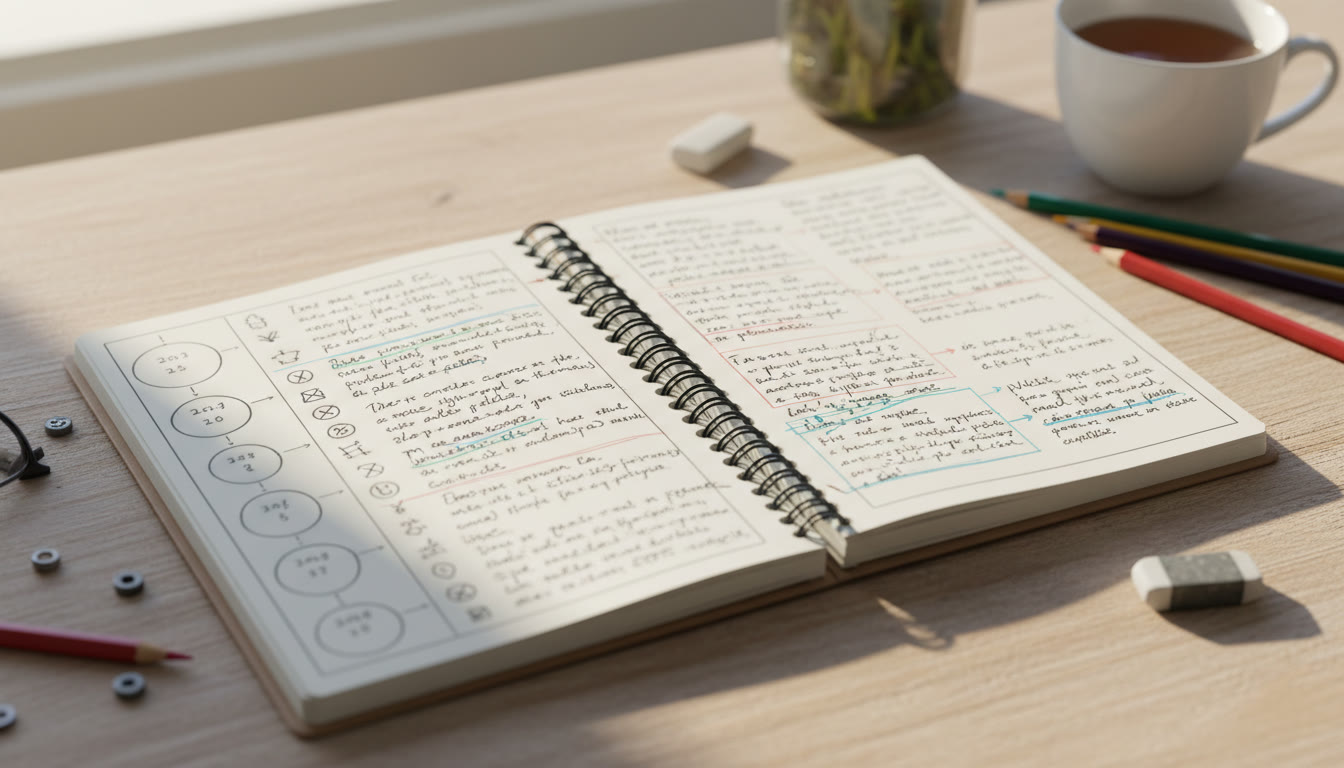
- Keep a simple source log: a shared note or spreadsheet where the student quickly records where each idea or quote came from.
- Encourage ‘three-draft’ thinking: idea sketch, evidence and structure, polish and citations.
- Model time management: if a parent shows how they break big tasks into smaller ones, the student learns a durable habit.
- Create a ‘citation corner’—a quick reference sheet for common citation formats and how to paraphrase.
Supporting the IA, EE, and TOK—practical, task-specific tips
Internal Assessments (IA)
IAs are about applying skills in a specific subject. Parents can be fantastic coaches of process without doing the intellectual work. Focus on structure, record-keeping, and honest troubleshooting.
- Insist on clear logs: dates, what was done, who advised what. That timeline protects both student and teacher.
- Help set realistic mini-deadlines tied to specific deliverables (e.g., data collection complete, first analysis run, 500-word interim summary).
- When helping with equipment, ask your child to show and explain each step so you are supporting method rather than content.
Extended Essay (EE)
The EE is a long-form research project—an ideal place to teach development of academic habits.
- Be a sounding board for topic-narrowing: ask questions that push toward a manageable research question rather than offering answers.
- Encourage annotated bibliographies early. Even short notes on source reliability reduce the temptation to over-copy later.
- Teach transparency: ask the student to keep a short reflection log after each research session describing what they did and why.
Theory of Knowledge (TOK)
TOK invites students to analyze claims and evidence. Parents can use everyday examples to practice TOK-style thinking.
- Turn dinner conversations into TOK practice: ask where a claim comes from and what assumptions it relies on.
- Encourage balanced evaluation: list reasons for and against a claim, then ask where the evidence is stronger.
- Remind students that citing sources in TOK is not just formality; it shows where knowledge claims originate and helps refine arguments.
How to teach paraphrasing and citation without sounding like a librarian
Most citation errors come from not knowing how to paraphrase and when to cite. Make it low-stakes to practice.
- Try a short exercise: pick a 100-word paragraph from a source. Ask the student to read, close the page, and explain the idea in two sentences. Then have them write a paraphrase and add a simple citation.
- Emphasize that facts and common knowledge don’t always need citation, but ideas or unique phrasing do.
- Practice summarizing an article in 50 words; it helps distinguish main idea from phrasing that must be cited.
Technology, AI tools, and the home boundary
New tools are helpful but tricky. The honest path is to treat them like any other source: use, disclose, and reflect. If your child uses generative tools to brainstorm or check grammar, ask them to keep a short note describing how the tool was used and what parts came from the tool versus their own thinking.
Suggest that they paste the tool-generated text into a private draft and then rewrite it in their own words. That way the real learning—sifting, choosing, and crafting—still belongs to the student.
When external help is needed (tutoring and guided support)
Sometimes a student needs targeted help: learning citation basics, improving academic English, or structuring a long essay. Expert tutors who emphasize skill-building—not doing the work for the student—can be incredibly useful.
For example, a service that offers 1-on-1 guidance, tailored study plans, and expert tutors can help students learn how to manage drafts, build bibliographies, and present analysis in their own voice. If you explore external options, look for tutors who stress process over product and who ask students to reflect on their work as part of each session.
One resource worth noting for parents exploring structured academic support is Sparkl‘s personalized tutoring, which highlights one-to-one guidance, tailored study plans, and tools to help students strengthen their independent writing and research skills.
What schools expect from parents and how to partner with teachers
Schools generally value parent support that helps students learn skills without completing work for them. If a school asks for documentation or interviews about a student’s process, be cooperative and honest. Share timelines, drafts, and any information about external help, and encourage your child to take ownership of the conversation.
Here are quick principles for parent–school collaboration:
- Be transparent about the support you’ve provided.
- Encourage your child to speak first to the teacher or supervisor; offer to join for backup but not to speak for them.
- Respect privacy: if a school investigation is underway, follow policies while supporting your child emotionally.
Everyday signs that your child is learning honesty (and how to praise it)
Look for small markers of growth: a clear source log, willingness to show early drafts, admitting when they don’t understand a citation style, or taking time to rewrite rather than copy. Praise the process—”I liked how you explained where that idea came from”—rather than praising the end product alone. That reinforces the value of honest effort.
Quick checklists you can use tonight
- Open a shared document for source tracking—encourage the student to add entries as soon as they consult a source.
- Agree a short weekly meeting: 20 minutes to read a paragraph and ask clarifying questions.
- Keep a simple evidence log for experiments or data collection—dates, raw numbers, and short notes on any changes.
- Ask the student to write a 100-word reflection on their learning after each major milestone; reflections show ownership.
Final paragraph: steady, supportive, and academic
Talking about plagiarism and integrity at home doesn’t require perfect knowledge of policy—what helps most is steady practice, honest conversations, and clear routines that make doing the work properly easier than taking a shortcut. When parents model curiosity, keep calm, and focus on learning skills (research, paraphrase, citation, reflection), students develop habits that carry them beyond the DP and into responsible lifelong learning.
























No Comments
Leave a comment Cancel