

IB DP CAS & CS Profiles: Treat CAS as the narrative engine for your computer science story
CAS is often talked about as a requirement to check off. But if you step back, it’s really a chance: a chance to shape a sustained story about who you are as a maker, thinker, teammate and problem-solver. For students aiming at Computer Science, that story can weave technical skills, ethical thinking, teamwork, and community impact into a profile that admissions tutors—and more importantly, future collaborators—can understand at a glance.

In this guide I’ll walk you through how to choose CAS experiences that genuinely move your CS profile forward, how to design a sustained project with real-world impact, and how to document everything so your portfolio reads like a coherent narrative rather than a scattershot scrapbook. Expect practical examples, reflection prompts you can copy, a clear table mapping project types to evidence, and tips on turning CAS work into admissions-ready artifacts.
Start with intention: define the narrative you want to tell
Pick a few tight themes, not everything at once
A compelling CS profile usually centres on 2–3 themes you return to again and again. Themes can be technical (e.g., algorithms, data science, HCI), social (e.g., accessibility, environmental tech), or educational (e.g., peer-teaching, outreach). Pick themes that genuinely interest you and that you can sustain across multiple CAS experiences.
- Why themes matter: they turn separate activities into evidence of growth.
- How to choose: follow curiosity—what projects do you enjoy tinkering with on weekends?
- Keep it realistic: depth matters more than breadth for CS admissions—demonstrate progression.
Map outcomes to goals
Before you start an activity, ask: what skill or learning outcome will this activity show? That makes documentation easier and forces you to think about measurable impact—did the workshop I ran improve participants’ confidence? Did my app reduce a process from 10 steps to 3? Answers like these are what turn a CAS log entry into a persuasive portfolio item.
Choose CAS experiences that show both technical skill and community-minded thinking
Project ideas that work especially well for CS profiles
Below are practical, scalable ideas that align naturally with the CAS strands and allow you to collect strong evidence while creating something useful.
- Community coding workshops (service + creativity): Teach younger students how to program a simple game. You’ll show communication, pedagogy, and technical clarity.
- Open-source contribution sprint (creativity + service): Contribute a feature or bug fix to a meaningful project—this produces Git commits, issue threads, and reviewer feedback as evidence.
- Assistive tech prototype (creativity + service): Build a tool that addresses accessibility—document user testing, iterations, and ethical reflections.
- Robotics or hardware club (activity + creativity): Lead a team that builds and iterates a robot; log design cycles, tests, and competition outcomes.
- Data-for-good analysis (creativity + service): Analyze local data to help a community organization—deliver a dashboard and a brief report.
- Hackathon with follow-up (activity + creativity + service): Don’t stop at the event—turn the prototype into a sustained project with users and metrics.
One sustained CAS project: what it looks like for CS
From spark to scale
A sustained project is your chance to show progression, leadership and persistence. For CS students, the sustained project could be a semester-long development of an app that solves a local problem, a program of weekly coding classes that grows each term, or a multi-phase research-and-build project involving sensors or machine learning. The point is sustained: you’ll iterate, collect data, involve stakeholders, and reflect deeply.
Design it with stages: discovery, prototype, test, iterate, document, and share. Each stage produces evidence—user interviews, code snapshots, screenshots, test results, meeting notes, and reflective entries.
Planning checklist for a CS sustained project
- Define the problem and stakeholders.
- Set clear, measurable milestones (e.g., prototype ready, user testing complete, version 1.1 deployed).
- Assign roles and responsibilities if you work with a team.
- Schedule regular reflective entries tied to learning outcomes.
- Plan a final showcase that yields artifacts (video demo, live demo, repository).
Documenting evidence: make your portfolio speak with clarity
What counts as high-quality evidence for a CS profile
Admissions teams and supervisors love evidence that is concrete, reproducible, and shows impact. For CS-focused CAS work, strong evidence includes:
- Public GitHub repositories or code snapshots (with clear README and changelog).
- Short demo videos (1–3 minutes) that walk through what your project does and why it matters.
- User testimonials, signed or recorded, showing the project helped someone.
- Before/after metrics: time saved, error rates reduced, number of workshop attendees, improvement in test scores.
- Photographs showing you in action (teaching, building, testing), with short captions tied to reflections.
- Supervisor feedback and peer reflections that corroborate your role and contribution.
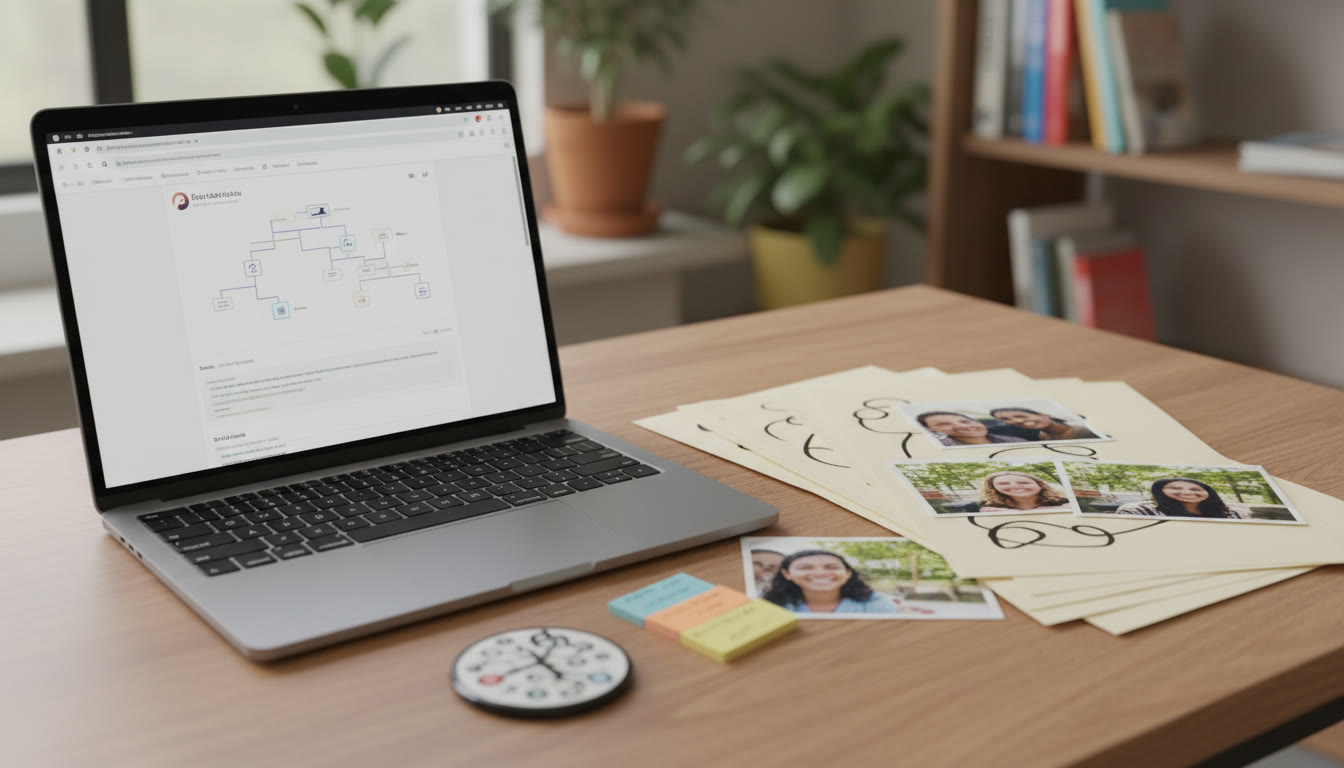
Organize a digital portfolio that admissions readers can scan
Create a clean landing page (portfolio website or a well-structured document) with a short overview, 3–5 highlighted projects, and links to deeper artifacts. Each highlight should have:
- A one-sentence project summary (problem + solution)
- Key artifacts (link to code, video demo, screenshots)
- Measurable outcome or impact
- One reflective statement that ties the experience to learning and future plans
If you want guided support shaping project scope or polishing reflective statements, Sparkl‘s personalized tutoring offers 1-on-1 guidance, tailored study plans, expert tutors, and AI-driven insights that can help turn early ideas into portfolio-ready projects.
Table: CAS project types mapped to skills and portfolio evidence
| Project idea | CAS Strand(s) | Skills demonstrated | Suggested evidence |
|---|---|---|---|
| Community coding workshops | Service, Creativity | Teaching, communication, curriculum design | Lesson plans, attendee feedback, photos, short demo video |
| Assistive tech prototype | Creativity, Service | UX design, prototyping, user testing, ethics | User test reports, iteration notes, code snapshot, testimonial |
| Open-source contribution | Creativity, Service | Collaboration, version control, code review | Pull requests, issue threads, merge commits, reviewer comments |
| Robotics club leadership | Activity, Creativity | Team leadership, troubleshooting, mechanical/electrical skills | Competition results, build logs, photos, mentor feedback |
| Data-for-good analysis | Creativity, Service | Data cleaning, visualization, statistical reasoning | Dashboard links, executive summary, metrics demonstrating community use |
Writing reflections that actually communicate learning
Reflection is not a diary entry—make it analytical
A good reflection shows what changed in you and why. Link technical steps to broader learning: how did a debugging crisis teach you about systematic testing? How did teaching younger students change the way you explain algorithms? Always tie an anecdote to a learning point.
Reflection prompts you can use
- What specific skill did I learn, and how can I show it in code or a demo?
- What feedback surprised me, and how did I change the project because of it?
- How does this activity connect to ethical or global considerations in computing?
- When did I fail or get stuck, and what did I do to move forward?
- How have I grown as a collaborator or leader through this activity?
Turning CAS into admissions-ready storytelling
Make it coherent, evidence-based, and future-facing
Admissions readers look for signs of curiosity, independence, impact and learning. Your CAS portfolio should make it easy to find those signs. Lead with impact statements: ‘Built an app used by 120+ students to book lab time, reducing booking conflicts by 60%.’ Then back that up with artifacts and a short reflection that explains what you learned and what you might do next.
Suggested profile snapshot for a CS applicant
| Section | Example entry | Why it matters |
|---|---|---|
| Highlight 1 | Assistive-reading app for visually impaired classmates (deployed prototype, 30 users) | Shows technical skill + ethical application |
| Highlight 2 | Weekly coding workshops I designed for middle schoolers (30 sessions) | Shows teaching, communication, sustained commitment |
| Evidence hub | GitHub repo, demo video, user testimonials, supervisor feedback | Concrete artifacts make claims verifiable |
Practical tips: timelines, supervisors, and ethics
Manage your timeline without burning out
- Break projects into week-by-week milestones and pair each milestone with an intended artifact.
- Build short feedback loops: a demo every 2–4 weeks keeps momentum and produces evidence.
- Balance: mix hands-on build weeks with reflection weeks so the portfolio grows in parallel.
Work with supervisors effectively
Communicate regular updates, share artifacts for verification, and ask for specific feedback that can be quoted in your evidence. Treat supervisors as collaborators who can help you translate a messy learning journey into credible claims.
Ethics and responsible computing
When your CAS work touches people’s data, privacy, or accessibility, document your ethical choices. Include consent forms, anonymized data summaries, and short ethical reflections. Ethical awareness strengthens both your project and your profile.
Common pitfalls and how to avoid them
Checklist of traps
- Avoid being too scattered: multiple tiny one-off activities are weaker than a few deep projects.
- Don’t over-claim: make sure evidence actually supports what you wrote in reflections.
- Keep artifacts organized: broken links and messy repositories reduce trust.
- Make learning explicit: don’t assume admissions readers will infer growth—say it.
Final practical checklist: convert CAS work into a polished CS portfolio
- Select 3–5 projects that align with your chosen themes.
- For each project, assemble: a one-liner summary, 2–4 artifacts, 1 short metric of impact, 1–2 reflective entries.
- Host artifacts in stable places (public repo, video link, downloadable PDF) and keep backups.
- Ask a supervisor and a peer to review your portfolio for clarity and honesty.
- Practice a 60–90 second narrative that ties your CAS story to your CS ambitions—precise language helps in interviews and personal statements.
CAS can be more than a checkbox: it can be the engine that turns curiosity into demonstrable impact. By selecting projects that align with a few coherent themes, planning a sustained CS-focused project, collecting clear evidence, and writing analytical reflections, you’ll build a profile that is both authentic and persuasive.
A thoughtful CAS portfolio for Computer Science shows technical competence, collaborative skill, ethical awareness, and the ability to learn from iteration—qualities that matter in both higher education and real-world problem solving.























No Comments
Leave a comment Cancel