
Why arts-for-impact matters in the IB Diploma Programme
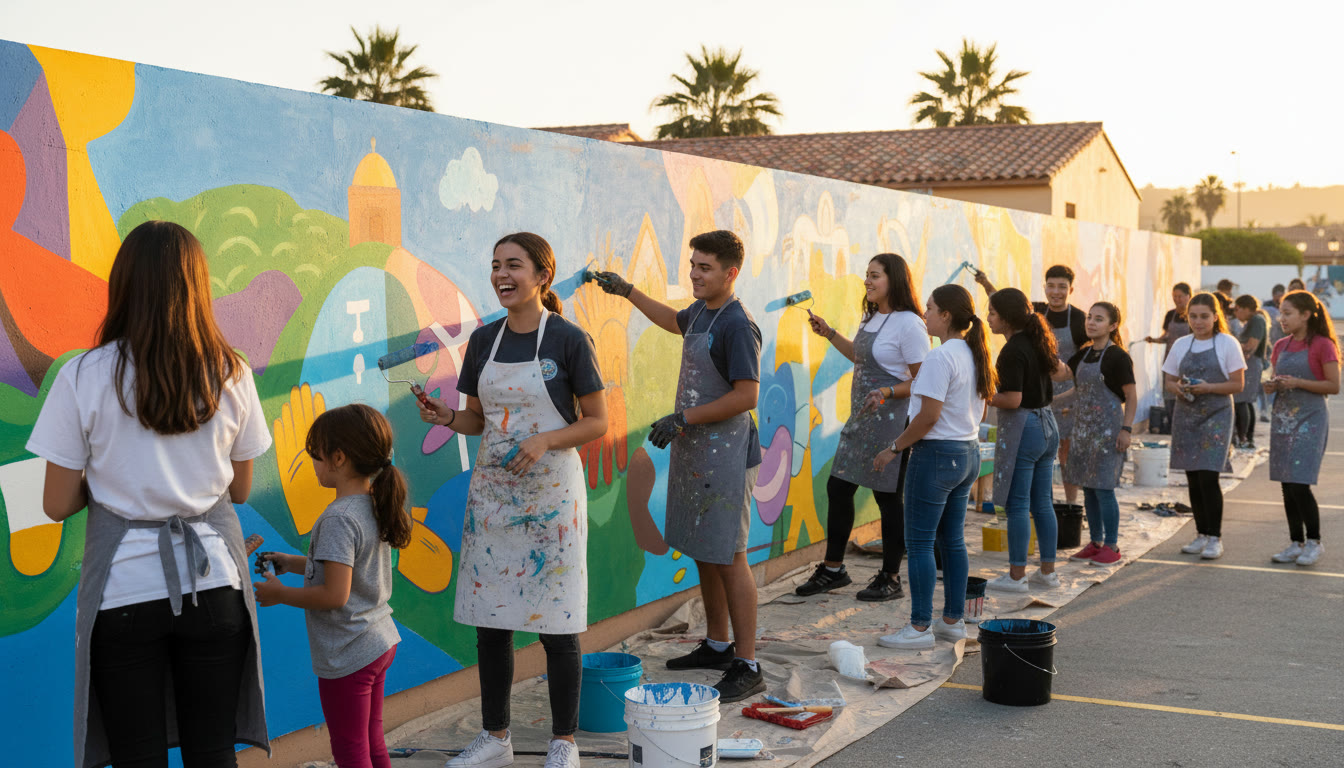
When creativity meets purpose, something quietly powerful happens: an IB DP student no longer just completes an activity, they catalyze social change. Arts-for-impact initiatives—whether a community mural, a storytelling workshop, a digital exhibition on local ecology, or a theatre piece addressing social stigma—bridge the IB’s emphasis on learning outcomes with meaningful community engagement. These projects produce tangible outputs that enrich your CAS profile and create memorable artifacts for university portfolios and personal growth.
This guide is written for students who want their creative projects to be more than exercises in skill-building. It’s for those who want evidence, reflection, and social impact woven neatly together so their CAS profile and student portfolio stand out for the right reasons: clarity of purpose, thoughtful execution, and demonstrable learning.
What we mean by “arts-for-impact”
At its heart, arts-for-impact is the intentional use of artistic practice to address a community need or social question. It is not art for art’s sake alone, nor is it service that merely uses art as entertainment. Instead, it deliberately combines creative process with measurable outcomes—improved awareness, accessible resources, participant skill-building, policy recommendations, or sustained changes in a local space.
For IB DP students, this dovetails perfectly with CAS: you can demonstrate creativity through the art itself, activity through planning and implementation, and service by engaging and benefiting a community. The output—a public exhibition, a distributed zine, an online archive—becomes evidence of both process and impact.
Strong project examples that translate to a standout CAS profile
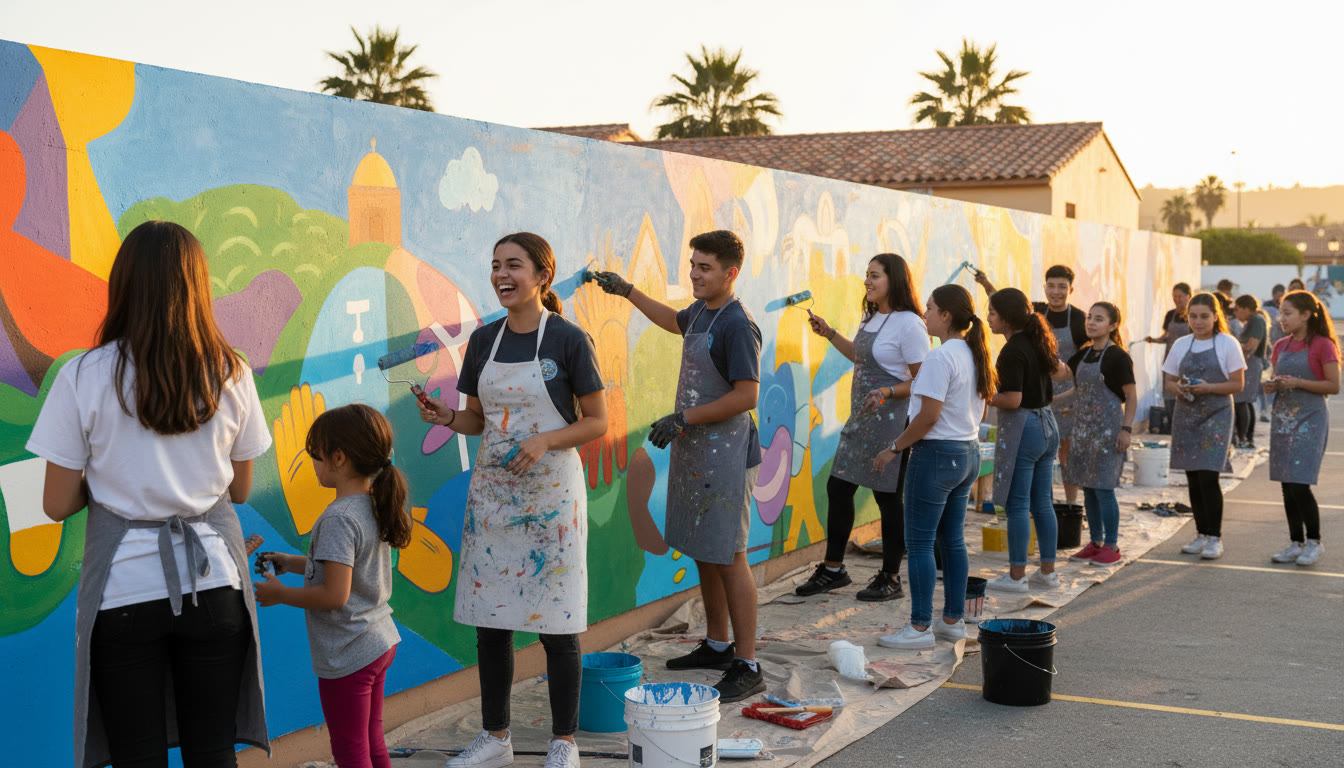
- Community mural co-designed with a senior centre: art workshops teach technique, the mural becomes a permanent community asset, and surveys measure shifts in neighborhood pride.
- Documentary short exploring local food insecurity featuring interviews, a community screening, and resource cards—followed by a how-to kit for future student documentary teams.
- Pop-up street theatre about mental health with facilitated post-show dialogues and partnership with local counsellors for follow-up resources.
- Collaborative zine or graphic anthology co-created with refugee youth, distributed in schools and community hubs, documenting stories and recommended actions.
- Interactive digital exhibition documenting neighborhood biodiversity with photographs, geotagged stories, and a downloadable habitat-restoration guide.
Designing an arts-for-impact project that actually shines
A standout project starts with clear purpose and a realistic plan. The creativity of your idea is important, but the clarity of your objectives and the logic of your methods are what make assessors and portfolio reviewers pay attention. Think like a designer: empathize, define, ideate, prototype, implement, evaluate.
Step-by-step project blueprint
- Begin with community listening: Hold short conversations, surveys, or workshops to identify genuine needs rather than assuming them.
- Define measurable goals: What will success look like? Increased attendance at workshops, a specific number of participants trained, or a set of materials distributed?
- Map stakeholders and partners: Local organizations, schools, galleries, community leaders, and your DP coordinator are allies—list roles and responsibilities early.
- Prototype and pilot: Run a small session or pop-up to test assumptions and gather quick feedback before scaling.
- Plan documentation: Decide how you will capture evidence from day one—photos, short videos, participant testimonials, reflective journals, data logs.
- Build reflection into the timeline: Schedule dedicated reflection slots that will feed into your CAS learning outcomes and portfolio narrative.
Where tutoring and mentoring fit—using guided support well
Outside guidance can be catalytic: a mentor who knows arts facilitation, project evaluation, or research methods can sharpen your plan. If tailored support is useful, a short, focused mentoring session for project design or reflective practice can improve outcomes quickly. For example, a one-on-one review of your evaluation metrics, or help developing strong reflective prompts, can turn scattered evidence into a coherent portfolio narrative. For students seeking such support, Sparkl‘s tutors offer targeted feedback on project plans and reflective writing, including tailored study plans and AI-driven insights where appropriate.
Sample project timeline (compact view)
| Phase | Timeframe | Key actions | Tangible outputs | Learning outcomes |
|---|---|---|---|---|
| Research & Listening | Weeks 1–2 | Stakeholder meetings, needs survey, site visit | Survey summary, stakeholder map | Empathy, community awareness |
| Design & Prototype | Weeks 3–5 | Workshop pilots, materials list, risk assessment | Prototype session video, feedback forms | Planning, adaptability |
| Implementation | Weeks 6–12 | Deliver workshops, create final artwork | Mural/film/exhibition, participation logs | Collaboration, communication |
| Presentation & Sharing | Week 13 | Public showing, community event, distribution | Event attendance data, press/photos | Engagement, outreach |
| Reflection & Evaluation | Weeks 14–16 | Surveys, reflective essays, lessons learned | Compiled portfolio, final reflection | Critical thinking, ethical reasoning |
Measuring impact: outputs versus outcomes
A common pitfall is celebrating outputs without analyzing outcomes. An output is something you produce (a mural, exhibition, zine). An outcome is the change that follows (greater community awareness, increased participation in local arts programs, or the formation of a new youth collective). For your CAS evidence, show both.
Quick metrics checklist
- Quantitative: number of participants, workshops run, items distributed, event attendance, social media engagement (if relevant).
- Qualitative: participant quotations, facilitator observations, testimonials, before-and-after narratives, photographs showing change.
- Process indicators: number of rehearsal hours, planning meetings, hours of community consultation.
- Longer-term markers: whether a project trained local volunteers to continue work, or whether a policy brief sparked a school conversation.
Sample metric table
| Metric type | Example | Why it matters |
|---|---|---|
| Participation | 120 workshop attendees over 6 sessions | Shows reach and community interest |
| Engagement | 75% completion of follow-up surveys | Indicates sustained engagement |
| Output | Community mural installed on library wall | Visible, lasting artifact of the project |
| Outcome | Local youth art group formed and meets monthly | Sustained social change beyond the project |
Documenting evidence: what makes a portfolio convincing
Think of your portfolio as a storybook of the project: process, people, pivot points, and proof. That story needs strong artifacts and reflective commentary that ties evidence to learning. Keep the documentation tidy, dated, and organised so a reader can follow the arc from need to outcome.
Essential documentation items
- High-quality photos and short videos showing workshops and final outputs.
- Participant testimonials and partner letters (signed, dated statements are best).
- Short process journal entries or blog posts that highlight decisions, challenges, and adjustments.
- Event attendance logs, survey summaries, and measurable indicators.
- Final reflective piece that explicitly links activities to CAS learning outcomes and IB learner profile attributes.
Tips for presentation
- Use captions: one sentence per photo that explains who, what, when, and why it matters.
- Chronological order helps the reader understand progression; thematic order works when presenting a multifaceted program.
- Compress long videos into short highlight reels (60–90 seconds) for assessors and university reviewers.
- Store documents in PDF for static artifacts and use accessible platforms for multimedia—always keep backups.
How tutoring can help polishing evidence
Polished reflective writing and coherent evidence selection are skills worth investing in. A focused tutoring session can help you turn raw material into persuasive narrative—selecting quotes, tightening reflections, and aligning discussions with CAS learning outcomes. For structured support on reflection and portfolio editing, consider a session with Sparkl, whose tutors can provide one-on-one guidance and help craft a strong academic voice.
Reflection: the part that elevates learning
Reflection is the bridge between doing and learning. A descriptive account of what happened is useful, but critical reflection—where you examine your choices, consider ethical implications, weigh alternatives, and connect the experience to broader learning—is what examiners and universities admire.
Reflection prompts that produce depth
- What assumptions did you bring, and how were they challenged?
- Which moments made you reconsider the project goals and why?
- How did the community respond differently than you expected?
- What skills did you develop that extend beyond the artistic (e.g., negotiation, cultural sensitivity, data interpretation)?
- If you were to repeat the project, what would you change and why?
Sample reflective paragraph (model)
“Running the community zine project taught me that intention is not the same as impact. I initially assumed workshops would be enough to surface stories, but participants needed more trust-building before they shared deeply. I adjusted by adding listening circles before creative sessions, which produced richer material and increased participation. Through this, I learned practical facilitation skills and how cultural context influences narrative ownership—lessons that transformed my role from director to collaborator.”
Leadership, collaboration, and roles that stand out
A strong arts-for-impact initiative showcases not just creativity but also leadership and ethical collaboration. When you describe your role, be precise about decisions you made, obstacles you managed, and how you distributed responsibilities.
Roles students can highlight
- Project lead—responsible for coordination and stakeholder communication.
- Artistic director—curates content and ensures artistic quality and relevance.
- Community liaison—builds trust and coordinates volunteers or partner organisations.
- Evaluation lead—designs surveys and compiles outcome data.
- Documentation lead—manages photos, videos, and the final portfolio.
Concrete leadership evidence
Show minutes from meetings you led, emails arranging partnerships, a short log of decisions and their impacts, or a timeline marking when key challenges were resolved. These demonstrate agency and accountability.
Sustainability and legacy: how to leave work that lasts
Projects that end cleanly with a handover plan or community ownership tell a stronger story than one-off events. Think about maintenance, training for local volunteers, digital archiving, and resources that allow replication.
Practical legacy options
- Train-the-trainer sessions that equip local volunteers to continue workshops.
- Open-source resource packs (lesson plans, templates, contact lists) distributed to schools and community groups.
- Digital archives with clear usage rights so materials remain accessible.
- Small steering committees including community representatives to oversee long-term use of outputs.
Putting it together: a checklist for a portfolio that stands out
- Clear project statement: purpose, stakeholders, and intended impact.
- Documented timeline with dates, not just vague phases.
- Evidence bank: photos, videos, testimonials, attendance logs, and public artifacts.
- Quantitative and qualitative metrics showing reach and change.
- Critical reflection linking activities to CAS learning outcomes and the IB learner profile.
- Proof of leadership: meeting notes, role descriptions, or emails that show initiative.
- Sustainability plan demonstrating how the project will continue or be handed over.
Final academic conclusion
Arts-for-impact initiatives in the IB Diploma Programme combine creative practice with civic responsibility; when carefully planned, documented, and reflected upon, they produce strong CAS evidence and meaningful portfolio artifacts. By grounding a project in community listening, defining clear outcomes, collecting robust evidence, and writing critical reflections that connect process to learning, students can demonstrate both artistic growth and ethical engagement—two pillars of the IB learner profile.





















No Comments
Leave a comment Cancel