
Why “randomness” sneaks into IB DP gap years — and why it matters
When IB students talk about a gap year, the word often carries a shrug. A break sounds appealing: time off after two intense DP years, space to breathe, travel, or earn money. But that shrug can become a risk. A gap year left unscripted can easily read as “random” to admissions officers, scholarship panels, and even to your own future self when you return to study or work. The good news is that avoiding randomness doesn’t require a rigid schedule or a Hollywood-level plan. It simply requires an honest map: what you want to learn, how you’ll prove it, and how the time will move you closer to the majors, careers, and life you imagine.

What we mean by “randomness” (and why it’s a problem)
Randomness in a gap year usually looks like a sequence of disconnected activities without a clear through-line: a few weeks of casual volunteering, a seasonal job, some travel, and a handful of short online classes with no later reflection or outcome. That’s not inherently bad — variety can teach a lot — but when those pieces don’t add up to skills, evidence, or a story, they can leave you back where you started: with experiences you enjoyed but can’t clearly use in applications, interviews, or career-strengthening portfolios.
For IB DP students who often need to translate interdisciplinary skills into university-level choices, a random gap year can create three main problems:
- Admissions ambiguity: activities that aren’t connected to a theme or demonstrable learning are harder to present in personal statements and interviews.
- Skill drift: months without intentional academic or skill practice can blunt momentum on complex subjects, especially if you’re moving toward a technical major.
- Lost evidence: undocumented projects, casual tasks, or unassessed learning make it difficult to show outcomes to universities or employers.
Start with clarity: define purpose before you pick activities
Before booking flights or signing up for every tempting opportunity, answer three simple questions. These are deliberately broad — you don’t need a final decision about your major, only a direction that gives the year meaning.
- What is the primary aim of my gap year? (explore majors, gain practical skills, strengthen applications, recover mentally, earn funds)
- Which two or three outcomes would make this year feel successful? (e.g., produce a research report, earn certification, build a portfolio, complete a language level, save a set amount)
- How will I document and show what I learned? (portfolio, blog/journal, certificates, supervisor reference, recordings)
These questions force you to move from activities to outcomes. Instead of collecting experiences like souvenirs, you start collecting evidence that can be translated into application language and real-life decisions.
Quick framing tool: purpose + proof + pacing
Use this short formula to check every idea: Purpose (why this activity?) + Proof (how will I show I learned?) + Pacing (how long and how intense will it be?). If any item doesn’t satisfy all three, refine the idea.
Designing an intentional gap year map
Think of your gap year as a series of tiles you’ll lay to create a path. Each tile should connect to at least one of your aims. Start by auditing what you already have — subject strengths from the DP, hobbies, contacts, language levels, and resources. Then choose 3–5 tiles that together form a coherent picture.
Tile examples and what they buy you
- Structured internship or research placement — subject-specific experience, references, demonstrable projects.
- Accredited short course (college credit or certificate) — formal proof of academic progress and subject commitment.
- Language intensive program — measurable skill gain for global majors and intercultural evidence.
- Directed volunteering with deliverables — social impact plus references and real responsibilities.
- Independent project or portfolio — creative work or research you control and can present.
- Part-time work combined with reflection — shows work ethic and lets you save while learning soft skills; pair with documented learning to avoid randomness.
Scheduling for balance
Mix shorter, high-impact tiles with at least one longer commitment. For example, a three-month internship plus an independent research project or a language course followed by practical volunteering. Keep at least one slot for reflection and consolidation — writing, portfolio-building, or coursework that turns experience into evidence for applications.
Activities that add intentional value (and how to make them count)
Not all valuable activities are glamorous. The difference between random and strategic is documentation and depth. Below are activity types with practical notes on how to turn them into strong application material.
| Activity | Best for (Majors / Goals) | Skills & Evidence | How to structure it |
|---|---|---|---|
| Research placement / lab internship | Sciences, Engineering, Psychology | Protocols, dataset, supervisor reference, short report | Agree on deliverables, keep a lab notebook, write a 1,500–3,000 word summary |
| Independent project / portfolio | Arts, Design, Computer Science, Humanities | Portfolio pieces, GitHub repo, reflective statement | Set milestones, document process with photos/videos, publish an online showcase |
| Accredited online or college course | All majors (especially when academic gap needs addressing) | Certificate, graded assessment, credit transfer potential | Choose courses with assessed outputs, save transcripts and syllabi |
| Language immersion | International relations, Languages, Business | Language certificate, recorded speaking test, cultural competence | Regular testing, tutor feedback, real-world usage log |
| Structured volunteering | Social sciences, Education, Public Health | Supervisor references, documented projects, measurable outcomes | Seek roles with responsibilities, set quantifiable goals |
Turning casual experiences into credible evidence
If you take a job or do travel, add a learning element: a short project, a reflective portfolio, or a mini-research question you answer by the end. For example, if you work in a hostel, commit to a customer-satisfaction mini-study or create a guidebook that demonstrates organisation, language, and research skills.
Concrete examples: brief student vignettes
Short, real-feeling vignettes help make abstract ideas concrete. These are fictional but realistic scenarios based on common IB DP pathways.
Vignette 1 — Science-focused student aiming for a research major
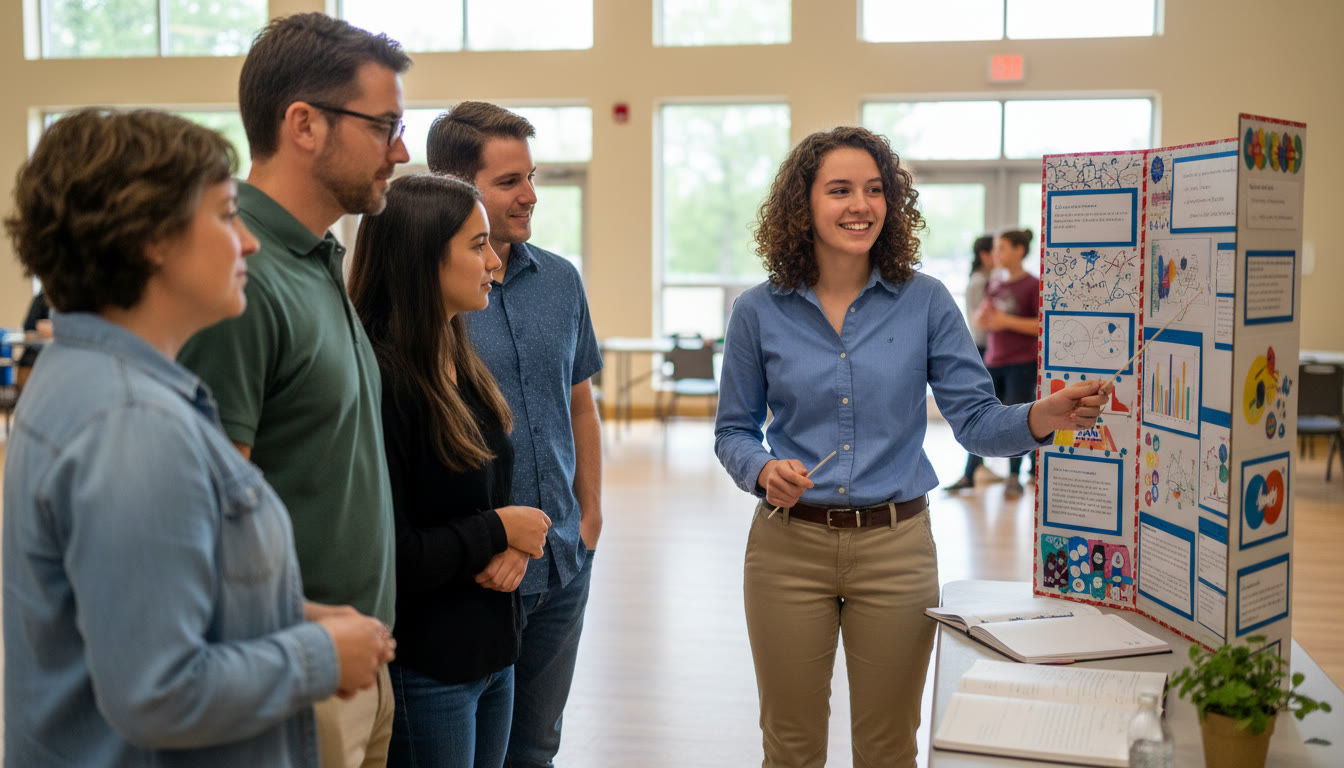
Sam is leaning toward a biomedical degree but isn’t sure whether research is the right fit. Instead of open-ended travel, Sam secures a lab placement at a university research group for three months, volunteers at a local health clinic to understand patient contexts for another three months, and spends the final trimester writing a concise research summary and presenting it to a mentor. Sam collects a supervisor reference, a short written report, and a poster-style summary that becomes part of the university application portfolio.
Vignette 2 — Arts student building a portfolio
Aisha wants to apply for visual arts. She spends the gap year doing a mix of local community mural work, an online painting techniques course with graded outputs, and an independent illustrated zine project. She documents process with dated photos and reflective notes, creating a portfolio that shows growth, commitment, and a clear creative arc rather than random one-off pieces.
Vignette 3 — Student exploring social sciences and languages
Diego is curious about international development. He pairs a short language-immersion program with a placement at an NGO where he helps design a small community-survey and analyze data. He saves the survey instruments, cleaned data, and writes a summary of findings with a supervisor’s comment. The package shows practical research skills and cultural competence.
Working with your IB counsellor and building a narrative
Your IB school counsellor is a key collaborator. Share your purpose + proof + pacing map early so they can advise on predicted grades, references, and how to frame your gap year in university documents. A well-prepared reference that connects your gap-year outcomes to academic or career intent makes a huge difference.
How to shape your personal statement or interview narrative
Admissions are drawn to stories that show growth and learning. Structure your narrative like a mini-research project:
- Question or motivation (what you wanted to explore)
- Method (what you actually did)
- Evidence (results, outputs, references)
- Reflection (how it shaped your academic or career thinking)
This order turns activities into arguments. Rather than listing what you did, you explain why it mattered and how it prepares you for the next step.
Practical matters: money, safety, and paperwork
Intentional gap years still need practical scaffolding. Consider these logistics early:
- Budgeting and savings targets with realistic contingency planning.
- Health, insurance, and safeguarding checks for placements and travel.
- Visas, course enrollment deadlines, and whether placements provide formal letters.
- Academic prerequisites or test schedules you may need to maintain (keep a study plan if you’ll prepare for any entrance tests).
A clear, documented plan makes it easier to pause or extend activities without losing evidence or direction. Even a simple shared calendar with milestones helps you and your counsellor track progress.
Tools and supports that help turn intention into impact
Two practical support types are especially useful: mentoring/tutoring for academic continuity and platforms that help structure projects and portfolios. Tutors and mentors can keep subject skills sharp and help you convert experiences into strong application language. If you choose to work with tutors or structured online guidance, look for those that emphasise 1-on-1 guidance, tailored study plans, expert tutors, and ways to capture your learning — not just generic lessons.
For example, Sparkl‘s personalised approach to tutoring can help you maintain academic momentum during a gap year: tailored study plans for DP subjects you want to keep fresh, expert tutors who can help you craft reflective statements, and AI-driven insights that point to gaps to address before applications. When a gap year includes targeted academic maintenance, it doesn’t feel like a break from progress — it becomes part of it.
Documentation checklist: what to save
Keep a digital folder (and a backup) with the following. This record is the raw material for references, statements and portfolios.
- Signed supervisor references and contact details
- Formal certificates and transcripts
- Time-stamped photos, videos, and process notes for projects
- Written reflections (500–1,000 words each after major milestones)
- Work samples: reports, code, designs, recorded presentations, or any assessed output
Measuring success and staying flexible
Set a few measurable checkpoints: skill levels (language CEFR, coding project milestones), saved funds, number of portfolio pieces, or delivery of a research summary. Review every 6–8 weeks and be ready to adjust. If an activity isn’t producing proof or satisfaction, stop it and reallocate energy to something more productive.
Flexibility is not randomness if it’s governed by periodic review against your stated aims. If you expected a research placement but found a community project more meaningful, document why the pivot was made and what you learned. Admissions panels value thoughtful course corrections almost as much as original plans.
Final practical checklist for the intentional IB DP gap year
- Decide your primary aim and two measurable outcomes.
- Choose 3–5 complementary tiles (internship, course, project, language, work) that map to those outcomes.
- For every tile, write a one-paragraph Purpose + Proof + Pacing statement.
- Arrange supervision or mentoring where possible and agree deliverables up front.
- Keep a dated evidence folder and write short reflections after each milestone.
- Meet your school counsellor regularly to align references and predicted outcomes.
Closing academic note
A gap year can be a strategic bridge — not a detour — when you design it with purpose, proof and pacing. For IB DP students, that means converting the interdisciplinary habits you already have into clear outcomes that support your choice of major, enrich your applications, and deepen your readiness for university-level work. A few months of intentional activity, clearly documented and reflected upon, will speak much louder than an extended list of pleasant but disconnected experiences. Plan with curiosity, measure your learning, and make sure every part of your year can be spoken for in the language of evidence and growth.


























No Comments
Leave a comment Cancel