
Can You Crack IIT in 2 Years? The Short, Honest Answer
Yes — it is absolutely possible to reach an IIT-level rank in a two-year window, but the qualifier is important: possible doesn’t mean easy, and it doesn’t mean one-size-fits-all. Two years give you enough runway to build concepts, practice intensively, and polish test-taking habits — provided your plan is focused, adaptable, and consistent. This article lays out a realistic, step-by-step strategy you can follow, with subject-wise tactics, a phase-wise timeline, mock-test discipline (including the crucial 3-hour full-length mock practice), and how targeted help like Sparkl‘s personalized tutoring can slot into your routine when you need it.

What “Two Years” Really Means
Two years is a compact but strategic timeframe. Think in phases rather than just “two long years.” The typical breakdown that works for many aspirants is: build foundation, expand and practice, consolidate and intensify, then sprint and polish. Each phase has clear milestones: master fundamentals, solve a wide variety of problems, take realistic mocks, and refine exam-day technique.
When you start, do a frank baseline assessment: how comfortable are you with Class 11 and Class 12 PCM (Physics, Chemistry, Mathematics) concepts? Can you solve standard problems in each topic? This baseline helps you choose realistic weekly targets and the right intensity for the rest of the plan.
Mindset: Consistency Beats Occasional Intensity
Two years reward steady, deliberate practice. Short bursts of hyper-studying are less effective than steady daily progress with periodic, focused revision. Aim for a rhythm you can sustain: growth compounds with small daily wins.
Core Principles That Drive Success
These are the non-glamorous rules that separate aspirants who improve from those who drift:
- Concept first: speed comes from understanding, not shortcuts.
- Practice deliberately: solve with a purpose—identify weak points and attack them.
- Test realistically: consistent 3-hour full-length mock practice conditions your stamina and strategy.
- Review ruthlessly: every wrong problem needs an error log and a plan to fix that gap.
- Balance breadth and depth: don’t rush the entire syllabus once; deepen where the payoff is highest for your rank goal.
MCQ Mindset, Negative Marking, and OMR Discipline
Modern JEE-style exams are MCQ-driven and timed. That means you need more than knowledge — you need tactics. There is negative marking for incorrect MCQs, so accuracy matters almost as much as speed. In many cycles the penalty structure translates to a fractional deduction for wrong attempts (for example, a common scheme penalizes roughly one-fourth of the marks allocated to a correct MCQ), so guessing without reason is costly. Practice elimination and intelligent guessing only when the probability of being correct justifies the risk.
OMR discipline is often overlooked. On exam day, small administrative mistakes (mis-bubbling, mis-entering roll number, or failing to follow proctor instructions) can be disastrous. Simulate the exact OMR/online interface rhythm during mock exams: learn to transfer answers calmly, double-check bubbles, and manage time so you don’t rush the final 15 minutes and make avoidable errors.
Phase-by-Phase Two-Year Roadmap
Below is a compact, actionable phase plan. Think months rather than academic years and adapt the pace to your baseline.
| Phase | Duration | Primary Focus | Weekly Mock/Tests | Expected Outcome |
|---|---|---|---|---|
| Phase 1: Foundation | Months 1–6 | Clear basic concepts in PCM, finish core syllabus of foundational chapters. | 1–2 short tests; diagnostic at start & end. | Strong conceptual grip; baseline improvement. |
| Phase 2: Build & Apply | Months 7–12 | Deeper practice, medium-level problems, begin topic-wise mock sets. | 2–3 sectional tests; one 3-hour mock every 2–3 weeks. | Problem-solving routine established; speed improving. |
| Phase 3: Consolidation | Months 13–18 | Complete advanced problems, prior-year practice, time-bound full mocks. | Weekly 3-hour full-length mock; daily short practice. | Exam temperament ready; error log shrinking. |
| Phase 4: Polish & Sprint | Months 19–24 | Revision cycles, focused weak-area correction, frequent realistic mocks. | 2–3 full mocks per week in final weeks; timed sectional drills. | Peak performance window; confident time management. |
How To Pace Each Week
Consistency is a product of a reasonable weekly plan. A sample template:
- Weekdays: 4–6 focused study blocks (45–60 minutes each) mixing theory and problem practice.
- Weekends: longer practice sessions (4–6 hours) and an extended problem set/simulated test.
- Reserve one session per week for review of the error log and targeted revision of weak topics.
Subject-wise Strategy: Where to Invest Your Two Years
Each subject needs a slightly different approach. Below are targeted tactics that work in a two-year frame.
Physics — Build Physical Intuition + Practice Numericals
- Start with fundamentals: kinematics, forces, energy, electrostatics — prioritize understanding the governing laws, not memorizing formulae.
- Derive key formulas by hand at least once; that creates a conceptual map you can recall under pressure.
- Practice a spectrum of problems: easy conceptual checks, standard medium-level, and a set of challenging application problems.
- Use diagrams liberally — they are thinking tools. Treat derivations and diagrams as learning tools, not something the exam requires you to reproduce verbatim.
Chemistry — Systematic Coverage and Smart Memorization
- Physical Chemistry: practice numeric problems often; units and dimensional checks will save time in calculations.
- Organic Chemistry: learn reaction mechanisms as patterns; practice transforming one functional group to another through multi-step problems.
- Inorganic Chemistry: build a revision-friendly memory structure — group theory, periodic trends, and simple naming conventions. Frequent quick recalls beat last-minute cramming.
- Keep reaction tables, standard reagents, and exceptions in a compact sheet for periodic revision.
Mathematics — Problem Patterns, Not Blind Drilling
- Master core techniques (calculus, algebraic manipulation, coordinate geometry, trigonometry) and then practice application patterns repeatedly.
- Create a formula bank but understand derivations — knowing when a formula applies is more important than rote recall.
- Solve by topic until you can finish standard topic sets without help, then move to mixed-problem sets to simulate exam unpredictability.
Daily Habits, Notes, and the Error Log
Small daily habits compound. Focus on three pillars:
- Active recall: close notes and attempt to reproduce key ideas or problem steps from memory.
- Spaced repetition: revisit topics at increasing intervals so they move to long-term memory.
- Error log: maintain a running list of mistakes. For each entry record the question, the nature of the mistake (conceptual, calculation, silly), and a corrective action.
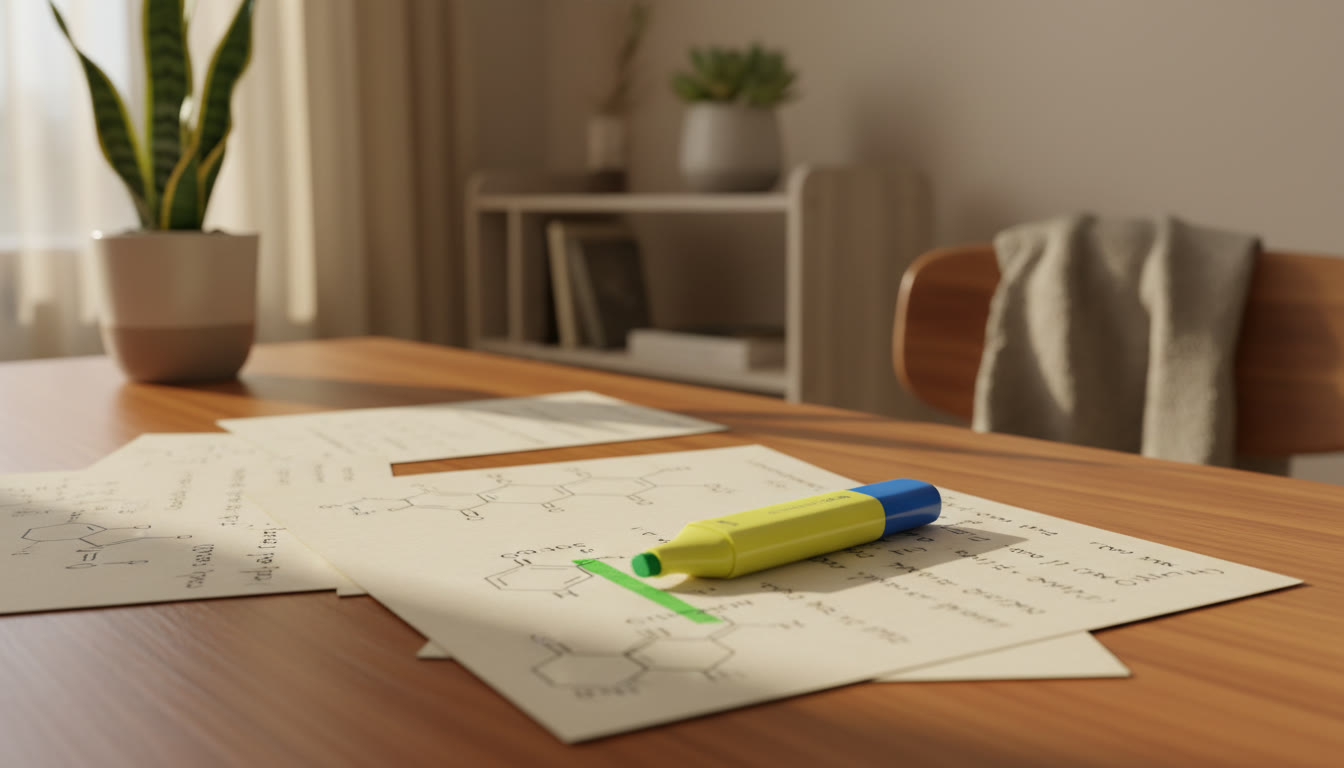
Notes should be concise, mobile, and usable in quick revision sessions. Use colored markers or tags for topics by priority: green for mastered, amber for shaky, red for must-fix.
Mock Tests: The Non-Negotiable Ingredient
Mocks are your exam laboratory. Every two-year plan must treat them as experiments you analyze and iterate on:
- Start with diagnostic mocks to set baselines.
- As you progress, schedule regular weekly or bi-weekly full-length tests that mimic the 3-hour format exactly. This builds stamina and time-slicing instincts.
- Post-mock analysis is where real gains happen: identify the types of errors, recreate the thought process for each wrong answer, and add those to your error log.
- Practice the OMR or online interface transfer frequently so it becomes automatic — the final 10 minutes should be for sanity checks, not for frantic bubbling.
Time Management and Attempt Strategy on Exam Day
Practice different attempt strategies (section-wise, topic-wise, balanced) during mocks and track which yields the best score and least negative marking for you. Common principles that work:
- Start with questions you can solve confidently to build momentum.
- Use the art of elimination on MCQs — cross out impossible choices first.
- Reserve time for review: mark uncertain questions, and cycle back to them with a calm mind; avoid random guessing unless the chances are reasonable.
Remember: do not assume descriptive partial marking. These exams reward correct answers to the set formats (MCQs or numerical answer types) and rarely give partial credit for written derivations in the computer-based testing environment.
Practice Resources and When to Get Help
Two years is long enough to improve drastically on your own, but targeted help can accelerate progress if used wisely. Personalized, one-on-one guidance can help when your error log shows persistent conceptual gaps, or when you need a tailored study plan to align with your strengths and weaknesses.
If you opt for targeted support, look for these benefits: 1-on-1 guidance to clarify sticking points, tailored study plans that fit your weekly rhythm, experienced tutors who track improvement, and tools that provide actionable analytics — for example, AI-driven insights that identify weak subtopics and suggest precise practice. Sparkl‘s personalized tutoring and benefits such as 1-on-1 guidance, tailored study plans, expert tutors, and AI-driven insights can fit naturally into a two-year plan when you need that focused push.
Common Mistakes Two-Year Aspirants Make
- Studying in silos: focusing on a single subject for too long without mixing practice.
- Ignoring mocks: treating them as optional rather than central to your strategy.
- Memorization without understanding: this collapses under tricky MCQs that test application.
- Neglecting OMR practice: small administrative mistakes are avoidable but costly.
- Overloading new topics in the final months: final months are for consolidation, not for trying to learn large new chunks.
Sample Week and Time Allocation
A balanced week mixes learning, practice, revision, and mock assessment. The table below shows an illustrative allocation you can adapt to your schedule and stamina.
| Session | Duration | Focus |
|---|---|---|
| Morning (deep work) | 2–3 hours | New concept study or difficult problem practice |
| Afternoon | 1.5–2 hours | Topic practice + numerical problems |
| Evening | 1.5–2 hours | Revision, flashcards, quick tests |
| Weekend | 4–8 hours | Full mock (3-hour) or extended problem sets and analysis |
How to Track Progress Without Getting Demotivated
Two-year plans will have plateaus. Track small wins: reductions in silly mistakes, faster solves for standard templates, cleaner derivations, and consistent mock-score improvements. Use rolling metrics — a moving average of your last 5 full mocks is a better indicator than a single test. Celebrate procedural wins (cleaner OMR practice, reduced time per problem type) as much as score jumps.
When You Should Re-evaluate the Plan
Be honest at midpoints. If after a few months your mock trends plateau, change one major element: seek targeted tutoring for persistent gaps, restructure daily hours, or shift practice from solitary problem-solving to timed mixed questions. Two years is flexible — iteration is part of the process.
Final Academic Note
Cracking an IIT exam in two years is a realistic objective when you combine conceptual clarity in Physics, Chemistry, and Mathematics with disciplined, exam-focused practice: frequent 3-hour full-length mock practice, strict OMR/online test discipline, intelligent handling of negative marking, and a structured phase-wise roadmap that alternates learning and consolidation. Build a durable habit system—daily focused blocks, a rigorous error log, and periodic full mocks—and adjust the details to your baseline and pace. With consistent execution, targeted analysis, and precise corrective action, a two-year plan can transform potential into performance.





















No Comments
Leave a comment Cancel