

How to Score 99 Percentile in JEE Main: Complete Guide for the Upcoming Cycle
There’s a little moment of wonder when you realise that 99 percentile is not a mythical number reserved for “geniuses” — it’s a goal you can reach with smart planning, focused practice, and the right habits. This guide walks you through the mindset, daily routines, subject-by-subject tactics, and exam-room discipline that create consistent high performers. I’ll keep this practical: checklists you can use, a mock-test rhythm that mirrors the real exam, and study templates you can adapt to your life.

Start with the Right Mindset: Precision > Hours
Scoring 99 percentile is less about burning out and more about studying with surgical precision. Replace the idea of “more hours” with “higher-value hours.” That means deliberate practice (actively solving problems), timely review of mistakes, and structured mock tests. Think of your study time as a set of high-leverage moves: concept clarity, targeted problem-solving, timed mocks, and smart revision.
What 99 Percentile Really Means
Percentile ranks are comparative: they show how you performed relative to everyone else in the same exam session. Because JEE Main is administered across sessions and difficulty varies, aiming for a high percentile is about maximizing net score, minimizing careless errors, and performing consistently across mocks and test windows.
Targets — realistic, not magical
Instead of focusing solely on a fixed mark, set process targets you control:
- Daily concept mastery targets (topics fully understood, not just skimmed).
- Weekly mock and review goals (simulate the full 3-hour test and spend equal time on analysis).
- Accuracy benchmarks (raise net accuracy steadily; fewer careless slips than the competition).
Blueprint: Four Pillars of a 99-Percentile Strategy
Everything you do should map to one of these pillars. Revisit them often and measure your progress against them.
- Concept Clarity: Depth over breadth. Understand why methods work.
- Speed & Problem Selection: Recognize question types fast and choose what to attempt.
- Accuracy & Negative Marking Discipline: Avoid blind guessing; use elimination.
- Mock-Test Mastery: Simulate the exam, review errors, and build endurance.
Why Mock Tests Matter (The 3-hour rule)
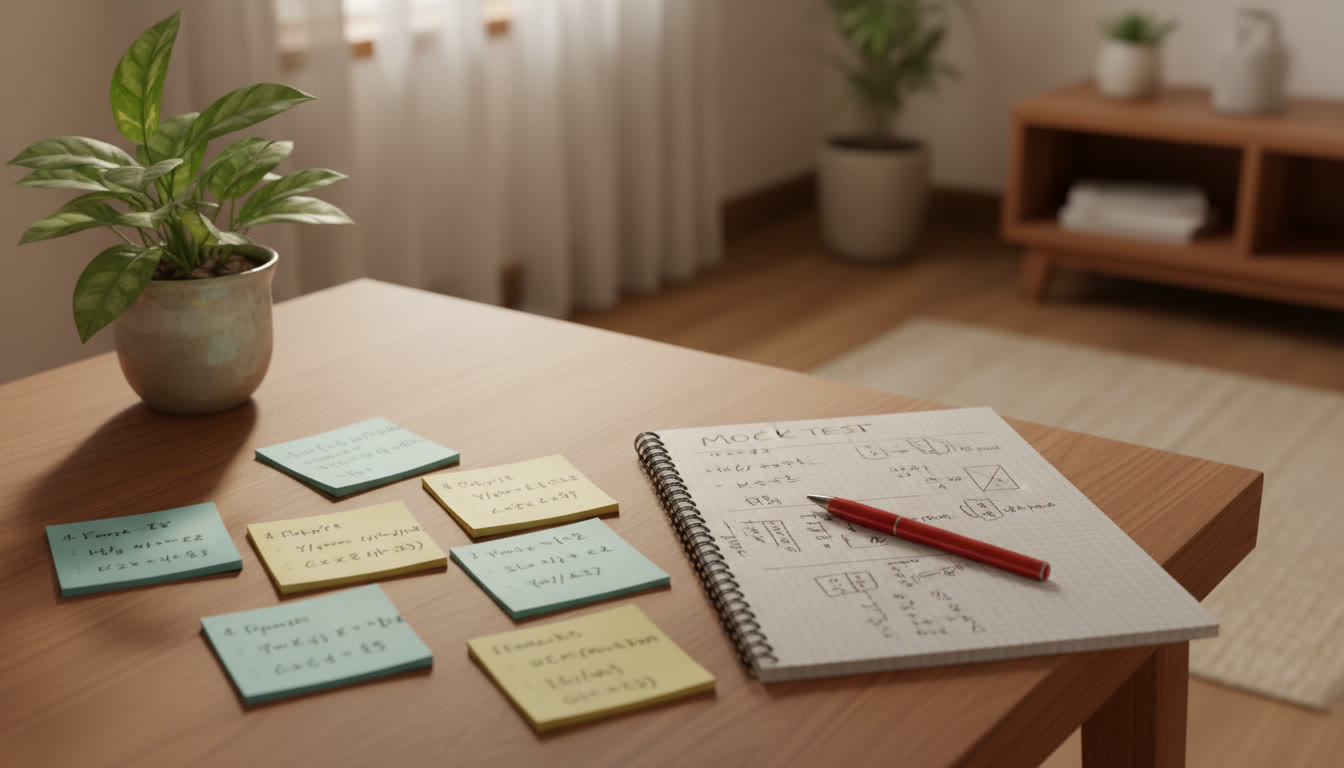
Full-length, timed mocks are non-negotiable. Practicing for three straight hours builds concentration, reveals stamina gaps, and teaches you pacing. Use every mock as a laboratory: record your time spent on each question category, list conceptual gaps, and write one clear action point after each review (for example: “revise projectile motion derivation” or “practice organic reaction mapping”).
Study Architecture: A Practical Weekly & Monthly Plan
Consistency beats cramming. Below is an adaptable 12-week framework for the final stretch: mix new learning with revision and regular mocks. Adjust hours to suit your schedule, but protect the mock-test slots.
| Week | Focus | Mock Routine | Practice Hours (per week) |
|---|---|---|---|
| 1–2 | Finish core topics; identify weak chapters | 1 full mock, detailed review | 20–30 |
| 3–4 | Strengthen weak topics; targeted problem sets | 1 full mock + 2 sectional timed tests | 22–30 |
| 5–6 | Advanced problem solving; concept consolidation | 2 full mocks, review & revision lists | 24–32 |
| 7–8 | Speed work and mixed practice | 2 full mocks + daily 60–90 min practice | 26–34 |
| 9–10 | Polish and reduce careless errors | 2–3 full mocks; focus on time management | 20–28 |
| 11–12 | Revision, light practice, confidence building | Final mocks at test pace; no heavy new topics | 15–22 |
How to Review a Mock — the only way that works
After each mock, spend at least as much time reviewing as you spent taking it. Use this checklist:
- Classify errors: careless, concept, application, or time-management.
- For each concept error, write a short note and solve 3 similar problems immediately.
- Maintain a “Revision Mistake Bank” — a short, annotated list you cycle through weekly.
Subject-Wise Playbook
Physics
Physics rewards physics thinking. It’s often about applying a few principles in unfamiliar setups. Prioritise:
- Master core laws and their physical meaning (don’t memorize blind formulas).
- Practice varied numerical problems to develop pattern recognition.
- Focus on units and dimensional checks — they catch setup errors fast.
When a question looks long, try to identify the central principle in the first 60 seconds — often that reveals the path to the solution.
Chemistry
Chemistry is three styles in one: physical (numerical), organic (pattern recognition), and inorganic (retention plus understanding). Tactics:
- Physical: solve numerical sets until methods feel automatic.
- Organic: focus on reaction mechanisms and typical transformations — build reaction families, not isolated facts.
- Inorganic: group-based learning, visual mind-maps, and periodic trends make memorisation efficient.
Mathematics
Maths demands practice and technique. Concentrate on:
- Foundational topics first — algebra, calculus, coordinate geometry.
- Learn solution templates for common question types, but be able to modify them.
- Time drills: set a 30–45 minute window to solve 5–7 moderate problems under time pressure.
Time & Attempt Strategy: When to Solve, Skip, or Revisit
High scorers are experts at question selection. During the test, follow a clean, repeatable plan:
- First pass (40–60 minutes): Solve low-hanging fruit — questions you can answer quickly and accurately.
- Second pass (next 90–100 minutes): Tackle medium-difficulty problems, using focused time blocks per question.
- Final pass: Attempt hard questions only if time allows and you can eliminate options confidently.
Avoid the sunk-cost trap: spending too long on a single problem early eats time and morale. Use the “two-minute test”: if you can’t see a path in two minutes, mark it for review.
Guessing and Negative Marking
Blind guessing is usually neutral or negative depending on negative marking. Only guess when you can eliminate one or more choices and the probability makes it favorable. A disciplined approach to elimination often converts a risky guess into a calculated chance.
Tools, Notes, and Revision Methods That Work
Quality notes are compact, repeatable, and active. Build three living documents:
- Concept Map: one-page summaries for core topics with formulas and when to use them.
- Mistake Bank: micro-notes of things you got wrong and why.
- Practice Log: record attempts, time taken, and error type for each mock.
Common Pitfalls and How to Fix Them
- Overemphasis on new topics: Rebalance with revision; consolidation beats constant novelty.
- Shallow practice: Solve until a method is habitual—varied contexts are key.
- Poor mock analysis: If you take mocks but never correct the underlying patterns, results won’t improve.
- Ignoring health: Sleep, hydration, and short exercise breaks dramatically improve cognitive endurance.
How Personalised Support Accelerates Progress
At the level of the last 1–3 percentile points, small changes matter: targeted feedback, a curated practice list, and one-to-one coaching on weak topics speed up improvement. For many students, a combination of expert guidance and tailored practice shortens the time it takes to turn weaknesses into scoring strengths. For example, Sparkl‘s personalised tutoring approach pairs focused 1-on-1 sessions with tailored study plans and AI-driven insights so students can track weak topics and measure improvement precisely.
Sample Daily Routine for Peak Performance
This is a template you can adapt to your day. Consistency matters more than perfection.
- Morning (2–3 hours): Concept study — short, deep sessions on one topic each for clarity.
- Midday (1–2 hours): Practice set — apply concepts in timed problem blocks.
- Afternoon (1–1.5 hours): Revision — flashcards, mistake bank, quick concept brush-up.
- Evening (2–3 hours): Mock practice / difficult problem solving and review.
- Night: Light reading or reflection; plan the next day and sleep early enough for recovery.
Tracking Progress: Metrics That Tell the Truth
Use measurable, repeatable metrics rather than vague feelings. Track:
- Net score on full mocks and sectional breakdowns.
- Accuracy percentage (correct answers divided by attempted).
- Average time per question and distribution across easy/medium/hard.
- Number of recurring conceptual errors (from your Mistake Bank).
Every two weeks, review these metrics and pivot your study plan: if accuracy is low, slow down and fix careless errors; if speed is low, add more timed drills.
Exam-Day Logistics & Psychology
The exam is a test of skill and temperament. Prepare the logistics ahead so nothing surprises you:
- Know the CBT interface: practice on the same platform style if possible; practice marking, unmarking, and navigation to build muscle memory.
- Rough sheets are typically provided in a CBT setup — practise solving with a clean layout on scratch paper.
- Rest well the night before; avoid last-minute heavy cramming.
- Use breathing techniques to centre yourself if anxiety rises during the test.
Remember: calm, steady performance beats frantic speed. Your goal is to maximize net correct answers under real conditions.
Example: How to Turn a Weak Topic into Strength in Three Steps
Turn a weak chapter into a scoring area with a small loop you repeat three times:
- Concept Review (30–45 minutes): Clean up the concept notes until you can explain the idea out loud.
- Targeted Practice (1–2 hours): Solve 8–12 problems of increasing complexity and note common traps.
- Immediate Repeat (15–30 minutes): Re-solve 3 problems from memory, then later re-check after a day.
Repeat this loop for the next weak topic. Consistency compounds: small daily wins turn into reliable exam performance.
Final Two Weeks: What to Double Down On
Switch into maintenance mode: no heavy new topics, preserve energy, and sharpen exam rhythm:
- Keep doing full 3-hour mocks with full review.
- Rotate short, high-quality revision sessions from your Concept Map and Mistake Bank.
- Ensure nutrition, sleep, and short physical activity are steady to maintain cognitive sharpness.
If you use personalised help, focus sessions on last-minute conceptual gaps and mock analysis so each hour yields the biggest return. For students who pair focused study with tailored guidance, tools that provide AI-driven insights into weak chapters often help convert small weaknesses into scoring strengths more quickly.
Quick Checklist for the Exam Hall
- Arrive early with required documents and stationery (as permitted).
- Warm up with a calm breathing exercise; avoid last-minute cramming.
- Follow your attempt strategy: first pass for quick wins, second pass for medium problems, last pass for tough questions.
- Don’t get lured into long arguments with tricky questions — mark, move on, and return if time allows.
Closing Thoughts — The Practical Truth
Scoring 99 percentile is the result of deliberate choices: focusing on concept clarity, committing to timed practice that mirrors the actual 3-hour exam, refining accuracy to reduce negative marking losses, and using data from mocks to iteratively improve. Small, steady improvements compound: a handful of fewer careless mistakes per test and a few reorganised hours per week are what move the needle. Build a study architecture that fits your life, measure honestly, and keep the most important rule front and center — practice with purpose.


















No Comments
Leave a comment Cancel