
NCERT vs OP Tandon: Making the Smart Choice for JEE Main Chemistry
If you’ve ever stood in front of your chemistry shelf wondering which book should be opened first, you’re not alone. The NCERT textbooks and the thicker reference books often occupy the same desk, and each seems to whisper a different promise: clarity and syllabus fidelity on one side, depth and practice on the other. This article walks you through a practical, exam-focused way to use both so your time produces marks and confidence—not confusion.

Understand the exam you are preparing for
Before choosing or combining resources, anchor your strategy in how the exam works. The JEE Main testing environment is paced, objective, and unforgiving of unchecked guesses. It relies heavily on multiple-choice and numerical-type questions in a timed, computer-based format, and full-length practice should mirror that: three-hour, focused, uninterrupted sessions that build stamina and time management. Negative marking penalizes incorrect choices in many question types, so precision matters as much as speed. Use this reality to shape how you read theory, practise problems, and schedule mocks.
What NCERT brings to your JEE Chemistry journey
Think of NCERT as the bedrock. It’s concise, aligned with the core senior secondary syllabus, and excellent at making fundamentals crystal clear—especially for inorganic chemistry and fundamental organic concepts. NCERT’s language is usually straightforward, which helps you translate textbook statements into exam-style MCQs.
Strengths of NCERT
- Clear, syllabus-aligned explanations—ideal for initial concept building.
- Compact coverage that saves time when you’re revising under pressure.
- Many JEE Main questions test facts or concepts explained directly in NCERT; tight notes here are high-yield.
- Good for memorization-driven topics (inorganic tables, oxidation states, simple reaction sequences).
Best way to use NCERT
- Read every chapter linearly at least once. Don’t skip examples; they often hide the logic used in MCQs.
- Annotate: highlight definitions, key reactions, and important conditions (heat, catalysts, solvents).
- Rewrite inorganic tables and periodic trends into one-page cheat-sheets for quick revisions.
- Solve NCERT exercises fully and make a short error log—this is your first-filter practice set.
What OP Tandon offers and why students reach for it
The thicker reference books are designed for depth. They usually contain extended theory, worked examples, and a much larger bank of practice problems with varying difficulty. If NCERT builds the foundation, a good reference text expands the house: richer problem types, tricky twists, and more numerical practice.
Strengths of a comprehensive reference book
- Large number of practice problems across difficulty levels—perfect for building problem-solving speed and flexibility.
- Deeper theoretical discussions that make you comfortable with multi-step reasoning and mechanism-based questions.
- Helpful solved examples demonstrating step-by-step approaches, especially in physical chemistry numericals and organic mechanisms.
- Useful when you’ve cleared basics and need systematic practice to push accuracy under time pressure.
How to use a reference book without getting lost in it
- Only pick topics for the reference book once NCERT basics are secure—otherwise you’ll build confusion, not clarity.
- Use the reference book selectively: choose 2–3 representative problems of each new type rather than solving every single one.
- When you solve a challenging problem, force yourself to summarize the core trick in one sentence—this turns practice into reusable strategy.
Side-by-side comparison (at a glance)
| Aspect | NCERT | Reference Book (dense problem bank) |
|---|---|---|
| Primary purpose | Clear concept delivery and syllabus coverage | Practice variety and deeper theory |
| Best for | Inorganic facts, core concepts, quick revisions | Organic mechanisms, physical numericals, advanced MCQs |
| When to use | First pass and last-minute review | Second pass and targeted problem practice |
| Exam alignment | High for direct-concept MCQs and fact recall | High for tricky application-type MCQs and time-pressured practice |
| Typical downside | Limited problem variety | Can be time-consuming and confusing if used too early |
How to combine NCERT and a reference book in a practical workflow
Combining books isn’t about alternating pages—it’s about sequencing learning so each resource multiplies the other’s strength. Here’s a simple, repeatable loop:
- First pass (Foundation): Read the NCERT chapter carefully, make margin notes, and solve NCERT exercises.
- Second pass (Application): Tackle 4–6 problems of increasing difficulty from the reference book for the same topic. Focus on understanding methods, not on finishing every exercise.
- Reflect (Consolidation): Note recurring techniques in a single “problem-strategy” page for each topic.
- Mock and analyze: Attempt a timed sectional or full-length mock that stresses the same topic mix. Log errors and revisit the exact NCERT section and the reference problems where you failed.
When you need guided personalization—say you are stuck on organic mechanisms or you want a tailored revision plan—consider pairing focused study with one-on-one help. Sparkl‘s personalized tutoring can provide targeted plans, expert tutors, and AI-driven insights that link your mock performance to specific textbook actions, helping you decide exactly which reference problems to prioritize.
Sample micro-plan for a single topic (e.g., Chemical Kinetics)
- Day 1: Read NCERT section; make one-page summary of formulas and assumptions.
- Day 2: Solve NCERT examples and exercises; note tricky steps.
- Day 3: Attempt 3–4 reference problems with increasing novelty; time each problem.
- Day 4: Take a 30–40 minute topical test (mixed MCQs + numericals) and analyze mistakes.
- Day 7: Quick revision of one-page summary and 2 flashcards of most error-prone points.
Practice strategy: building exam stamina and accuracy
The exam is not only about what you know—it’s about how you apply it under pressure. Simulate exam conditions frequently: sit for three-hour, full-syllabus mocks in computer-based mode when possible. Time blocks, single-window focus, no phone distractions, and full-length endurance sessions are crucial.
Time allocation and answer strategy
- Attempt safe, high-confidence questions first—this locks in marks early and reduces anxiety.
- Reserve a specific block (for example, last 30–45 minutes) for calculation-heavy physical chemistry questions that need paper work.
- Keep an error-log. After every mock, write down the top 10 mistakes, the reason (careless / concept / calculation), and the fix.
- When negative marking is enforced, avoid blind guessing. If eliminating options gives you >50% confidence, a calculated attempt may be justified; otherwise skip and return if time allows.
Error analysis: convert failure into a study map
A mock’s real value is its feedback. Treat each incorrect answer as a wire that can reroute your study priorities. For every wrong attempt, ask: did I understand the concept (go back to NCERT), did I make a calculation slip (practice similar numericals), or did I miss a trick in the wording (practise careful reading of MCQs)?
- Tag mistakes as Concept / Calculation / Careless / Time Management.
- For Concept errors, re-study the NCERT section and do two fresh reference problems of that type.
- For Calculation errors, add a short daily numericals drill (20–30 minutes) using reference problems.
Topic-specific tactics
Physical Chemistry
Practice is king here. Build a toolbox: dimensional checks, keeping units visible, making quick assumptions to test limits, and recognizing standard forms (like first-order vs second-order equations). Use NCERT for foundational derivations and a reference book for a broader set of problems that force adaptation of known methods.
Organic Chemistry
Prioritize reaction logic over memorization. NCERT gives you the basic reaction sequences and conditions—draw mechanisms by hand until the arrow-pushing feels natural. Use reference problems to see how reactions are tested in multi-step MCQs or mechanism-based traps. Summarize common reaction pathways on index cards and practice recognizing “reaction fingerprints” from reactants and conditions.
Inorganic Chemistry
NCERT is often sufficient for pure fact-based questions. Where a reference book helps is in applying those facts to unusual MCQ phrasing or combinational problems. Convert tables in NCERT into flashcards and revise them in short, frequent bursts.
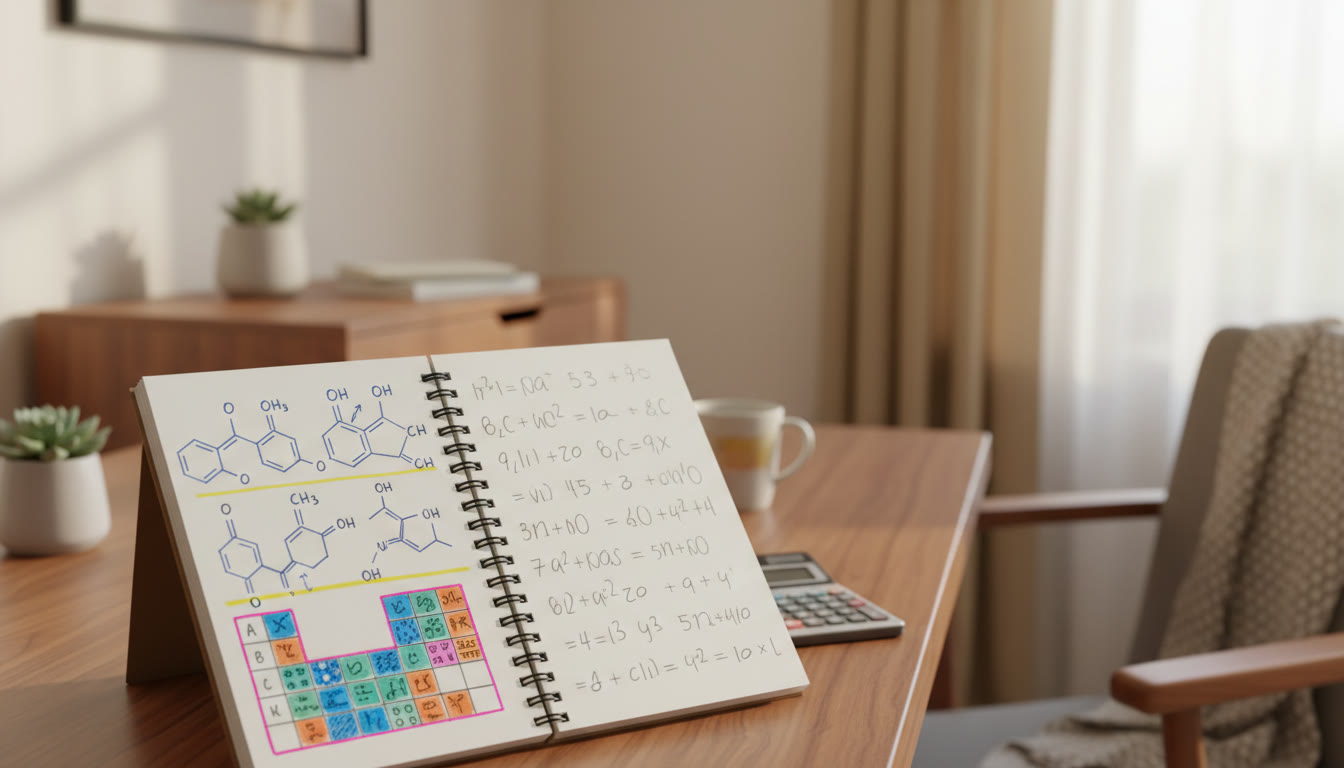
When to rely mostly on NCERT, and when to push with a reference
- Beginner / early-stage: NCERT first. Build solid understanding; don’t chase complex problems before basics are stable.
- Mid-stage (concepts done): Introduce selective reference problems to broaden exposure and increase speed.
- Advanced-stage (revision + mocks): Use reference books as a surgical tool—target only problem types you’re weak at. Keep NCERT for quick revision.
Common pitfalls and how to avoid them
- Overdoing problem volume: Quantity without reflection leads to false confidence. Make sure each practiced problem yields a note or strategy summary.
- Studying reference content before NCERT clarity: this creates shaky conceptual foundations—start simple, then deepen.
- Ignoring mock-format practice: theory without timed, full-length tests undercuts exam readiness.
- Neglecting error-log use: if a mistake repeats, it’s a process failure, not just bad luck—fix the process.
Sample 6-week integration plan (high-level)
Adapt this to the time you have left. The pattern here alternates concept building and targeted practice with scheduled full-length mocks.
- Weeks 1–2 (Foundation): NCERT read-through for all key chapters; make one-page summaries.
- Weeks 3–4 (Practice): For each chapter, solve 3–5 reference problems; take two sectional timed tests each week.
- Week 5 (Consolidation): Focused revision of error-log, rapid inorganic flashcard review, and daily 45-minute numericals drill.
- Week 6 (Exam Simulation): Three full-length mocks interspersed with targeted topic reviews; final quick NCERT read for weakest topics.
If you find yourself short on time or needing a smarter study plan rather than just more hours, Sparkl can help by translating your mock data into a prioritized, personalized revision map and offering one-on-one sessions to clear stubborn concepts quickly.
Final checklist for exam-ready chemistry
- NCERT: all chapters read and annotated; inorganic facts condensed into flashcards.
- Reference practice: selected problems done for each major topic; strategy notes written.
- Mocks: at least several full-length, timed sessions in a realistic environment with post-mock error analysis.
- Revision: one-page summaries and quick recall flashcards for last-minute review.
- Mental readiness: plan for sleep, diet, and short breaks during study blocks to keep cognitive function sharp.
Concluding note
Your best resource is the one you use deliberately. NCERT secures the fundamentals and should be non-negotiable; a dense reference book expands problem exposure and sharpens application skills. Sequence them: build clarity with NCERT, then use the reference book for targeted practice, and always validate progress through timed, full-length mock tests. Focused, reflective practice—rather than chasing more titles—turns study hours into exam performance.





















No Comments
Leave a comment Cancel