
Mindset First: Treat the Mock Like a Mini Final
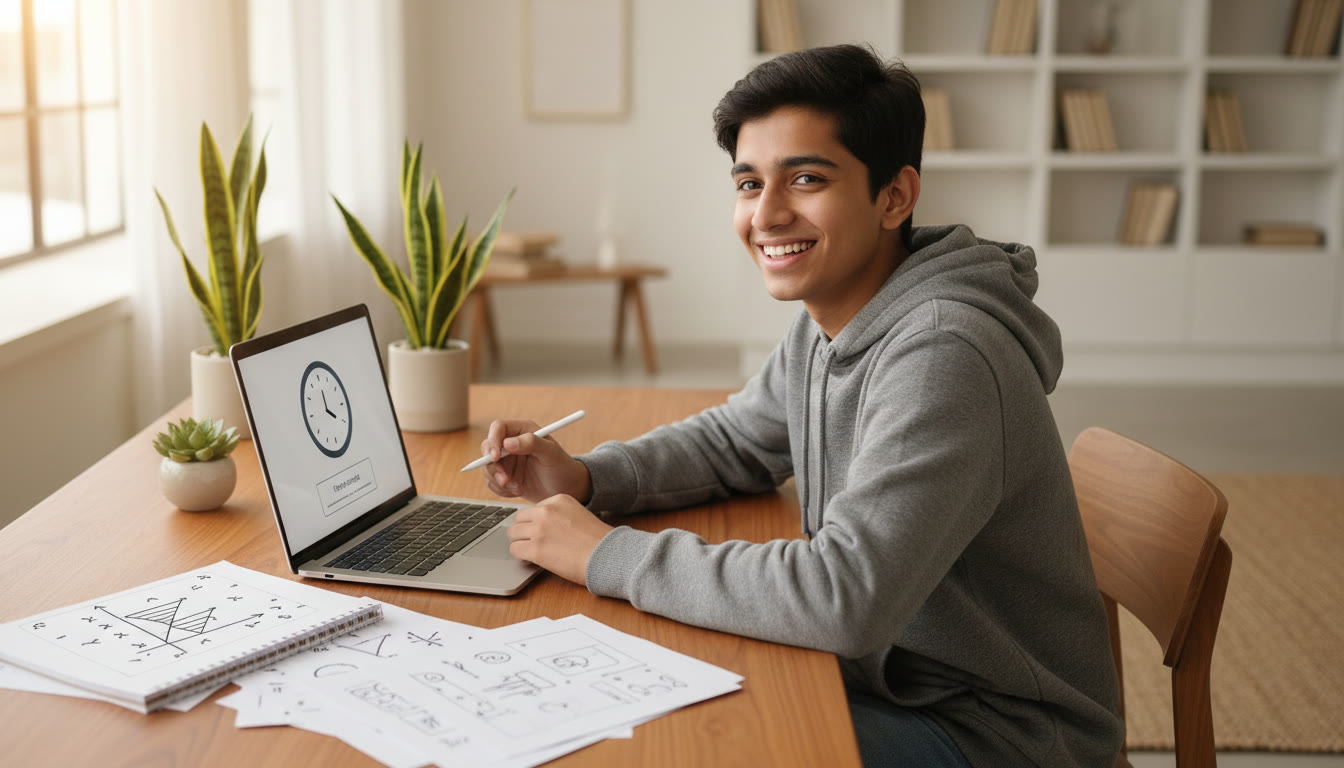
If you want mock tests to do more than inflate a scoreboard, you need a mindset that treats each mock as a controlled experiment in performance. A mock is not just practice; it’s feedback, a stress test, and a way to discover exactly where your preparation meets reality. Think of it this way: the exam room is a place where knowledge, speed, and calm meet—mocks are your rehearsal. Approach them that way, and you’ll extract far more than right-or-wrong answers.
What the current JEE-style context means for your mock strategy
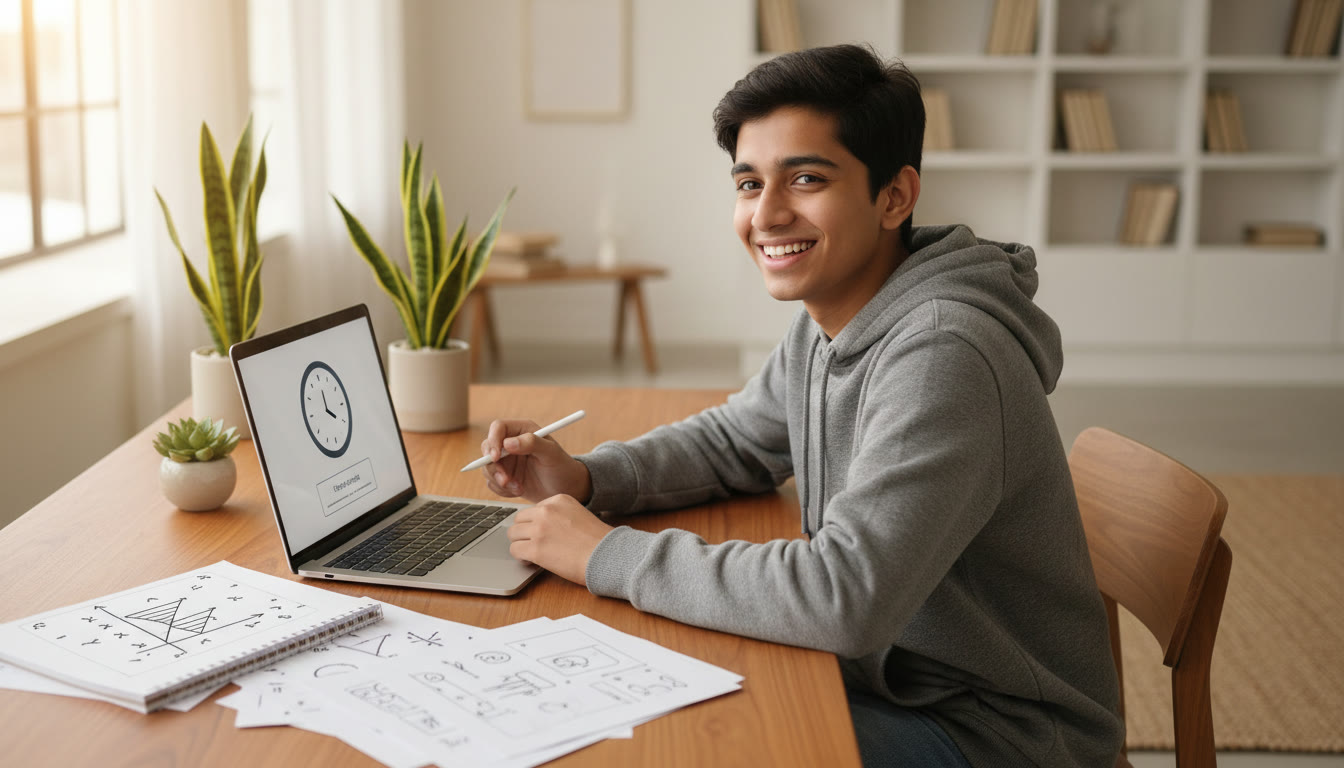
Keep the context clear in your head: current JEE mock conditions emphasize MCQ-style questions (with some numerical-answer types in certain cycles), a full-length session that simulates roughly three hours of focused work, and scoring systems that reward accuracy and penalize random guessing. Whether you’re working with an on-paper simulated sheet or a computer interface, simulate the exact discipline of the real test—time pressure, question order, and answer-selection mechanics. Remember: there are no partial marks for incomplete reasoning in objective items, so how you manage time and accuracy is as important as concept mastery.
Before the Mock: Logistics, Rituals, and the Right Attitude
Too many students treat the minutes before a mock like a free-for-all: last-minute formulas, frantic caffeine, or doom-scrolling on doubt. Instead, build a short, repeatable pre-test routine that signals to your brain: this is practice but it is serious. Repetition trains not just knowledge but readiness. A consistent pre-test routine reduces anxiety and improves focus because the body and mind learn a pattern that precedes performance.
Practical pre-test checklist (30–60 minutes beforehand)
- Simulate test timing: start the exam at the time you would in the real slot so your internal clock stays consistent.
- Prepare materials: charged device if CBT, clean rough sheets, a watch (if allowed in practice), and water. For paper mocks, practice proper OMR-bubble discipline.
- Short warm-up: 10–15 minutes of light revision—formula sheet glance, one tricky concept revision—but avoid deep study or panic cramming.
- Food and sleep hygiene: light, familiar meal and a stable sleep-wake pattern in the days leading up to the mock.
- Mindset reset: 3–5 minutes of breathing or visualization to reduce adrenaline spikes. Tell yourself this is a rehearsal, not the final verdict.
How to reproduce exam conditions accurately
If the real exam is computer-based, use a computer mock. If you’ll face a mixture of MCQs and numerical answers in the current cycle, include both. If you practice with paper-based OMR sheets, enforce ‘bubble discipline’: mark cleanly, avoid eraser smudges, and pace yourself so you don’t rush the final scanning. Even when the real test is online, the discipline of neat marking and clear answer selection transfers—mistakes made by hurried clicking or misreading an option are problems you must surface during mocks.
During the Mock: Execution, Not Emotion
The exam itself is less about raw knowledge and more about the intersection of strategy, timing, and calm. Planning your attack before you open the paper keeps you from drifting into reactive mode. A calm, pre-decided plan is the shield against panic when you encounter a tough patch.
Start with a quick triage (first 10–15 minutes)
- Scan the whole paper quickly if possible: identify easy clusters you can bank on quick marks from.
- Mark time blocks mentally: when you’ll stop for a short break or when you’ll switch subjects.
- Decide early on an attempt target—this is flexible, but having a number calms impulsive over-attempting that invites negative marking penalties.
Sample time-allocation for a 3-hour mock (adapt to your strengths)
| Subject | Sample Questions | Suggested Time | Avg. Time/Q | Primary Strategy |
|---|---|---|---|---|
| Physics | ~30 | 55–65 min | ~1.8–2.2 min | Quick conceptual reads; skip long calculations initially |
| Chemistry | ~30 | 45–55 min | ~1.5–1.8 min | Attempt theory and organic first; return to numeric physical chemistry |
| Mathematics | ~30 | 55–80 min | ~1.8–2.7 min | Handle quick scoring problems first; isolate long problems for second pass |
Use the table above as a template and adapt. If you’re a quick calculator but slow at conceptual reading, flip the time. The goal is not a fixed split—it’s an informed distribution that you can execute calmly.
Answer-selection and negative marking
Most objective patterns penalize incorrect choices. That means educated guessing is a tool—not a reflex. Use elimination to improve odds: if you can confidently eliminate one or two options, your expected value from a guess rises. If you can’t eliminate anything, the safer choice is to skip. Remember: the marginal advantage of risking a random guess is small compared to the long-term cost of building a habit of careless guessing.
OMR discipline and CBT habits
Whether you practice OMR or computer-based mocks, the discipline is similar: double-check you’ve mapped your selected option correctly. For paper mocks, keep rough work in a dedicated area and transfer answers carefully. For CBT mocks, train to click deliberately: avoid transferring a mental answer to a hasty click. Both modes reward methodical checking at natural pauses—don’t skip the last five minutes that let you reconcile time and answers.
After the Mock: Review Like a Scientist
Too many students either celebrate a good score or drown in the damage after a bad one. The useful approach is analytical: data first, emotion later. Your goal is to identify repeatable error patterns and fix them.
A methodical post-mock review
- Wait a cooling-off period: give yourself 30–60 minutes before you inspect solutions so your immediate emotional reaction fades.
- Re-solve flagged questions without looking at the solution. If you still miss them, you’ve found a learning target.
- Classify errors: conceptual gap, careless mistake, calculation slip, time mismanagement, or misinterpretation of the question.
- Map each error to an action: revisit a chapter, rework similar problems, conduct timed practice, or refine exam strategy.
Error analysis table (use this template after each mock)
| Error Category | Example Question | Root Cause | Immediate Fix | Practice Plan |
|---|---|---|---|---|
| Conceptual gap | Projectile motion derivation | Missed core theorem application | Re-study derivation; solve 5 focused problems | Daily 15-min concept drill for 2 weeks |
| Careless error | Sign error in algebra step | Rushed arithmetic under time pressure | Slow down for final checks; box key steps | Timed micro-quizzes with verification routine |
| Time management | Left two long integrals unsolved | Poor initial triage | Practice faster scanning; mark long problems | Alternate fast/slow practice sessions weekly |
Turn analysis into a week-by-week corrective loop
After you classify errors, write a focused plan for the next seven days. A mock’s value is in the corrections you apply. If a mock reveals a recurring algebra error, allocate specific timed practice and re-test the same topic in your next mock. If mental fatigue caused sloppy mistakes, schedule shorter, sharper practice blocks to build stamina rather than longer panicked sessions.
If you use guided support, Sparkl‘s personalized tutoring can translate mock analytics into a tailored study plan—1-on-1 guidance, targeted problem sets, and AI-driven insights that map mistakes to precise practice. That kind of feedback helps convert raw scores into a focused roadmap.
Mindset Drills: Build Resilience and Composure
Preparation is half technical and half psychological. Mock tests are stress inoculation: managed exposure that shrinks the novelty of actual exam pressure. Build small daily habits that increase your stress tolerance and attention span.
- Breathing anchor: 4-4-8 breathing for 2 minutes before a mock to reduce sympathetic activation.
- Micro-simulations: once or twice a week, simulate the toughest 30 minutes of exam time so you learn to cope with cognitive fatigue.
- Visualization: spend 3 minutes picturing a calm, stepwise solution to a typical problem—visual rehearsal reduces freeze-ups.
- Reflection journal: after each mock, write three sentences: what went well, what surprised you, and one specific change you’ll implement next.
Sample Two-Week Mock Cycle: From Test to Transformation
Use a repeating two-week cycle to make mocks meaningful rather than just frequent. Frequency without review is noise; frequency with analysis is progress.
| Day Range | Primary Focus | Actions |
|---|---|---|
| Day 1 | Full-length mock (3 hours) | Simulate exam conditions; strict timing; no interruptions |
| Day 2 | Cooling and initial review | Wait 30–60 min; re-solve flagged Qs; start classification |
| Days 3–5 | Targeted correction | Topic drills for identified weak areas; 30–60 min focused practice |
| Day 6 | Mini mock (1 hour) | Retest corrected topics under time pressure |
| Days 7–10 | Mixed practice and revision | Alternate conceptual revision with problem sets; spaced repetition |
| Day 11 | Full-length mock | Execute with updated strategy |
| Days 12–14 | Deep analysis and consolidation | Full error classification; integrate learnings into study schedule |
Repeat the cycle, and watch small, consistent improvements compound into reliable performance. If you prefer guided feedback for this loop, Sparkl‘s analytics-driven insights and tutor-led reviews can turn each mock into a precise corrective action plan, with 1-on-1 sessions that accelerate the learning loop.
Common Pitfalls and Smart Avoidance
- Overfocusing on score rather than learning—use score as a thermometer, not the whole diagnosis.
- Ignoring small repeated mistakes—small leaks sink ships; fix recurring minor errors before they become major drains.
- Changing strategy mid-test because one section looked hard—stick to your plan, then adapt after analysis, not during panic.
- Isolating practice—mocks are the glue that binds concept practice to speed; do both.
Final Day and Final Steps Before a Mock
- Sleep well the night before; fragmenting sleep into short bursts harms recall more than a single steady rest.
- Eat familiar, slow-energy food—avoid high-sugar spikes and unknown ‘superfoods’.
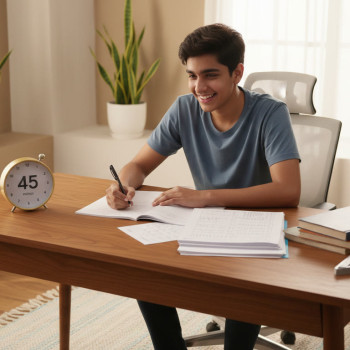
- Set up a calm physical environment for the mock: comfortable chair, uncluttered table, and minimal phone distractions.
- Have a brief mental checklist ready: breathe, scan, triage, execute—repeat this silently at the start.
Mock tests are your diagnostic tool and your rehearsal. Their real power lies in the loop: simulate closely, execute calmly, analyze honestly, and correct deliberately. Over time, this turns the mock room into a place where your best performance becomes familiar instead of surprising.
In the end, effective mock preparation combines three things: a realistic simulation of exam conditions, a disciplined execution strategy during the test, and a ruthless but kind analysis afterward that drives targeted practice. Follow these steps consistently, and the anxiety around mock tests will shrink while your dependable performance grows.
Conclusion
Mindset matters because mocks measure more than content; they measure how you perform under real constraints. Treat each mock as a data-rich rehearsal, follow a disciplined pre- and post-test routine, and convert errors into targeted practice. That approach—not just repeating tests—creates lasting improvement in performance.



















No Comments
Leave a comment Cancel