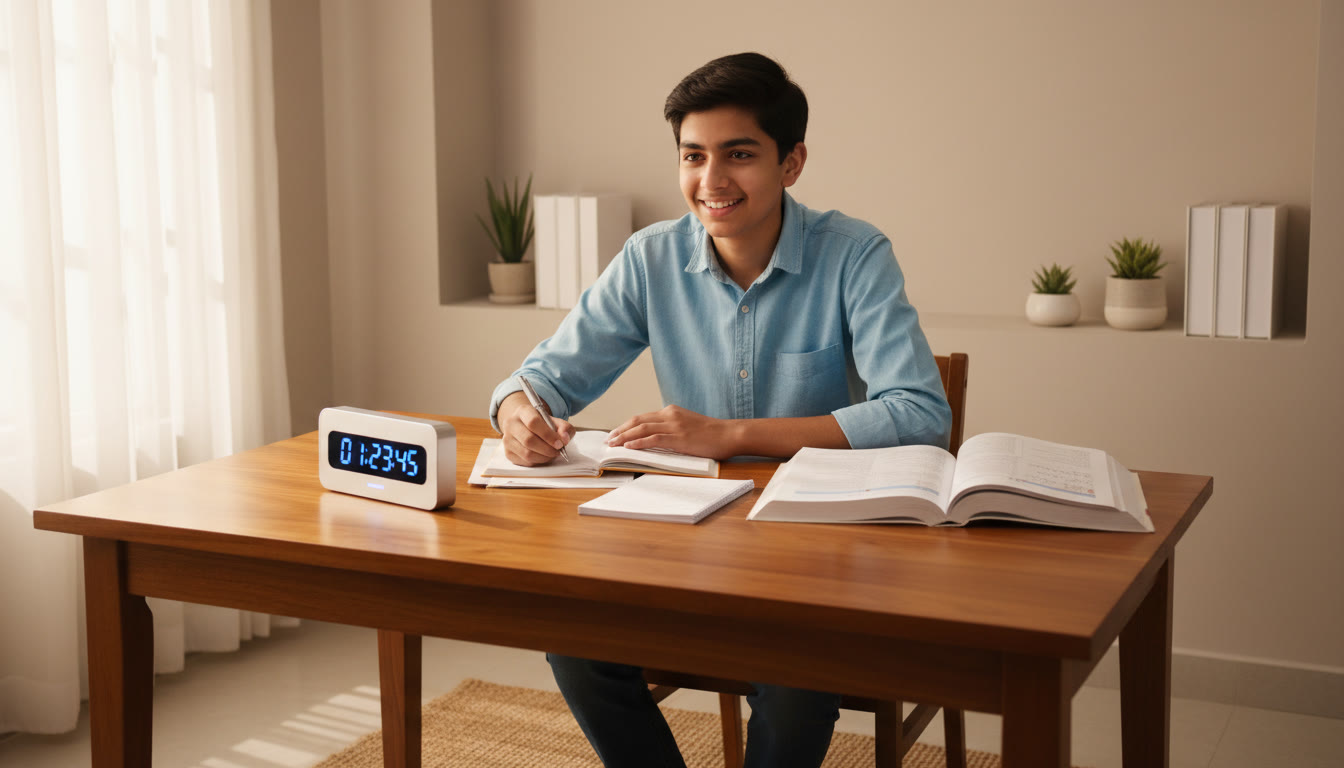

Sharpen Your Concentration: How to Improve Focus for JEE Preparation
If you’ve ever sat down with a stack of notes and found your attention slipping after twenty minutes, you’re not alone. Preparing for the JEE is as much about managing attention as it is about mastering concepts. When you learn how to focus reliably, every hour you spend studying becomes several times more effective — problems get solved faster, concepts stick longer, and mock-test scores rise in ways that feel like magic.
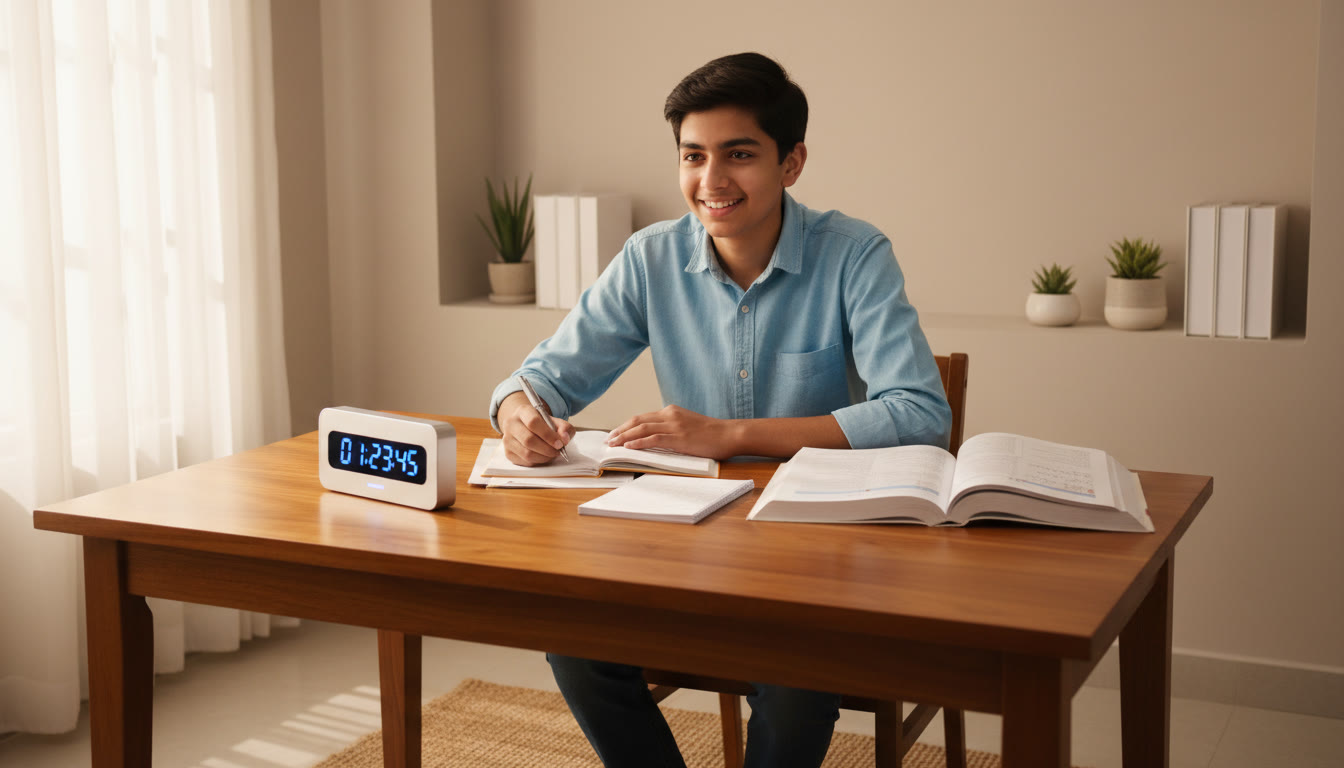
This guide is written for students who want practical, human-friendly steps to build that focus muscle. We’ll cover routines you can adopt today, how to design study sessions that match the JEE exam style (MCQ-based, high-stakes, time-limited with negative marking), ways to simulate real exam conditions with 3-hour full-length practice, and how to use personalized help when needed. Expect examples, simple templates you can copy, and real-life tweaks that actually work.
Why focus matters more than raw hours
Two students might both put in six hours a day, but one reads passively while the other practices actively and preserves attention. The active student will move faster because attention determines depth of encoding: focused study forms stronger memory traces, reduces rework, and improves problem-solving transfer. In other words, attention multiplies study time — not linearly, but exponentially.
Here’s a quick mental model: think of focus as the quality control for learning. When you’re distracted, you build shaky foundations. With focus, each concept you touch becomes usable knowledge that supports harder problems later.
Understand the exam context and shape your focus around it
JEE-style testing is high-precision: multiple-choice questions, computer-delivered interfaces in most cycles, strict time limits (practice full-length mocks for the full session length), and negative marking for incorrect answers. That means two things for your focus strategy:
- Accuracy matters as much as speed — shallow, rushed practice increases careless errors that cost you marks.
- Stamina and sustained attention are essential — treat mock tests as training for the real cognitive load of a long, intense session.
Planning your practice to mirror the exam (time, format, negative-marking mindset) trains not just knowledge but the attention patterns needed to use that knowledge under pressure.
Diagnose where your attention is leaking
Before changing anything, get curious about why you lose focus. Try a simple 3-day attention audit: for each study session, note the start-time, minutes of uninterrupted work, and what broke your flow. Common leaks include notifications, unclear goals, fatigue, hungry brain, and habit interruptions (checking phone out of habit).
- Internal leaks: fatigue, anxiety about performance, unclear study targets, lack of challenge.
- External leaks: phone/notifications, noisy room, multi-tasking tabs, interruptions from family or messages.
When you name the leak, you can fix it. If it’s anxiety, add short, frequent practices that build success. If it’s notifications, create a phone quarantine. Small fixes compound quickly.
Design a study environment that invites focus
A focused mind is supported by a predictable space. Here’s a checklist you can apply tonight:
- Single-purpose corner: a desk used mainly for problem solving, not for scrolling or chatting.
- Minimal visual clutter: one notebook, one textbook, one problem sheet; keep extras in a drawer.
- Lighting and ergonomics: bright enough to avoid eye strain, chair and table at comfortable height.
- Essential supplies ready: pencils, eraser, rough sheets, calculator (if allowed for practice), watch or timer.
- Phone policy: out of sight and on ‘do not disturb’ for deep sessions; quick-access study playlist or ambient noise only if it helps you concentrate.
Make your study spot a signal: when you sit there, your brain should know it’s time to focus.
Routines and techniques that sharpen attention
Here’s a set of evidence-backed routines you can combine. Think of them as building blocks — mix and match to fit your rhythm.
1. Time-blocking for JEE problems
Instead of vague “study 3 hours” goals, block time around tasks with clear outcomes. Examples:
- 90 minutes: focused theory + 30 minutes of targeted problems on the same concept.
- 50 minutes: intense problem-solving sprint (no notes), 10-minute break (repeat twice).
- 3-hour block: full-length mock or combined session simulating exam conditions.
Choose the block length based on task difficulty and your current stamina. For new concepts, shorter repeated blocks work better; for exam simulation, build to full-length sessions.
2. Active practice beats passive review
After reading a derivation or watching a short lesson, close the book and attempt the simplest problem that uses that idea. If you can’t, that’s where focus should land — not more reading. Active practice includes:
- Solving three problems immediately after learning a concept.
- Explaining the concept aloud in one minute (teach-back).
- Writing a one-line summary of when to apply the idea and one common trap.
3. Interleaving and spaced repetition
Mix problem types in practice sessions. Rather than doing 30 mechanics questions in a row, mix in a couple from optics and a chemistry numerical. Interleaving improves the mind’s discrimination and selection skills — exactly what the JEE demands. Also, revisit topics across days instead of cramming them in one night.
4. Build exam stamina with regular 3-hour mocks
Set aside one day each week for a full-length, uninterrupted mock under real-like rules (same time length, negative marking applied, no study materials). After the mock, spend time analyzing mistakes and attention lapses: did you lose focus after question 60? Did you rush the last 30 minutes? Use that data to refine your blocks and practice choices.
5. Micro-rests, nutrition, and sleep
Short breaks are productive: 5–10 minutes between focused blocks to stand up, hydrate, and reset. Regular sleep is non-negotiable — the brain consolidates problem-solving skills during rest. Fuel with steady energy (protein, whole grains, fruits) and avoid heavy meals right before deep sessions.
Technique comparison table: pick what to use and when
| Technique | How to apply | Typical session | Main benefit |
|---|---|---|---|
| Time-blocking | Schedule exact tasks (e.g., ‘1 topic theory + 5 problems’) | 50–90 minutes | Clarity and reduced procrastination |
| Active practice | Do problems immediately after learning | 20–45 minutes per mini-cycle | Stronger, testable understanding |
| Interleaving | Mix topics/types in one session | 60–120 minutes | Improves selection & flexibility |
| Full mock simulation | Weekly 3-hour test under real rules | 3 hours | Builds stamina & reveals attention leaks |
| Micro-rests | 5–10 minute resets between blocks | During long sessions | Prevents burnout and attention decay |
How to practice with the exam’s scoring mindset
Negative marking changes risk calculus. Train yourself to:
- Attempt questions where you can eliminate options or are confident; avoid blind guessing.
- Use the ‘mark for review’ feature in the interface wisely — allocate specific minutes near the end for revisiting marked questions.
- Practice timing: set micro-deadlines inside mocks (e.g., aim to reach question 60 by 110 minutes) so you leave time to pick safer attempts later.
Remember: a steady, slightly conservative approach with high accuracy often outperforms frenetic guessing.
Track attention like a scientist
Make a simple focus log. After each session note:
- Session length and uninterrupted minutes
- Number of problems attempted and accuracy
- Mental fatigue score (1–5) and major distractions
Review this log weekly. Look for patterns: do you nap after lunch and then lose focus? Are mornings the best time for problem solving? Use the data to schedule your hardest work when your concentration is highest.
Use technology to support — not hijack — your attention
Digital tools can help you focus if used intentionally. Examples of healthy use:
- Set your phone to airplane or ‘do not disturb’ during deep blocks.
- Keep only one study tab open on your browser and close social media tabs.
- Use a timer for strict blocks, and log sessions automatically if that reduces friction.
Resist the illusion that multitasking is efficient. For problem solving, single-tasked deep work is consistently superior.
When personalized help can accelerate focus
If you’ve tried structure and still struggle, tailored coaching can help diagnose blind spots and build schedules that match your attention profile. For instance, Sparkl’s personalized tutoring offers 1-on-1 guidance, tailored study plans, expert tutors, and AI-driven insights that can pinpoint the moments you lose focus and provide concrete exercises to fix them. Small changes from a mentor can often unlock weeks of progress.

Sample weekly template you can copy
This template balances focused learning, problem practice, and rest. Adjust the timing to your school and family schedule.
| Day | Morning | Afternoon | Evening |
|---|---|---|---|
| Monday | 50-min theory block (new topic) + 10-min break | 90-min problem set (related problems) | 30-min review + light reading |
| Tuesday | 50-min mixed-practice (interleaved problems) | School/Classes | 60-min revision of weak areas |
| Wednesday | 3-hour full mock (every other week) | Mock analysis (errors & attention log) | Relaxing activity and early sleep |
| Thursday | Concept drills + quick revisions | Group problem discussion (short) | Active recall flashcards |
| Friday | 50-min focused practice | School/Classes | Light problem-solving and rest |
| Weekend | Deep problem-solving project (2–3 hours) | Rest, physical activity | Plan next week & short review |
Common pitfalls and quick fixes
- Pitfall: Studying without an outcome. Fix: Always close a session with a clear deliverable (e.g., ‘solve 10 electrostatics problems’).
- Pitfall: Ignoring energy. Fix: Schedule hard work at your peak times and protect sleep.
- Pitfall: Overdoing mocks without analysis. Fix: Spend at least as much time reviewing a mock as you spent taking it — focus on why attention failed.
Measuring progress in a way that keeps focus positive
Move beyond raw hours. Track measurable improvements like:
- Accuracy on topic-wise problem sets (target upward trend).
- Average uninterrupted study minutes per session.
- Consistency of full mock performance under test-like conditions.
Celebrate small wins: one more uninterrupted hour this week, a steady reduction in careless errors, or a clearer exam strategy for a tricky chapter. Those compound into real rank improvement.
Final practical checklist
- Create a dedicated study spot and a phone policy.
- Plan and time-block every study session with a clear outcome.
- Prioritize active practice, interleaving, and spaced review over passive reading.
- Do one 3-hour full-length mock per week under real conditions and analyze attention lapses.
- Log focus metrics and adjust your schedule to your natural energy peaks.
- Seek tailored mentoring if patterns persist; one-on-one guidance can accelerate targeted improvements.
Improving focus is less about dramatic overhauls and more about consistent, small changes that align your study actions with the way attention works. When you build the right environment, adopt a handful of reliable routines, and simulate exam conditions regularly, the quality of your preparation rises — and with it, your confidence and results.
Focus, like problem-solving, is a practised skill: structure your time, measure what matters, and refine based on feedback. With deliberate practice and consistent habits, focused study becomes the engine that drives steady improvement across Physics, Chemistry, and Mathematics.



















No Comments
Leave a comment Cancel